Connect with us

Economy

CBN Admits Printing Money to Boost Allocations to States

Published

on

Summon CBN Governor

By Adedapo Adesanya

The Central Bank of Nigeria (CBN) has disclosed that one of its functions under the law is printing money to support the government whenever there is a crisis.

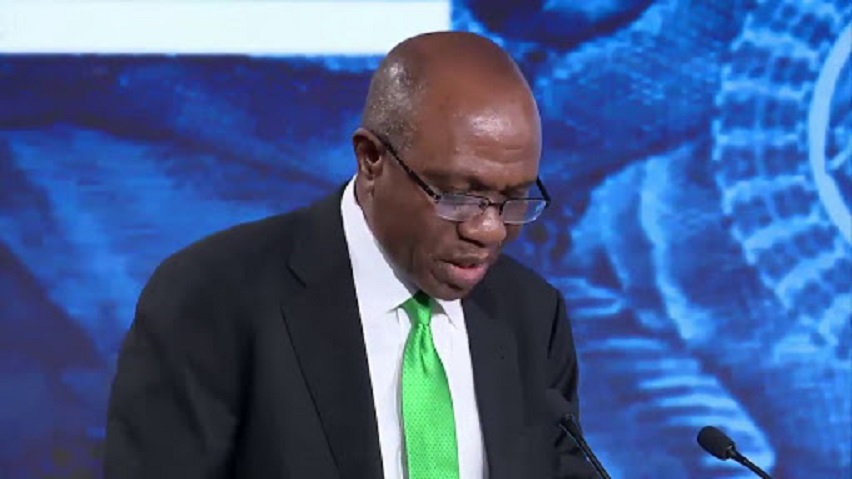
The Governor of the CBN, Mr Godwin Emefiele, while speaking on Thursday in Tunga, Awe Local Government Area of Nasarawa State, said one of its key mandates is to print currency.

Mr Emefiele was reacting to questions posed to him on the revelation by the Governor of Edo State, Mr Godwin Obaseki, that the federal government printed N60 billion last month to shore the shortfall in revenue generated in February 2021 shared to the three tiers of government by the Federal Accounts Allocation Committee (FAAC).

Mr Obaseki had warned that the country was in a serious fiscal crisis and the monetary rascality must be put an end to by the federal government.

But Mr Emefiele rebuffed his name-sake, saying that printing money is a key mandate of the central bank anywhere in the world, adding that the bank must always act to support the government at times of financial difficulties.

“If you understand the concept of printing of money. The concept of printing of money, it’s about lending money; that’s our job – to print. It’s about lending money and so, there’s no need to put the controversy about the printing of money as if we are going into the factory printing the naira and start distributing on the streets,” he was quoted as saying by ThisDay.

“For us to see some people playing some games, overheating his polity talking about the printing of money, I think it is unfortunate and totally inappropriate. I would like to advise that this should stop. We should all work for the growth of our country and not play politics.

“It is very inappropriate for people to just give some colouration to the word printing of money as if it is a foreign word coming from the sky.

“In 2015/2016, we were in a similar [fiscal] situation, but it is far worse today. We provided a budget support facility to all the states of the country and that loan remains unpaid till now.

“We are going to insist on the states paying the loan back since they are effectively accusing us of giving them loans.

“Most countries of the world today are confronted by not just the health crisis from the COVID pandemic but also economic crisis.

“I keep saying this: it would be irresponsible of the central bank of Nigeria or any central bank to stand idle and refuse to support its government at this time. Whatever we do in Nigeria is being done in any clime.

“Nigeria is unfortunately in a very bad situation and we cannot pretend about it in the sense that we are facing problems about productivity output which is gross domestic product (GDP).

“We are working very hard to see how we can get our heads above water. We are also concerned with issues of inflation.”

Obaseki’s Claims

Mr Obaseki on Monday, April 7, 2021, said the country was facing a serious financial crisis and called on the federal government to act quickly.

“When we got FAAC for March, the federal government printed additional N50-N60 billion to top-up for us to share,” he said.

The Minister of Finance, Budget and National Planning, Zainab Ahmed, dismissed the claim, insisting the FAAC allocation was revenue from different agencies of the government.

Mr Obaseki then took to Twitter on Thursday to say the government was “playing the ostrich” and urged the government to take urgent steps to end the current “monetary rascality”.

He wrote, “While we do not want to join issues with the Federal Ministry of Finance, we believe it is our duty to offer useful advice for the benefit of our country.

“The Minister of Finance, Budget and National Planning, Mrs Zainab Ahmed, should rally Nigerians to stem the obvious fiscal slide facing our country.

“Rather than play the Ostrich, we urge the government to take urgent steps to end the current monetary rascality, so as to prevent the prevailing economic challenge from degenerating further.

“We believe it is imperative to approach the Nigerian project with all sense of responsibility and commitment and not play to the gallery because ultimately, time shall be the judge of us all.”


Adedapo Adesanya is a journalist, polymath, and connoisseur of everything art. When he is not writing, he has his nose buried in one of the many books or articles he has bookmarked or simply listening to good music with a bottle of beer or wine. He supports the greatest club in the world, Manchester United F.C.

Advertisement
Click to comment

Leave a Reply

Your email address will not be published. Required fields are marked *

Economy

Nigeria Gets Fresh $500m World Bank Loan for Small Businesses

Published

on

Small Businesses

By Adedapo Adesanya

The World Bank has approved a $500 million facility for Nigeria to expand longer-term lending to small and medium sized businesses.

Approved under the Fostering Inclusive Finance for MSMEs in Nigeria (FINCLUDE) project, the package comprises a $400 million International Bank for Reconstruction and Development (IBRD) loan and a $100 million International Development Association (IDA) credit. Both IBRD and IDA are members of the World Bank Group.

The scheme will be implemented by the Development Bank of Nigeria (DBN), with credit guarantees provided through DBN’s subsidiary, Impact Credit Guarantee Limited (ICGL).

FINCLUDE is designed to address constraints faced by micro, small, and medium enterprises (MSMEs) in Nigeria which despite accounting for most businesses and nearly half of gross domestic product (GDP) face long-standing barriers to formal finance.

Fewer than one in 20 MSMEs have access to bank credit; loans are often short-term and costly; and collateral requirements exclude many viable firms. Women-led enterprises, which make up a substantial portion of MSMEs, are disproportionately affected, facing higher rejection rates and limited tailored products. Agribusinesses, central to food security and rural livelihoods, similarly struggle to obtain more extended‑tenor financing for equipment, processing, storage, and logistics.

However, FINCLUDE seeks to address these constraints by expanding access to affordable, longer-term finance and tailored solutions for segments with the most significant development impact.

Speaking on this, the World Bank Country Director for Nigeria, Mr Mathew Verghis, said, “FINCLUDE is about jobs, opportunity, and inclusion. By expanding access to finance for viable MSMEs—particularly women-led firms and agribusinesses—Nigeria can accelerate growth and deliver tangible benefits across communities nationwide.

“The project will make it easier for deserving small businesses to get the finance they need to grow and hire workers. With better support for lenders that practice inclusive finance and fairer, longer-term loans for entrepreneurs, we are backing the people who power Nigeria’s economy—especially women and those in agriculture.”

The FINCLUDE project will help to mobilise private investment and expand access to and usage of inclusive, innovative financial products for MSMEs nationwide.

Through DBN, the operation will strengthen the capacity of banks, including microfinance banks and non-bank financial institutions such as financial technologies (fintechs), to provide larger loans with more reasonable repayment periods, and—through ICGL—will scale partial credit guarantees so that lenders can extend credit to businesses they might otherwise consider too risky.

Targeted technical assistance will modernise loan appraisal by leveraging AI-enabled digital platforms to accelerate decision-making, improve data quality, strengthen impact measurement, and build capacity for both MSMEs and participating financial institutions.

According to the World Bank, a strong emphasis on inclusion will ensure that women-led businesses and agribusinesses benefit from these improvements.

Also commenting, Task Team Leader for FINCLUDE, Mrs Hadija Kamayo, said, “FINCLUDE will help to mobilize approximately $1.89 billion in private capital, expand debt financing to 250,000 MSMEs—including at least 150,000 women-led businesses and 100,000 agribusinesses—and issue up to $800 million in guarantees to catalyse lending.

“By extending the average maturity of MSME loans to about three years, it will help firms invest in equipment, factories, staff, and productivity, translating finance into jobs and growth.”

Continue Reading

Economy

Nigerian Stocks Close 1.13% Higher to Remain in Bulls’ Territory

Published

on

Nigerian Stocks1

By Dipo Olowookere

The local stock market firmed up by 1.13 per cent on Friday as appetite for Nigerian stocks remained strong.

Investors reacted well to the 2026 budget presentation of President Bola Tinubu to the National Assembly yesterday, especially because of the more realistic crude oil benchmark of $64 per barrel compared with the ambitious $75 per barrel for 2025. This year, prices have been between $60 and $65 per barrel.

Business Post observed profit-taking in the commodity and energy sectors as they respectively shed 0.14 per cent and 0.03 per cent.

But, bargain-hunting in the others sustained the positive run, with the consumer goods index up by 3.82 per cent.

Further, the industrial goods space appreciated by 1.46 per cent, the banking counter improved by 0.08 per cent, and the insurance industry gained 0.04 per cent.

As a result, the All-Share Index (ASI) increased by 1,694.33 points to 152,057.38 points from 150,363.05 points and the market capitalisation chalked up N1.080 trillion to finish at N96.937 trillion compared with Thursday’s closing value of N95.857 trillion.

A total of 34 shares ended on the advancers’ chart, while 24 were on the laggards’ log, representing a positive market breadth index and bullish investor sentiment.

Austin Laz gained 10.00 per cent to close at N2.42, Union Dicon also jumped 10.00 per cent to N6.60, Tantalizers increased by 9.80 per cent to N2.69, Aluminium Extrusion improved by 9.78 per cent to N12.35, and Champion Breweries grew by 9.71 per cent to N16.95.

Conversely, Sovereign Trust Insurance dipped by 7.42 per cent to N3.87, Royal Exchange lost 6.84 per cent to trade at N1.77, Omatek slipped by 6.84 per cent to N1.09, Eunisell depreciated by 5.88 per cent to N80.00, and Eterna dropped 5.63 per cent to close at N28.50.

Yesterday, traders transacted 1.5 billion units worth N21.8 billion in 25,667 deals compared with the 839.8 million units sold for N32.8 billion in 23,211 deals in the preceding session, showing a surge in the trading volume by 76.61 per cent, an uptick in the number of deals by 10.58 per cent, and a shrink in the trading value by 33.54 per cent.

Continue Reading

Economy

FrieslandCampina, Two Others Erase N26bn from NASD OTC Bourse

Published

on

FrieslandCampina

By Adedapo Adesanya

Three stocks stretched the bearish run of the NASD Over-the-Counter (OTC) Securities Exchange by 1.21 per cent on Friday, December 19, with the market capitalisation giving up N26.01 billion to close at N2.121 billion compared with the N2.147 trillion it ended a day earlier, and the NASD Unlisted Security Index (NSI) dropping 43.47 points to 3,546.41 points from 3,589.88 points.

The trio of FrieslandCampina Wamco Nigeria Plc, Central Securities Clearing System (CSCS) Plc, and NASD Plc overpowered the gains printed by four other securities.

FrieslandCampina Wamco Nigeria Plc lost N6.00 to sell at N54.00 per unit versus N60.00 per unit, NASD Plc shrank by N3.50 to N58.50 per share from N55.00 per share, and CSCS Plc depleted by N2.91 to N33.87 per unit from N36.78 per unit.

On the flip side, Air Liquide Plc gained N1.01 to close at N13.00 per share versus N11.99 per share, Golden Capital Plc appreciated by 70 Kobo to N7.68 per unit from N6.98 per unit, Geo-Fluids Plc added 39 Kobo to sell at N5.50 per share versus N5.11 per share, and IPWA Plc rose by 8 Kobo to 85 Kobo per unit from 77 Kobo per unit.

During the trading day, market participants traded 1.9 million securities versus the previous day’s 30.5 million securities showing a decline of 49.3 per cent. The value of trades went down by 64.3 per cent to N80.3 million from N225.1 million, but the number of deals jumped by 32.1 per cent to 37 deals from 28 deals.

Infrastructure Credit Guarantee Company (InfraCredit) Plc finished the session as the most active stock by value on a year-to-date basis with 5.8 billion units valued at N16.4 billion, followed by Okitipupa Plc with 178.9 million units transacted for N9.5 billion, and MRS Oil Plc with 36.1 million units traded for N4.9 billion.

The most active stock by volume on a year-to-date basis was still InfraCredit Plc with 5.8 billion units worth N16.4 billion, trailed by Industrial and General Insurance (IGI) Plc with 1.2 billion units sold for N420.7 million, and Impresit Bakolori Plc with 536.9 million units traded for N524.9 million.

Continue Reading

Trending