Connect with us

Auto

Ogun Plans Mass Transit Services to Lagos, Others

Published

on

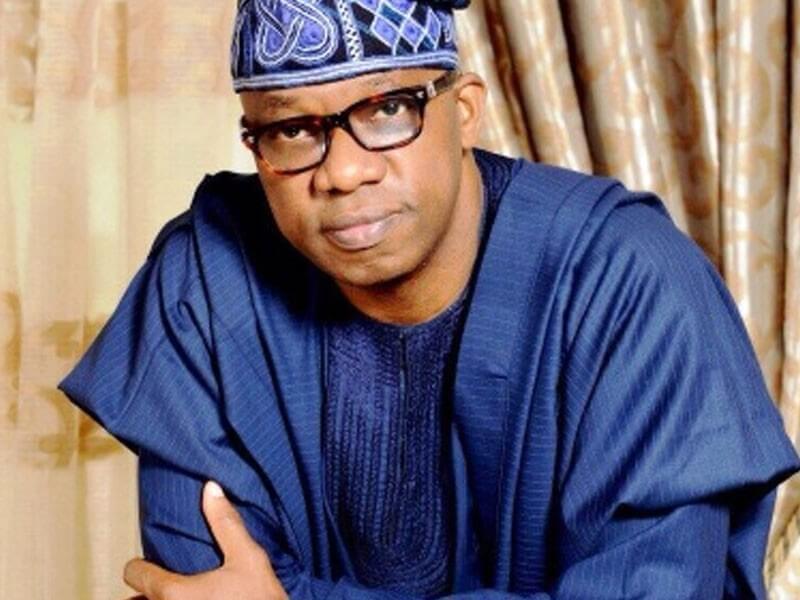
Ogun State Governor Dapo Abiodun

By Adedapo Adesanya

Ogun State is set to commence the operation of the mass transit services to Lagos and major towns in the state.

This was disclosed by Governor Dapo Abiodun while receiving reports on the transportation sector on the Abeokuta Urban Transport Policy.

The report was submitted by the Head of United Kingdom Prosperity Fund, Nigeria Office, Ms Martha Bostock. It also contains the Strategic Transport Intervention Plan for Ogun State.

The Transport Steering committee is headed by the State Commissioner for Transportation, Mr Gbenga Dairo, with support from the Department of Transport Planning and Management of the Olabisi Onabanjo University, Ago Iwoye.

The Governor noted that the Bus Mass Transit was deliberately conceptualised to improve quality of life by reducing travel time, improving local air quality, curbing greenhouse gas emissions, and preventing road fatalities and crashes.

Mr Abiodun reiterated that the present administration was poised towards achieving an effective multimodal transportation system, adding that the state government had embarked on various strategies in achieving an effective transportation system by rehabilitating both urban and rural roads.

He further stated that the flag-off of Ogun State Bus Mass Transit Scheme would commence in May, while light rail services in the state would commence as soon as discussions are concluded with the Nigerian Railway Corporation (NRC) and Lagos State to take full advantage of rail infrastructure within Ogun for the development of the state.

“As part of government’s deliberate efforts at modernising and promoting efficiency in the transport sector, as contained in our urban renewal programme, the berth of Ogun Bus Mass Transit, which takes off in May, is aimed at providing improved movement of people in the state through a bus-based public transport system designed to have better capacity and reliability than a conventional bus system with a view to providing valuable public health benefits by reducing road fatalities, crashes and injuries; reducing personal exposure to harmful air pollutants, and increasing accessibility for public transport users”, the Governor maintained.

Governor Abiodun, who commended the committee for painstakingly carrying out its assignment towards the growth of the state transportation sector, promised his government would ensure proper implementation of the committee’s report.

“I can assure you that we will implement the reports and will not leave them on the shelves to gather dust. I am convinced that the implementation would change the face of transportation in the state,” Mr Abiodun stated.

The Commissioner for Transportation, Mr Gbenga Dairo, expressed confidence in the reports of the committee and the partnership with the United Kingdom Prosperity Fund, which he said would facilitate considerable resource allocation and investment in the Ogun State transport sector.

He disclosed that the Lagos Red Line from Oyingbo to Alagbado would be extended further into Ogun passing through Ijoko to Kajola/Ifo in Ado-Odo/Ota and Ifo Local Government Areas of the state.

He added that discussions with the NRC would not only connect the proposed Cargo Airport with the new Lagos to Ibadan rail and the proposed East-West line along Sagamu-Benin Expressway.

This line, according to the Commissioner, would berth new rail stations at Ijoko, Itori, Obada-Oko, Osiele, and Odeda, while branch lines at Ijoko, Kajola, and Papalanto would serve economic development zones in the state.

Speaking on the corridors of operation of the state BRT services, the Commissioner said inter-State BRT services would be between Shagamu-Mowe and Lagos as well as Ota and Lagos, with Park and Ride Services on the Mowe-Ibafo-Lagos corridor, while intercity bus mass transit services would start with a hub at Abeokuta, connecting services to Ijebu Ode, Sagamu, Ilaro, and Ota.

“We shall invest in both the quality and capacity of the public transport system, road and rail, in our greater push towards using public transport to ease human and cargo movement just as we seek to make public transport a choice mode for all commuters, including car owners, integrating travel information and fares as a way to better serve commuters while divisively maintaining a sustainable and high-quality living environment,” Mr Dairo added.

In her remarks, Head of the United Kingdom Prosperity Fund, Ms Martha Bostock, expressed the readiness of the UK authorities to offer technical assistance to Ogun state in building capacity in its transport department for development and sustainability, urging that government should initiate a legislative framework that would make the project implementation successful and also facilitate foreign support.

“Future Cities of Nigeria will offer technical assistance to Ogun State in building capacity within the state government’s department like the Ministry of Transportation and other relevant agencies about what a good transport policy should include.

“I like to see the policy put in place with necessary legislative action aiding the policy to be used to advertise the state to attract more investments which I hope would help the state’s development and its continued transformation,” Ms Bostock noted.


Adedapo Adesanya is a journalist, polymath, and connoisseur of everything art. When he is not writing, he has his nose buried in one of the many books or articles he has bookmarked or simply listening to good music with a bottle of beer or wine. He supports the greatest club in the world, Manchester United F.C.

Click to comment

Leave a Reply

Your email address will not be published. Required fields are marked *

Auto

Mobility Fintech Moove Secures $250m Series C Funding, Joins Unicorn Club

Published

on

Moove

By Adedapo Adesanya

Mobility fintech, Moove, has raised $250 million in a Series C round, valuing the company at $2.1 billion, finally attaining a long-pursued unicorn status.

The round was led by Mubadala Investment Company and co-led by Woven Capital, Toyota’s growth fund, and Ion Pacific. New backers BlueCrest Capital Management, Sona Asset Management and The Raptor Group also joined, alongside existing investors BlackRock, MUFG, Franklin Templeton, Uber and others.

The funding will help Moove expand its autonomous vehicle business by investing in fleet ownership and its robotics-powered depots, known as “Nests,” where autonomous vehicles are charged, maintained, serviced and managed for continuous operation.

Through its partnership with Waymo, Moove is already a leading third-party autonomous fleet operator, with operations live in Phoenix and Miami, and future operations in London.

The capital will also support the company’s expansion into new global markets. As part of the growth plan, Moove expects to increase its autonomous vehicle workforce by more than 220 per cent by the end of the year, growing from about 150 employees to around 500.

Moove said scaling autonomous mobility requires more than just self-driving vehicles. It also needs investment in fleets, charging infrastructure, maintenance facilities and operational systems. The company is building this supporting infrastructure to make autonomous transport reliable and scalable across cities.

Moove started in Africa in 2020 by financing cars for drivers working on ride-hailing platforms. It later entered the UAE, India, the US and the UK. The company also works with Uber, which joined a $100 million funding round in 2024 that valued Moove at $750 million. The new valuation is 2.8 times that level.

Speaking on the deal, the co-chief executive and Advisory Board Chairman of Moove, Mr Ladi Delano, said, “Every major technology revolution becomes an infrastructure race. The internet required data centres. AI required compute. Autonomy requires fleets, charging, maintenance, data systems and 24/7 operations in every city – and that is what Moove is building. In our view, as autonomy scales, infrastructure ownership and operations will define the category leaders. We are building to be one of them.”

On his part, Mr Ali Eid AlMheiri, Executive Director of Diversified Assets, UAE Investments Platform at Mubadala, said: “As autonomous mobility moves from innovation to scaled deployment, the infrastructure supporting it becomes increasingly important. Moove is building an integrated operating platform that combines fleet ownership, operational capability, and technology to support the next phase of growth in autonomous mobility. This is particularly important for the UAE.”

Adding her input, Ms Betty Lee, Principal at Woven Capital (Toyota’s Growth Fund), said, “Moove has demonstrated an exceptional ability to execute across markets, building a global platform across traditional and autonomous vehicle fleets. The next wave of mobility is an infrastructure problem as much as a software one, and Moove is building the foundational layer to solve it.”

For Mr Michael Joseph, co-CEO & Co-Founder of Ion Pacific Limited, said: “We’ve partnered with the Moove team for more than five years, and their execution has consistently impressed us. As autonomous mobility moves from possibility to reality, Moove is building a critical infrastructure layer for the sector – one that is complex, adaptive and essential to scaling AVs. We’re excited to be part of that journey.”

Continue Reading

Auto

Bolt Business Plans Smarter Mobility Solutions for Nigerian Clients

Published

on

bolt business

By Aduragbemi Omiyale

The corporate mobility solution from Bolt, Bolt Business, has expressed its desire to strengthen relationships with existing customers in Nigeria by introducing solutions tailored to industries with frequent employee mobility needs, including healthcare, financial services, legal services and logistics.

This is as the organisation, over the past 12 months, delivered double-digit growth in the country, driven by expanding adoption across multiple industries, growing demand from small and medium-sized enterprises (SMEs), and an increasing number of firms seeking cost-efficient alternatives to managing in-house transport fleets.

The Country Manager for Bolt for Business Nigeria, Mr Isaac Iroko, disclosed that the smarter mobility solutions being planned will improve visibility, simplify expense management and support business growth.

“Our focus remains on building products that create value for organisations of every size while delivering a seamless experience for their employees,” he stated.

Bolt Business has continued to experience an increasing demand from businesses seeking smarter, more efficient ways to manage employee transportation and business travel.

It serves organisations across a broad range of industries, including financial services, technology, healthcare, professional services, manufacturing, logistics, media, real estate and fast-growing consumer businesses.

The growth reflects a broader shift in how Nigerian businesses approach corporate mobility. Rather than maintaining expensive vehicle fleets or relying on fragmented transport arrangements, more organisations are adopting digital mobility platforms that offer greater transparency, control and operational efficiency.

“Businesses today are looking beyond transportation; they’re looking for smarter ways to optimise operations and manage costs.

“We’ve seen organisations across different sectors embrace Bolt Business because it gives them a simple, reliable and transparent way to manage employee travel, whether it’s daily commutes, client meetings or business trips.

“This growth demonstrates that corporate mobility is becoming an increasingly important part of business efficiency in Nigeria,” Mr Iroko stated.

Unlike traditional fleet management, Bolt Business enables companies to centralise transportation through a single platform, providing features such as centralised billing, trip reporting, spending controls and real-time visibility into employee travel. These capabilities help businesses improve oversight while reducing the administrative burden associated with corporate transportation.

Continue Reading

Auto

Eight Lagos Island Residents Get Cars Under LagRide Partner Programme

Published

on

eight LagRide Lagos Island drivers

By Modupe Gbadeyanka

To boost economic activities in Lagos Island and support residents, the chief executive of the Lagos State Lotteries and Gaming Authority, Mr Bashir Are, sponsored the training of eight persons at the LagRide Drivers Academy through the LagRide Partner Programme.

Mr Are funded both the academy training and the vehicle costs, removing the two barriers that most frequently prevent qualified drivers from entering formal, structured employment in the mobility sector.

The beneficiaries were handed over keys to their vehicles at a ceremony in Lagos on Tuesday, July 21, 2026.

They now operate a LagRide vehicle under the platform’s Drive To Own programme, which allows a Captain to earn daily income while working towards full ownership of the vehicle at the end of the agreed payment term.

“The initial capital required to be onboarded was never going to come from these young men, so we provided that intervention financially so that they can have good employment.

“Lagos is a megacity. My agency runs the largest gaming and fintech conference on the continent every year, and when those delegates arrive, we do not want them driven around in poor vehicles. This is also employment for our own people, and we have a great deal of unemployment and underemployment in this country.

“These Captains are from Lagos Island Local Government, and they can now take care of their own families. Let me be clear about one thing. This is not a project. It is a programme, and it continues,” Mr Are stated.

Also speaking, the chairman of LagRide, Ms Diana Chen, said, “Today is just a new beginning, and more and more people will come. More local governments will join us, and one day we want to bring the Governor here so that this programme runs across the state.

“LagRide is a platform where a person comes to take a job and ends up owning the vehicle. It is also a platform that any government, or any organisation with a social development or CSR mandate, can use to empower the people they want to support. The people get their own asset at the end of it.”

On her part, the lawmaker representing Lagos Island Constituency I in the Lagos State House of Assembly, Mrs Omolara Oyekan-Olumegbon, said, “Everyone keeps saying there are not enough jobs for our youths. This is our own way of ensuring that they are empowered.

“When you give a person money, it is money, and it finishes. This is the difference between giving a man a fish and teaching him how to fish. You are giving these young men something they can use to take care of themselves, their families and their homes.

“We must thank the chief executive of the Lagos State Lotteries and Gaming Authority for doing this, and I must also thank Chief Diana Chen. Lagos Island is a commercial hub, and we intend to keep the flag flying. This is the beginning, and we will be coming back to ask for more.”

Continue Reading