Economy
Why Scalping is the go-to Trading Strategy for Cryptos
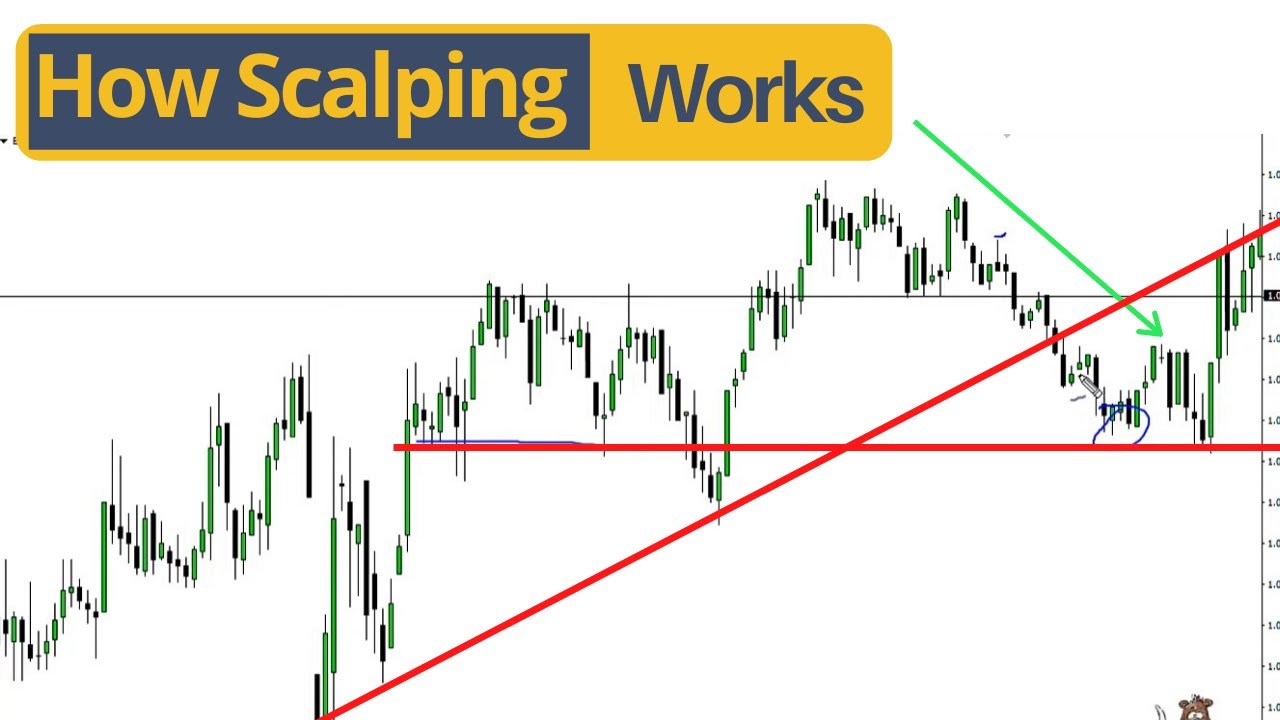
If you’re familiar with forex dealing, you’ve also come across the word scalping. It is also known as scalp dealing. It’s a trading technique in which customers benefit from minor fluctuations in futures markets.
Functional analysis, such as the MACD, and candlestick tables, are primarily used in its implementation. This is now standard procedure for cryptocurrency traders.
The aim of this approach is to make money fast, but the issue that keeps coming up is how it works for cryptocurrencies like Bitcoin. We’ll go into the specifics of how crypto scalping operates and how you can use it to your benefit as a crypto trader.
How does scalping work?
Scalping has traditionally been shown to be a low-cost, short-term trading tactic that yields lower gains with less risk. Traders who use this technique do so by making a series of small trades easily. And as the trading day progresses, these small trades will add up to a significant amount of benefit, as in this minute scalping technique, where a trader must bring in all of his paces and focus for these small trades to come in, and this is why most veteran traders use electronic trading systems, which are built to assist traders in identifying and executing trades based on data obtained from various sources.
Traders that use this technique for cryptocurrencies can keep an eye on the values of a crypto pair, such as ETH/BTC or BTC/USD, and take advantage of market fluctuations to benefit from each small transaction. When rates rise, investors benefit from higher market volume because it adds value.
This helps you to open and close trades easily without having to keep them for an extended period of time. And as soon as the market reaches your target price, sell signs will appear, closing your positions for you while you walk away with a slight profit.
However, for the beginner on the market, it is more beneficial to use the 1-minute scalping strategy, which can be a little bit different from what the experienced traders are using. The method would still necessitate time and focus effort. If you are unable to devote at least a few hours per day to this FX approach, you should try using other, less time-consuming trading tactics.
The exchange and trading costs are two very critical factors to remember when implementing this approach. Since most trades charge a taker and a nominal creator fee on each deal, and you’ll be doing multiple minor trades in a row, you’ll need profit margins and risk resources to cover the fees you’ll incur for this approach.
Bonuses are often offered by trades that foster liquidity in order to reduce trading costs. These bonuses are often linked to an exchange-specific token that can be used to further mitigate costs, often up to a 50% discount.
Altcoin scalping vs Bitcoin scalping
Bitcoin is also the most stable of the dynamic community of cryptocurrencies when compared to other cryptocurrencies. This ensures the gains per exchange are smaller, but it’s still useful for scalping because theoretical research forecasts that BTC will stay steady during the trading session. As a result, the most popular method of scalp trading in the cryptocurrency industry is BTC scalping.
Altcoin, on the other hand, may have significant price variations. This is especially true if the coins are smaller and are not sponsored by a well-known business. A coin could be deleted from the list, so anything could go wrong, including the money you made from the trades. If the coin isn’t worth much, the cost of transaction fees can be greater than the profit you gain from trading.
Whatever crypto you want to test your scalping technique with, persistence and concentration are essential. It’s always a good idea to turn off your feelings at this stage to prevent being upset or giving up on your trade too soon if you don’t see profits within a few minutes.
What time is good for scalp trading with cryptos?
You’ll be able to tell whether the new business dynamics favour scalping or not until you know what to look out for. It’ll take some time and experience, but if you know what to look out for, you’ll be able to tell. When using the scalping technique, crypto investors are always on the lookout for three key business variables.
Relative Strength Index (RSI)
This is a tool that is measured based on recent market shifts. The relative Strength Index (RSI) determines if a commodity, such as Altcoin, is oversold or overbought and displays the results as a line graph. It could represent a number between 0 and 100. A Relative Strength Index of 70 or higher sometimes indicates that an asset is oversold or overbought, signalling a reasonable time to sell. When it is 30 or lower, the same is true: the stock is undervalued and primed for a price rise, signalling a reasonable time for a seller to buy.
Support and Resistance Levels
If an asset’s price rises or falls, its support and resistance ratios can change. As a result of this transition, an asset may experience a downward trend and a concentration of demand, or it may experience a rise in demand as prices decline.
The Moving Average
Investors use this to predict where an instrument’s price will go in the future by using historical data to predict what will sell. Some traders use charts to manually watch these metrics, but automation tools will help you interpret the same data quicker.
Scalping allows a dealer to make a lot of small gains from a large number of small transactions that accumulate easily, proving that “a little goes a long way.” Traders should be aware of the fees associated with such transactions, as the value provided can be less than the fee paid. However, much like anything else, a trader must put in time and effort to become an expert, particularly in a market as competitive as crypto trading.
Economy
Nigerian Stocks Close 1.13% Higher to Remain in Bulls’ Territory
By Dipo Olowookere
The local stock market firmed up by 1.13 per cent on Friday as appetite for Nigerian stocks remained strong.
Investors reacted well to the 2026 budget presentation of President Bola Tinubu to the National Assembly yesterday, especially because of the more realistic crude oil benchmark of $64 per barrel compared with the ambitious $75 per barrel for 2025. This year, prices have been between $60 and $65 per barrel.
Business Post observed profit-taking in the commodity and energy sectors as they respectively shed 0.14 per cent and 0.03 per cent.
But, bargain-hunting in the others sustained the positive run, with the consumer goods index up by 3.82 per cent.
Further, the industrial goods space appreciated by 1.46 per cent, the banking counter improved by 0.08 per cent, and the insurance industry gained 0.04 per cent.
As a result, the All-Share Index (ASI) increased by 1,694.33 points to 152,057.38 points from 150,363.05 points and the market capitalisation chalked up N1.080 trillion to finish at N96.937 trillion compared with Thursday’s closing value of N95.857 trillion.
A total of 34 shares ended on the advancers’ chart, while 24 were on the laggards’ log, representing a positive market breadth index and bullish investor sentiment.
Austin Laz gained 10.00 per cent to close at N2.42, Union Dicon also jumped 10.00 per cent to N6.60, Tantalizers increased by 9.80 per cent to N2.69, Aluminium Extrusion improved by 9.78 per cent to N12.35, and Champion Breweries grew by 9.71 per cent to N16.95.
Conversely, Sovereign Trust Insurance dipped by 7.42 per cent to N3.87, Royal Exchange lost 6.84 per cent to trade at N1.77, Omatek slipped by 6.84 per cent to N1.09, Eunisell depreciated by 5.88 per cent to N80.00, and Eterna dropped 5.63 per cent to close at N28.50.
Yesterday, traders transacted 1.5 billion units worth N21.8 billion in 25,667 deals compared with the 839.8 million units sold for N32.8 billion in 23,211 deals in the preceding session, showing a surge in the trading volume by 76.61 per cent, an uptick in the number of deals by 10.58 per cent, and a shrink in the trading value by 33.54 per cent.
Economy
FrieslandCampina, Two Others Erase N26bn from NASD OTC Bourse
By Adedapo Adesanya
Three stocks stretched the bearish run of the NASD Over-the-Counter (OTC) Securities Exchange by 1.21 per cent on Friday, December 19, with the market capitalisation giving up N26.01 billion to close at N2.121 billion compared with the N2.147 trillion it ended a day earlier, and the NASD Unlisted Security Index (NSI) dropping 43.47 points to 3,546.41 points from 3,589.88 points.
The trio of FrieslandCampina Wamco Nigeria Plc, Central Securities Clearing System (CSCS) Plc, and NASD Plc overpowered the gains printed by four other securities.
FrieslandCampina Wamco Nigeria Plc lost N6.00 to sell at N54.00 per unit versus N60.00 per unit, NASD Plc shrank by N3.50 to N58.50 per share from N55.00 per share, and CSCS Plc depleted by N2.91 to N33.87 per unit from N36.78 per unit.
On the flip side, Air Liquide Plc gained N1.01 to close at N13.00 per share versus N11.99 per share, Golden Capital Plc appreciated by 70 Kobo to N7.68 per unit from N6.98 per unit, Geo-Fluids Plc added 39 Kobo to sell at N5.50 per share versus N5.11 per share, and IPWA Plc rose by 8 Kobo to 85 Kobo per unit from 77 Kobo per unit.
During the trading day, market participants traded 1.9 million securities versus the previous day’s 30.5 million securities showing a decline of 49.3 per cent. The value of trades went down by 64.3 per cent to N80.3 million from N225.1 million, but the number of deals jumped by 32.1 per cent to 37 deals from 28 deals.
Infrastructure Credit Guarantee Company (InfraCredit) Plc finished the session as the most active stock by value on a year-to-date basis with 5.8 billion units valued at N16.4 billion, followed by Okitipupa Plc with 178.9 million units transacted for N9.5 billion, and MRS Oil Plc with 36.1 million units traded for N4.9 billion.
The most active stock by volume on a year-to-date basis was still InfraCredit Plc with 5.8 billion units worth N16.4 billion, trailed by Industrial and General Insurance (IGI) Plc with 1.2 billion units sold for N420.7 million, and Impresit Bakolori Plc with 536.9 million units traded for N524.9 million.
Economy
Naira Crashes to N1,464/$1 at Official Market, N1,485/$1 at Black Market
By Adedapo Adesanya
It was not a good day for the Nigerian Naira at the two major foreign exchange (FX) market on Friday as it suffered a heavy loss against the United States Dollar at the close of transactions.
In the black market segment, the Naira weakened against its American counterpart yesterday by N10 to quote at N1,485/$1, in contrast to the N1,475/$1 it was traded a day earlier, and at the GTBank forex counter, it depreciated by N2 to settle at N1,467/$1 versus Thursday’s closing price of N1,465/$1.
In the Nigerian Autonomous Foreign Exchange Market (NAFEX) window, which is also the official market, the nation’s legal tender crashed against the greenback by N6.65 or 0.46 per cent to close at N1,464.49/$1 compared with the preceding session’s rate of N1,457.84/$1.
In the same vein, the local currency tumbled against the Euro in the spot market by N2.25 to sell for N1,714.63/€1 compared with the previous day’s N1,712.38/€1, but appreciated against the Pound Sterling by 73 Kobo to finish at N1,957.30/£1 compared with the N1,958.03/£1 it was traded in the preceding session.
The market continues to face seasonal pressure even as the Central Bank of Nigeria (CBN) is still conducting FX intervention sales, which have significantly reduced but not remove pressure from the Naira. Also, there seems to be reduced supply from exporters, foreign portfolio investors and non-bank corporate inflows.
President Bola Tinubu on Friday presented the government’s N58.47 trillion budget plan aimed at consolidating economic reforms and boosting growth.
The budget is based on a projected crude oil price of $64.85 a barrel and includes a target oil output of 1.84 million barrels a day. It also projects an exchange rate of N1,400 to the Dollar.
President Tinubu said inflation had plunged to an annual rate of 14.45 per cent in November from 24.23 per cent in March, while foreign reserves had surged to a seven-year high of $47 billion.
Meanwhile, the cryptocurrency market was dominated by the bulls but it continues to face increased pressure after million in liquidations in previous session over accelerating declines, with Dogecoin (DOGE) recovering 4.2 per cent to trade at $0.1309.
Further, Ripple (XRP) appreciated by 3.9 per cent to $1.90, Cardano (ADA) rose by 3.5 per cent to $0.3728, Solana (SOL) jumped by 3.4 per cent to $126.23, Ethereum (ETH) climbed by 2.9 per cent to $2,982.42, Binance Coin (BNB) gained 2.0 per cent to sell for $853.06, Bitcoin (BTC) improved by 1.7 per cent to $88,281.21, and Litecoin (LTC) soared by 1.2 per cent to $76.50, while the US Dollar Tether (USDT) and the US Dollar Coin (USDC) traded flat at $1.00 each.
-
Feature/OPED6 years agoDavos was Different this year
-
Travel/Tourism9 years ago
Lagos Seals Western Lodge Hotel In Ikorodu
-
Showbiz3 years agoEstranged Lover Releases Videos of Empress Njamah Bathing
-
Banking7 years agoSort Codes of GTBank Branches in Nigeria
-
Economy3 years agoSubsidy Removal: CNG at N130 Per Litre Cheaper Than Petrol—IPMAN
-
Banking3 years agoFirst Bank Announces Planned Downtime
-
Banking3 years agoSort Codes of UBA Branches in Nigeria
-
Sports3 years agoHighest Paid Nigerian Footballer – How Much Do Nigerian Footballers Earn