Connect with us

Economy

Relationship between PayPal, Central Banks and Cryptocurrencies?

Published

on

Cryptocurrencies

Cryptocurrencies’ mainstream popularity has generally been restricted as a trading tool by its poor use owing to volatility, costs and transaction speed.

The possibility of improved technology platforms, nevertheless, allows digital currencies to be integrated. One in 10 financial institutions representing over one-fifth of the world population – expects to issue its own numerical currencies over the next three years, according to a poll carried out by the Bank for International Settlements.

“The change to virtual currencies is imminent with clear benefits in respect of monetary inclusiveness and access; the financial system’s effectiveness, speed and resilience; and the capacity to transfer public money swiftly for governments,” says Dan Schulman, President, and CEO, PayPal.

“We have the chance and the obligation to assist us to comprehend, re-deem, and inter-operable these new exchange instruments on a worldwide basis and via the aid of digital transactions, the dual side network, and stringent compliance and security checks. We are committed to working with central banks and authorities worldwide to help us.”

In order to pay for 26 million PayPal businesses worldwide, PayPal clients may utilize their bitcoin investments as a financial resource. With value certainties and no further charges, customers may immediately change their preferred cryptocurrency balance to fiat currency.

There is no additional integration or cost for PayPal dealers as all transactions are processed at the current PayPal rate using fiat currencies.

Cryptocurrency simply becomes another form of financing within the PayPal digital wallet by giving greater benefit to bitcoin holders and solving past volatility, costs, and speed issues related to cryptocurrency transactions.

The cryptocurrency and Paypal

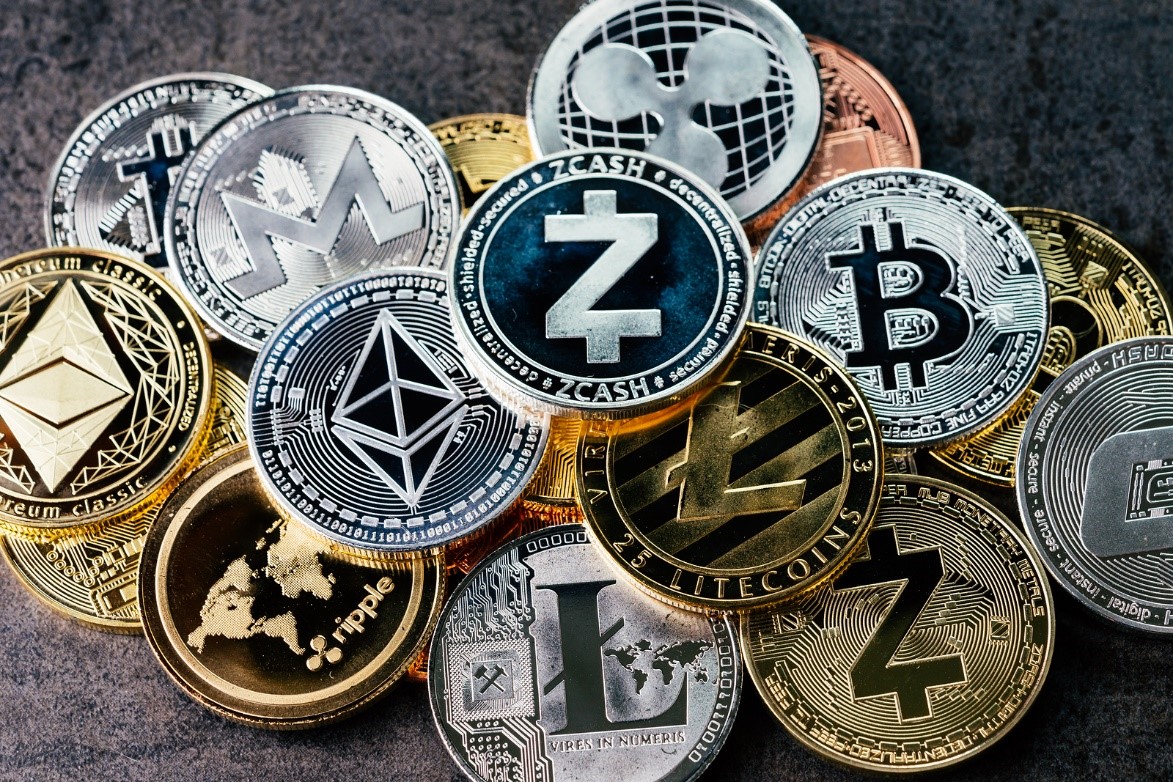
In 2020, the digital payment corporation pushed into crypto and the system now enables people in the United States to purchase, market, hold and check out using cryptos, such as Bitcoin, Ethereum, Bitcoin Cash, and Litecoin.

Venmo, which is the wallet owned by PayPal, can also purchase and sell cryptocurrency for consumers. You may start by investing as little as $1 and do not need to register a specific cryptocurrency account.

It should be said that one of the biggest industries which adopt cryptocurrencies is the Forex market, which is the world’s largest and the most liquid market.

So, it goes without saying that traders who are involved in FX trading can use PayPal as a payment method. For these reasons, many investors are searching for Forex brokers that accept PayPal in order to deposit their accounts with digital currency. Hence, both PayPal and FX brokers are in a win-win situation and can get benefits from their customers.

Normally, you have two items to make this company legitimate when you buy bitcoin: a public and an encrypted data combination. Your wallet is the public key, and you administer the wallet with your individual and secured key.

You can access your public address with PayPal, but the firm monitors your secret key.

The company says in the “Crypto on PayPal FAQ” section of the program, “that it is not possible to move cryptography to other PayPal on or off your accounts. It is a constraint that seems strange since it should be the security you possess.

It is like depositing US$ with Bank of America. You trust the Bank of America has your bank accounts with U.S. money and they give you an IOU.

This makes it impossible for users to move their bitcoin to cold storage or to transfer money to a bank account outside of the Paypal platform.

Paypal and Central Bank

PayPal might be the equivalent of private banks to central bank digital currency (CBDC). During the company’s investor day on Thursday, CEO Dan Schulman sketched out a vision for PayPal’s digital wallets to be the vehicle through which central banks distributed CBDCs to customers of all income levels.

This is a once-in-a-decade opportunity to reshape the system’s core rails, and we have the potential to help design it. The firm also revealed additional data on the transaction activity of its clients who utilize its cryptocurrency products.

Individuals that utilize PayPal’s cryptocurrency services have a 12% boost in week-based transactions on the site. This really is due, in addition, to the fact that more than 40% of PayPal consumers in the United States who do use cryptocurrency returning to perform more than two further transactions, according to the PayPal company.

How are investors allowed to get cryptocurrencies through Paypal?

PayPal makes it simple for you to join the cryptocurrency global marketplace. You may transact in minutes and use the proceeds in your own Personal PayPal Cash or PayPal Cash Plus accounts to finance transactions and pay for goods. At the moment, Business Accounts are not accessible.

Crypto, an abbreviation for Cryptocurrency, is a decentralized cryptocurrency that you can purchase, sell, and store safely in your PayPal account.

Digital currency values will increase and fall – perhaps dramatically. Before engaging with Cryptocurrencies, it is essential that you conduct research and examine all actions (buy/sell/hold).

You may buy cryptocurrency fractions for only $1. You are allowed to determine how much you’d like to be involved.

The Crypto check-out enables clients to PayPal for the sale of their crypto-currencies and then to complete the real US dollar transactions.

For companies that don’t actually make any difference in USD, not a cryptocurrency, they are still compensated. The PayPal functionality, however, makes it easy for the consumers to make their purchases easily utilizing cryptocurrencies in the same checkout procedure.

If the client has sufficient cryptocurrencies to settle for its financial exchange then, amongst other regular payment options, such as the client’s bank account, PayPal balance, or credit and debit card, the Crypto Check-out function will emerge. Check-out on Crypto will also feature security features such as fraud, returns, and purchase protection for approved products PayPal says, as are the other payment options, the company says.


Dipo Olowookere is a journalist based in Nigeria that has passion for reporting business news stories. At his leisure time, he watches football and supports 3SC of Ibadan. Mr Olowookere can be reached via [email protected]

Advertisement
Click to comment

Leave a Reply

Your email address will not be published. Required fields are marked *

Economy

Nigerian Stocks Further Lose 0.38% as Cautious Trading Persists

Published

on

exposure to Nigerian stocks

By Dipo Olowookere

The absence of a positive trigger left Nigerian stocks 0.38 per cent deeper in the bears’ territory on Friday, as investors embarked on cautious trading.

Two of the five major sectors tracked by Business Post finished in red on the last trading session of this week, with the industrial goods down by 2.44 per cent, and the energy down by 0.26 per cent due to profit-taking.

However, bargain-hunting raised the insurance sector by 1.52 per cent, the banking index increased by 0.79 per cent, and the consumer goods sector expanded by 0.28 per cent.

When the closing gong was struck yesterday, the All-Share Index (ASI) of the Nigerian Exchange (NGX) Limited crashed by 741.04 points to 192,826.77 points from 193,567.81 points, and the market capitalisation lost N476 billion to close at N123.763 trillion compared with the previous day’s N124.239 trillion.

According to data from Customs Street, Mecure gave up 9.97 per cent to trade at N75.85, Meyer depreciated by 9.90 per cent to N18.65, DAAR Communications crumbled by 9.83 per cent to N2.11, Champion Breweries staggered by 6.49 per cent to N18.00, and Dangote Cement crashed by 6.09 per cent to N779.00.

Conversely, Sovereign Trust Insurance gained 9.95 per cent to settle at N2.21, RT Briscoe improved by 9.93 per cent to N12.51, NGX Group expanded by 9.78 per cent to N124.00, Ellah Lakes surged by 9.70 per cent to N13.00, and Omatek chalked up 9.70 per cent to sell for N2.60.

A total of 44 shares finished on the gainers’ chart during the session, while 25 shares ended on the losers’ table, representing a positive market breadth index and strong investor sentiment.

The activity chart showed that 823.8 million stocks valued at N34.8 billion exchanged hands in 63,759 deals during the session versus the 868.5 million stocks worth N31.5 billion traded in 69,310 deals on Thursday.

This indicated that the value of transactions increased by 10.48 per cent, the volume of trades declined by 5.15 per cent, and the number of deals dipped by 8.01 per cent.

The busiest equity on Friday was Fortis Global Insurance, which sold 146.6 million units for N137.3 million, Zenith Bank transacted 79.4 million units valued at N7.1 billion, Japaul exchanged 57.2 million units worth N225.1 million, Jaiz Bank traded 49.5 million units valued at N589.3 million, and Access Holdings exchanged 44.8 million units worth N1.2 billion.

Continue Reading

Economy

Nigeria’s Economy Expands 4.07% in Q4 2025

Published

on

4.03% GDP Growth

By Adedapo Adesanya

Nigeria’s economy, measured by gross domestic product (GDP), grew by 4.07 per cent (year-on-year) in real terms in the fourth quarter (Q4) of 2025. 

The National Bureau of Statistics (NBS) announced the development in its latest GDP report for Q4 2025 on Friday. 

The latest figure represents an improvement over the 3.76 per cent growth recorded in the corresponding period of 2024, signalling sustained recovery across key sectors of the economy. The growth rate was faster than the third quarter’s 3.98 per cent.

The report confirmed that Nigeria’s oil sector grew 6.79 per cent year-on-year and the non-oil part of the economy expanded by 3.99 per cent.

Nigeria’s average daily oil production stood at 1.58 million barrels per day in the final three months of 2025. That was lower than the third quarter’s output of 1.64 million barrels per day but higher than the 1.54 million barrels per day in the fourth quarter of 2024.

‎Breakdown of the data showed that the agriculture sector grew by 4.00 per cent in the fourth quarter of 2025. This marks a significant increase compared to the 2.54 per cent growth recorded in the same quarter of 2024, reflecting improved output and resilience in the sector.

‎The industry sector also recorded a stronger performance during the period under review. It grew by 3.88 per cent year-on-year, up from 2.49 per cent posted in the fourth quarter of 2024. The improvement suggests enhanced activity in manufacturing, construction, and related industrial sub-sectors.

‎The services sector maintained its position as a major growth driver, expanding by 4.15 per cent in Q4 2025. However, this was slightly lower than the 4.75 per cent growth recorded in the corresponding quarter of the previous year.

‎Overall, the 4.07 per cent GDP growth in the final quarter of 2025 underscores broad-based expansion across agriculture, industry, and services, despite a marginal moderation in services growth.

‎The Q4 performance provides further evidence of strengthening economic momentum, with improvements recorded in both agriculture and industry compared to the previous year.

Continue Reading

Economy

Flour Mills Supports 2026 Paris International Agricultural Show

Published

on

flour mills PIAS 2026

By Modupe Gbadeyanka

For the second time, Flour Mills of Nigeria Plc is sponsoring the Paris International Agricultural Show (PIAS) as part of its strategies to fortify its ties with France.

The 2026 PIAS kicked off on February 21 and will end on March 1, with about 607,503 visitors, nearly 4,000 animals, and over 1,000 exhibitors in attendance last year, and this year’s programme has already shown signs of being bigger and better.

The theme for this year’s event is Generations Solution. It is to foster knowledge transfer from younger generations and structure processes through which knowledge can be harnessed to drive technological advancement within the global agricultural sector.

In his address on the inaugural day of the Nigerian Pavilion on February 23, the Managing Director for FMN Agro and Director of Strategic Engagement/Stakeholder Relations, Mr Sadiq Usman, said, “At FMN, our mission is Feeding and Enriching Lives Every Day.

“This is a mandate we have fulfilled through decades of economic shifts, rooted in a culture of deep resilience and constant innovation. We support this pavilion because FMN recognises that the next frontier of global Agribusiness lies in high-level technical exchange.

“We thank the France-Nigeria Business Council (FNBC), the organisers of the PIAS, and our fellow members of the Nigerian Pavilion – Dangote, BUA, Zenith, Access, and our partners at Creativo El Matador and Soilless Farm Lab— we are exceedingly pleased to work to showcase the true face of Nigerian commerce.”

Speaking on the invaluable nature of the relationship between Nigeria and France, and the FMN’s commitment to process and product innovation, Mr John G. Coumantaros, stated, “The France – Nigeria relationship is a valuable partnership built on a shared value agenda that fosters remarkable Intercontinental trade growth.

“Also, as an organisation with over six decades of transformational footprint in Nigeria and progressively across the African Continent, FMN has been unwaveringly committed to product and process innovation.

“Therefore, our continuous partnership with France for the success of the Paris International Agricultural Show further buttresses the thriving relationship between both countries.”

PIAS is one of the most widely attended agricultural shows, with thousands of people from across the world in attendance.

Continue Reading

Trending