Health
Alpha Mead to Launch Modular Healthcare Facility in Lagos
By Modupe Gbadeyanka
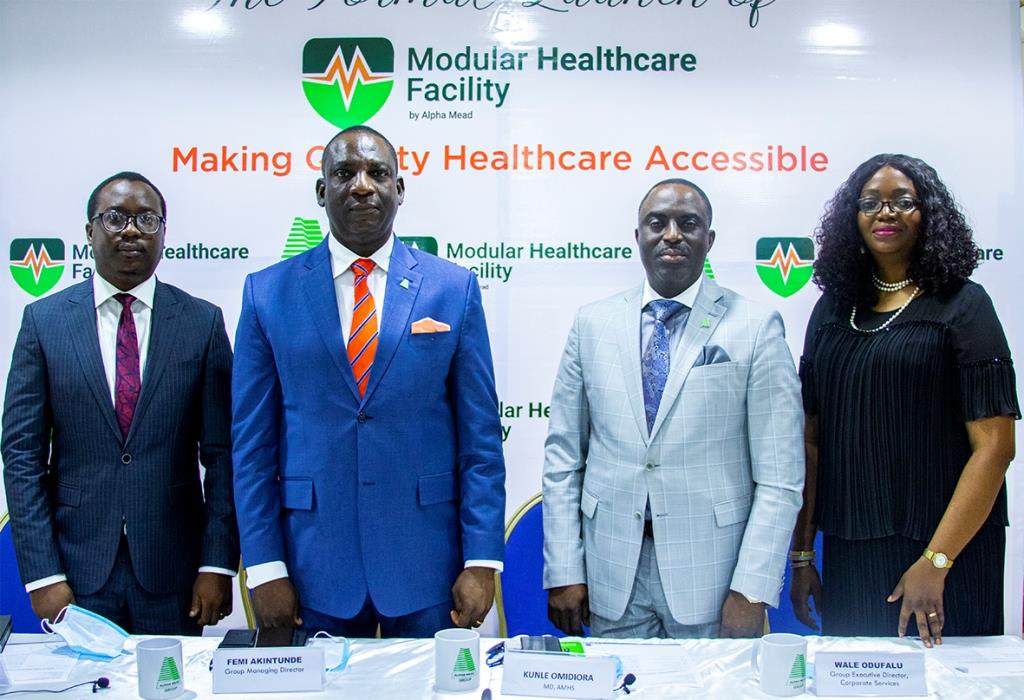
A state-of-the-art Modular Healthcare Facility (MHF) will on Wednesday, June 23, 2021, be launched at the Gbagada General Hospital, Gbagada, Lagos.
The facility was put in place by Alpha Mead Healthcare Management Services, a subsidiary of the Alpha Mead Group, to accelerate access to quality healthcare for all Nigerians.
Explaining further, the Group Managing Director of Alpha Mead Group, Mr Femi Akintunde, “The MHF is a customised, mobility-enhanced, prefabricated portacabin with detachable modules equipped with state-of-the-art clinical and diagnostic equipment that is designed to take quality healthcare services to the doorstep of all Nigerians.”
He further disclosed that after a successful pilot of the company’s foray into healthcare at Gbagada General Hospital, and Lagos University Teaching (LUTH), the need to make quality healthcare accessible to more Nigeria became even more pressing.
“So, we went back to the drawing board. We noted that some of the issues slowing down the government and private sector programmes in making healthcare accessible for all are; how long it takes to set up a healthcare facility, inadequate amount of healthcare workers, lack of the required equipment and sometimes; even the terrain or location where these healthcare facilities will be constructed,” Mr Akintunde informed newsmen at a parley on Wednesday, June 16.
“To address these issues, we came up with the Modular Healthcare Facility (MHF). The whole idea of the MHF is to aggressively drive the penetration of healthcare facilities in Nigeria by reducing the construction timeline of a healthcare facility to less than 30 days – saving the time lost to design, construction, equipment installation and commissioning of regular brick and mortar healthcare facilities, which sometimes run into years,” the engineer further said.
He noted that to address the issue of inadequate medical practitioners, particularly doctors in the rural areas or crisis zones, the MHF was designed to leverage technology to connect patients with medical doctors anywhere through its telemedicine facilities.
According to him, the MHF provides the right healthcare equipment that meets the minimum standard for each class of the healthcare segment – primary, secondary and tertiary and reduces the dependency of the healthcare facility on public utility by running on efficient and clean utility systems such as solar power, bio-digester sewage system, etc.
In his presentation, Mr Kunle Omidiora, Managing Director, Alpha Mead Healthcare & Management Services (AMHS), the subsidiary of Alpha Mead promoting the MHF said the product is coming to bridge the widening gap in access to quality healthcare in Nigeria.
“From whatever lens one chooses to view the challenges with the healthcare sector in Nigeria today; whether financial, personnel, equipment, systems or technologies; the biggest challenge with Nigeria’s healthcare sector is that of access to quality healthcare,” he said.
“This challenge is costing our nation a great deal. For example, a USAID report noted that Nigeria shoulders up to 10% of the global disease burden.
“The report noted further that this situation is caused by lack of access to quality healthcare facilities and workers, particularly in the rural areas,” Mr Omidiora stated.
He further noted that the challenge can be further put in context when squared against 2019 data from Nigeria Health Facility Register (NHFR).
“According to the report, Nigeria has 40,345 registered hospitals and clinics to serve the 201 million population. This simply implies that one healthcare facility is responsible for an estimated five million Nigerians”, Mr Omidiora explained.
“The problem is even more compounded with data from WHO report revealing that only a quarter of Nigeria’s primary healthcare facilities have more than 25% of the minimum equipment package. One, therefore, does not need to wonder why Nigeria loses over 1 billion dollars to medical tourism, has one of the world highest infant mortality rates, and why prevalence of medical errors in Nigeria is on the rise”.
He explained that this huge gap is what the MHF intends to bridge; noting that the MHF is equipped with Radiology Information System, Picture Archiving Communication System (RISPACS), Enterprise Electronic Medical Records (EMR) and Telehealth infrastructure for real-time reporting of investigation and remote consultation.
Health
Nigeria Launches First National Antimicrobial Resistance Survey
By Adedapo Adesanya
Nigeria has launched its first nationally representative survey on antimicrobial resistance to generate critical data to guide evidence-based policies, improve patient outcomes, and strengthen health system resilience.
Antimicrobial resistance occurs when bacteria, viruses, fungi, and parasites evolve to resist treatment, making infections harder to cure.
As a result, surveillance is essential to track resistance patterns, identify priority pathogens, and guide targeted interventions and with support from the World Health Organization (WHO) and other partners, the initiative marks a milestone in the country’s public health response.
Nigeria becomes the third country globally to partner with WHO on a national antimicrobial resistance survey. having been selected based on the country’s strong commitment to AMR surveillance, its updated WHO Nigeria NAP 2.0, and readiness to expand laboratory and data systems.
Africa’s most populous country ranks 20th globally for age-standardized mortality due to antimicrobial resistance . In 2019, an estimated 263,400 deaths in Nigeria were linked to it—more than the combined deaths from enteric infections, tuberculosis, respiratory infections, maternal and neonatal disorders, neglected tropical diseases, malaria, and cardiovascular diseases.
Globally, resistant infections in tertiary care settings cost between $2,371 and $29,289 per patient episode, extend hospital stays by an average of 7.4 days, and increase mortality risk by 84 per cent.
The survey will see the establishment of a national baseline on antimicrobial resistance prevalence to monitor interventions, assess the distribution, burden (morbidity, mortality, DALYs, cost), and diversity of AMR across regions and populations, as well as contribute to the global target of reducing AMR deaths by 10 per cent by 2030, in line with the political declaration endorsed at the 79th United Nations General Assembly in 2024.
It also seeks to strengthen routine antimicrobial resistance surveillance, including diagnostics, sample referral systems, and laboratory capacity.
Using WHO’s standardized methodology, the survey will run for 12–15 months and cover 40–45 randomly selected health facilities nationwide. Patients with suspected bloodstream infections (BSIs) will be identified using standard case definitions, and blood samples will be analysed in quality-assured laboratories.
Data will be collected across all age groups, covering clinical, demographic, laboratory, financial, and outcome indicators. Follow-up will occur at discharge, 28 days, and three months post-infection. The survey will sample approximately 35,000 patients suspected of BSIs to obtain around 800 isolates of the most common pathogens.
Dr Tochi Okwor, Acting Head, Disease Prevention and Health Promotion, Nigeria Centre for Disease Control and Prevention (NCDC) said, “With WHO’s support, we are confident the survey will generate the evidence needed to protect public health.”
WHO Representative in Nigeria, Dr Pavel Ursu, reaffirmed WHO’s commitment stating that ,“Nigeria is taking a decisive step toward combating AMR with an approach grounded in data, science, and measurable impact. This survey will provide the clarity needed to drive smarter policies, stronger surveillance, and better patient outcomes. Nigeria is laying the foundations for a resilient health system, one that protects lives, strengthens trust, and ensures that essential medicines remain effective for future generations.”
Adding her input, Dr Laetitia Gahimbare, Technical Officer at WHO Regional Office for Africa, added:“Strengthening surveillance enhances Nigeria’s capacity to detect and respond to AMR threats, supporting better patient outcomes, reinforcing health security, and building a resilient system.”
Professor Babatunde Ogunbosi, Paediatric Infectious Diseases Specialist at University College Hospital, Ibadan, highlighted the broader impact:, “This survey is about more than data. It’s about building national capacity for research, diagnostics, and policy. It integrates science into public health decision-making.”
Health
Our Vision Extends Beyond Offering Health Insurance Packages—SUNU Health
By Modupe Gbadeyanka
One of the leading Health Maintenance Organisations (HMOs) in Nigeria, SUNU Health, has said its philosophy is proactive wellness, noting that this was why it recently partnered with The Divine Physician and St. Luke Catholic Chaplaincy Centre for a community health initiative.
The chief executive of the company, Dr Patrick Korie, said, “SUNU Health’s vision extends far beyond merely offering health packages and insurance.”
“We are fundamentally interested in proactive wellness—preventing illness rather than just treating it. This annual exercise is a crucial part of that commitment, and we will continue to champion it for as long as we exist,” he stressed.
The medical practitioner led the company’s annual Health Walk in Lagos on Saturday, November 8, 2025. The event drew hundreds of health enthusiasts, including the Chaplain of the centre, Rev Fr. John Okoria SJ.
His active participation reinforced the spiritual and moral commitment to holistic well-being, proving crucial in mobilizing staff and community members, thereby ensuring the vital wellness message reached a broad and deeply engaged audience.
The health walk covered several major streets in Lagos, starting from Ishaga Road and navigating through Itire Road, Randle Avenue, Akerele, Ogunlana Drive, and Workers Street before concluding back at the starting point. Following the vigorous walk, participants engaged in a session of high-energy aerobics and other outdoor exercises, reinforcing the day’s focus on fitness.
“We are delighted to champion this vital health initiative alongside the Catholic Chaplaincy Centre LUTH/CMUL. The turnout was truly delightful, reflecting the community’s deep desire to embrace wellness.
“Collaborations like this amplify our message and commitment to the Nigerian community,” the Brand and Corporate Communications Lead at SUNU Health, Mr Samuel Olayemi, stated.
Health
80 Coronation Registrars Staff Donate Blood in Lagos CSR Initiative
By Adedapo Adesanya
Coronation Registrars Limited, a subsidiary of Coronation Group, in partnership with the Lagos State Blood Transfusion Committee (LSBTC), recently hosted a Blood Drive Initiative at the 5th floor of Coronation Group Plaza. The event saw over 80 staff donate blood to support critical healthcare needs in Lagos State.
The Blood Drive Initiative forms part of Coronation’s commitment to meaningful, human-centred corporate social responsibility, a direct, measurable, and life-saving effort that reflects the Group’s health and sustainability values.
As Prosperity Partners dedicated to creating sustainable wealth for clients and the African continent, Coronation recognises that true prosperity extends beyond financial returns to encompass the well-being of communities we serve.
The company noted that this initiative enabled it to deliver immediate social impact by supporting national blood supply shortfalls through employee-driven action, demonstrate leadership in health-focused CSR aligned with ESG goals and SDG 3 (Good Health & Well-being), strengthen internal culture by fostering employee engagement, empathy, and purpose in a safe, structured environment, and reinforce corporate reputation through public-facing acts of service, stakeholder trust, and media visibility.
Blood donation remains a critical need in Nigeria, where regular blood supply is essential for emergency care, surgeries, and treatment of various medical conditions. Each donation can save up to three lives, and the collective effort of Coronation employees will significantly impact patients in need across Lagos State healthcare facilities.
“This aligns seamlessly with Coronation’s broader sustainability agenda, which views healthcare access as fundamental to building prosperous communities across Africa,” the company said in a statement on Tuesday.
Partnering with a certified medical institution, the drive was professionally managed, medically compliant, and logistically efficient. Participants underwent necessary medical screening procedures to ensure donor fitness and safety. Following their donations, donors received refreshments and appreciation for their life-saving contribution.
“At Coronation, we believe in making a meaningful difference in the communities we serve,” said Mr Oluseyi Owoturo, Chief Executive Officer of Coronation Registrars Limited. “This Blood donation Initiative reflects our values in action, saving lives, building community, and positioning the company as a purpose-driven brand. We’re proud of our employees who stepped forward to donate blood and save lives. This is what sustainable impact looks like: tangible solutions that address real challenges facing our continent.”
The partnership with the Lagos State Blood Transfusion Committee ensured professional handling of the donation process, meeting all safety and quality standards for blood collection and storage.
Coronation Registrars Limited says it continues to demonstrate that corporate success goes hand-in-hand with social responsibility.
“This initiative reinforces the company’s purpose to create a prosperous future for clients and the African continent through transformational solutions,” it added.
-
Feature/OPED6 years agoDavos was Different this year
-
Travel/Tourism9 years ago
Lagos Seals Western Lodge Hotel In Ikorodu
-
Showbiz3 years agoEstranged Lover Releases Videos of Empress Njamah Bathing
-
Banking7 years agoSort Codes of GTBank Branches in Nigeria
-
Economy3 years agoSubsidy Removal: CNG at N130 Per Litre Cheaper Than Petrol—IPMAN
-
Banking3 years agoFirst Bank Announces Planned Downtime
-
Banking3 years agoSort Codes of UBA Branches in Nigeria
-
Sports3 years agoHighest Paid Nigerian Footballer – How Much Do Nigerian Footballers Earn


1 Comment