Connect with us

Health

Kwara, Three Others to Receive ASR N10bn Health Intervention Fund

Published

on

ASR Africa Initiative

By Adedapo Adesanya

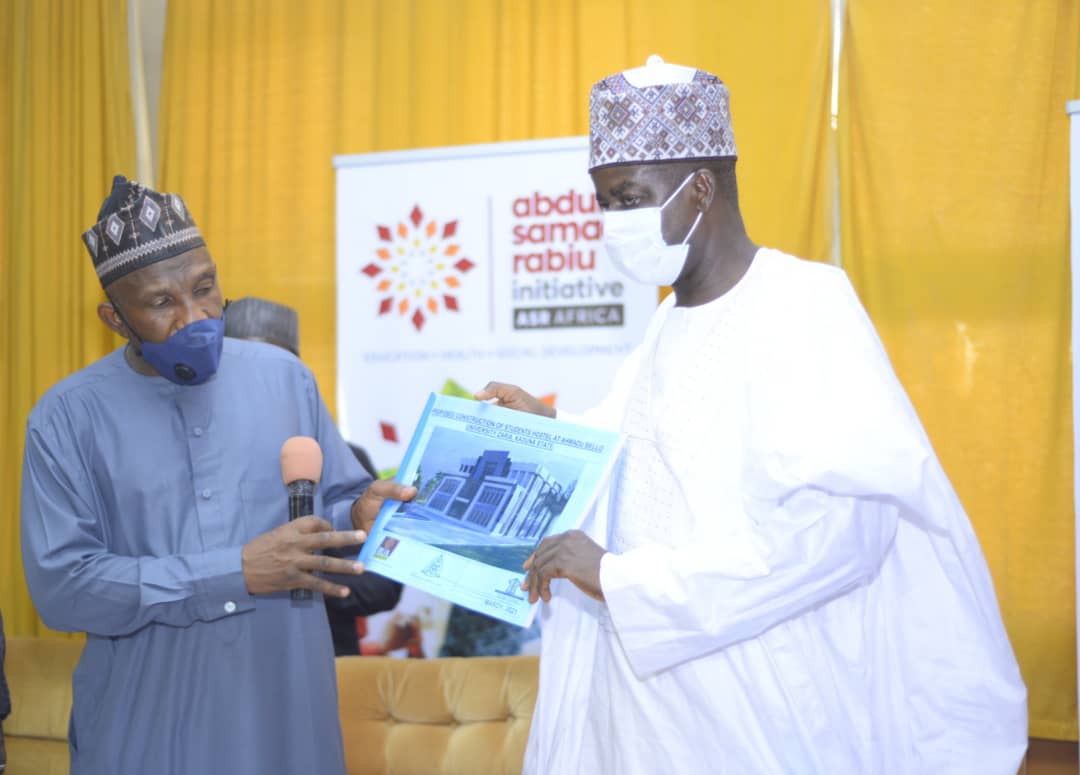
Four states in Nigeria – Kwara, Edo, Ogun and Sokoto have been selected as recipient states for the Abdul Samad Rabiu Africa Initiative (ASR Africa) N10 billion health intervention programmes for 2021.

This was disclosed by the Managing Director of the ASR Africa, Mr Ubon Udoh, in a statement in Ilorin, the capital of Kwara state on Tuesday, June 22.

He explained that the health intervention fund is a continuation of the initiative’s $100 million Africa Fund for social development within Nigeria and the African continent, which has identified and commenced implementation of development needs in healthcare, education and social development within the country and beyond.

“In addition to this and based on our subnational healthcare needs assessment, ASR Africa has now decided to commit N2.5 billion each to four states within Nigeria — Ogun, Kwara, Sokoto and Edo States.

“This expanded grant will be dedicated towards healthcare interventions from maternal and child health to health infrastructure, capacity development, amongst others.

“We will develop mutual accountability frameworks with the state implementation teams after which 50 per cent of the grant will be disbursed immediately to commence implementation of the projects earmarked. The remaining 50 per cent will be released in line with agreed delivery milestones,” Mr Udoh said.

Established this year, the Abdul Samad Rabiu Africa Initiative seeks to support sustainable development initiatives in the health, education, and social development within Nigeria and the rest of Africa, every year, the statement added.

Speaking on the selection of his administred state for the initiative, Governor AbdulRahman AbdulRazaq of Kwara State commended the ASR Africa Initiative for including the State of Harmony in the intervention, saying it would help to consolidate the administration’s investments and achievements in the health sector.

The Governor said; “We sincerely thank AbdulSamad Rabiu for this huge humanitarian gesture which is a continuation of his supports for the state over the years.

“The government, for the record, remains immensely grateful for the support it received from Alhaji Abdul Samad and the BUA Group in the teeth of the COVID-19 pandemic last year, and looks forward to enduring relationship with the conglomerate,” the Governor said.


Adedapo Adesanya is a journalist, polymath, and connoisseur of everything art. When he is not writing, he has his nose buried in one of the many books or articles he has bookmarked or simply listening to good music with a bottle of beer or wine. He supports the greatest club in the world, Manchester United F.C.

Click to comment

Leave a Reply

Your email address will not be published. Required fields are marked *

Health

Ebola: Nigeria May Restrict Flights From DR Congo, Uganda, South Sudan

Published

on

ebola dr congo

By Adedapo Adesanya

Nigeria is considering flight restrictions and tighter border surveillance to prevent Ebola outbreaks from spreading from the Democratic Republic of Congo (DRC), Uganda, and South Sudan into the country.

The move was discussed during a high-level strategic meeting held in Lagos on Thursday, where top government officials reviewed Nigeria’s Ebola preparedness and response framework amid growing concerns over outbreaks in parts of Africa.

Among those present at the meeting were Mr Jide Idris, Director-General of the Nigeria Centre for Disease Control and Prevention (NCDC); Mr Olubunmi Tunji-Ojo, Minister of Interior; Mr Femi Gbajabiamila, Chief of Staff to President Bola Tinubu; and Mr Akin Abayomi, Lagos State Commissioner for Health.

Speaking after the meeting, Mr Gbajabiamila said President Tinubu had been fully briefed on the situation in the affected countries and assured Nigerians that the federal government would take all necessary steps to prevent any outbreak in Nigeria.

“We have a health scare, which is Ebola, and we all know what happened the last time. The cases are getting worse, internationally and worldwide, and we don’t want to leave anything to chance,” Mr Gbajabiamila said.

He explained that several preventive measures were being considered by the government, including restricting flights from countries affected by the outbreak.

“There were three or four areas we looked at. We looked at the issue of the possibility, as of now, of restricting flights from countries of interest. We looked at the possibilities of isolating passengers who may exhibit symptoms of Ebola,” he said.

“We looked at the possibility of isolating or using the cargo terminal to deal with passengers that are coming in from those areas, and of course, putting certain things in place, protocols in place; we believe that prevention is better than cure, and where some passengers slip through the cracks, then we must have ways of dealing with situations such as that.”

On his part, Mr Tunji-Ojo said the government had already directed that all entry points into Nigeria be placed under strict surveillance.

According to him, the Nigeria Immigration Service (NIS) would collaborate closely with the NCDC to strengthen early detection and rapid response mechanisms.

The NCDC Director-General also disclosed that preparedness plans had been activated across the 36 states of the federation, while public awareness campaigns would be intensified to educate citizens on preventive measures and response protocols.

The renewed alert comes years after the devastating 2013–2016 Ebola outbreak in West Africa, regarded as the deadliest in history, which claimed more than 4,500 lives across the region.

Continue Reading

Health

Ebola: NCAA Directs Enhanced Surveillance Across Nigerian Airports

Published

on

ebola

By Adedapo Adesanya

The Nigeria Civil Aviation Authority (NCAA) has directed airlines, airport operators and other aviation stakeholders to intensify public health surveillance measures following the outbreak of Ebola Virus Disease (EVD) in parts of the Democratic Republic of Congo (DRC) and Uganda.

In a circular dated May 18, 2026, the NCAA said the directive became necessary due to growing concerns over the spread of the disease and the critical role of the aviation sector in preventing cross-border transmission.

The authority noted that although no confirmed case linked to the outbreak has been recorded in Nigeria, it is collaborating with the Federal Ministry of Health, the Nigeria Centre for Disease Control (NCDC), Port Health Services and international health organisations to closely monitor the situation.

According to the NCAA, health authorities in the DRC recently identified a cluster of severe illnesses among healthcare workers in the Bunia Health Zone in the northeastern part of the country.

Recall that Nigeria also said it would tighten surveillance after the World Health Organisation (WHO) declared a public health emergency after Ebola killed over 80 people in Congo and Uganda.

Laboratory investigations later confirmed the presence of the Bundibugyo virus, a strain of the Ebola virus family known to cause severe viral haemorrhagic disease in humans.

The authority stated that there is currently no licensed vaccine specifically approved for the Bundibugyo strain, while treatment remains largely supportive and symptom-based.

The NCAA listed symptoms associated with Ebola Virus Disease to include sudden fever, severe fatigue, persistent headache, vomiting, abdominal pain and bleeding manifestations such as nosebleeds or vomiting blood.

It stressed that early detection and immediate reporting remain critical to preventing the international spread of the disease.

As part of preventive measures, the authority said disease surveillance systems at airports have been strengthened, while contact tracing, case reporting mechanisms and border health screening procedures are also being reinforced.

The NCAA further directed pilots to notify Air Traffic Control of any suspected communicable disease cases onboard aircraft, in line with the Nigeria Civil Aviation Regulations.

It also instructed flight crew members to complete and submit Aircraft General Declaration forms for all suspected cases and mandated airlines to ensure passenger locator forms are completed and handed over to Port Health Services upon arrival.

The authority added that airlines must ensure aircraft are properly equipped with first aid kits, universal precaution kits and emergency medical kits.

It also urged operators to reinforce crew training on the identification and management of communicable diseases and ensure strict adherence to infection prevention and control guidelines.

The NCAA called on all aviation stakeholders to remain vigilant and comply fully with established public health protocols to safeguard passengers, crew members and the general public from potential health threats.

Continue Reading

Health

Nigeria on High Alert as WHO Declares Ebola Emergency of International Concern

Published

on

ebola dr congo

By Adedapo Adesanya

The Nigeria Centre for Disease Control and Prevention (NCDC) has said that although the country currently has no confirmed case of Ebola Virus Disease (EVD), it is, nevertheless, actively strengthening surveillance.

This comes as the World Health Organisation (WHO) declared the Ebola outbreak in Congo and Uganda a public health emergency of international concern, after 80 deaths were attributed to the disease.

The WHO, however, stopped short of declaring a pandemic, saying it did not meet the necessary criteria. The United Nations agency advised countries against closing borders or restricting trade.

Early symptoms include fever, muscle pain, fatigue, headache, and sore throat, and are followed by vomiting, diarrhoea, a rash, and bleeding.

In a statement by its Director General, Mr Jide Idris, on Sunday, the NCDC noted that it is also ramping up laboratory readiness, infection prevention, and public awareness efforts across the country.

He said the centre was closely monitoring the situation due to increasing regional movement across African countries and was working with relevant stakeholders, including the Port Health Services under the Federal Ministry of Health and Social Welfare, to strengthen preparedness within Nigeria’s public health system.

“NCDC is closely monitoring the situation and working with relevant stakeholders, including the Port Health Services, to ensure continued vigilance and preparedness within the public health system,” he stated.

The NCDC boss described Ebola virus disease as a severe viral illness transmitted through direct contact with the blood, bodily fluids, secretions, or contaminated materials of infected persons or animals.

He noted that the disease has an incubation period ranging from two to 21 days, while symptoms include fever, weakness, headache, muscle pain, sore throat, vomiting, diarrhoea, and, in severe cases, unexplained bleeding.

Recall that Nigeria gained international recognition for successfully containing an Ebola outbreak in 2014 after an infected traveller arrived in Lagos from Liberia.

Healthcare workers were advised to maintain a high index of suspicion for Ebola, especially in patients presenting symptoms compatible with the disease alongside relevant travel or exposure history.

Idris stressed the importance of strict adherence to infection prevention and control measures, including early identification and isolation of suspected cases, proper use of personal protective equipment, hand hygiene, and prompt reporting through established channels.

“NCDC will continue to monitor the situation closely and provide updates as necessary,” he added.

NCDC advised Nigerians to remain calm, maintain good hand hygiene, avoid misinformation, and report unusual illnesses promptly.

Continue Reading

Trending