Economy
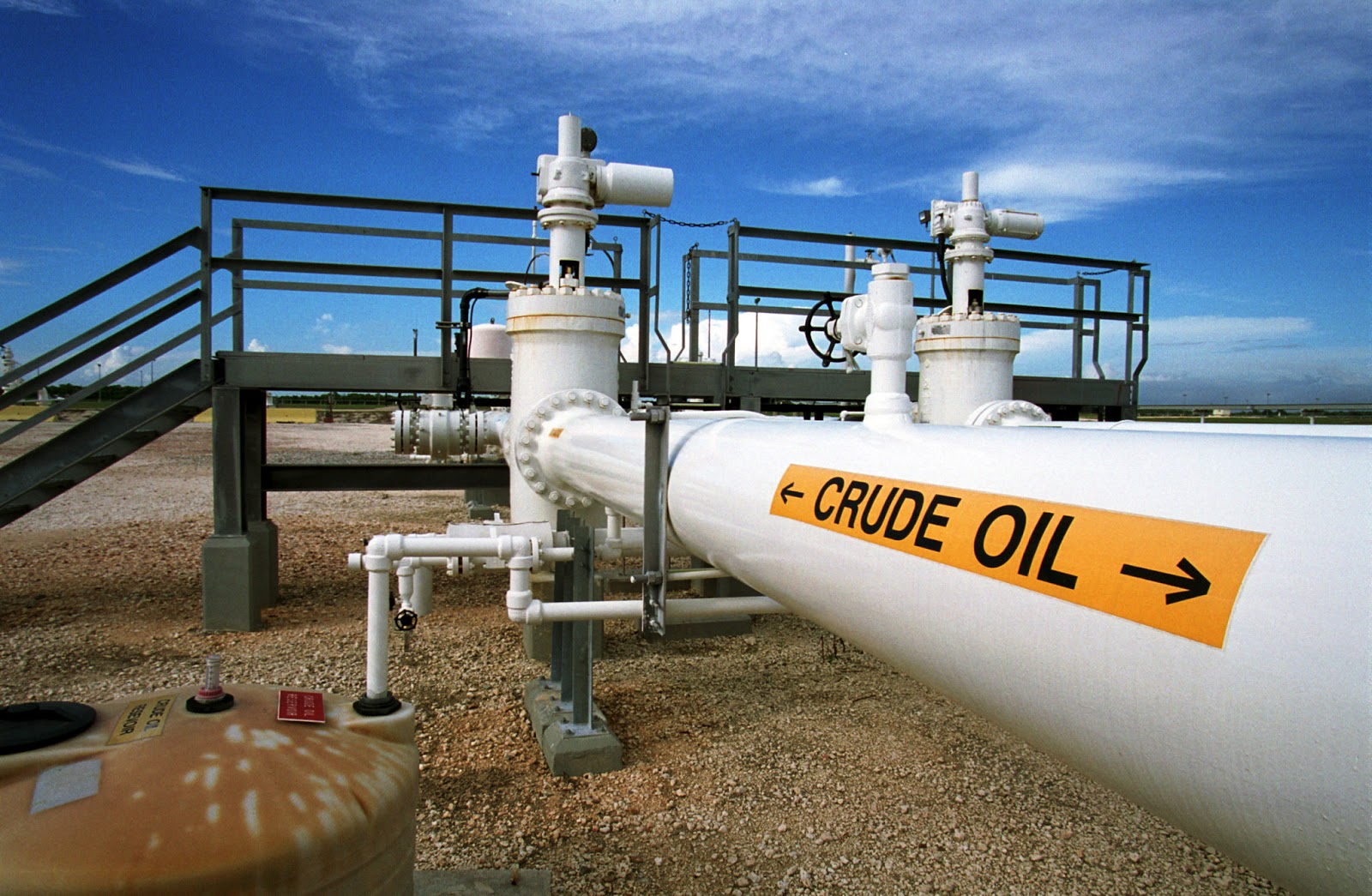
Crude Oil Prices Improve Amid Rising Stockpiles
By Adedapo Adesanya
Crude oil prices returned to the bullish territory on Tuesday as a surprise build in stockpiles held back traders who rushed to buy the commodity at lower prices.
The Brent crude rose by 20 cents or 0.43 per cent to close at $69.05, while the West Texas Intermediate recorded a growth of 29 cents or 0.43 per cent to sell at $66.91.
The American Petroleum Institute (API) on Tuesday reported a build in crude oil inventories of 806,000 barrels for the week ending July 16, bringing the total 2021 crude draw so far to a hair under 50 million barrels, using API data.
Analysts had expected a loss of 4.333 million barrels for the week.
In the previous week, the API reported a draw in oil inventories of 4.079 million barrels, largely in line with analyst predictions for a draw of 4.333 million barrels.
The price of both benchmarks had risen more than 50 per cent so far this year, but slipped more than 7 per cent on Monday as the Organisation of the Petroleum Exporting Countries and allies (OPEC+) agreed to ramp up production by 400,000 barrels per day.
Monday’s selloff, spurred by demand destruction fears amid rising COVID-19 cases, pushed oil about 7 per cent lower and hit other riskier assets.
Crude oil futures then rebounded on Tuesday as market participants vied to take advantage of oil’s two-month low touched in the previous session.
But the fear of higher inventories and fears that a surge in the Delta variant of the coronavirus threatens oil demand prospects still persist.
If confirmed by government figures from the Energy Information Administration (EIA) on Wednesday, a crude stockpile draw would end an eight-week streak of inventory declines.
The Delta variant of COVID-19 is now the dominant strain worldwide, accompanied by a surge of deaths around the world.
The US has warned citizens to not travel to the United Kingdom and Indonesia amid an increase in infections, and Singapore will tighten restrictions on dining-in and social gatherings.
Goldman Sachs Group said the variant may curb global oil demand by one million barrels a day for a couple of months, though that’s offset by a slow production ramp-up from OPEC+.
Economy
Oil Prices Climb on Geopolitical Anxiety
By Adedapo Adesanya
Oil prices rose about 2 per cent on Friday, with traders bracing for supply disruptions as nuclear talks between the United States and Iran were without an agreement.
Brent crude futures settled at $72.48 a barrel after chalking up $1.73 or 2.45 per cent, while US West Texas Intermediate crude futures finished at $67.02 a barrel, up $1.81 or 2.78 per cent.
The two sides agreed to extend indirect negotiations into next week, but traders grew sceptical that an agreement between US President Donald Trump’s administration and Iran was possible.
The US and Iran held indirect talks in Geneva on Thursday after Mr Trump ordered a military buildup in the region.
Oil prices gained during the talks, on media reports indicating that discussions had stalled over U.S. insistence on zero enrichment of uranium by Iran. However, prices eased after the mediator from Oman said the two sides had made progress.
They plan to resume negotiations with technical-level discussions scheduled next week in Vienna, Omani Foreign Minister Sayyid Badr Albusaidi said on X.
Market analysts noted that geopolitical risk premiums of $8 to $10 a barrel have been built into oil prices on fears that a conflict will disrupt Middle East supply through the Strait of Hormuz, where about 20 per cent of global oil supply passes.
To cushion the impact from a possible strike, one of the world’s largest oil producers, the United Arab Emirates (UAE), is set to export more of its flagship Murban crude in April, while Saudi Arabia said it would also increase oil production.
Additionally, Saudi Arabia may raise its April crude price to Asia for the first time in five months due to higher demand from India to replace Russian supplies, potentially raising it by about $1 a barrel.
Meanwhile, the Organisation of the Petroleum Exporting Countries and its allies (OPEC+) is likely to consider raising oil output by 137,000 barrels per day for April at its March 1 meeting, after suspending production increases in the first quarter.
The resumption of output increases after a three-month pause would allow Saudi Arabia and the UAE to regain market share at a time when other OPEC+ members, such as Russia and Iran, contend with Western sanctions while Kazakhstan recovers from a series of oil production setbacks.
Eight OPEC+ producers – Saudi Arabia, Russia, the United Arab Emirates, Kazakhstan, Kuwait, Iraq, Algeria and Oman will meet at the meeting on Sunday.
Economy
Nigerian Stocks Further Lose 0.38% as Cautious Trading Persists
By Dipo Olowookere
The absence of a positive trigger left Nigerian stocks 0.38 per cent deeper in the bears’ territory on Friday, as investors embarked on cautious trading.
Two of the five major sectors tracked by Business Post finished in red on the last trading session of this week, with the industrial goods down by 2.44 per cent, and the energy down by 0.26 per cent due to profit-taking.
However, bargain-hunting raised the insurance sector by 1.52 per cent, the banking index increased by 0.79 per cent, and the consumer goods sector expanded by 0.28 per cent.
When the closing gong was struck yesterday, the All-Share Index (ASI) of the Nigerian Exchange (NGX) Limited crashed by 741.04 points to 192,826.77 points from 193,567.81 points, and the market capitalisation lost N476 billion to close at N123.763 trillion compared with the previous day’s N124.239 trillion.
According to data from Customs Street, Mecure gave up 9.97 per cent to trade at N75.85, Meyer depreciated by 9.90 per cent to N18.65, DAAR Communications crumbled by 9.83 per cent to N2.11, Champion Breweries staggered by 6.49 per cent to N18.00, and Dangote Cement crashed by 6.09 per cent to N779.00.
Conversely, Sovereign Trust Insurance gained 9.95 per cent to settle at N2.21, RT Briscoe improved by 9.93 per cent to N12.51, NGX Group expanded by 9.78 per cent to N124.00, Ellah Lakes surged by 9.70 per cent to N13.00, and Omatek chalked up 9.70 per cent to sell for N2.60.
A total of 44 shares finished on the gainers’ chart during the session, while 25 shares ended on the losers’ table, representing a positive market breadth index and strong investor sentiment.
The activity chart showed that 823.8 million stocks valued at N34.8 billion exchanged hands in 63,759 deals during the session versus the 868.5 million stocks worth N31.5 billion traded in 69,310 deals on Thursday.
This indicated that the value of transactions increased by 10.48 per cent, the volume of trades declined by 5.15 per cent, and the number of deals dipped by 8.01 per cent.
The busiest equity on Friday was Fortis Global Insurance, which sold 146.6 million units for N137.3 million, Zenith Bank transacted 79.4 million units valued at N7.1 billion, Japaul exchanged 57.2 million units worth N225.1 million, Jaiz Bank traded 49.5 million units valued at N589.3 million, and Access Holdings exchanged 44.8 million units worth N1.2 billion.
Economy
Nigeria’s Economy Expands 4.07% in Q4 2025
By Adedapo Adesanya
Nigeria’s economy, measured by gross domestic product (GDP), grew by 4.07 per cent (year-on-year) in real terms in the fourth quarter (Q4) of 2025.
The National Bureau of Statistics (NBS) announced the development in its latest GDP report for Q4 2025 on Friday.
The latest figure represents an improvement over the 3.76 per cent growth recorded in the corresponding period of 2024, signalling sustained recovery across key sectors of the economy. The growth rate was faster than the third quarter’s 3.98 per cent.
The report confirmed that Nigeria’s oil sector grew 6.79 per cent year-on-year and the non-oil part of the economy expanded by 3.99 per cent.
Nigeria’s average daily oil production stood at 1.58 million barrels per day in the final three months of 2025. That was lower than the third quarter’s output of 1.64 million barrels per day but higher than the 1.54 million barrels per day in the fourth quarter of 2024.
Breakdown of the data showed that the agriculture sector grew by 4.00 per cent in the fourth quarter of 2025. This marks a significant increase compared to the 2.54 per cent growth recorded in the same quarter of 2024, reflecting improved output and resilience in the sector.
The industry sector also recorded a stronger performance during the period under review. It grew by 3.88 per cent year-on-year, up from 2.49 per cent posted in the fourth quarter of 2024. The improvement suggests enhanced activity in manufacturing, construction, and related industrial sub-sectors.
The services sector maintained its position as a major growth driver, expanding by 4.15 per cent in Q4 2025. However, this was slightly lower than the 4.75 per cent growth recorded in the corresponding quarter of the previous year.
Overall, the 4.07 per cent GDP growth in the final quarter of 2025 underscores broad-based expansion across agriculture, industry, and services, despite a marginal moderation in services growth.
The Q4 performance provides further evidence of strengthening economic momentum, with improvements recorded in both agriculture and industry compared to the previous year.
-
Feature/OPED6 years agoDavos was Different this year
-
Travel/Tourism10 years ago
Lagos Seals Western Lodge Hotel In Ikorodu
-
Showbiz3 years agoEstranged Lover Releases Videos of Empress Njamah Bathing
-
Banking8 years agoSort Codes of GTBank Branches in Nigeria
-
Economy3 years agoSubsidy Removal: CNG at N130 Per Litre Cheaper Than Petrol—IPMAN
-
Banking3 years agoSort Codes of UBA Branches in Nigeria
-
Banking3 years agoFirst Bank Announces Planned Downtime
-
Sports3 years agoHighest Paid Nigerian Footballer – How Much Do Nigerian Footballers Earn