Connect with us

Technology

Review: Oppo New Reno6 Series Smartphone

Published

on

Oppo Reno6 Series

By Ashemiriogwa Emmanuel

Oppo, one of the world’s leading smart device manufacturers and innovators in China, recently launched its new smartphone named Reno6 Series.

The latest Oppo smartphone, which debuted in China in May, is offered in three models – Oppo Reno 6 5G, Oppo Reno 6 Pro 5G, and Oppo Reno 6 Pro+ 5G  – but only the first two models have now been launched in Nigeria.

Reno6 Pro 5G and  Reno6 5G come as the newest innovation of the many products which the brand brings to its audience in more than 40 countries every year.

According to specifications observed, the new device features a large 6.55 inches AMOLED display with a resolution of 1080 x 2400 pixels, 90 Hz refresh rate, 20:9 aspect ratio, and 92.1 per cent screen-to-body ratio. This allows end-users to enjoy playing games or watching videos with superb quality visuals that are sharp and clear.

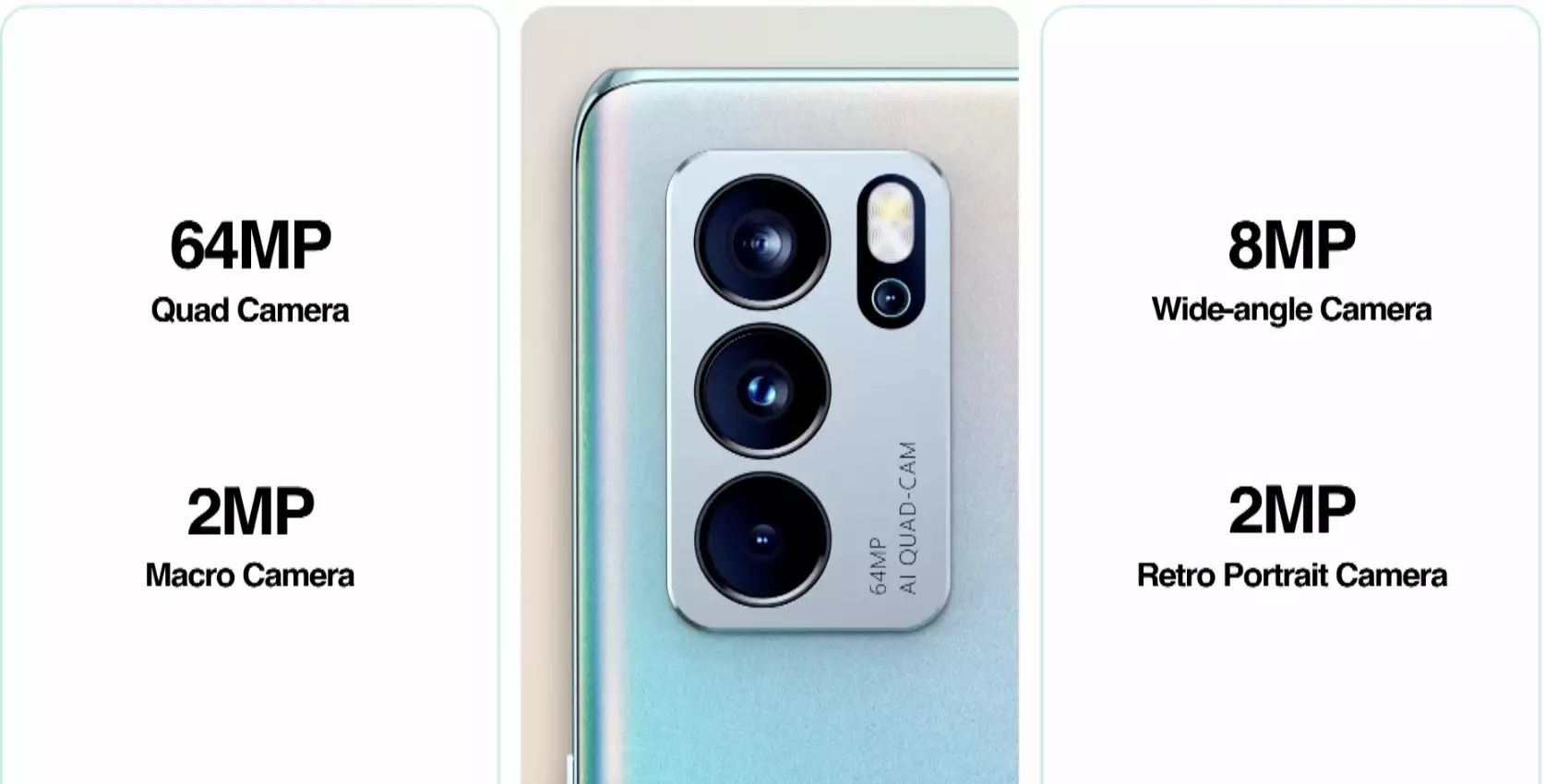
In terms of camera quality, the Reno6 5G features a 64 MegaPixel (MP) triple rear camera setup (64MP Main Camera +8MP Ultra-Wide-Angle Camera+ 2MP Macro Camera), while the Reno6 Pro 5G is designed with a 64MP quad rear camera setup (64MP Main Camera + 8MP Ultra-Wide-Angle Camera + 2MP Macro Camera +2MP Mono Camera).

While both devices boast of a 32MP selfie shooter, they both allow for professional DSLR-level portrait video shooting which most smartphone users look out for when choosing one to buy.

In addition to this, both series significantly features the AI Highlight Video specification that allows users to take high-quality portrait videos without having to worry about lighting conditions.

The new Oppo smartphone innovation also considered those who prioritize phone battery longevity. The battery life of the dual SIM Oppo Reno 6 Pro 5G houses a li-polymer 4500 mAh non-removable battery which supports fast charging.

The Reno 6 5G is paired with 8G of RAM and 128GB of storage, while the Reno 6 Pro 5G is paired with 12GB of RAM and 256GB of storage.

Comparing the latest flagship offering in the company’s Oppo Reno series with its previously launched device, Reno 10X Hybrid Zoom, one can observe a transition into improved, superior performance.

Available in Black, Blue, Aurora, Purple colours, the current price of Oppo Reno 6 5G in the Nigerian market costs around N170,000, while the Oppo Reno 6 Pro 5G costs around N230,000 across various online shopping platforms and mobile stores.


Advertisement
Click to comment

Leave a Reply

Your email address will not be published. Required fields are marked *

Technology

Airtel Commits to Boosting Nigeria’s Digital Infrastructure

Published

on

Airtel Nigeria Nxtra Data Centre

By Modupe Gbadeyanka

A leading telecommunications firm, Airtel Nigeria, has reaffirmed its long-term commitment to strengthening the country’s digital infrastructure and data access to bridge gaps in connectivity and unlock new opportunities in the country.

The company gave this reassurance during a recent inspection tour of its ongoing Nxtra Data Centre at Eko Atlantic, Lagos.

The data centre is being established to deliver hyperscale and edge facilities across key African markets. With a load of 38 Megawatts, the Lagos facility is expected to serve as a major hub for data hosting, cloud services, content distribution, artificial intelligence, and enterprise solutions in West Africa.

“This Nxtra Data Centre in Lagos represents a critical part of our long-term vision for Nigeria’s digital ecosystem. Today’s visit allows us to review progress, engage our stakeholders, and ensure that our infrastructure investments continue to meet global standards and local needs.

“This data centre will deliver critical high multi megawatt capacity in line with hyperscale customers and enable high density environment. We are putting the infra to bring the cloud to Nigeria,” the chief executive of Airtel Africa Plc, Mr Yashnath Issur, said.

Also commenting, the chief executive of Airtel Nigeria, Mr Dinesh Balsingh, said, “Since the announcement of this project, our focus has been on building a world-class facility that supports Africa’s digital transformation agenda.

“We are encouraged by the progress recorded so far and remain committed to delivering a secure, energy-efficient, and future-ready data centre for Nigeria,” reiterating that the data centre is progressing steadily towards the previously announced 2028 go live date.

On his part, the chairman of Eko Atlantic, Mr Gabbi Massoud, disclosed that, “Eko Atlantic as a city with high quality infrastructure will contribute positively to boost the economy of Nigeria and is a perfect place for the development of the digital infrastructure of Nigeria.

“The Nxtra data centre reflects the calibre of projects we seek to attract — long-term, technology-driven investments built to the highest global standards.

“Today’s visit affirms the rigour of the planning and execution process by Nxtra, and the commitment of Eko Atlantic to facilitate and promote the Nigeria’s evolving digital ecosystem.”

Continue Reading

Technology

Google Partners African Universities to Launch WAXAL Speech Dataset

Published

on

Google WAXAL Speech Dataset

By Modupe Gbadeyanka

A speech dataset designed to catalyze research and build more inclusive Artificial Intelligence (AI) technologies has been launched by Google in partnership with a consortium of leading African research institutions, which are mainly universities.

The main universities involved in the project known as WAXAL are Makerere University in Uganda, the University of Ghana, and Digital Umuganda in Rwanda.

A statement from Google on Monday said the dataset bridges a critical digital divide for over 100 million speakers by providing foundational data for 21 sub-Saharan African languages, including Hausa, Luganda, Yoruba, and Acholi.

While voice-enabled technologies have become common in much of the world, a profound scarcity of high-quality speech data has prevented their development for most of Africa’s over 2,000 languages. This has excluded hundreds of millions of people from accessing technology in their native tongues.

The WAXAL dataset was created to directly address this gap. Developed over three years with funding from Google, the project features 1,250 hours of transcribed, natural speech, and Over 20 hours of high-quality, studio recordings designed for building high-fidelity synthetic voices.

The WAXAL dataset, which is available starting today, covers Acholi, Akan, Dagaare, Dagbani, Dholuo, Ewe, Fante, Fulani (Fula), Hausa, Igbo, Ikposo (Kposo), Kikuyu, Lingala, Luganda, Malagasy, Masaaba, Nyankole, Rukiga, Shona, Soga (Lusoga), Swahili, and Yoruba.

Commenting on the development, the Head of Google Research for Africa, Ms Aisha Walcott-Bryantt, said, “The ultimate impact of WAXAL is the empowerment of people in Africa.

“This dataset provides the critical foundation for students, researchers, and entrepreneurs to build technology on their own terms, in their own languages, finally reaching over 100 million people.

“We look forward to seeing African innovators use this data to create everything from new educational tools to voice-enabled services that create tangible economic opportunities across the continent.”

Also commenting, a Senior Lecturer at Makerere University’s School of Computing and Information Technology, Ms Joyce Nakatumba-Nabende, said, “For AI to have a real impact in Africa, it must speak our languages and understand our contexts.

“The WAXAL dataset gives our researchers the high-quality data they need to build speech technologies that reflect our unique communities. In Uganda, it has already strengthened our local research capacity and supported new student and faculty-led projects.”

An Associate Professor at the University of Ghana, Mr Isaac Wiafe, said, “For us at the University of Ghana, WAXAL’s impact goes beyond the data itself. It has empowered us to build our own language resources and train a new generation of AI researchers.

“Over 7,000 volunteers joined us because they wanted their voices and languages to belong in the digital future.

“Today, that collective effort has sparked an ecosystem of innovation in fields like health, education, and agriculture. This proves that when the data exists, possibility expands everywhere.”

Continue Reading

Technology

Nigeria Grows Data Protection Industry to N16.2bn

Published

on

Data Protection Bill

By Adedapo Adesanya

The Nigeria Data Protection Commission (NDPC) has disclosed that the country’s data protection ecosystem has grown to N16.2 billion within just two years of formal regulation.

The disclosure was made by the chief executive of the data regulating agency, Mr Vincent Olatunji, during a media workshop and capacity-building engagement held in Lagos recently.

He further said  the growth reflects rising enforcement, compliance activity, and increasing confidence in Nigeria’s digital governance framework, even though the NDPC was not designed as a revenue-generating agency.

Mr Olatunji explained that regulatory compliance fees and enforcement actions under the Nigeria Data Protection Act (NDPA), 2023, have created significant economic value while also contributing to government revenue and job creation across the country, noting that regulatory fees and sanctions after investigations have contributed over N16.2 billion to federal revenue while supporting an estimated 23,000 jobs nationwide.

“These investigations have resulted in 11 major enforcement actions, including significant financial penalties and corrective directives.”

“The message is clear: violations of data privacy will attract serious consequences, regardless of the size or status of the organisation involved,” Mr Olatunji stated, adding that the commission has concluded 246 investigations into data protection and privacy breaches across multiple sectors, signalling that enforcement will remain central to Nigeria’s data governance strategy.

Business Post reports that NDPC has over the last two years carried some sanctions against some top companies including a N766.2 million fine on MultiChoice Nigeria in July 2025 as well as Fidelity Bank, which was fined N555.8 million in 2024 for processing personal data without informed consent.

The NDPC Commissioner linked the Commission’s enforcement milestones to Nigeria’s broader ambition of building a $1 trillion digital economy.

He stressed that accountability and trust are foundational to digital transformation and long-term investment.

“Privacy enforcement is the foundation of digital confidence. By holding violators accountable, we are safeguarding citizens while creating the secure environment required for innovation, investment and sustainable growth,” he said.

He said the Commission has significantly expanded compliance structures across the economy to support this objective, moving beyond sanctions to system-wide institutional strengthening.

The NDPC has registered 38,677 Data Controllers and Processors of Major Importance, licensed 307 Data Protection Compliance Organisations, and received more than 8,155 Compliance Audit Returns.

In addition, the Commission has issued the General Application and Implementation Directive, which takes effect from September 2025, translated the NDPA into three major Nigerian languages, and launched a multi-sector compliance sweep covering banking, insurance, pensions, and gaming, with 1,348 entities already served with compliance notices.

Continue Reading

Trending