Economy
Nigeria’s Securities Lending Market Hits N513m
By Dipo Olowookere
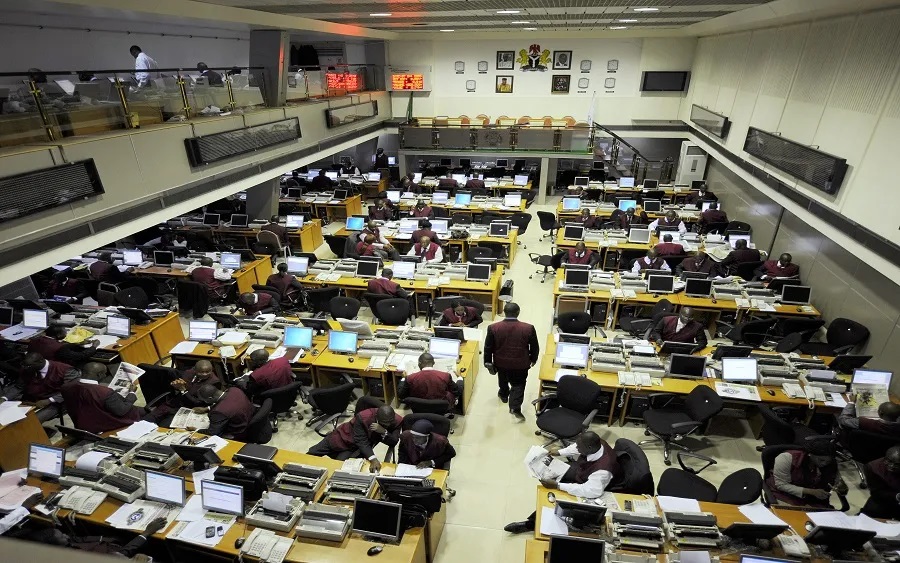
The securities lending market in Nigeria is gradually growing and this is because investors are beginning to embrace the ecosystem.
Business Post gathered that the market has been witnessing an uptick in stakeholders’ participation and data from the Nigerian Exchange (NGX) Limited showed that as at August 20, 2021, the space has 6.8 million units of shares worth N513.1 million
As at 2019, the market had 61,435 stocks valued at N344,555 and in 2020, it expanded to 7.38 million units worth N95.2 million and this is because investors are beginning to see value in the investment tool.
The data also showed that at the moment, 2.3 million equities of MTN Nigeria worth N395.6 million have been borrowed by investors and as at last Friday, there are 77.33 million shares of Zenith Bank Plc, 8.89 million shares of MTN Nigeria, 43 million shares of Dangote Sugar, 31.09 million shares of GTCO and 45 million shares of UBA available for market participants to borrow.
Recall that at an interactive session, the Head of Trading Business Division at the NGX, Mr Jude Chiemeka, had said that securities lending presented significant benefits to investors in a bull or bear market.
“Whether you are a speculative investor looking to make quick gains, or a long-term investor holding stocks, securities lending provides the strong potential to deliver benefits to all market players through capital gains and low-risk incremental income.
“It also plays an important role in the capital market by providing liquidity, which in turn reduces the cost of trading and promotes price discovery,” Mr Chiemeka had stated.
Securities lending is the market practice of transferring shares for a fee from a holder (the lender) to another party (the borrower), with the borrower agreeing to return the securities to the lender either on demand or at the end of the agreed loan term.
It essentially means that the owner of a share can temporarily loan out his shares to someone else and earn an income that they ordinarily would not have enjoyed if the shares were left sitting in his/her portfolio.
In a bid to widen the pool of securities available for lending and increase participation, the NGX issued guidelines that became effective on January 7, 2019.
These guidelines were prepared to adequately address stakeholders’ expectations in securities lending transactions and to provide proper education on the procedures and controls involved in securities lending.
Economy
BudgIT Raises Alarm Over Poor Transparency in Nigeria’s Local Government Budgets
By Adedapo Adesanya
Governance transparency platform, BudgIT, has expressed worry that only 10 states provided publicly accessible budget information for their Local Government Areas (LGAs).
The report, titled The Missing Tier: Mapping Local Government Budget Transparency in Nigeria, found that while six states offer partial or outdated disclosures, as many as 18 states do not publish any LGA budget data at all.
Despite the existence of these budgets at council secretariats nationwide, BudgIT noted that access remains largely restricted, particularly online.
“For most of Nigeria’s 774 local governments, those budgets are not publicly accessible online,” the report stated.
Among the states assessed, Ekiti emerged as the top performer, with a comprehensive system that includes detailed, up-to-date budget documentation for its councils.
Other states identified as making LGA budget information available include Ebonyi, Osun, Kebbi, Kogi, Enugu, Kaduna and Yobe.
However, the report cautioned that even among these states, data quality remains inconsistent, with several budgets either incomplete, outdated, or poorly structured.
BudgIT highlighted notable examples of improved accountability practices.
Ekiti State, for instance, publishes individual 2026 budgets for all its LGAs and LCDAs, accompanied by signed documents, consultation records, and standardised financial templates.
Cross River State also stood out for releasing individual council budgets, audited accounts, and quarterly performance reports.
Similarly, Borno State was commended for maintaining a consolidated 2025 budget alongside supporting financial documents, suggesting a structured and functional reporting system.
The report identified six states with limited transparency, providing only fragmented or outdated information.
Kano State, for example, publishes quarterly performance reports but lacks full-year approved budgets.
In Imo State, no LGA budgets were found, although a financial statement from the Accountant-General was available.
Ondo State reportedly released documents for only a portion of its LGAs, while Anambra published an appropriation law without detailed breakdowns. Ogun State, meanwhile, only provided data for 2024.
BudgIT further disclosed that a large number of states fail entirely to make LGA budgets public.
These include Abia, Adamawa, Akwa Ibom, Bauchi, Bayelsa, Benue, Delta, Edo, Gombe, Jigawa, Katsina, Lagos, Nasarawa, Niger, Oyo, Plateau, Rivers, Sokoto, Taraba, and Zamfara.
According to the organisation, the issue is not the absence of budget documents but the lack of public access to them.
“Yet for most of Nigeria’s 774 local governments, those budgets are not publicly accessible online,” the civic tech firm said.
BudgIT stressed that improving transparency at the local government level does not require complex reforms but rather a deliberate policy decision.
“Since state governments already publish their own budgets online, extending the same standard to local councils is neither complex nor costly; it is a matter of institutional choice,” the organisation said.
It added, “This choice is a critical one; Nigeria’s post-1999 experience with democracy has not had Local Governments with significant autonomy. Be that as it may, LGAs still have the opportunity to make public what they budget, what they spend and what they earn.”
Highlighting the benefits of openness, the report noted that transparency enables citizens to track public spending and hold officials accountable.
“Where they are withheld, accountability stops at the state level, leaving the tier closest to citizens financially opaque,” BudgIT said.
Economy
NGX Regco Lifts Suspension on Zichis, Adjusts Share Price to N8.58
By Aduragbemi Omiyale
The suspension earlier placed on trading in the shares of Zichis Agro-Allied Industries Plc has been lifted by the Nigerian Exchange (NGX) Regulations Limited.
The regulatory subsidiary of NGX Group Plc placed an embargo on Zichis stocks after the price went up by nearly 900 per cent within one month of its listing on the NGX Limited in January 2026.
The action was taken to find out if there was any form of manipulation in the price movement of the new firm on Customs Street to protect market integrity.
Zichis was listed on the growth board of the bourse by introduction at a unit price of N1.81, but within a month, its share price rose to N17.36 per unit, indicating an 859.12 per cent surge.
In a notice to the investing community today, the Head of Issuer Regulation Department at NGX, Mr Godstime Iwenekhai, confirmed the lifting of the suspension on Zichis.
“Kindly refer to our market bulletin referenced NGXREG/IRD/MB23/26/02/23 and dated February 23, 2026, titled Notification of Suspension of Trading in the Shares of Zichis Agro-Allied Industries Plc, wherein trading license holders and the investing public were notified of the suspension of trading in the shares of Zichis Agro-Allied Industries Plc, pursuant to Rule 7.0: General, Rules on Suspension of Trading in Listed Securities, Rulebook of The Exchange, 2015 (Issuers’ Rules), as amended.
“Trading licence holders and the investing public are hereby informed that NGX Regulation Limited has concluded its investigation into the trading activities in the company’s shares and has implemented corrective measures to safeguard market integrity in line with its mandate to promote a fair, orderly and efficient market.
“Accordingly, the suspension placed on trading in the shares of Zichis Agro-Allied Industries Plc has been lifted, effective Monday, March 23, 2026,” the notice read.
Business Post reports that the share price of Zichis has been adjusted downward from N17.36 to N8.58 after the suspension was lifted.
Economy
Dangote Refinery Exports 456,000 Tonnes of Fuel to Five African Countries
By Adedapo Adesanya
The Dangote Petroleum Refinery said it has strengthened Nigeria’s presence in the regional energy market with the successful sales of 12 cargoes, by traders, totalling 456,000 tonnes of refined petroleum products.
The shipments by traders, destined for countries such as Cote d’Ivoire, Cameroon, Tanzania, Ghana, and Togo, represent the refinery’s export of Premium Motor Spirit (PMS) since achieving 650,000 barrels a day capacity in February, according to a statement by the Refinery.
The products were sold on a FOB (Free on Board) basis to the end international traders for deliveries to the above-identified countries of export.
This accomplishment, the Refinery noted, underscores its capability not only to meet but to exceed Nigeria’s domestic fuel demands.
“It also demonstrates the refinery’s growing role in supplying high-quality Euro 5 gasoline and diesel to West Africa — a region long underserved and historically regarded as a dumping ground for lower-quality fuels, and other regions which have become destinations of exports.
“By supplying neighbouring and other economies, the Dangote Refinery is expected to contribute to enhancing energy security in West, East, and Central Africa, reducing logistics and supply chain delays associated with long-distance fuel imports, lowering cost pressures on regional fuel markets through proximity sourcing, and as well as building stronger trade relations between Nigeria and key African economies”, the statement added.
The sale comes amid widening global worries about fuel supplies as the tanker traffic through the Strait of Hormuz, which serves as the critical chokepoint for roughly 20 per cent of global oil and LNG trade, has slowed sharply amid escalating military activity in the Gulf.
The conflict in the region has sent oil prices above $113 per barrel in recent weeks and has made economies worry about inflationary worries.
President Bola Tinubu expressed concerns over the negative impact the crisis in the Middle East would have on the Nigerian economy, noting that efforts are being made to ensure the citizens, especially the vulnerable, are catered to by the government.
Western economies could release additional volumes of crude from storage should the need arise after it released 400 million barrels of crude from OECD reserves to cushion the blow to oil markets.
-
Feature/OPED6 years agoDavos was Different this year
-
Travel/Tourism10 years ago
Lagos Seals Western Lodge Hotel In Ikorodu
-
Showbiz3 years agoEstranged Lover Releases Videos of Empress Njamah Bathing
-
Banking8 years agoSort Codes of GTBank Branches in Nigeria
-
Economy3 years agoSubsidy Removal: CNG at N130 Per Litre Cheaper Than Petrol—IPMAN
-
Banking3 years agoSort Codes of UBA Branches in Nigeria
-
Banking3 years agoFirst Bank Announces Planned Downtime
-
Sports3 years agoHighest Paid Nigerian Footballer – How Much Do Nigerian Footballers Earn


Pingback: Stanbic IBTC Bank Enables Lending of Bonds, Treasury Bills | Business Post Nigeria