Connect with us

General

Poor Leadership: Principal or Instrumental Explanation for Nigeria’s Underdevelopment?

Published

on

Poor Leadership

By Jerome-Mario Utomi

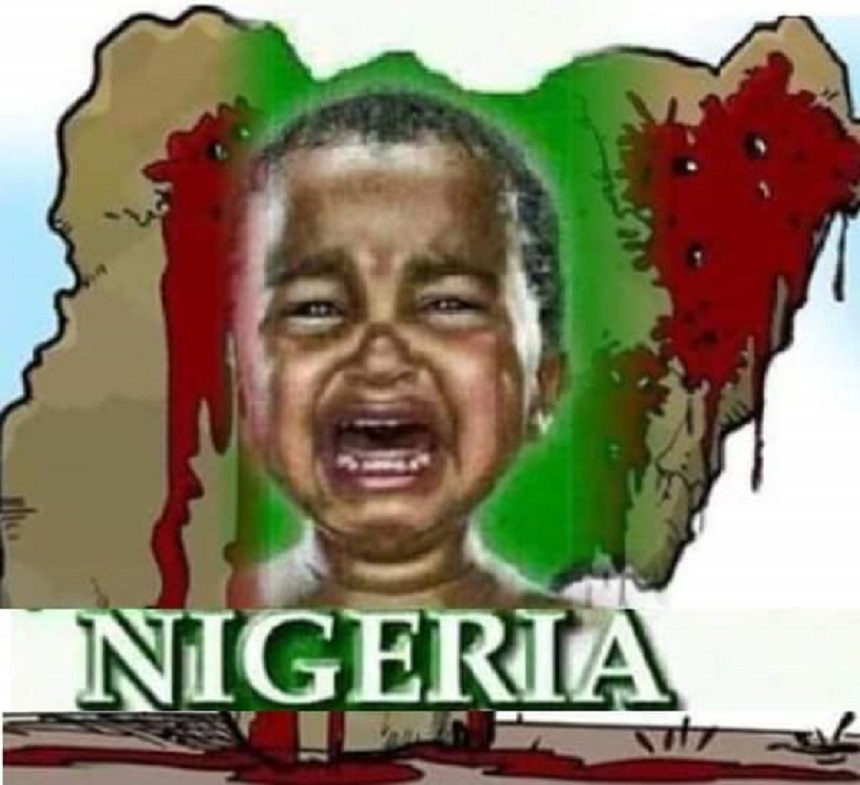
There is no gainsaying that Nigeria is plagued with development challenges such as widespread poverty, insecurity, corruption, the gross injustice and ethnic politics.

Also, evidence abounds that the nation is in dire need of attention/support from interventionist’s organisations (private and civil society organisations) to help unleash economic development,  promotes growth and structural change, with some measures of distributive equity, modernisation in social and cultural attitudes, a degree of political transformation and stability, an improvement in health and education so that population growth stabilizes, and an increase in urban living and employment.

What is yet to be uncovered is/are the principal and instrumental factors that set the stage for this unending national malady, as well as give it a boost to thrive unhindered in the country.

To many, corruption is the principal factor exacerbating the nation’s underdevelopment. It is the single reason Nigeria has remained underdeveloped. Corruption has eaten so deep into the fabric of the nation, so much so that it has become a threat to the very existence of the nation.

Talking about corruption is almost like wasting precious time on an issue that has come to stay and not in any hurry to leave. To some, the challenge is rooted in the ‘Federal Character Principle’ which was introduced into the 1979 Constitution, to among other responsibilities; promote peace, stability, sharing of power and resources amongst the states, has contrary to expectations failed to achieve the primed principle but, lowered education standards in the country, compromised standards and professionalism in the nation’s civil service by ignoring meritocracy.

The rest are on the one hand, particularly of the view that the existence of weak institutions daily undermined by strong figures, region and ‘political Maradonas’ breeds national mediocrity.

Others on the other hand blame the nation’s deformed Federal System which has not only made the centre more attractive with federating states stripped of valuable responsibilities/autonomy but made the nation stand in an inverted pyramid shape with more power concentrated at the top and the base not formidable enough making collapse inevitable if urgent and fundamental steps are not taken,

Definitely, this piece agrees with most of the reasons above being responsible for the situation/challenge in the country. However, I would like to add to what I have just observed above that the problem in the country would need to be looked at in a wider and, indeed, deeper context of the evolution and development in the wider human society particularly in Nigeria where corruption has held all square bound.

At this point, the question may be asked; what impact has leadership had on the development of the nation?  Are political leaders in Nigeria patrons or profiteers?

Again, looking at the multiple layers of formal and informal political leadership in post-colonial Nigeria where political leaders are the primary holders, controllers and distributors of power and resources, it elicits the question as to whether poor leadership is a principal or instrumental factor impeding the development of the country?

To add to the contest, talking about principal or instrumental factors impeding the development, Sylvester Enomah clarifies the concern in his book entitled ‘the Nature of Metaphysics’.

According to him, as the term designates it, instrumental cause means a thing or instrument that aids the agent or the principal cause in the process of causation and in the achieving of the effect.

In this case, the instrument is subordinate to the principal cause for direction, principles and initiative. The instrumental cause is handicapped in determining the nature and the character or the type of effect the principal cause intends.

Secondly, the effect is always attributed to the principal cause. The principal cause is intelligent and has the knowledge of what should be the effect of the cause; the instrumental cause may be unintelligent and may not know what may happen or be the effect of the cause. Even if the instrumental cause knows, it is not responsible for the effect of the causality as such.

The instrumental cause is not responsible on the condition that it is a non-living entity, and if it is a living thing, it is at the lower level of existence, for instance, lower animals like dogs. If the living entity is a man, the effect is not attributed to him, or he is not responsible on the condition that he is handicapped, i.e. he cannot hear, think, see, and smell, reason, mentally depraved, underage or under threat.

From the above explanation, it is deductible in my views that leadership challenge is the principal factor responsible for Nigeria’s underdevelopment while corruption, a system of government are but instrumental reasons.

Even Barrister Lee Kuen Yew, pioneer prime minister of Singapore shares similar views.

Let’s listen to him; my experience of developments in Asia has led me to conclude that we need good people to have a good government. However good the system of government, bad leaders will bring harm to their people.

On the other hand, I have seen several societies well-governed in spite of poor systems of government, because good, strong leaders were in charge. I have also seen so many of the over 80 constitutions drafted by Britain and France for their former colonies come to grief, and not because of flaws in the constitutions. It was simply that the preconditions for a democratic system of government did not exist.

Again, sometime in May 2016, the Prime Minister of Britain, David Cameron, described Nigeria and Afghanistan as “fantastically corrupt” in a con­versation with the Queen. Cameron had said, “We’ve got some leaders of some fantastically corrupt countries coming to Britain… Nigeria and Afghanistan, possibly the two most corrupt countries in the world.”

Closely related to the above is the reality that the managers of our nation’s economy continue to go against the provisions of the constitutions as an attempt to disengage governance from public sector control of the economy has only played into waiting hands of the profiteers of goods and services to the detriment of the Nigerian people.

While the nation continues to lie prostrate and diminish socially and economically with grinding poverty and starvation driving more and more men into the ranks of the beggars, whose desperate struggle for bread renders them insensible to all feelings of decency and self-respect, the privileged political few continue to flourish in obscene and splendour as they pillage and ravage the resources of our country at will.

Finally, the truth is that if nothing is done to alleviate this appealing situation, it will hopelessly confirm why the nation is stumbling.

Jerome-Mario Utomi is the Programme Coordinator (Media and Public Policy), Social and Economic Justice Advocacy (SEJA), Lagos. He could be reached via je*********@***oo.com/08032725374.

Advertisement
1 Comment

Leave a Reply

Your email address will not be published. Required fields are marked *

General

Nigeria Signs Defence Joint Venture with Terra Industries

Published

on

Terra Industries

By Adedapo Adesanya

Nigeria has signed a joint venture with defence technology company, Terra Industries Limited, as part of efforts to boost the country’s defence industrial capacity and advance indigenous high-technology development.

The Defence Industries Corporation of Nigeria (DICON) and Terra signed a Memorandum of Understanding (MoU) for the establishment of the Joint Venture Company (JVC), both parties announced on Monday.

The partnership provides a robust framework for the local production, assembly, research and development (R&D), and training in high-technology systems, including drones, cybersecurity solutions, robotics, and other ancillary software and hardware platforms.

The MoU, executed pursuant to the DICON Act 2023, underscores DICON’s statutory mandate to collaborate with indigenous and foreign defence-related industries through Public-Private Partnerships. Under the agreement, the Joint Venture Company will operate as a subsidiary of DICON, jointly promoted and owned by DICON and Terra Industries, and duly incorporated in Nigeria.

This marks the latest move by Terra, which recently became a $100 million company, following recent raises from investors including Flutterwave CEO, Mr Gbenga Agboola, American actor Jared Leto as well as 8VC founded by the co-founder of Palantir Technologies Inc., Mr Joe Lonsdale. Other investors included Valor Equity Partners, Lux Capital, SV Angel, Leblon Capital GmbH, Silent Ventures LLC, Nova Global.

Terrahaptix, founded by Mr Nathan Nwachukwu and Mr Maxwell Maduka, are using the new funding to expand Terra’s manufacturing capacity as it expands into cross-border security and counter-terrorism.

The latest agreement with DICON is designed to establish advanced production and assembly lines for high-tech equipment within Nigeria, while promoting meaningful technology transfer, skills development, and specialised training for Nigerian personnel.

It also aims to strengthen local sourcing of raw materials, reduce dependence on imports, and enhance domestic industrial capacity and strategic autonomy. Additionally, the partnership will support the supply of security equipment to the wider Nigerian security agencies, other security agencies, positioning Nigeria as a competitive player in the global defence manufacturing sector.

Under the agreement, Terra Industries will provide technical expertise, professional services, and training, and will attract both local and foreign investment to strengthen the defence industrial ecosystem.

The company will also facilitate the procurement of production equipment, coordinate local and international training programmes, and provide access to manufacturing know-how, tooling, spare parts, and established defence sector supply chains.

Speaking on this, Mr Nathaniel Nwachukwu, CEO of Terra Industries, noted that the partnership “Demonstrates confidence in indigenous Nigerian engineering capability and creates a platform for sustainable defence technology development, innovation, and export competitiveness.”

On his part, Major General BI Alaya, the Director General of DICON, described the agreement as “A transformational step toward strengthening Nigeria’s defence manufacturing base, reducing import dependence, and positioning Nigeria as a regional hub for advanced innovation.”

The need for security has risen in recent years, as groups such as Islamic State and al-Qaeda are gaining ground in Africa, converging along a swathe of territory that stretches from Mali to Nigeria.

Continue Reading

General

Deep Blue Project: Mobereola Seeks Air Force Support

Published

on

deep blue project

By Adedapo Adesanya

The Director General of the Nigerian Maritime Administration and Safety Agency (NIMASA), Mr Dayo Mobereola, is seeking enhanced cooperation between the agency and the Nigerian Air Force (NAF) with the aim of strengthening tactical air support within the Deep Blue project.

During a courtesy visit last week, Mr Mobereola told the Chief of Air Staff, Air Marshall S. K. Aneke at the NAF Headquarters in Abuja, that the Air Force was a strategic partner in enhancing maritime security in Nigeria and sustaining the momentum of the Deep Blue Project’s success.

According to the DG, “We are here to seek the Air Force’s support, given the importance of tactical air surveillance to the Deep Blue Project. Nigeria is the only African country with a record of zero piracy within the last 4 years. The Deep Blue Project platforms have been used to achieve zero piracy and sea robberies in the Gulf of Guinea, and we need your collaboration to sustain this momentum”.

He further emphasised that international trade depends on security, which is why vessels prefer to go to or transit through countries where they are secured. “With the traffic we have now, we need to show more security might through collaboration to strengthen our trade viability because of the risks attached to our route. We need these collaborations to sustain what we have achieved so far with the Deep Blue Project”.

The NIMASA DG expressed hope that the collaboration with the Nigeria Air Force will reduce response time.

On his part, the Chief of Air Staff, Air Marshall S.K. Aneke, noted that the Air Force desires to be “a very supportive and collaborative partner with NIMASA and is ready to match the Agency step by step and side by side to achieve the desired results.”

He noted that “collaboration between NIMASA and the Nigerian Air Force under the Deep Blue Project can be strengthened through a joint strategic framework, integrated command structures, and a standing steering committee to ensure shared objectives and accountability.

“Establishing a joint maritime domain awareness fusion cell will enable real-time intelligence sharing, synchronised surveillance, and faster response to maritime threats and ensure sustained operational effectiveness across Nigeria’s territorial waters and exclusive economic zone,” he said, according to a statement.

The Air Force Chief added that the Air Force can also support NIMASA outside the Deep Blue Project operations by providing its own ISR platforms, tactical air support, and rapid airborne deployment for interdictions and search and rescue missions.

While thanking the NIMASA DG for the basic trainings the Agency has provided the aircraft pilots under the Deep Blue Project, Air Marshall Aneke also highlighted areas of operational challenges needing NIMASA’s attention to include bridging the communication gap between NAF operators and NIMASA, higher level and in-depth maintenance trainings, readily available fueling of aircrafts to avoid delays on missions, and provision of flying kits among others.

He therefore pledged the Air Force’s collaboration and assured that the request by NIMASA has been noted and that things will begin to move at thrice its speed going forward.

Continue Reading

General

Nigeria’s Democracy Suffocating Under Tinubu—Atiku

Published

on

atiku press conference

By Modupe Gbadeyanka

Former Vice President, Mr Atiku Abubakar, has lambasted the administration of President Bola Tinubu for the turnout at the FCT Area Council elections held last Saturday.

In a statement signed by his Media Office, the Adamawa-born politician claimed that the health of Nigeria’s democracy under the current administration was under threat.

According to him, “When citizens lose faith that their votes matter, democracy begins to die. What we are witnessing is not mere voter apathy. It is a direct consequence of an administration that governs with a chokehold on pluralism. Democracy in Nigeria is being suffocated slowly, steadily, and dangerously.”

He warned that the steady erosion of participatory governance, if left unchecked, could inflict irreversible damage on the democratic fabric painstakingly built over decades.

“A democracy without vibrant opposition, without free political competition, and without public confidence is democracy in name only. If this chokehold is not released, history will record this era as the period when our hard-won freedoms were traded for fear and conformity,” he stressed.

Mr Atiku said the turnout for the poll was below 20 per cent, with the Abuja Municipal Area Council (AMAC) recording 7.8 per cent.

He noted that such civic participation in the nation’s capital, the symbolic heartbeat of the federation, is not accidental, as it is the predictable outcome of a political environment poisoned by intolerance, intimidation, and the systematic weakening of opposition voices.

The presidential candidate of the People’s Democratic Party (PDP) in the 2023 general elections stated that the ruling All Progressives Congress (APC) under Mr Tinubu has pursued a deliberate policy of shrinking democratic space, harassing dissenters, coercing defectors, and fostering a climate where alternative political viewpoints are treated as threats rather than contributions to national development.

He called on opposition parties and democratic forces across the country to urgently close ranks and forge a united front, declaring, “This is no longer about party lines; it is about preserving the Republic. The time to stand together to rescue and rebuild Nigeria is now.”

Continue Reading

Trending