Economy
NEPZA Opposes Provisions of Customs Service Bill on Free Zones
By Adedapo Adesanya
The Nigeria Export Processing Zones Authority (NEPZA) has opposed some sections of the proposed Customs Service reform bill, citing three reasons why an amendment to give the Nigeria Customs Service (NCS) powers to make regulations in free zones will weaken and subvert the nation’s Special Economic Zones.
In a submission to the ongoing public hearing on the Custom Reform Bill at the House of Representatives, the agency said, “Free Zones are areas designated as such by the President to serve as one-stop-shop investment hub wherein incentives are provided in form of tax holidays, simplified Customs and Immigration processes, amongst others, with a view to attracting investors.
“The One-Stop-Shop concept, in furtherance of which Regulations were made for all the active Free Zones with the involvement of the Nigeria Customs Service and all relevant stakeholders, would be eroded if the provisions of the bill are allowed.”
It argued that “by providing regulations for the free zones, the Nigeria Customs Service would be setting a dangerous precedent, as other agencies would want to do same.”
The Authority in its response also held that the development, if not nipped in the bud, would result in either multiple regulations that might be contradictory, thereby creating avoidable legal tussles or making registration of enterprises unnecessarily cumbersome and unattractive.
It further submitted that: “the proposed sections of the bill which seek to make the Free Zones Customs- Controlled Zones invariably seek to create antithetical Free Zones Customs Territory alien to the global free trade zone model used around the world.”
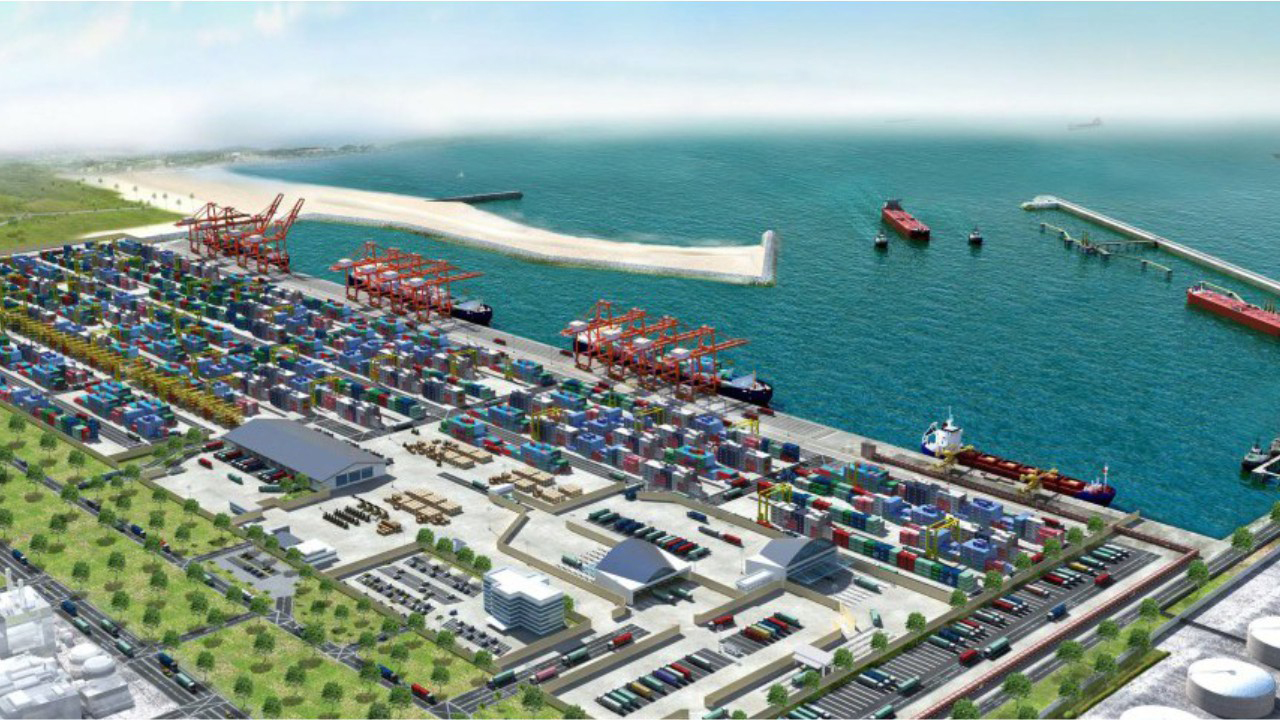
While listing specific areas of the Bill it finds objectionable, NEPZA stated that it had through the operations of the free zones contributed tremendously to the national economy, noting that the Lekki Free Zone Quadrant that comprised Lekki Free Trade Zone, Lagos Free Zone, Dangote Free Zone Enterprises and the Alaro City Free Zone, as well as the Calabar Free Zone, and the Kano Free Zone were alluring testaments of how it continued to fast track the country’s industrialisation.
“Dangote Free Zone, a national asset is a zone with enormous prospects for the Nigerian economy. With the heightened insecurity in Nigeria amidst the COVID-19 pandemic, the introduction of a new bureaucratic bottleneck such as this proposed legal framework would only scare away investors and retard the free trade zone scheme.
“Bureaucratic bottlenecks have been identified as one of the reasons for Nigeria’s low ranking on the World Trade Organisation’s index of Ease of Doing Business.
“The free zone scheme, therefore, seeks to tackle the problem of corporate investments characterized by bureaucratic challenges, multiple taxation, conflicting regulations,” the agency said.
NEPZA also used the opportunity to allay the fears of the NCS about revenue leakages, adding that it had put in place proper customs procedures and regulations to guide investors operating in the zones in order to avoid or prevent bureaucratic bottlenecks while ensuring that all applicable laws, regulations and guidelines were duly observed.
These safeguards, NEPZA noted, could be ascertained in its enabling Act, as well as the regulations of the respective free zones.
It, therefore, urged the National Assembly to be circumspect by avoiding the temptation of allowing any legal framework that would cripple NEPZA and the free zone scheme.
Economy
Aradel Grows FY 2025 Profit by 55% on Higher Earnings Contribution
By Aduragbemi Omiyale
Improved tax efficiency and higher earnings contribution supported the 55 per cent growth in the post-tax profit of Aradel Holdings Plc in the 2025 fiscal year.
The financial statements of the energy firm showed that the profit after tax stood at N401.2 billion in the period under review compared with the N259.1 billion recorded in the 2024 accounting year.
Analysis of the results revealed that the company delivered strong top-line growth, with total revenue up by 20 per cent year-on-year to N697.3 billion from N581.2 billion, due to sustained momentum across all business segments.
It was observed that earnings from crude oil exports grew by 18 per cent to N440.1 billion from N373.7 billion, supported by higher production volumes and reliable evacuation through both the TNP and ACE system.
Also, crude sales rose to 4.1mmbbls from the 3.1mmbbls recorded in the previous fiscal year, accounting for 63 per cent of the total revenue despite decline in realised crude oil prices.
Further, refined products revenues increased by 18 per cent to N210.8 billion from N179.3 billion, representing 30 per cent of total revenue, driven by a 26 per cent rise in sales volume to 302.9 mmltrs versus 240.5 mmltrs in FY 2024, demonstrating the organisation’s expanding downstream footprint and strong market penetration.
In addition, gas revenues increased by 65 per cent to N46.4 billion from N28.2 billion, indicating 7 per cent of total revenue, buoyed by higher production volumes despite a decline in realised gas prices to $1.52/mscf compared to $1.66/mscf in FY 2024.
“Aradel delivered a strong and resilient performance in 2025, reflecting the quality of our asset base, disciplined execution, and the inherent resilience of our diversified energy portfolio.
“Despite operating in a dynamic environment, we achieved meaningful growth across our upstream, gas, and refining businesses,” the chief executive of Aradel Holdings, Mr Adegbite Falade, stated.
“During the year, we advanced our acquisition-led growth strategy with the completion of two landmark transactions: the acquisition of a 33.3 per cent effective equity interest (comprising 12.5 per cent directly by Aradel Energy; and 20.8 per cent indirectly through ND Western Limited) in Renaissance Africa Energy Company Limited, operator of the Renaissance Joint Venture (formerly known as the SPDC Joint Venture), and the purchase of an additional 40 per cent equity interest in ND Western Limited,” he added.
“The acquisition of the additional interest in ND Western Limited represents a significant milestone for the group. It is fully aligned with Aradel’s long-term strategy of disciplined portfolio consolidation, asset base expansion, and sustainable value creation, and it further strengthens our strategic position within Nigeria’s upstream oil and gas sector. The completion of the NDW transaction increases Aradel’s effective interest in ND Western Limited to 81.67 per cent and the Renaissance Africa Energy Company Limited to 53.33 per cent,” Mr Adegbite further stated.
“Looking ahead, our focus in 2026 is on consolidating our expanded portfolio to enhance operational scale, improve efficiency across our assets, increase production and further diversify our revenue base in support of long-term shareholder value,” he noted.
Economy
Tinubu Seeks World Bank Support to Boost Agriculture, Economic Reforms
By Adedapo Adesanya
President Bola Tinubu has called on the World Bank to support Nigeria’s ongoing economic reforms, with a focus on agriculture, youth employment, and private sector growth.
The president sought this assistance when he received a delegation from the World Bank led by Anna Bjerde, Managing Director of Operations, at the State House, Abuja on Tuesday, noting that the bank’s support will boost his administration’s strategy to strengthen the economy and expand opportunities for Nigerians.
“Since we went into this tunnel of reform, we have our hands on the power and we’re never going to look back. Initially, it was painful and difficult, but those who win are not the ones who give up in difficult times,” Mr Tinubu said.
The president highlighted the importance of mechanization and modernization of agriculture to increase productivity and create opportunities for Nigeria’s large young population.
“We have mechanization centers to help farmers with improved seedings and fertilizers to enhance their programs. The goal is to move farmers from small-scale holders to large cooperatives that can create opportunities for Nigerians,” he explained.
Mr Tinubu also pointed to the petrochemical sector and other domestic industries as areas where the government is working to improve outputs and strengthen local markets. He stressed that reforms are continuous and must be grounded in transparency, accountability, and stability.
“The first reaction to reforms was high inflation, but it has come down dramatically, and the Naira is now stable. We want to help investors operate with ease, reduce bureaucracy, and develop the skills of our people,” he said.
On her part, Ms Anna Bjerde commended the administration for its consistent and steady approach to reforms over the past two years. She highlighted that Nigeria has become a global example of reform implementation, giving confidence to investors and policymakers worldwide.
“The results achieved in the last two years are commendable. Your steady communication of the importance of reforms has given confidence and clarity, and there is no turning back,” Ms Bjerde said.
She emphasized the importance of job creation, particularly for Nigeria’s youth, noting that Africa’s young population is growing rapidly and that SMEs are central to employment generation.
“Agriculture is a huge part of the economy and a major employer. Innovations in mechanization, cooperatives, value-chain development, and infrastructure can be scaled to create more opportunities,” Ms Bjerde said.
She also highlighted the World Bank’s financial support for Nigeria, including public sector financing of $17 billion, private sector support of $5 billion through the International Finance Corporation (IFC), and investment guarantees exceeding $500 million. These instruments are aligned with Nigeria’s reforms, including trade, digital initiatives, and inflation management, to stimulate private sector growth and human development.
“We want to work with Nigeria to accelerate growth, improve access to finance for SMEs, and support early childhood development as part of a comprehensive human development strategy,” she added.
Economy
OTC Securities Exchange Rises 0.96% to 3,641.30 Points
By Adedapo Adesanya
The NASD Over-the-Counter (OTC) Securities Exchange appreciated by 0.96 per cent on Tuesday, February 3, boosting the Unlisted Security Index (NSI) by 34.54 points to 3,641.30 points from the 3,606.76 points it ended a day earlier.
Equally, the market capitalisation of the trading platform was up during the session by N20.67 billion to end N2.178 trillion from the N2.158 trillion it ended on Monday.
The expansion witnessed by the OTC securities exchange yesterday was buoyed by the gains printed by four stocks on the bourse, with Central Securities Clearing System (CSCS) Plc up by N4.00 to sell at N44.00 per unit versus the previous day’s N40.00 per unit.
Further, Air Liquide Plc increased by N1.86 to end at N20.49 per share compared with Monday’s closing price of N18.63 per share, Afriland Properties Plc appreciated by 35 Kobo to N14.00 per unit from N3.65 per unit, and UBN Property Plc added 1 Kobo to settle at N2.20 per share, in contrast to the preceding day’s N2.21 per share.
On the flip side, there were two price losers led by FrieslandCampinaWamco Nigeria Plc, which shed 4 Kobo to close at N63.50 per unit compared with the previous day’s N63.54 per unit, and Geo-Fluids Plc lost 3 Kobo to finish at N6.81 per share compared with the N6.84 per share it traded in the preceding session.
Data showed that the volume of securities bought and sold by investors grew by 82.5 per cent to 7.0 million units from 3.9 million units, and the value of securities jumped by 5.2 per cent to N37.9 million from N36.0 million, while the number of deals decreased by 15 per cent to 34 deals from 40 deals.
CSCS Plc remained the most active stock by value (year-to-date) with 15.9 million units sold for N649.0 million, the second spot was taken by FrieslandCampina Wamco Nigeria Plc with 1.7 million units worth N110.9 million, while the third position was occupied by Geo-Fluids Plc with the sale of 11.1 million units for N73.1 million.
The most traded stock by volume (year-to-date) was still CSCS Plc with 15.9 million units exchanged for N649.0 million, followed by Mass Telecom Innovation Plc with 12.7 million units sold for N5.1 million, and Geo-Fluids Plc with 11.1 million units traded for N73.1 million.
-
Feature/OPED6 years agoDavos was Different this year
-
Travel/Tourism9 years ago
Lagos Seals Western Lodge Hotel In Ikorodu
-
Showbiz3 years agoEstranged Lover Releases Videos of Empress Njamah Bathing
-
Banking8 years agoSort Codes of GTBank Branches in Nigeria
-
Economy3 years agoSubsidy Removal: CNG at N130 Per Litre Cheaper Than Petrol—IPMAN
-
Banking3 years agoSort Codes of UBA Branches in Nigeria
-
Banking3 years agoFirst Bank Announces Planned Downtime
-
Sports3 years agoHighest Paid Nigerian Footballer – How Much Do Nigerian Footballers Earn