General
FG Launches Project to Curb Carbon Emissions by 50%
By Adedapo Adesanya
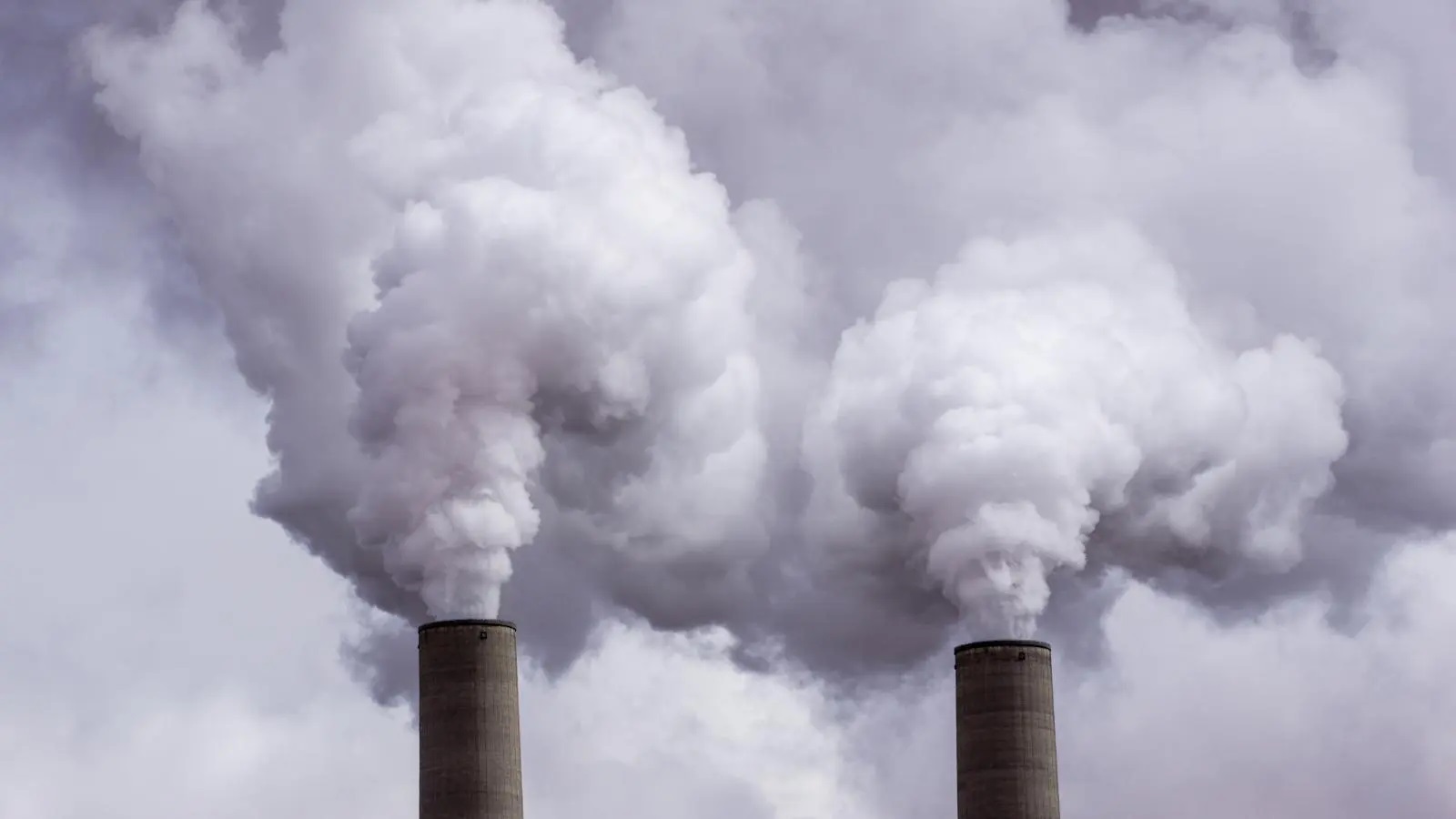
The federal government has launched a Deep Decarbonization Pathway Programme (DDPP) in a determination to reduce carbon emissions by 50 per cent come 2050 in its quest to meet net-zero carbon emission levels.
DDPP is a national research and capacity building project to be implemented between Nigeria’s Federal Ministry of Environment and the Agence Française de Dévelopment (AFD) with the International Relation and Sustainable Development Institute (IDDRI) as the coordinator.
Launching the project, Minister of Environment, Mrs Sharon Ikeazor, stated that the decarbonization of the global economy has long been recognised as an imperative in the fight against climate change.
“The Nigeria Deep Decarbonization Project is, therefore, a very important component in our effort to navigate Nigeria and the global world over the harsh and unpleasant risks of climate change,” she said.
According to the Environment Minister, the federal government has made several climate change interventions intended to mitigate climate change and increase resilience to avert the excruciating consequences of climate change.
The Minister revealed that the federal government recently submitted its revised and robust Nationally Determined Contributions that articulate climate actions until 2030 in response to Article 4.2 of the Paris Agreement.
“The Federal Ministry of Environment also formulated Nigeria Decarbonisation Transition Plan, which enumerated pathways for Nigeria to achieve net-zero by 2050.
“The Nigerian government’s effort to transit to a low-emissions economy was also echoed in all the discussions that the Federal Government of Nigeria was involved in at the COP26.
“The Nigerian government formulated and communicated its Long-Term Low GHG Emission Development Strategies, LT-LEDS and envisioned that by 2050, Nigeria will be a country of low-carbon, climate-resilient, high-growth circular economy that reduces its current level of emissions by 50 per cent, moving towards having net-zero emissions across all sectors of its development in a gender-responsive manner,” the Minister explained.
On his part, the National Project leader for DDP Nigeria, Mr Chukwumerije Okereke said what prompted the project was a desire to build a capacity of Nigerian academics, to be able to design high quality, rigorous, robust climate change models that can guide international climate policy.
“This project was prompted by the fact that year after year, Nigeria designs and publishes nationally important documents and plans around climate change. What about mitigation? What is about adaptation, and more recently, the nationally determined contribution that provides a guideline of how Nigeria can reduce their emissions in the long run while also growing sustainability.
However, all of these plans have been really designed and written by foreigners, foreign experts, international experts, and the reason is that Nigeria does not have enough capacity on what we call climate modelling,” he explained.
Mr Okereke said the team will be working very closely with the government to make inputs into the long term strategies; the long term climate change development strategy that the government will be producing next year, before COP 27 in Egypt.
“Having Nigerian academics working in collaboration with other ministries, and guided by the Department for climate change under the Federal Ministry of Environment, we hope that we’ll be able to produce long term strategies. These strategies will be relevant, specific contexts that will accommodate the uniqueness of our Nigeria and certain that they will help to ensure that whatever is produced will be implemented,” Mr Okereke added.
Director of the DDP Initiative at IDDRI, Mr Henri Waisman, said all countries should consider positive zero emissions within their boundaries by 2050- 2070, notably from fossil fuels combustion and maximize the domestic carbon sinks.
He noted that carbon neutrality by 2050-2070 is feasible in all the country contents IDDRI have investigated and it is possible to achieve simultaneously carbon neutrality and key socio-economic goals, as defined by each country.
“We develop a scientifically robust analysis of pathways achieving the systemic transformations towards carbon neutrality; we use this analysis to structure domestic conversations with decision-makers and stakeholders on options, choices and risks,” he said.
The Nigeria Deep De-carbonization Project is designed to generate context-specific scenarios and long-term modelling that will offer substantial evidence to support the government’s long term emissions reduction strategies and climate action in general.
General
Gbajabiamila Remains President Tinubu’s Chief of Staff—Presidency
By Modupe Gbadeyanka
The presidency has reacted to speculations that Mr Femi Gbajabiamila has been removed as the Chief of Staff to President Bola Tinubu.
It was alleged that Mr Gbajabiamila has been replaced with the President’s Principal Private Secretary, Mr Hakeem Muri-Okunola.
Mr Muri-Okunola went to Abuja to take up this role after leaving as the Head of Service of the Lagos State Civil Service.
Reacting to the reports on social media on the purported removal of Mr Gbajabiamila, a former Speaker of the House of Representatives, the presidency said no such change has been made.
In a statement signed on Thursday by the Special Adviser to the President on Information and Strategy, Mr Bayo Onanuga, members of the public were advised to disregard the report as “there is absolutely no truth to this story.”
“The Chief of Staff remains in his position. The Principal Private Secretary likewise remains in his role. Hakeem Muri-Okunola has not replaced Femi Gbajabiamila as Chief of Staff.
“The viral claim is a fabrication by mischievous purveyors of fake news whose sole aim is to create disharmony within the government.
“We reiterate that news media should always verify their information before publishing or sharing on social media,” the statement said.
General
Eyesan Promises Bold Reset in Nigeria’s Upstream Sector as New NUPRC Head
By Adedapo Adesanya
The new chief executive of the Nigerian Upstream Petroleum Regulatory Commission (NUPRC), Mrs Oritsemeyiwa Eyesan, has assumed office with a clear message to advance the country’s upstream oil and gas sector in line with the mandate of the commission as enshrined in the Petroleum Industry Act (PIA) 2021.
According to a statement signed by Mr Eniola Akinkuotu, the Head of Media & Strategic Communications at the upstream regulator, the NUPRC boss made this assertation during her first town hall meeting with management and staff on Tuesday December 23, 2025.
She further disclosed plans to make the commission a business enabler and re-ignite investments in the upstream sector.
Recall that President Tinubu nominated Mrs Eyesan to take over the NUPRC after the abrupt resignation of her predecessor, Mr Gbenga Komolafe as well as his counterpart in the Nigerian Midstream and Downstream Petroleum Regulatory Authority (NMDPRA), Mr Farouk Ahmed.
In her new capacity, Mrs Eyesan also set a firm production ambition of growing Nigeria’s output and increasing gas production.
“The goal is that we must enable the industry, we are regulators. We must enable the industry from our interactions with the stakeholders, from our interactions with everybody.
“My main objective is to ensure that we make a difference. I believe the NUPRC is at the Center of the industry,” she said.
The commission boss who has served for over three decades in the oil and gas sector, promised to entrench digitisation, transparency and efficiency in operations.
The NUPRC head said with the support of staff and management, the NUPRC will become the gold-standard regulator in Africa. She also promised capacity development, stronger technical depth and sustained engagement with stakeholders, unions and professional teams.
On leadership style, Mrs Eyesan promised an open-door policy and frequent staff engagement, while also soliciting for support and cooperation as the industry embarks on the next phase of transformation.
“If we work together we can unleash opportunities, I don’t see impediments only opportunities,” she added.
General
Christmas: Tinubu Calls for Religious Tolerance Amid Rising Insecurity
By Adedapo Adesanya
President Bola Tinubu has called on Nigerians to embrace religious tolerance, peace, and unity, urging citizens of all faiths to reject violence and intolerance amid ongoing security challenges across the country.
In his 2025 Christmas goodwill message issued on Wednesday by his Special Adviser on Information and Strategy, Mr Mr Bayo Onanuga, the President emphasised that no Nigerian should suffer discrimination or violence because of their religious beliefs, reaffirming his administration’s commitment to safeguarding freedom of worship and national cohesion.
“As your President, I remain committed to doing everything within my power to enshrine religious freedom in Nigeria and to protect all people of different faiths from violence,” Mr Tinubu said, noting that all Nigerians have the constitutional right to live, worship, and pursue their aspirations in safety and dignity.
The President acknowledged growing concerns around religious intolerance and insecurity, revealing that he had engaged extensively throughout the year with leaders of Nigeria’s two major faiths.
In the last few months, the country faced a spate of attacks including kidnapping of school children and armed terror, involving the death of a high ranking army personnel.
He also said the government would continue to build on these engagements to strengthen collaboration with religious institutions, prevent conflict, and promote peaceful coexistence.
President Tinubu described Christmas as a period for reflection on the message of Jesus Christ as the Prince of Peace, urging Nigerians to draw inspiration from values of love, compassion, and goodwill that cut across all major religions.
He commended Christians in Nigeria for their contributions to national development, particularly their role in caring for the vulnerable and promoting harmony within communities.
“The love for God and love for humanity is at the heart of all the great faiths. These shared values must continue to bind us together as one indivisible and resilient people,” he said.
Reiterating his administration’s stance on security, the President said the government’s commitment to protecting Nigeria’s unity and stability has remained unwavering since he assumed office in 2023. He stressed that the state would not tolerate violence targeted at any group on the basis of ethnicity or belief.
President Tinubu also appealed to Nigerians travelling during the festive season to exercise patience and discipline on the roads, wishing them safe journeys and returns.
Expressing optimism about the country’s future, the President said that with faith in God and collective resolve, Nigeria would overcome its challenges and build a nation that future generations would be proud of.
He concluded by wishing Christians in Nigeria and around the world a Merry Christmas and Nigerians a happy New Year in advance.
-
Feature/OPED6 years agoDavos was Different this year
-
Travel/Tourism9 years ago
Lagos Seals Western Lodge Hotel In Ikorodu
-
Showbiz3 years agoEstranged Lover Releases Videos of Empress Njamah Bathing
-
Banking8 years agoSort Codes of GTBank Branches in Nigeria
-
Economy3 years agoSubsidy Removal: CNG at N130 Per Litre Cheaper Than Petrol—IPMAN
-
Banking3 years agoFirst Bank Announces Planned Downtime
-
Banking3 years agoSort Codes of UBA Branches in Nigeria
-
Sports3 years agoHighest Paid Nigerian Footballer – How Much Do Nigerian Footballers Earn