Connect with us

World

Putin Seeks Stronger Solidarity in New Year Greetings to BRICS Leaders

Published

on

BRICS leaders

By Kester Kenn Klomegah

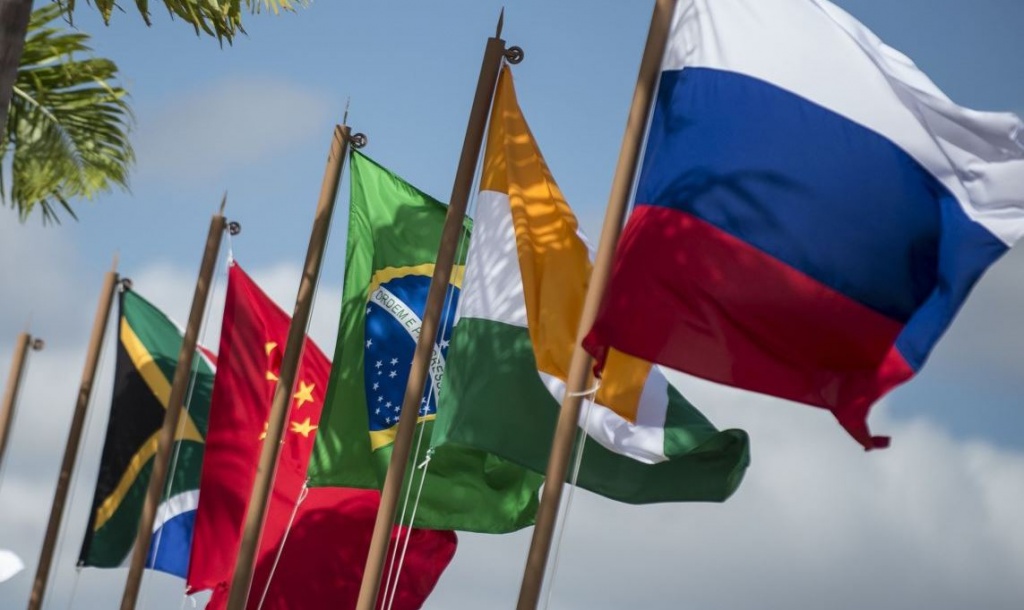
In a new year message to leaders of Brazil, Russia, India, China and South Africa (BRICS), President Vladimir Putin of Russia called for stronger unity among the group’s members.

He also urged the BRICS leaders to strengthen political dialogue and forge a common approach to emerging challenging global problems, especially issues relating to economic stability and security.

In his message to President of the Republic of Brazil Jair Bolsonaro, Putin stressed that the strategic partnership between Moscow and Brasilia in the outgoing year was quite successful. He expressed hope for continued constructive dialogue and joint activities bilaterally and within BRICS, the G20, the UN and other multilateral associations and organizations.

Moscow, together with the other four members, has made appreciable efforts in developing the BRICS. It always intends to work effectively for the sake of enhancing the organization’s authority and promoting common approaches to pressing problems on the international agenda.

In the messages of greetings addressed to the leaders of the Republic of India, President Ram Nath Kovind and Prime Minister Narendra Modi, the Russian leader noted the high level of Russia-India relations of special privileged strategic partnership, as fully demonstrated by the results of recent talks held in New Delhi.

“The implementation of the agreements reached will help further expand productive Russia-India cooperation in various areas,” Putin noted.

He further expressed hope that in the coming year, the two countries would continue their constructive dialogue both via bilateral ties and within BRICS, the SCO, the G20, the UN and other multilateral organizations. These would benefit the friendly peoples of both Russia and India and in the interests of enhancing security and stability in Eurasia and across the world.

In his message of greetings to President of the People’s Republic of China Xi Jinping on the occasion of the New Year and the upcoming Spring Festival, Putin noted that 2021 marked the 20th anniversary of the signing of the Russian-Chinese Treaty on Good-Neighborliness and Friendly Cooperation, which is a solid basis underlying bilateral relations.

Despite the pandemic-related challenges, the Russian leader noted that Russia and China’s interaction was exceedingly productive. “A dynamic political dialogue continued at all levels, trade was up at an all-time high, and cross years of Scientific, Technological and Innovative Cooperation led to good practical results,” the message says.

The effective coordination of efforts in addressing key items on the regional and international agenda was noted in the message, and confidence was expressed that the two countries would be able to expand the entire range of bilateral ties, and a new joint project between the two countries – the Year of Cooperation in Physical Fitness and Sports – would be implemented in full.

“I have no doubt that our Chinese friends will make sure that the Winter Olympic Games are a success. I look forward to our meeting at the opening ceremony of this sports festival,” according to his message of greetings.

Russia and South Africa, in particular, have been attempting to scale up their bilateral relations. “I hope that in 2022 we will continue to work closely to strengthen the multifaceted interaction between Russia and South Africa – both bilaterally and within BRICS, the G20, the UN and other multilateral organizations. This fully meets the interests of our peoples and helps strengthen international stability and security,” Putin wrote in his message to the President of the Republic of South Africa Cyril Ramaphosa.

The BRICS member countries (Brazil, Russia, India, China and South Africa) collectively represent about 26% of the world’s geographic area and are home to 3.6 billion people, about 42% of the world’s population. The five command a combined nominal Gross Domestic Product (GDP) of $16.6 trillion.


Dipo Olowookere is a journalist based in Nigeria that has passion for reporting business news stories. At his leisure time, he watches football and supports 3SC of Ibadan. Mr Olowookere can be reached via [email protected]

Advertisement
Click to comment

Leave a Reply

Your email address will not be published. Required fields are marked *

World

African Visual Art is Distinguished by Colour Expression, Dynamic Form—Kalalb

Published

on

Natali Kalalb Art Gallery, Moscow

By Kestér Kenn Klomegâh

In this insightful interview, Natali Kalalb, founder of NAtali KAlalb Art Gallery, discusses her practical experiences of handling Africa’s contemporary arts, her professional journey into the creative industry and entrepreneurship, and also strategies of building cultural partnership as a foundation for Russian-African bilateral relations. Here are the interview excerpts:

Given your experience working with Africa, particularly in promoting contemporary art, how would you assess its impact on Russian-African relations?

Interestingly, my professional journey in Africa began with the work “Afroprima.” It depicted a dark-skinned ballerina, combining African dance and the Russian academic ballet tradition. This painting became a symbol of cultural synthesis—not opposition, but dialogue.

Contemporary African art is rapidly strengthening its place in the world. By 2017, the market was growing so rapidly that Sotheby launched its first separate African auction, bringing together 100 lots from 60 artists from 14 foreign countries, including Algeria, Ghana, Mali, Nigeria, Senegal, and others. That same year during the Autumn season, Louis Vuitton Foundation in Paris hosted a major exhibition dedicated to African art. According to Artnet, sales of contemporary African artists reached $40 million by 2021, a 434% increase in just two years. Today, Sotheby holds African auctions twice a year, and in October 2023, they raised $2.8 million.

In Russia, this process manifests itself through cultural dialogue: exhibitions, studios, and educational initiatives create a space of trust and mutual respect, shaping the understanding of contemporary African art at the local level.

Do you think geopolitical changes are affecting your professional work? What prompted you to create an African art studio?

The international context certainly influences cultural processes. However, my decision to work with African themes was not situational. I was drawn to the expressiveness of African visual language—colour, rhythm, and plastic energy. This theme is practically not represented systematically and professionally in the Russian art scene.

The creation of the studio was a step toward establishing a sustainable platform for cultural exchange and artistic dialogue, where the works of African artists are perceived as a full-fledged part of the global cultural process, rather than an exotic one.

To what extent does African art influence Russian perceptions?

Contemporary African art is gradually changing the perception of the continent. While previously viewed superficially or stereotypically, today viewers are confronted with the depth of artistic expression and the intellectual and aesthetic level of contemporary artists.

Portraits are particularly impactful: they allow us to see not just an abstract image of a “continent,” but a concrete personality, character, and inner dignity. Global market growth data and regular auctions create additional trust in African contemporary art and contribute to its perception as a mature and valuable movement.

Does African art reflect lifestyle and fashion? How does it differ from Russian art?

African art, in my opinion, is at its peak in everyday culture—textiles, ornamentation, bodily movement, rhythm. It interacts organically with fashion, music, interior design, and the urban environment. The Russian artistic tradition is historically more academic and philosophical. African visual art is distinguished by greater colour expression and dynamic form. Nevertheless, both cultures are united by a profound symbolic and spiritual component.

What feedback do you receive on social media?

Audience reactions are generally constructive and engaging. Viewers ask questions about cultural codes, symbolism, and the choice of subjects. The digital environment allows for a diversity of opinions, but a conscious interest and a willingness to engage in cultural dialogue are emerging.

What are the key challenges and achievements of recent years?

Key challenges:

  • Limited expert base on African contemporary art in Russia;
  • Need for systematic educational outreach;
  • Overcoming the perception of African art as exclusively decorative or ethnic.

Key achievements:

  • Building a sustainable audience;
  • Implementing exhibition and studio projects;
  • Strengthening professional cultural interaction and trust in African

contemporary art as a serious artistic movement.

What are your future prospects in the context of cultural diplomacy?

Looking forward, I see the development of joint exhibitions, educational programs, and creative residencies. Cultural diplomacy is a long-term process based on respect and professionalism. If an artistic image is capable of uniting different cultural traditions in a single visual space, it becomes a tool for mutual understanding.

Continue Reading

World

Ukraine Reveals Identities of Nigerians Killed Fighting for Russia

Published

on

russia ukraine war

By Adedapo Adesanya

The Ukrainian Defence Intelligence (UDI) has identified two Nigerian men, Mr Hamzat Kazeem Kolawole and Mr Mbah Stephen Udoka, allegedly killed while fighting as Russian mercenaries in the war between the two countries ongoing since February 2022.

The development comes after Russia denied knowledge of Nigerians being recruited to fight on the frontlines.

Earlier this week, the Russian Ambassador to Nigeria, Mr Andrey Podyolyshev, said in Abuja that he was not aware of any government-backed programme to recruit Nigerians to fight in the war in Ukraine.

He said if at all such activity existed, it is not connected with the Russian state.

However, in a statement on Thursday, the Ukrainian Defence released photographs of Nigerians killed while defending Russia.

“In the Luhansk region, military intelligence operatives discovered the bodies of two citizens of the Federal Republic of Nigeria — Hamzat Kazeen Kolawole (03.04.1983) and Mbah Stephen Udoka (07.01.1988),” the statement read.

According to the statement, both men served in the 423rd Guards Motor Rifle Regiment (military unit 91701) of the 4th Guards Kantemirovskaya Tank Division of the armed forces of the Russian Federation.

UDI said that they signed contracts with the Russian Army in the second half of 2025 – the deceased Mr Kolawole on August 29 and Mr Udoka on September 28.

“Udoka received no training whatsoever — just five days later, on October 3, he was assigned to the unit and sent to the temporarily occupied territories of Ukraine,” the report read.

It added that no training records for Mr Kolawole have been preserved; however, it is highly likely that he also received no military training, but his wife and three children remain in Nigeria.

Both Nigerians, the report added, were killed in late November during an attempt to storm Ukrainian positions in the Luhansk region.

“They never engaged in a firefight — the mercenaries were eliminated by a drone strike,” UDI stated, warning foreign citizens against travelling to the Russian Federation or taking up any work on the territory of the “aggressor state”.

“A trip to Russia is a real risk of being forced into a suicide assault unit and, ultimately, rotting in Ukrainian soil,” the statement read.

In an investigation earlier this month, CNN reported that hundreds of African men have been enticed to fight for Russia in Ukraine with the promise of civilian jobs and high salaries. However, the media organisation uncovered that they are being deceived or sent to the front lines with little combat training.

CNN said it reviewed hundreds of chats on messaging apps, military contracts, visas, flights and hotel bookings, as well as gathering first-hand accounts from African fighters in Ukraine, to understand just how Russia entices African men to bolster its ranks.

Continue Reading

World

Today’s Generation of Entrepreneurs Value Flexibility, Autonomy—McNeal-Weary

Published

on

Tonya McNeal-Weary Today's Generation of Entrepreneurs

By Kestér Kenn Klomegâh

The Young African Leaders Initiative (YALI) is the United States’ signature step to invest in the next generation of African leaders. Since its establishment in 2010 by Obama administration, YALI has offered diverse opportunities, including academic training in leadership, governance skills, organizational development and entrepreneurship, and has connected with thousands of young leaders across Africa. This United States’ policy collaboration benefits both America and Africa by creating stronger partnerships, enhancing mutual prosperity, and ensuring a more stable environment.

In our conversation, Tonya McNeal-Weary, Managing Director at IBS Global Consulting, Inc., Global Headquarters in Detroit, Michigan, has endeavored to discuss, thoroughly, today’s generation of entrepreneurs and also building partnerships as a foundation for driving positive change and innovation in the global marketplace. Here are the excerpts of her conversation:

How would you describe today’s generation of entrepreneurs?

I would describe today’s generation of entrepreneurs as having a digital-first mindset and a fundamental belief that business success and social impact can coexist. Unlike the entrepreneurs before them, they’ve grown up with the internet as a given, enabling them to build global businesses from their laptops and think beyond geographic constraints from day one. They value flexibility and autonomy, often rejecting traditional corporate ladders in favor of building something meaningful on their own terms, even if it means embracing uncertainty and financial risk that previous generations might have avoided.

And those representing the Young African Leaders Initiative, who attended your webinar presentation late January 2026?

The entrepreneurs representing the Young African Leaders Initiative are redefining entrepreneurship on the continent by leveraging their unique perspectives, cultural heritage, and experiences. Their ability to innovate within local contexts while connecting to global opportunities exemplifies how the new wave of entrepreneurs is not confined by geography or conventional expectations.

What were the main issues that formed your ‘lecture’ with them, Young African Leaders Initiative?

The main issues that formed my lecture for the Young African Leaders Initiative were driven by understanding the importance of building successful partnerships when expanding into the United States or any foreign market. During my lecture, I emphasized that forming strategic alliances can help entrepreneurs navigate unfamiliar business environments, access new resources, and foster long-term growth. By understanding how to establish strong and effective partnerships, emerging leaders can position their businesses for sustainable success in global markets. I also discussed the critical factors that contribute to successful partnerships, such as establishing clear communication channels, aligning on shared goals, and cultivating trust between all parties involved. Entrepreneurs must be proactive in seeking out partners who complement their strengths and fill gaps in expertise or resources. It is equally important to conduct thorough due diligence to ensure that potential collaborators share similar values and ethical standards. Ultimately, the seminar aimed to empower YALI entrepreneurs with practical insights and actionable strategies for forging meaningful connections across borders. Building successful partnerships is not only a pathway to business growth but also a foundation for driving positive change and innovation in the global marketplace.

What makes a ‘leader’ today, particularly, in the context of the emerging global business architecture?

In my opinion, a leader in today’s emerging global business architecture must navigate complexity and ambiguity with a fundamentally different skill set than what was previously required. Where traditional leadership emphasized command-and-control and singular vision, contemporary leaders succeed through adaptive thinking and collaborative influence across decentralized networks. Furthermore, emotional intelligence has evolved from a soft skill to a strategic imperative. Today, the effective modern leader must possess deep cross-cultural intelligence, understanding that global business is no longer about exporting one model worldwide but about genuinely integrating diverse perspectives and adapting to local contexts while maintaining coherent values.

Does multinational culture play in its (leadership) formation?

I believe multinational culture plays a profound and arguably essential role in forming the kind of leadership required in today’s global business environment. Leaders who have lived, worked, or deeply engaged across multiple cultural contexts develop a cognitive flexibility that’s difficult to replicate through reading or training alone. More importantly, multinational exposure tends to dismantle the unconscious certainty that one’s own way of doing things is inherently “normal” or “best.” Leaders shaped in multicultural environments often develop a productive discomfort with absolutes; they become more adept at asking questions, seeking input, and recognizing blind spots. This humility and curiosity become strategic assets when building global teams, entering new markets, or navigating geopolitical complexity. However, it’s worth noting that multinational experience alone doesn’t automatically create great leaders. What matters is the depth and quality of cross-cultural engagement, not just the passport stamps. The formation of global leadership is less about where someone has been and more about whether they’ve developed the capacity to see beyond their own cultural lens and genuinely value differences as a source of insight rather than merely tolerating them as an obstacle to overcome.

In the context of heightening geopolitical situation, and with Africa, what would you say, in terms of, people-to-people interaction?

People-to-people interaction is critically important in the African business context, particularly as geopolitical competition intensifies on the continent. In this crowded and often transactional landscape, the depth and authenticity of human relationships can determine whether a business venture succeeds or fails. I spoke on this during my presentation. When business leaders take the time for face-to-face meetings, invest in understanding local priorities rather than imposing external agendas, and build relationships beyond the immediate transaction, they signal a different kind of partnership. The heightened geopolitical situation actually makes this human dimension more vital, not less. As competition increases and narratives clash about whose model of development is best, the businesses and nations that succeed in Africa will likely be those that invest in relationships characterized by reciprocity, respect, and long-term commitment rather than those pursuing quick wins.

How important is it for creating public perception and approach to today’s business?

Interaction between individuals is crucial for shaping public perception, as it influences views in ways that formal communications cannot. We live in a society where word-of-mouth, community networks, and social trust areincredibly important. As a result, a business leader’s behavior in personal interactions, their respect for local customs, their willingness to listen, and their follow-through on commitments have a far-reaching impact that extends well beyond the immediate meeting. The geopolitical dimension amplifies this importance because African nations now have choices. They’re no longer dependent on any single partner and can compare approaches to business.

From the above discussions, how would you describe global business in relation to Africa? Is it directed at creating diverse import dependency?

While it would be too simplistic to say global business is uniformly directed at creating import dependency, the structural patterns that have emerged often produce exactly that outcome, whether by design or as a consequence of how global capital seeks returns. Global financial institutions and trade agreements have historically encouraged African nations to focus on their “comparative advantages” in primary commodities rather than industrial development. The critical question is whether global business can engage with Africa in ways that build productive capacity, transfer technology, develop local talent, and enable countries to manufacture for themselves and for export—or whether the economic incentives and power irregularities make this structurally unlikely without deliberate policy intervention.

Continue Reading

Trending