General
UN Seeks $25m To Feed Over 5m In Nigeria

By Modupe Gbadeyanka
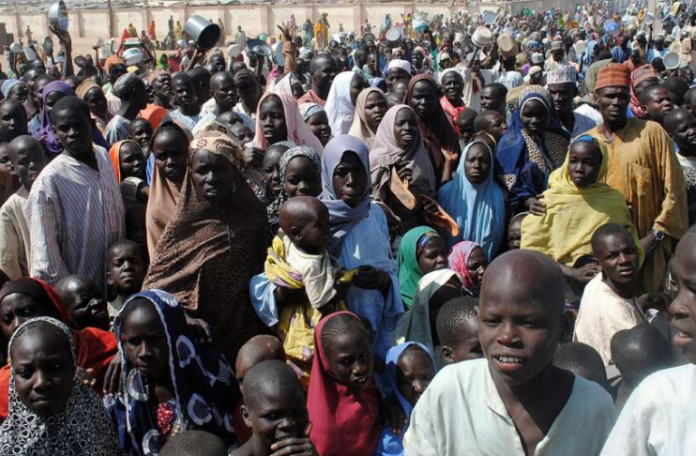
The United Nations (UN) has raised alarm that an “immediate action” is needed as millions in north-eastern Nigeria face food insecurity.
The world body warned that ongoing unrest and rising inflation have left more than five million people in restive north-east Nigeria facing acute food insecurity and has appealed for $25 million through May 2017 to support irrigated vegetable production and micro-gardening in the dry season, as well as rebuild livestock systems.
In a situation update, the Food and Agriculture Organization (FAO) said the urgently needed funds would tackle food insecurity among returnee, internally displaced and host communities. In addition, the agency is seeking funds now to provide critical agricultural inputs to farmers in time for the 2017 main rainy season.
“We must act now to rapidly restore food security and combat severe hunger and malnutrition,” FAO said in the update, which notes that inflationary pressures in the national economy have pushed the prices of staple food crops extremely high across the three north eastern states of Adamawa, Borno and Yobe; and these are expected to rise further, requiring “immediate intervention.”
In other news, the International Organization for Migration (IOM) Displacement Tracking Matrix (October 2016) shows for the first time since August 2015, a total number of internally displaced persons (IDPs) below two million – 97 per cent of whom declared that their displacement was due to the Boko Haram insurgency. One-quarter of these were displaced in 2016, with the majority displaced in 2014. Almost half of those surveyed noted food as their biggest unmet need.
Since August 2015, a total of 958 549 returnees from within and outside Nigeria have been recorded, with an increase of about 48 000 returnees since August 2016. This further emphasizes the need for increased attention towards sustainable agricultural livelihoods support to the returnee process, according to IOM.
In addition FAO reports that the security remains volatile, particularly in Borno state, as Boko Haram activities continue to impact the security situation in some areas. In Borno, Yobe and Adamawa States, there are currently nine local government areas (LGAs) categorized as ‘restricted’ and 27 LGAs categorized as having ‘limited’ access due to a high level of insurgent activity.
General
Defence HQ Denies Civilian Casualties in Niger State Weekend Airstrikes
By Adedapo Adesanya
The Defence Headquarters on Monday denied reports of civilian deaths from airstrikes on suspected bandits in the Niger State over the weekend.
The Defence HQ said the strikes were intelligence-led and hit only militant targets in the state.
The Defence spokesperson, Major-General Michael Onoja, said drone strikes carried out overnight between May 9 and 10 targeted the villages of Katerma, Bokko, Kusasu and Kuduru in the Shiroro district after intelligence indicated that armed gangs, known locally as bandits, were gathering to plan attacks.
The denial came in response to reports in local media (excluding Business Post) alleging civilian casualties and reinforced longstanding concerns about the impact on local communities of airstrikes in Nigeria’s conflict zones.
The development comes as Nigeria continues to battle banditry and terrorism in the North, which is reportedly spreading southwards, as tensions in the Sahel continue.
Last month, around 200 people were killed after military jets struck a village market while pursuing Islamist militants in the North East.
In the latest airstrikes, Mr Onoja said at least 70 suspected bandits were killed in Kusasu alone.
He added that post-strike intelligence indicated that surviving fighters were regrouping, with more than 200 motorcycles moving toward nearby Zango village.
“The strikes were precisely targeted at identified terrorist enclaves and achieved their intended military objectives,” Mr Onoja said, adding that residents had relocated to another village beforehand, limiting the likelihood of civilian presence.
He, however, didn’t say whether civilians were given a warning of strikes.
The military has ordered field units to investigate any claims of civilian harm, Mr Onoja said.
General
SERAP Urges Tinubu to Probe Alleged Missing N26.9bn USPF Funds
By Adedapo Adesanya
The Socio-Economic Rights and Accountability Project (SERAP) has called on President Bola Tinubu to probe the alleged missing or diverted N26.9 billion of public funds from the Universal Service Provision Fund (USPF).
In a Sunday statement posted on its official website, the rights group asked President Tinubu to direct the Minister of Communications, Innovation and Digital Economy, Mr Bosun Tijani, and the Secretary of the USPF, Mr Yomi Arowosafe, to account for and explain the whereabouts of the missing funds.
In a letter signed by SERAP deputy director, Mr Kolawole Oluwadare, it was said that USPF is vital to expanding telecommunications access in underserved and rural communities, and any diversion of its funds directly undermines its mandate to bridge the digital divide, support infrastructure development, and promote inclusive connectivity.
SERAP demanded that President Tinubu should direct the Attorney General of the Federation and Minister of Justice Lateef Fagbemi, SAN to appropriate anti-corruption agencies to promptly and effectively investigate the allegations.
It said, “Anyone suspected to be responsible should face prosecution as appropriate, if there is sufficient admissible evidence, and any missing or diverted public funds should be fully recovered and remitted to the treasury.”
According to the statement, the allegations are documented in the latest annual report published by the Auditor-General of the Federation on 9 September 2025.
The organisation noted that, “These allegations, which include unaccounted expenditures, failure to remit public funds, irregular contract awards, and payments for services not rendered, point to serious breaches of public trust and raise concerns about systemic failures in financial accountability within the USPF.”
SERAP expressed that any failure to investigate the allegations and recover any missing or diverted public funds would not only deprive Nigerians of essential services but also frustrate national development objectives and efforts to achieve digital inclusion.
“The failure to ensure accountability for these funds also risks perpetuating inequality, particularly for marginalised and vulnerable groups who depend most on public interventions to access digital infrastructure,” it warned.
According to the letter, SERAP expressed that they would be grateful if the recommended measures were taken within seven days of the publication of this letter.
SERAP warned that if actions are not taken within seven days, it would consider appropriate legal actions to compel the government, Nigerian Communications Commission (NCC), and the USPF to comply with the request in the public interest.
Also in the letter, SERAP alleged that “According to the 2022 audited report by the Auditor-General of the Federation, which was published on 9 September 2025, the Universal Service Provision Fund (USPF) failed to disclose that it maintained a domiciliary (Dollar) account, and failed to grant the Auditor-General access to the books of the account.
“The USPF failed to remit over N13.8 billion [13,874,132.629.50] ‘being 25% annual operating surplus for four years, that is, between 2016 and 2019.’ The Auditor-General fears ‘the money may have been diverted.’ He wants the USPF to account for and remit the money.
“The USPF also ‘claimed to have spent over N11.7 million [N11,793,838.40] on international trainings in October 2020’, but ‘these claims were made without any documents.’ There were no documents, such as a letter of invitation for the programme, no receipt/invoice for registration, and no certificate of participation.”
The rights group further alleged that there was a total lockdown and restriction of movement out of Nigeria on foreign trips during the period (April to October 2020) due to the global COVID-19 pandemic. Yet, payments were made for these trips without any documents.
“The USPF also awarded contracts of over N2.8 billion [N2,853,052,005.90] but without any approval. The USPF failed to ‘provide the procurement procedures and processes adopted in awarding the contracts, including the contract files.’”
General
NAFDAC, NEPZA Deepen Collaboration on Pharmaceutical Regulation in Free Zones
By Adedapo Adesanya
The Nigeria Export Processing Zones Authority (NEPZA) and the National Agency for Food and Drug Administration and Control (NAFDAC) are strengthening joint oversight within Nigeria’s free trade zones.
The collaboration focuses on pharmaceutical and consumable products manufactured by enterprises operating in the zones.
The Director-General of NAFDAC, Mrs Mojisola Adeyeye, disclosed this during a visit to the Managing Director of NEPZA, Mr Olufemi Ogunyemi, at the authority’s headquarters in Abuja.
Mr Adeyeye said the visit was aimed at deepening collaboration and partnerships that would enable NAFDAC to effectively discharge its regulatory responsibilities within the free trade zones nationwide.
According to her, the agency remains committed to monitoring the importation, exportation, production, and distribution of pharmaceuticals, food products, cosmetics, and other regulated consumables within the zones.
“We must view this meeting as a responsibility we have to the country to protect citizens from fake drugs and consumables infiltrating our markets from known and unknown destinations,” she said.
The NAFDAC boss said the agency had consistently insisted on strict testing procedures and compliance with approved standards to guarantee quality control across regulated manufacturing and export industries.
She emphasised the strategic importance of the free trade zone scheme to Nigeria’s industrialisation drive and broader economic growth objectives, particularly in manufacturing and export promotion activities.
However, Mr Adeyeye said stronger monitoring mechanisms were necessary to ensure the safety, efficacy, and quality of products entering Nigeria’s customs territory from the free trade zones.
“NEPZA and NAFDAC can fix this misalignment by jointly insisting on compliance. We can close this gap through excellent facility management and improved inspection across production lines,” she said.
On his part, Mr Ogunyemi welcomed the collaboration, describing it as critical to addressing alleged irregularities associated with medical supplies and consumable products originating from enterprises operating within the free trade zones.
According to him, the free trade zone scheme, comprising 63 zones and more than 900 enterprises, remains a major gateway for industrial growth, investment attraction, and national economic development.
The NEPZA managing director, however, acknowledged that regulating operations within the zones still presented significant challenges requiring stronger inter-agency collaboration and improved enforcement mechanisms.
“We need a joint effort to address some of the irregularities. We will allow NAFDAC to perform its regulatory functions because the public’s health depends on it,” he said.
Mr Ogunyemi added that NEPZA remained committed to ensuring that free trade zones were not used as safe havens for illicit activities or the circulation of substandard products.
“We fully endorse this partnership and collaboration, which has the potential to enhance the scheme’s global compliance across all production and export activities for the benefit of the country,” he said.
The meeting also featured the confirmation of an eight-member technical committee to examine challenges affecting seamless regulatory operations between both agencies within the nation’s free trade zones.
-
Feature/OPED6 years agoDavos was Different this year
-
Travel/Tourism10 years ago
Lagos Seals Western Lodge Hotel In Ikorodu
-
Showbiz3 years agoEstranged Lover Releases Videos of Empress Njamah Bathing
-
Banking8 years agoSort Codes of GTBank Branches in Nigeria
-
Economy3 years agoSubsidy Removal: CNG at N130 Per Litre Cheaper Than Petrol—IPMAN
-
Banking3 years agoSort Codes of UBA Branches in Nigeria
-
Banking3 years agoFirst Bank Announces Planned Downtime
-
Sports3 years agoHighest Paid Nigerian Footballer – How Much Do Nigerian Footballers Earn