Connect with us

Banking

Ecobank Nigeria Grows Agency Banking Locations to 50,000

Published

on

Ecobank Agency Banking Locations

By Modupe Gbadeyanka

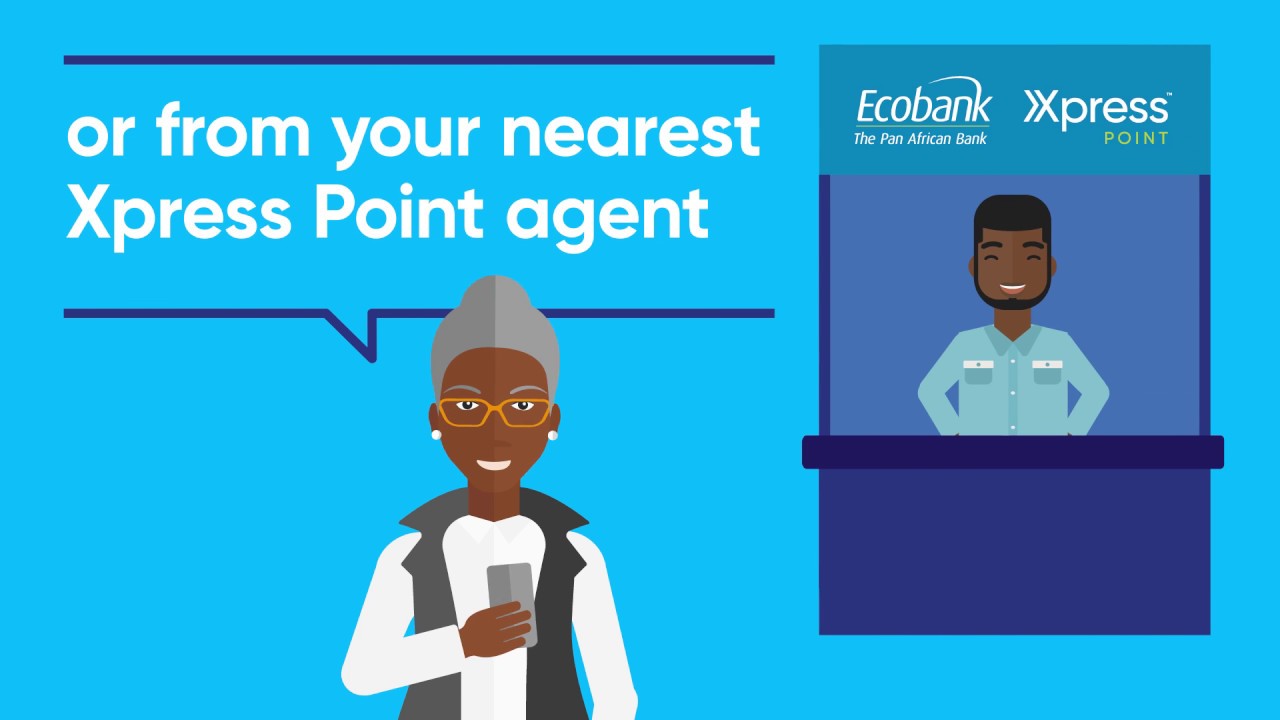
Ecobank Nigeria now has over 50,000 agency banking locations across the country, helping the Central Bank of Nigeria (CBN) achieve its financial inclusion drive.

“Apart from driving financial inclusion of the unbanked and under-banked, we are improving neighbourhood banking with our 50,000 agent points across Nigeria.

“The vision of the Ecobank is to use the agency banking scheme to drive entrepreneurship, provide employment opportunities and support Micro, Small and Medium Enterprises (MSMEs) to contribute meaningfully to the development of nation’s economy.

“For us as a bank, agency banking is part of our efforts to help more Nigerians embrace entrepreneurship as the best strategy to tackle poverty and address growing unemployment.

“We are out to empower people to create wealth and enjoy financial freedom,” the Head of Agency Banking, Ecobank Nigeria, Mrs Olanike Kolawole, stated.

She said through the banking agents, customers can do simple deposit, withdrawal and transfers in their own neighbourhood rather than travel to a bank branch.

Further, she said the bank is happy with its agency banking services providers also known as our Xpress point agents, knowing they are playing a critical role in helping us reach out to the unbanked and underbanked in society.

“They are bringing more people to the banking space through their services. They carry out financial transactions on our behalf and earn commission on every transaction processed.

“Our services are available for sole proprietors, partnerships, co-operative societies, companies with large distribution networks – like petrol stations, FMCGs, telecommunication companies, super agents, aggregators and unregistered businesses such as petty traders, hair salon and others,” she added.

Meanwhile, the Shared Agent Network Expansion Facilities (SANEF) in its recent report said, Ecobank Nigeria which ranked fourth out of 23 listed banks in the country in terms of agents acquired in 2021, made an impressive showing in accounts opening at agency locations.

SANEF is an initiative of the CBN, supported by Deposit Money Banks (DMBs), Nigeria Inter-Bank Settlement Systems (NIBSS) and Licensed Mobile Money Operators/Shared Agents. Its major role is to deepen financial inclusion in Nigeria; drive financial literacy and campaign awareness on financial products and services.

According to the report, Nigerian banks in 2021 acquired over 441,470 agents across the regions of the country, which represents 101 per cent of Year to date achievement against the target set for 2021.

Four regions achieved over 70 per cent of target; Northeast had 67 per cent growth in agent acquisition despite security challenges in the region.

 Similarly, Southeast recorded 131 per cent growth in agent acquisition, Abuja (42 per cent), Rivers (28 per cent) and Lagos (57 per cent) of the total agents deployed in North-central, South-south, and Southwest respectively.

The report revealed that 1.62 billion transactions valued at N30.5 trillion were carried out at agent locations, while 3.1million accounts/ wallets were opened at during the year.


Modupe Gbadeyanka is a fast-rising journalist with Business Post Nigeria. Her passion for journalism is amazing. She is willing to learn more with a view to becoming one of the best pen-pushers in Nigeria. Her role models are the duo of CNN's Richard Quest and Christiane Amanpour.

Banking

See Nigerian Banks That Have Secured Their Licences

Published

on

CBN Building Governor Yemi Cardoso

Nigeria’s banking sector is in the midst of one of its most transformative periods in decades. In March 2024, the Central Bank of Nigeria (CBN) announced a new minimum capital requirement for banks, prompting them to raise additional capital by 31 March 2026. The goal? Create larger, more resilient banks that can support big projects, strengthen the financial system, and help drive Nigeria toward a $1 trillion economy.

It is important for everyday customers, investors, and businesses to understand that the new capital requirement is at different levels: International, National, and Regional.

Banks That Have Secured International Licences

An international banking licence allows banks to operate beyond Nigeria’s borders and engage in cross-border transactions. To qualify, banks must meet a higher capital threshold — ₦500 billion in paid-up capital.

As of early 2026, the following banks met this requirement and secured their international licences:

  • Access Bank Plc
  • Fidelity Bank Plc
  • First Bank of Nigeria Ltd
  • Guaranty Trust Bank (GTBank)
  • United Bank for Africa (UBA)
  • Zenith Bank Plc

Banks That Have Secured National Licences

A national banking licence allows operations across Nigeria but restricts international expansion. Banks need ₦200 billion in paid-up capital to secure this licence.

  • FCMB (First City Monument Bank) – currently pushing to raise additional capital to secure its international licence.
  • Wema Bank
  • Standard Chartered Bank (Nigeria)
  • Citibank Nigeria
  • Stanbic IBTC Bank
  • Sterling Bank
  • Globus Bank
  • Premium Trust Bank
Continue Reading

Banking

VAT on USSD, Mobile Transfer Fees Not Introduced by Nigeria Tax Act—NRS

Published

on

USSD War

By Modupe Gbadeyanka

The Nigeria Revenue Service (NRS) has denied reports that customers performing financial transactions would pay a Value Added Tax (VAT) of 7.5 per cent from January 19, 2026.

Information about this emanated from messages sent out to customers of a financial institution, informing them of the new development in compliance of Nigeria’s new tax laws, especially the Nigeria Tax Act 2025.

It was claimed that Nigerians, as part of efforts of the government to generate more funds from taxes, would begin to pay VAT for the use of banking services like USSD and others.

But reacting in a statement signed by its management on Thursday, January 15, 2026, the tax collecting agency emphasised that the VAT collection for such services was not new.

It stressed that customers have always paid taxes for electronic money transfers and others, as this is charged on the fee, not from the main amount of the transaction.

“The Nigeria Revenue Service wishes to address and correct misleading narratives circulating in sections of the media suggesting that Value Added Tax (VAT has been newly introduced on banking services, fees, commissions, or electronic money transfers. This claim is categorically incorrect.

“VAT has always applied to fees, commissions, and charges for services rendered by banks and other financial institutions under Nigeria’s long-established VAT regime. The Nigeria Tax Act did not introduce VAT on banking charges, nor (sic) did it impose new tax obligation on customers in this regard.

“The Nigeria Revenue Service urges members of the public and all stakeholders to disregard misinformation and to rely exclusively on official communications for accurate, authoritative, and up-to-date tax information,” the statement read.

Business Post reports that what this basically means is that if a customer sends N10,000 and the bank charges N50 for the service, a 7.5 per cent VAT on the N50, which is N3.75, would be paid by the sender, not N750, which is 7.5 per cent of N10,000.

VAT on banking fees

Continue Reading

Banking

Paystack Enters Banking Space With Ladder Microfinance Bank Acquisition

Published

on

Paystack

By Adedapo Adesanya

Nigerian-born payments company, Paystack, has announced its entry into the banking sector with the launch of Paystack Microfinance Bank (Paystack MFB) after the acquisition of Ladder Microfinance Bank.

The bank continues Paystack’s push into consumer products and adds a banking layer to its business-focused payment product, coming ten years after the company was founded with the goal of simplifying payments for businesses using modern technology.

In Nigeria alone, the company says its systems process trillions of Naira every month, supporting more than 300,000 businesses and millions of customers. According to Paystack, this growth highlighted a broader need beyond payments, prompting the decision to build a more comprehensive financial offering.

Paystack MFB will begin lending to businesses before expanding to consumers. It will also offer banking-as-a-service (BaaS) products to companies building financial products and treasury management products.

The company explained that while payments are a critical part of the financial journey, businesses and individuals increasingly require a full financial operating system. This includes the ability to store money securely, move funds easily, gain clarity from financial data, and access tools that support long-term growth. Developers, Paystack added, also need reliable, secure, and compliant infrastructure to build new financial solutions efficiently.

To address these needs, Paystack said it has established Paystack Microfinance Bank as a separate and independent entity from Paystack Payments Limited.

The new microfinance bank operates with its own license, governance structure, and product roadmap, although it will work closely with its sister company.

“By adding Paystack MFB to our family of brands, we’re finding the right balance through combining the rapid innovation of a tech-first platform with the stability of traditional banking,” said Ms Amandine Lobelle, Paystack’s chief operating officer.

Last year, it launched its controversial consumer payments app Zap, and now it is taking a step further with the company securing regulatory backing to become a deposit-taking institution. According to a statement, the bank will be guided by the same principles that shaped Paystack’s early success, including reliability, simplicity, transparency, and trust.

Paystack MFB has begun operations with a small group of early members and plans a gradual rollout to more businesses and individuals. The company also announced the opening of a waitlist for interested users and confirmed it is recruiting a dedicated team to help build its long-term banking infrastructure.

Continue Reading

Trending