
Auto
Groups Partner to Train African Women in Logistics


South Africa’s African Women in Supply Chain Association (AWISCA) has signed an MOU with the Women in Logistics & Transport (WiLAT) organisation from Côte D’Ivoire to collaborate on the delivery of tailor-made entrepreneurial skills training in the logistics and supply chain and to bolster such capacities across the African continent through mentorship, training and coaching.
AWISCA is an organisation focused on the upliftment, empowerment and transformation of Sub-Saharan Africa’s supply chain skills environment. The association aims to address shortages and capacity gaps and to provide integrated solutions that confront such challenges pragmatically.
Founded by Lebo Letsoalo, a globally renowned supply chain champion and expert, the association also intends to bring the supply chain curriculum across African higher education institutions to a globally competitive level.
In this partnership with WiLAT, the two will develop a programme to unlock the continent’s potential through entrepreneurship, anchored around the varied opportunities within the scope of the Africa Continental Free Trade Area (AfCFTA) agreement.
“The programme will necessitate the development of the relevant skills in entrepreneurship within the supply chain and logistic sectors to effectively take advantage of the opportunities in the AfCFTA agreement, especially for the youth and women on the continent”, says Lebo Letsoalo, Founder and Director of AWISCA.
The partnership will also foster a mentorship and coaching-based student exchange program that will see supply chain and logistics students from Côte D’Ivoire visit South Africa on a skills transfer and exchange mission and the same for South African students.
The entrepreneurship element of the training will be offered to emerging entrepreneurs in the same space, with a key focus on the technical skills relevant to the AfCFTA agreement and through enterprise and supplier development.
WiLAT Côte D’Ivoire is an organisation which promotes the social status of women in the supply chain, logistics and transport industries and coordinates the efforts of other organisations that aid the career development of women and women entrepreneurs in Africa.
Chairperson of WiLAT CI Carine Toure Yemtia says that the agreement with AWISCA will see it expand and extend its programmes to many more women and countries on the continent: “Over and above the skills development initiatives, the understanding seeks to develop advanced curriculum and further training that will benefit women in the sector. We want also to help create relevant policies that will empower and uplift women in our industries, especially in the Franco Nations.”
AWISCA and WiLAT Côte D’Ivoire will work collaboratively, reaching many economies across the SSA over the next three years. It will also collaborate with other companies and organisations with the desired expertise to deliver on the mentioned objectives.
AWISCA is already partnering with WiLAT SA and CILT SA (The Chartered Institute of Logistics and Transport) and will expand the partnerships across various African countries.



By Modupe Gbadeyanka
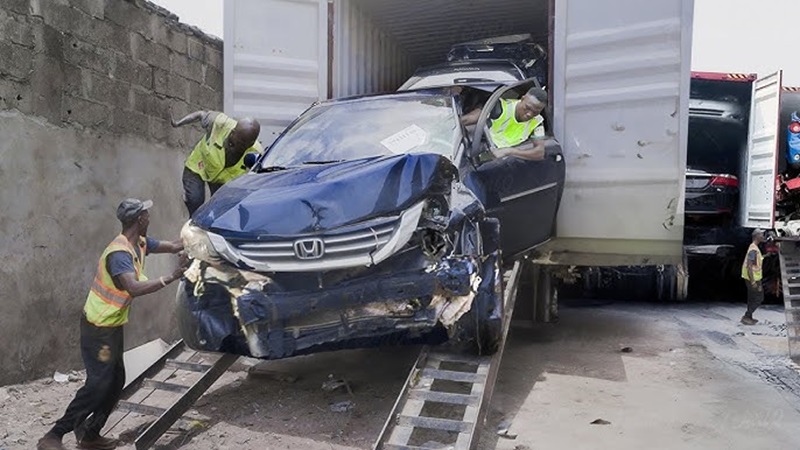
Reactions have continued to trail the decision of the federal government to stop the importation of accidented vehicles into Nigeria by car dealers and others.
On Tuesday, the government declared that it would no longer accept the importation of vehicles without prior certification, noting that it was worried at the influx of substandard automobiles into the country.
The Minister of State for Industry, Trade, and Investment, Mr John Enoh, said the no certification, no entry policy tagged the Standard Organisation of Nigeria–National Automotive Design and Development Council Vehicle Conformity Assessment Programme was now fully implemented with immediate effect, noting that any vehicle that fails to meet the requirements would be denied entry into the country.
“I want to clarify again that this is not a proposal or a pilot. This has become government policy and takes immediate effect upon commencement,” he declared at a meeting in Abuja, stressing that vehicles coming into the nation must obtain pre-shipment certification.
“So, the endorsement integrates vehicle safety into Nigeria’s economic policy framework. It aligns fiscal instruments, foreign exchange import financing, and revenue systems with safety and standards objectives.
“It also strengthens the long-standing work of the Standard Organisation of Nigeria and NADDC within a coordinated whole-of-government approach.
“I think that with effect from the commencement of this SON-NADDC VehCAP, all new and used vehicles and automotive products entering Nigeria must obtain pre-shipment certification on that VehCAP before form M approval, before customs valuation, before power processing, before import clearance, and before market entry,” he stated.
“No vehicle or automotive product shall be imported, cleared, registered or licensed without valid certification. Any non-compliant import shall be subject to refusal of clearance, seizure, or sanctions under applicable laws,” he added.
Mr Enoh disclosed that, “We did not arrive here by accident. Too many Nigerians have died from accidents caused by vehicles that fell short of required standards. Nigeria deserves better, and this government is determined to deliver better.”
While he admitted that some Nigerians may not be able to afford new vehicles, the government cannot fold its arms and allow its citizens to die because of substandard cars.
“I think that without taking an extreme position, we must find a middle ground. There are economic challenges, there is purchasing power, and there is also the capacity of local assemblers to meet demand.
“But at the very minimum, if we adhere strictly to existing regulations, such as limits on the age of imported vehicles, our problem will not be nearly as bad as it is,” he said.
“A vehicle that is non-compliant at the federal level must not be registered at the state level. For the FCCPC, you are expected to treat VehCAP certification as a baseline for consumer protection enforcement for vehicles. State governments, because we run a federation with federal units, state governments are expected to align vehicle registration systems with VehCAP requirements. Most importantly, let me acknowledge the very profound role that was played by the Minister of Finance and Coordinating Minister of the Economy, Wale Edun, for approving the VehCAP initiative,” he warned.
While some Nigerians applaud this initiative, others believe citizens would be exploited by government officials and make the price of fairly used cars more expensive. Some dealers have been accused of bringing in accidented cars, refurbishing them and selling to unsuspecting customers at exorbitant prices.

By Aduragbemi Omiyale
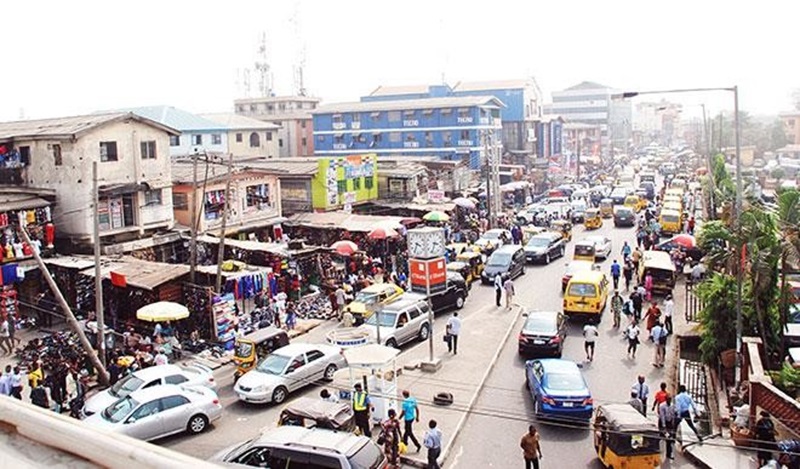
Individuals and syndicates involved in illegal parking extortion at the Computer Village area of Ikeja have been warned to desist or face the full weight of the law.
This caution was given by the General Manager of the Lagos State Parking Authority (LASPA), Mrs Adebisi Adelabu, in a statement.
She said her organisation has uncovered a racket where fraudsters, working in collaboration with touts, are illegally collecting parking fees of up to N1,000 from motorists under false pretences.
Mrs Adelabu further revealed that some operatives of the Lagos Central Business District (CBD), in Ikeja, often clamp down on the illegally parked vehicles, either removing their number plates or arranging for the vehicles to be towed away, making vehicle owners pay a significant fine to recover both their vehicles and license plates.
She emphasised that the management and regulation of parking within the Ikeja business district, Computer Village and the entire state is not within the statutory purview of the CBD or any group of touts but rests exclusively with LASPA.
“We are aware of these fraudulent activities, and we want to make it clear that LASPA is the only government body legally mandated to oversee parking in Lagos State,” she said.
Continuing, the GM of LASPA condemned these illicit activities in the strongest terms, describing them as a disservice to the public and an embarrassment to the efforts of the state government at creating a seamless and orderly parking ecosystem.
The management of LASPA therefore urged all perpetrators engaged in illegal parking activities to stop immediately, adding that the Authority has revamped its monitoring and enforcement operations in the Computer Village and the State environs.
While stressing that anyone engaging in illegal parking activities will be arrested and prosecuted without leniency, Mrs Adelabu advised Lagos motorists and visitors to the Computer Village area to remain vigilant and patronise only LASPA-registered parking operators with valid identification and receipts.
The general public was also urged to report any suspected individuals or groups engaging in illegal parking operating in LASPA.


By Dipo Olowookere
Rising operational costs and declining earnings have forced drivers of ride-haling platforms like Uber and Bolt to embark on a three-day warning strike in Lagos.
This situation has not gone down well with their customers in the metropolis, who have expressed frustration over the strike.
“Though I am not happy with the action of the drivers, I feel for them because they operate in a harsh environment,” a customer of Bolt, Mr Seyi Adeniji, said.
When Business Post checked the Uber app on Monday morning to book a ride from Egbeda to Megida Ayobo, both in the Alimosho Local Government Area of Lagos State, it was functional, but with fewer drivers available for pick-up, with prices ranging from N5,200 on Uber X to N7,400.
One of the drivers, who spoke with this newspaper but begged for anonymity, said efforts by them for improved packages have failed.
It was gathered that when nothing concrete came out from talks with operators of the platforms, drivers, under the aegis of the Amalgamated Union of App-Based Transporters of Nigeria (AUATON), Lagos State Chapter, decided to begin a warning strike from March 16 to 18, 2026, to further press home their demands.
They want an immediate review of ride fares to reflect current economic conditions. They also seek a cut in commission charges by ride-hailing companies, and want the introduction of a guaranteed minimum trip fare.
The drivers have asked for insurance coverage, an end to unjust deactivation of driver accounts without proper investigation, and greater transparency in how fares and commissions are calculated.
In addition, they want improved safety protections for drivers through better rider-verification systems, emergency panic buttons, and faster response mechanisms in cases of security threats.
According to a statement from the spokesman of the organisation, Mr Steven Iwindoye, many drivers are struggling to remain financially viable due to increasing fuel prices, vehicle maintenance costs, inflation and other living expenses, while fare structures on ride-hailing platforms have remained largely unchanged.
“Drivers operating on platforms such as Uber, Bolt, inDrive and Lagride continue to face rising operational costs, including the high price of fuel, vehicle maintenance, inflation and daily living expenses.
“Unfortunately, the fare structures and policies of these companies have not been adjusted to reflect these economic realities,” the statement said.
It was stressed that many drivers now work extremely long hours yet still struggle to earn a sustainable income, clarifying that, “This strike is not intended to punish commuters but to demand fair treatment, economic sustainability and safety protections for the drivers who power the ride-hailing industry.”
-
 Feature/OPED6 years ago
Davos was Different this year
-
Travel/Tourism10 years ago
Lagos Seals Western Lodge Hotel In Ikorodu
-

 Showbiz3 years ago
Estranged Lover Releases Videos of Empress Njamah Bathing
-
 Banking8 years ago
Sort Codes of GTBank Branches in Nigeria
-

 Economy3 years ago
Subsidy Removal: CNG at N130 Per Litre Cheaper Than Petrol—IPMAN
-

 Banking3 years ago
Sort Codes of UBA Branches in Nigeria
-

 Banking3 years ago
First Bank Announces Planned Downtime
-

 Sports3 years ago
Highest Paid Nigerian Footballer – How Much Do Nigerian Footballers Earn