Auto
Lagos Extends Okada Ban to Oshodi, Mushin, Others
By Modupe Gbadeyanka
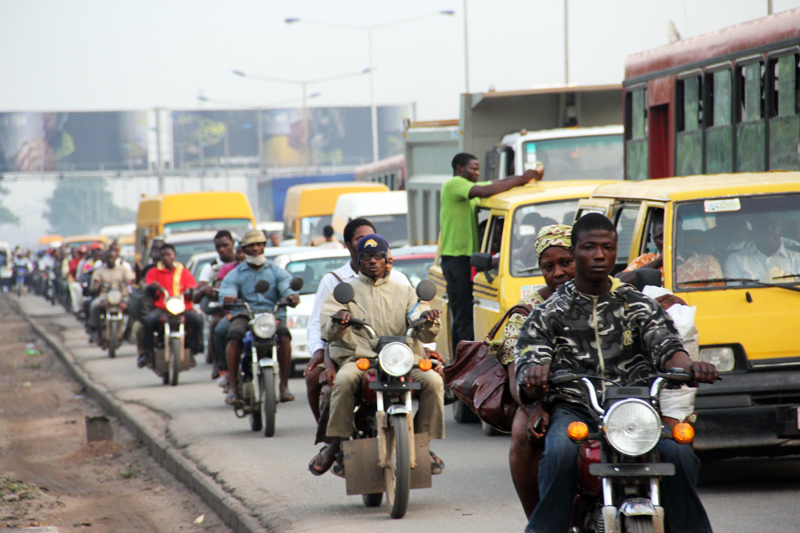
The ban on commercial motorcycles otherwise known as Okada in Lagos State has been extended to more local councils from Thursday, September 1, 2022.
The Commissioner for Transportation, Mr Frederic Oladehinde, at a press conference in Lagos on Thursday, disclosed that from next month, Okada riders would not be allowed to ply major roads in four additional Local Government Areas (LGAs) and six Local Council Development Areas (LCDAs).
The new areas to observe the ban on commercial motorcycle operations are Kosofe, Oshodi-Isolo, Somolu and Mushin Local Government Areas as well as Ikosi-Isheri LCDA, Agboyi-Ketu LCDA, Isolo LCDA, Bariga LCDA, and Odi-Olowo LCDA.
Earlier, precisely on June 1, 2022, the state governor, Mr Babajide Sanwo-Olu, banned Okada in Eti-Osa, Ikeja, Surulere, Lagos Island, Lagos Mainland, and Apapa, as well as LCDAs under them after a young man was lynched by Okada riders in Victoria Island.
While addressing newsmen today, Mr Oladehinde said the extension of the proscription order was a move by the state government to sustain the gains recorded in the ongoing action against operations of motorcycle operators in the metropolis.
According to him, Okada accidents and fatalities have reduced by 63.7 per cent across the 15 local councils where the first phase of ban had been enforced, stressing that the development also significantly brought down the rate of crimes associated with motorcycles.
This, he said, led to resolutions reached at a stakeholders’ forum last Tuesday, with interest groups in which the participants unanimously urged the Government to make the Okada ban state-wide.
“The Ministry in conjunction with the inter-ministerial committee on Okada, having critically accessed these resolutions and the challenges of Okada operations on the security architecture of the State, recommended to Mr. Governor not to go back on the already laid down phase ban in a bid to sustain the gains.
“Based on the apparent positive impact of the ban and the resolution of the Stakeholders’ Forum, Mr Governor has approved the ban of Okada in another four LGAs and their respective five LCDAs for the second phase of the total ban, in addition to the on-going ban in the six LGAs and their respective LCDAs,” the Commissioner said.
The state government advised residents to embrace alternative means of transportation for their journey, noting that the State had provided safe and sustainable First- and Last-Mile Transport Scheme, BRT Scheme, e-hailing taxi Scheme and other acceptable means for the safety of commuters.
Mr Oladehinde disclosed that 7,500 motorcycles had been impounded and crushed in the ongoing enforcement, while resistance had dropped sharply. He issued a stern warning to riders who may want to flout the proscription order, stressing that the enforcement would not be sparing.
The Commissioner said the state government had interventions in place to empower the affected Okada riders as an alternative means of livelihood. He urged them to embrace the intervention programmes which are being coordinated by six Government ministries and also Lagos State Employment Trust Fund (LSETF).
“It is important to reiterate the State Government’s commitment to the safety, security of lives and properties in the State. In exercising this, any motorcycle impounded will be crushed and the process will be made public.
“Both riders and passengers arrested on proscribed routes will be made to face the full wrath of the law in line with the provision of Section 46, sub-section 1, 2 & 3 of the Transport Sector Reform Law (TSRL), 2018,” he said.
Auto
Interswitch Digitises Nigeria’s Interstate Travel With Ticket Vending Platform
By Modupe Gbadeyanka
Nigeria’s interstate transport ecosystem has been digitalised by the introduction of a ticket vending platform by one of Africa’s leading integrated payments and digital commerce companies, Interswitch.
This comprehensive digital solution was designed to transform ticketing, streamline operations, and enhance service delivery.
At the core of the solution is a secure, token-based system that allows travellers to purchase digital tickets across multiple channels, including web, mobile, and dedicated point-of-sale (POS) devices deployed at transport terminals.
These tokens serve as verifiable digital vouchers, which are validated and redeemed at boarding points, significantly reducing inefficiencies associated with manual ticketing, cash handling, and fragmented sales processes.
It was developed as both an operational management system and a digital marketplace to allow transport operators, particularly small and medium-scale businesses, to digitise their end-to-end processes while connecting to a broader customer base through the Quickteller ecosystem.
With this innovation, operators can seamlessly create and manage routes, oversee terminal activities, track sales, and access real-time performance insights from a single, centralised platform.
It also introduces a marketplace experience that enables travellers to search, compare, and select transport options across multiple operators based on routes, schedules, and pricing. This not only simplifies journey planning but also promotes transparency and choice for commuters.
The platform also supports corporate and institutional users by enabling bulk token purchases, offering a flexible and efficient solution for organisations managing employee or group travel.
In addition, it delivers value to regulators and stakeholders within the transport ecosystem by providing access to structured data and actionable insights that can support oversight, licensing, and consumer protection efforts.
“Transportation remains a critical backbone of Nigeria’s economy, yet much of the sector still operates with fragmented systems and manual processes that limit efficiency and growth.
“With the Ticket Vending Platform, we are introducing a scalable digital infrastructure that empowers transport operators to modernise their operations, expand their reach, and deliver a more seamless experience to travellers.
“Beyond ticketing, this is about creating a connected ecosystem, one that brings together operators, commuters, and regulators on a unified platform, while driving transparency, efficiency, and long-term value across the industry,” the Managing Director for Industry Ecosystems at Interswitch, Ms Chinyere Don-Okhuofu, said.
Auto
FRSC, Brewery Companies Renew Pact to Tackle Drink-Driving
The Federal Road Safety Corps (FRSC) has renewed a strategic partnership with major brewing companies in Nigeria to intensify efforts against drunk driving and improve road safety nationwide.
The renewed Memorandum of Understanding (MoU), signed with members of the Beer Sectoral Group (BSG), extends the collaboration for another five years, with both sides pledging to deepen public awareness, enforcement and community engagement.
FRSC Corps Marshal, Shehu Mohammed, said the partnership underscores the importance of synergy between government and the private sector in addressing road crashes, particularly those linked to alcohol consumption.
He stressed that saving lives on Nigerian roads requires sustained collaboration, adding that the corps would continue to work with industry players to promote responsible behaviour among motorists.
Speaking on behalf of the BSG, Managing Director of Nigerian Breweries Plc and Chairman BSG, Thibaut Boidin, said the renewal reflects the industry’s commitment to sustained collaboration with regulators. He cited previous joint campaigns, including the Don’t Drink and Drive Campaign, as impactful, adding that the next phase would focus on expanding reach and strengthening implementation.
Also speaking, the Managing Director of Guinness Nigeria, Girish Sharma, said the industry remains committed to supporting initiatives that promote safer roads. He noted that while alcoholic beverages are often blamed for road crashes, the real issue lies in irresponsible consumption, particularly drinking and driving.
“We are here to work with you and ensure that this programme grows bigger and delivers real impact. Saving lives is what matters most,” he said.
Similarly, the chief executive of International Breweries Plc, Mr Nicholas Kade, commended the FRSC for its dedication, describing the corps’ efforts as critical to making communities safer. He said the brewing industry would continue to support initiatives that promote responsible drinking and road safety.
The Executive Director of the Beer Sectoral Group, Ms Abiola Laseinde, described the renewal as a milestone in public-private collaboration.
She said the partnership had driven nationwide campaigns against drunk-driving, influenced behaviour and reached millions of Nigerians with road safety messages.
Ms Laseinde added that both parties would scale up interventions in the next five years to further reduce crashes and promote responsible alcohol consumption.
The FRSC and BSG’s partnership has been central to national campaigns discouraging drunk-driving, with stakeholders expressing optimism that the renewed agreement will deliver stronger outcomes.
Auto
NRS Denies Introduction of New Vehicle Tax from July 1
By Modupe Gbadeyanka
The Nigeria Revenue Service (NRS) refuted reports making the rounds on social media that the federal government plans to introduce a new tax on vehicles from July 1, 2026.
Mr Dare Adekambi, who serves as the Special Adviser to the NRS Chairman, Mr Zach Adedeji, and spokesperson for the organisation, said in a statement that the government was not planning to introduce the vehicle tax as claimed.
He described a viral infographic purporting the policy as false and misleading, urging members of the public to disregard it.
Mr Adekambi advised citizens to only rely on information from the NRS, urging them to follow the company its official handles on all social media platforms and its website for accurate information about tax and its activities.
In the infographic, motorists were directed to pay an unspecified vehicle tax rate online or at approved banks and agencies. The website listed as NRS’s was the old one, http://www.firs.gov.ng and not the new http://www.nrs.gov.ng created after it was rebranded.
“The NRS wishes to state categorically that the information did not emanate from the service or any government agency.
“Citizens are, therefore, advised to disregard the fabricated messages designed to mislead the public and instead rely on official government channels for information on government policies,” Mr Adekambi said in the statement.
-
Feature/OPED6 years agoDavos was Different this year
-
Travel/Tourism10 years ago
Lagos Seals Western Lodge Hotel In Ikorodu
-
Showbiz3 years agoEstranged Lover Releases Videos of Empress Njamah Bathing
-
Banking8 years agoSort Codes of GTBank Branches in Nigeria
-
Economy3 years agoSubsidy Removal: CNG at N130 Per Litre Cheaper Than Petrol—IPMAN
-
Banking3 years agoSort Codes of UBA Branches in Nigeria
-
Banking3 years agoFirst Bank Announces Planned Downtime
-
Sports3 years agoHighest Paid Nigerian Footballer – How Much Do Nigerian Footballers Earn