Auto
Lagos to Enforce e-Call-up System on Lekki-Epe Corridor from June 16
By Adedapo Adesanya
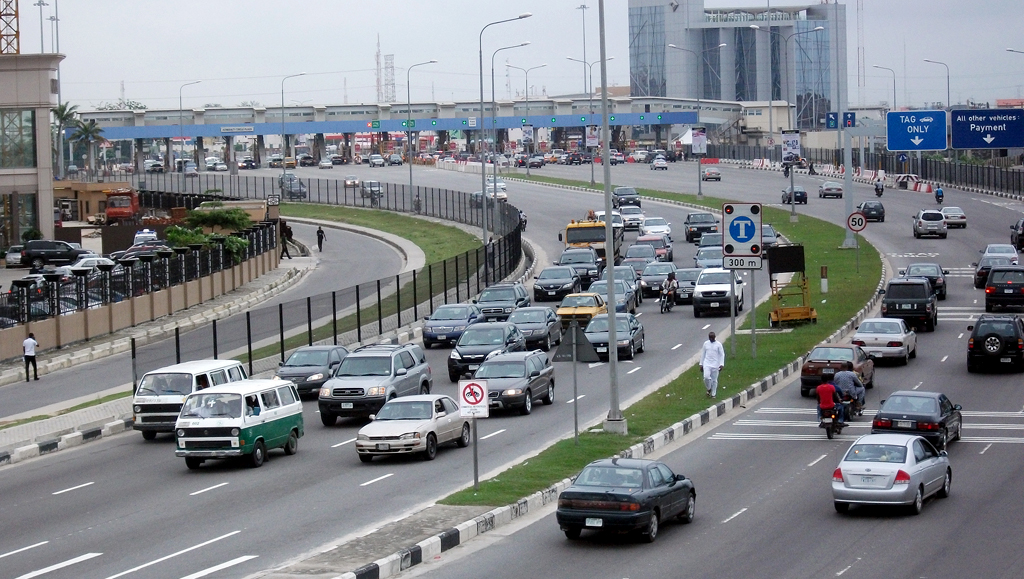
The Lagos State Government will commence the enforcement of the electronic call-up (e-call-up) system on the Lekki-Epe corridor from June 16.
The Deputy Governor of Lagos State, Mr Obafemi Hamzat, confirmed this in a statement signed by the state’s Commissioner for Transportation, Mr Oluwaseun Osiyemi, on Sunday.
He announced the implementation of the system during a stakeholders’ meeting convened to address pressing concerns surrounding traffic management and congestion caused by increasing industrial activities within the Lekki Free Zone and its surrounding areas.
Recall that the e-call-up system was met with fierce opposition by stakeholders, who rejected it, leading to a postponement by Governor Babajide Sanwo-Olu.
Mr Hamzat explained that the e-call-up system was designed to regulate the movement of articulated vehicles and tankers accessing the corridor, adding that this will promote orderly traffic flow, preventing the kind of gridlock previously experienced in the Apapa area.
“I urge all stakeholders to remain fully committed to the initiative, as it is critical in enhancing logistics efficiency and improving road transportation infrastructure in the state,” he said.
Also speaking, Mr Osiyemi, reaffirmed the government’s unwavering commitment to the project.
He acknowledged that while previous engagements with stakeholders had resulted in consensus on implementation, challenges encountered during recent enforcement efforts necessitated a temporary pause and further consultations.
The commissioner further directed the immediate removal of all articulated vehicles currently obstructing traffic along the Lekki-Epe corridor.
“Enforcement of the e-call-up system is not intended as a revenue-generating initiative, but rather as a vital strategy to improve traffic flow, safety, and road infrastructure management across the state,” he said.
The meeting witnessed the participation of key stakeholders, including representatives from the Nigerian Union of Petroleum and Natural Gas Workers (NUPENG), Petroleum Tanker Drivers (PTD), Independent Petroleum Marketers Association of Nigeria (IPMAN).
Others include Major Energies Marketer Association of Nigeria (MEMAN), Depots and Petroleum Products Marketers Association of Nigeria (DAPPMAN), Lekki Worldwide Investment Company (LWIC), Lekki Free Zone (LFZ), Lekki Sea Port.
Also involved in the meeting are: Nigerian Ports Authority (NPA), Nigerian National Petroleum Corporation (NNPC Retail), and the Nigerian Midstream and Downstream Petroleum Regulatory Authority (NMDPRA).
Auto
Bolt Business Plans Smarter Mobility Solutions for Nigerian Clients
By Aduragbemi Omiyale
The corporate mobility solution from Bolt, Bolt Business, has expressed its desire to strengthen relationships with existing customers in Nigeria by introducing solutions tailored to industries with frequent employee mobility needs, including healthcare, financial services, legal services and logistics.
This is as the organisation, over the past 12 months, delivered double-digit growth in the country, driven by expanding adoption across multiple industries, growing demand from small and medium-sized enterprises (SMEs), and an increasing number of firms seeking cost-efficient alternatives to managing in-house transport fleets.
The Country Manager for Bolt for Business Nigeria, Mr Isaac Iroko, disclosed that the smarter mobility solutions being planned will improve visibility, simplify expense management and support business growth.
“Our focus remains on building products that create value for organisations of every size while delivering a seamless experience for their employees,” he stated.
Bolt Business has continued to experience an increasing demand from businesses seeking smarter, more efficient ways to manage employee transportation and business travel.
It serves organisations across a broad range of industries, including financial services, technology, healthcare, professional services, manufacturing, logistics, media, real estate and fast-growing consumer businesses.
The growth reflects a broader shift in how Nigerian businesses approach corporate mobility. Rather than maintaining expensive vehicle fleets or relying on fragmented transport arrangements, more organisations are adopting digital mobility platforms that offer greater transparency, control and operational efficiency.
“Businesses today are looking beyond transportation; they’re looking for smarter ways to optimise operations and manage costs.
“We’ve seen organisations across different sectors embrace Bolt Business because it gives them a simple, reliable and transparent way to manage employee travel, whether it’s daily commutes, client meetings or business trips.
“This growth demonstrates that corporate mobility is becoming an increasingly important part of business efficiency in Nigeria,” Mr Iroko stated.
Unlike traditional fleet management, Bolt Business enables companies to centralise transportation through a single platform, providing features such as centralised billing, trip reporting, spending controls and real-time visibility into employee travel. These capabilities help businesses improve oversight while reducing the administrative burden associated with corporate transportation.
Auto
Eight Lagos Island Residents Get Cars Under LagRide Partner Programme
By Modupe Gbadeyanka
To boost economic activities in Lagos Island and support residents, the chief executive of the Lagos State Lotteries and Gaming Authority, Mr Bashir Are, sponsored the training of eight persons at the LagRide Drivers Academy through the LagRide Partner Programme.
Mr Are funded both the academy training and the vehicle costs, removing the two barriers that most frequently prevent qualified drivers from entering formal, structured employment in the mobility sector.
The beneficiaries were handed over keys to their vehicles at a ceremony in Lagos on Tuesday, July 21, 2026.
They now operate a LagRide vehicle under the platform’s Drive To Own programme, which allows a Captain to earn daily income while working towards full ownership of the vehicle at the end of the agreed payment term.
“The initial capital required to be onboarded was never going to come from these young men, so we provided that intervention financially so that they can have good employment.
“Lagos is a megacity. My agency runs the largest gaming and fintech conference on the continent every year, and when those delegates arrive, we do not want them driven around in poor vehicles. This is also employment for our own people, and we have a great deal of unemployment and underemployment in this country.
“These Captains are from Lagos Island Local Government, and they can now take care of their own families. Let me be clear about one thing. This is not a project. It is a programme, and it continues,” Mr Are stated.
Also speaking, the chairman of LagRide, Ms Diana Chen, said, “Today is just a new beginning, and more and more people will come. More local governments will join us, and one day we want to bring the Governor here so that this programme runs across the state.
“LagRide is a platform where a person comes to take a job and ends up owning the vehicle. It is also a platform that any government, or any organisation with a social development or CSR mandate, can use to empower the people they want to support. The people get their own asset at the end of it.”
On her part, the lawmaker representing Lagos Island Constituency I in the Lagos State House of Assembly, Mrs Omolara Oyekan-Olumegbon, said, “Everyone keeps saying there are not enough jobs for our youths. This is our own way of ensuring that they are empowered.
“When you give a person money, it is money, and it finishes. This is the difference between giving a man a fish and teaching him how to fish. You are giving these young men something they can use to take care of themselves, their families and their homes.
“We must thank the chief executive of the Lagos State Lotteries and Gaming Authority for doing this, and I must also thank Chief Diana Chen. Lagos Island is a commercial hub, and we intend to keep the flag flying. This is the beginning, and we will be coming back to ask for more.”

Auto
Senate Passes Bill to Sanction Trading, Preaching in Buses
By Modupe Gbadeyanka
A bill aimed at prohibiting hawking, trading or preaching inside commercial vehicles in Nigeria has been passed by the Senate.
The bill known as the Federal Road Safety Corps (Amendment) Bill, 2026, imposes fines between N50,000 and N100,000 for violations if assented to by the President.
The piece of legislation was passed by the red chamber of the National Assembly on Thursday and should later be transmitted to President Bola Tinubu for assent.
Members of the upper chamber of the parliament explained that the law was amended to discourage distractions in commercial vehicles and improve the safety of commuters.
In addition, motorists who fail to cooperate with officials of the Federal Road Safety Corps (FRSC) during roadside breath tests conducted on reasonable suspicion are liable to fines or imprisonment or both.
Lawmakers noted that this was to improve compliance with road safety regulations and reduce road crashes, as fines for driving under the influence of alcohol or intoxicating drugs were raised to N100,000 from N5,000, with the risk of spending two years behind bars.
It was also proposed that disobedience to traffic lights, road signs, pavement markings and other traffic control devices will now attract N100,000, while the fine for speed limit violations is now N100,000, with reckless driving now a fine of N100,000 or two years’ imprisonment.


Pingback: e-Call-Up: Fuel Scarcity Looms as Marketers, Truck Drivers Threaten to | Business Post Nigeria