Auto
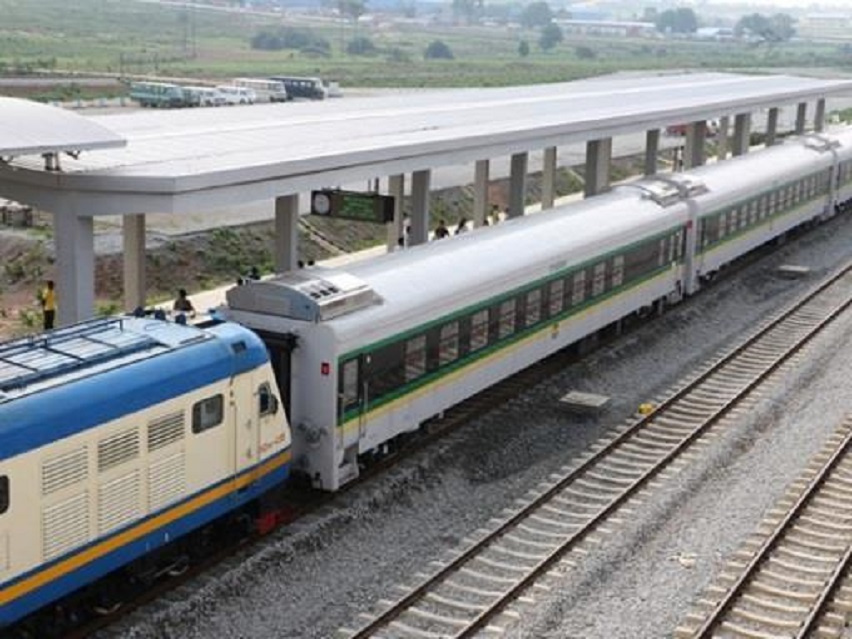
Nigeria Gets €245m Chinese Loan for Kaduna-Kano Rail Project
By Adedapo Adesanya
China Development Bank (CDB) has recently granted the first tranche of a loan worth €245 million ($255 million) to support the Kaduna-Kano railway in Nigeria.
This will provide crucial financial backing to ensure the smooth construction of the transportation initiative, the CDB said on Tuesday.
The railway is on the list of practical cooperation deliverables released during the third Belt and Road Forum for International Cooperation in 2023.
The project has been making steady progress so far, the CDB said, adding that going forward, it will closely coordinate with Nigerian partners to ensure the smooth disbursement of subsequent loans and effective post-loan management.
The Kaduna-Kano railway, spanning 203 kilometres in total, is set to provide a direct rail connection between Kano, an important northern city in Nigeria, and the country’s capital Abuja upon its completion, according to the CDB.
In July 2024, the Senate Committee Chairman on Land Transport, Mr Adamu Aliero reaffirmed the commitment of the National Assembly in ensuring that funds are made available for timely completion of the project.
Mr Aliero, while speaking to the press on the sidelines of the inspection at Maikarfi, Kaduna State, explained that the joint committee of both the House and also the Senate were on site to inspect the construction of a rail line between Kaduna to Kano.
“We have just taken a ride from Kano to Maikarfi. So far, we are impressed with what we have seen. We have seen a lot of dedication by the ministry and also by the contractor trying to deliver the project in time, I think 2025, they said.
“We understand that the deadline given to them is 2025 or 2026. But we are hoping that by 2025 if they sustain the tempo, they will be able to deliver. We will lobby our colleagues in the National Assembly to ensure that this project does not suffer from inadequate funding.
“There are other challenges connected with the project, particularly the funding arrangement, which we intend to discuss with the Minister of Finance, the Attorney General of the Federation, and also the Minister of Transportation,” he added.
Auto
Bolt, Uber, inDrive Not Banned From Airports—FAAN
By Adedapo Adesanya
The Federal Airports Authority of Nigeria (FAAN) has clarified that e-hailing services such as Uber and Bolt are not banned at the nation’s airports, noting that discussions are ongoing with the operators to establish a workable framework for their operations.
FAAN made the clarification in a statement issued on Thursday, following reports and concerns over the status of e-hailing services at some Nigerian airports.
The authority said its position was not aimed at restricting passengers’ access to transportation options or undermining the role of e-hailing platforms in providing convenient mobility to air travellers.
“FAAN wishes to clarify that its position is not, and has never been, directed at limiting passengers’ access to transportation options or undermining the important role that e-hailing services play in providing convenient mobility to air travellers,” the statement said.
According to the FAAN, airports are highly regulated environments, requiring all commercial transportation services operating on their premises to have appropriate frameworks that allow FAAN to maintain visibility over their operations, vehicles and drivers.
It said such arrangements were also necessary to ensure effective coordination in the event of security or passenger-related incidents.
FAAN said it had received complaints and observed operational challenges linked to commercial transportation activities within and around airport premises, including passenger “solicitation and touting”.
“These concerns make it imperative for FAAN to have a clear and effective framework for managing commercial transportation activities at the airport,” it said.
The authority added that it had been engaging relevant e-hailing operators to develop a mutually workable framework that recognises the value of their services while addressing safety, security, accountability and passenger-experience requirements.
“The current situation should therefore not be misconstrued as FAAN declaring a blanket prohibition on e-hailing services.
“Rather, it is part of an ongoing process of operational alignment with the objective of ensuring that e-hailing services can continue to serve passengers within a framework that meets the requirements of the airport,” the airport authority noted.
FAAN also clarified the role of its Airport Car Hire Rank Management System (ACHRAMS), saying the platform was not designed to compete with Uber, Bolt or other e-hailing services.
“ACHRAMS is not an e-hailing application and is not intended to compete with or replicate the services provided by Uber, Bolt or any other e-hailing platform,” the authority said.
It explained that ACHRAMS was developed primarily to provide operational visibility and tracking within the airport environment while facilitating the management of applicable concessions and related airport charges.
The clarification comes amid concerns over the implementation of ACHRAMS and the regulatory requirements for commercial transportation operators at airports.
FAAN has previously said the system was designed to modernise airport ground transportation, improve coordination and strengthen passenger safety and security. The Authority has also said discussions were ongoing with Uber and Bolt to enable their integration into the new framework.
FAAN said it recognised the convenience and additional choice that Uber and Bolt provide to passengers, adding that it appreciated concerns from travellers who may experience inconvenience while the operational issues are being resolved.
“The authority equally appreciates the concerns being expressed by passengers who may experience inconvenience while these operational issues are being resolved,” it said.
FAAN said it and the affected operators were currently engaged in “constructive discussions” to resolve outstanding issues, particularly those relating to passenger safety and security, operational visibility, accountability and the management of pick-up activities within airport environments.
The authority said the discussions needed to be concluded “expeditiously” and expressed confidence that a mutually acceptable understanding would be reached shortly.
It reiterated that passenger protection remained its overriding consideration.
FAAN also reaffirmed its commitment to working with Uber, Bolt and other mobility providers to ensure that passengers continue to have safe and convenient transportation options at Nigerian airports.
Auto
Mobility Fintech Moove Secures $250m Series C Funding, Joins Unicorn Club
By Adedapo Adesanya
Mobility fintech, Moove, has raised $250 million in a Series C round, valuing the company at $2.1 billion, finally attaining a long-pursued unicorn status.
The round was led by Mubadala Investment Company and co-led by Woven Capital, Toyota’s growth fund, and Ion Pacific. New backers BlueCrest Capital Management, Sona Asset Management and The Raptor Group also joined, alongside existing investors BlackRock, MUFG, Franklin Templeton, Uber and others.
The funding will help Moove expand its autonomous vehicle business by investing in fleet ownership and its robotics-powered depots, known as “Nests,” where autonomous vehicles are charged, maintained, serviced and managed for continuous operation.
Through its partnership with Waymo, Moove is already a leading third-party autonomous fleet operator, with operations live in Phoenix and Miami, and future operations in London.
The capital will also support the company’s expansion into new global markets. As part of the growth plan, Moove expects to increase its autonomous vehicle workforce by more than 220 per cent by the end of the year, growing from about 150 employees to around 500.
Moove said scaling autonomous mobility requires more than just self-driving vehicles. It also needs investment in fleets, charging infrastructure, maintenance facilities and operational systems. The company is building this supporting infrastructure to make autonomous transport reliable and scalable across cities.
Moove started in Africa in 2020 by financing cars for drivers working on ride-hailing platforms. It later entered the UAE, India, the US and the UK. The company also works with Uber, which joined a $100 million funding round in 2024 that valued Moove at $750 million. The new valuation is 2.8 times that level.
Speaking on the deal, the co-chief executive and Advisory Board Chairman of Moove, Mr Ladi Delano, said, “Every major technology revolution becomes an infrastructure race. The internet required data centres. AI required compute. Autonomy requires fleets, charging, maintenance, data systems and 24/7 operations in every city – and that is what Moove is building. In our view, as autonomy scales, infrastructure ownership and operations will define the category leaders. We are building to be one of them.”
On his part, Mr Ali Eid AlMheiri, Executive Director of Diversified Assets, UAE Investments Platform at Mubadala, said: “As autonomous mobility moves from innovation to scaled deployment, the infrastructure supporting it becomes increasingly important. Moove is building an integrated operating platform that combines fleet ownership, operational capability, and technology to support the next phase of growth in autonomous mobility. This is particularly important for the UAE.”
Adding her input, Ms Betty Lee, Principal at Woven Capital (Toyota’s Growth Fund), said, “Moove has demonstrated an exceptional ability to execute across markets, building a global platform across traditional and autonomous vehicle fleets. The next wave of mobility is an infrastructure problem as much as a software one, and Moove is building the foundational layer to solve it.”
For Mr Michael Joseph, co-CEO & Co-Founder of Ion Pacific Limited, said: “We’ve partnered with the Moove team for more than five years, and their execution has consistently impressed us. As autonomous mobility moves from possibility to reality, Moove is building a critical infrastructure layer for the sector – one that is complex, adaptive and essential to scaling AVs. We’re excited to be part of that journey.”
Auto
Bolt Business Plans Smarter Mobility Solutions for Nigerian Clients
By Aduragbemi Omiyale
The corporate mobility solution from Bolt, Bolt Business, has expressed its desire to strengthen relationships with existing customers in Nigeria by introducing solutions tailored to industries with frequent employee mobility needs, including healthcare, financial services, legal services and logistics.
This is as the organisation, over the past 12 months, delivered double-digit growth in the country, driven by expanding adoption across multiple industries, growing demand from small and medium-sized enterprises (SMEs), and an increasing number of firms seeking cost-efficient alternatives to managing in-house transport fleets.
The Country Manager for Bolt for Business Nigeria, Mr Isaac Iroko, disclosed that the smarter mobility solutions being planned will improve visibility, simplify expense management and support business growth.
“Our focus remains on building products that create value for organisations of every size while delivering a seamless experience for their employees,” he stated.
Bolt Business has continued to experience an increasing demand from businesses seeking smarter, more efficient ways to manage employee transportation and business travel.
It serves organisations across a broad range of industries, including financial services, technology, healthcare, professional services, manufacturing, logistics, media, real estate and fast-growing consumer businesses.
The growth reflects a broader shift in how Nigerian businesses approach corporate mobility. Rather than maintaining expensive vehicle fleets or relying on fragmented transport arrangements, more organisations are adopting digital mobility platforms that offer greater transparency, control and operational efficiency.
“Businesses today are looking beyond transportation; they’re looking for smarter ways to optimise operations and manage costs.
“We’ve seen organisations across different sectors embrace Bolt Business because it gives them a simple, reliable and transparent way to manage employee travel, whether it’s daily commutes, client meetings or business trips.
“This growth demonstrates that corporate mobility is becoming an increasingly important part of business efficiency in Nigeria,” Mr Iroko stated.
Unlike traditional fleet management, Bolt Business enables companies to centralise transportation through a single platform, providing features such as centralised billing, trip reporting, spending controls and real-time visibility into employee travel. These capabilities help businesses improve oversight while reducing the administrative burden associated with corporate transportation.