
Banking
Access Bank Shines at EMEA Finance Banking Awards

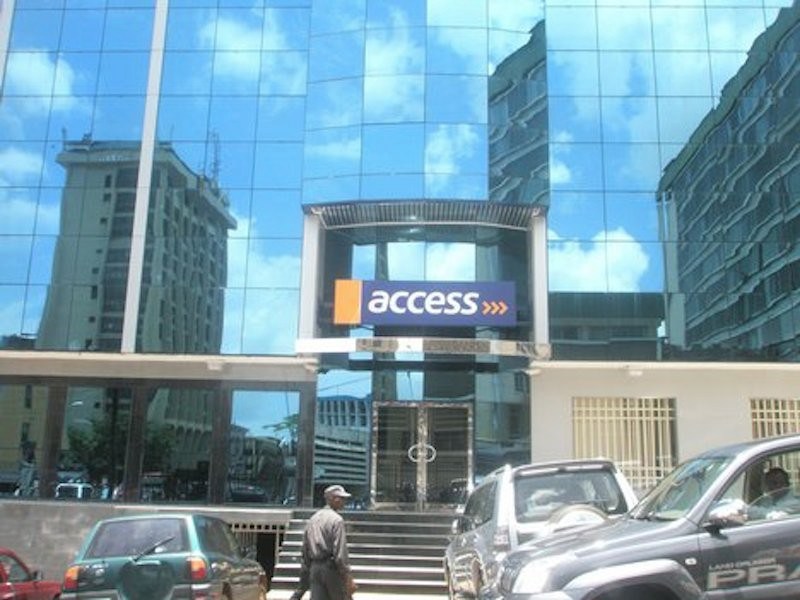

By Dipo Olowookere
It was a day of glory for foremost African financial institution, Access Bank Plc, when it emerged as Nigeria’s biggest winner at the 2016 EMEA Finance Banking Awards by leading financial publication EMEA Finance Magazine.
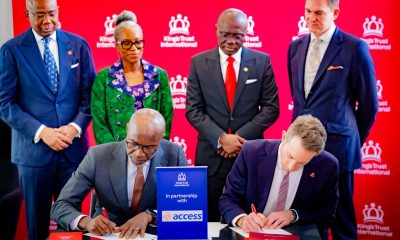
At the event, Access Bank won in three categories awarded to financial institutions in the Pan-African region: the ‘CEO of the Year’, awarded to Access Bank’s Group Managing Director and CEO, Mr Herbert Wigwe; ‘Best Bank in Nigeria’ and ‘Corporate Social Responsibility’.
Receiving the award on behalf of the bank at the annual African Banking Awards Dinner in London, United Kingdom, Mr Wigwe thanked the staff of Access Bank, acknowledging their support in achieving the goal of not only becoming one of the Top 3 banks in Nigeria, but also for participating in the firm’s CSR activities that have touched the lives of thousands of Nigerians.
“We are delighted to receive these prestigious awards. It is a testimonial to the hard work we have done in line with our five-year strategy to become the world’s most respected African Bank,” Mr Wigwe, who was obviously elated, said at the occasion.
Furthermore, he said, “2016 has been a remarkable year for the Bank as we continue to receive both regional and international acclaim.
“I am extremely proud to be part of a profitable institution that is committed to delivering sustainable economic growth that is profitable, environmentally responsible and socially relevant. We have reaffirmed our status as innovative industry pioneers equipped to help our customers take tomorrow today.”
Commenting on Access Bank’s impressive streak, EMEA Finance CEO, Mr Christopher Moore, said that, “A repeat winner of our Best Bank in Nigeria award, Access Bank has become a Nigerian powerhouse, and one of the premier financial institutions in the country.
“Generating steep increases in revenues and profit growth over the past several years is no small feat, particularly with strong negative macroeconomic headwinds.”
The hat-trick comes after two recent big wins at the Business Day Awards where the Bank was named ‘Bank of the Year’ and Access Bank’s Group Managing Director and Chief Executive Officer, Mr Herbert Wigwe was also crowned ‘Bank CEO of the Year’.
“We are delighted to recognise Wigwe as our CEO of the Year in our African Banking Awards 2016 awards package,” Moore said. “Leadership requires ambition, and Wigwe possesses this quality and much more. His years of dedication and commitment to the development of Access Bank have helped it to attract over 8 million customers, to complete complex and strategically important financings, and to create an international presence,” he added.
EMEA Finance is a leading bi-monthly global industry publication that reports on the major financial events and happenings initiated and influenced by the international financial industry active in Europe, Middle East and Africa.
Mr Wigwe led Access Bank’s efforts to incorporate sustainability across all aspects of the bank’s activities. In doing so, he also moved the entire sector forward, and now all of Nigeria’s banks, including the Central Bank of Nigeria, have adopted what is known as the Nigerian Sustainable Banking Principles.














Nigeria’s relationship with digital banking has changed almost beyond recognition in a decade. Where cash once dominated every transaction, from the roadside market to the corporate boardroom, mobile apps, instant transfers, and USSD codes have reshaped how tens of millions of Nigerians interact with their money every single day. The figures speak for themselves: point-of-sale transactions surged to a record N18 trillion in 2024, a 69 per cent increase from the year before, and the number of POS terminals in operation more than doubled to 5.5 million. Mobile banking is now the most widely used digital financial service in the country, with four in five users having accessed it within any given 90-day window.
This is, by any honest measure, an extraordinary story of financial inclusion and technological adoption. But it is an incomplete story if told without its other half.
Behind the growth curves and transaction volumes, a quieter and more troubling story has been unfolding. According to the 2024 Nigeria Consumer Protection Survey published by Innovations for Poverty Action, nearly one in four digital financial services users reported experiencing unexpected fees, charges or fraud attempts in the past year. Of those who encountered a problem, only half sought any form of formal redress. That silence is not apathy. It is the sound of eroded confidence: customers who have concluded that raising a complaint is unlikely to produce results.
The fraud data from the Nigeria Inter-Bank Settlement System tells the same story from a different angle. Actual losses to digital payment fraud rose to N52.26 billion in 2024, a figure inflated significantly by a single N31.1 billion incident involving one institution but still representing a 196 per cent increase in fraud losses over five years, even as the number of individual cases declined. The decline in case counts is not reassuring enough. It suggests that while fraudsters are making fewer attempts, they are making each one count considerably more.
By channel, e-commerce and internet banking remain the most exposed, followed by point-of-sale, mobile and web platforms. The most common technique is social engineering, which requires no sophisticated technology at all. It requires only a convincing conversation and a customer who does not know what to guard against. Insider abuse, where bank staff are complicit in fraud, is identified by NIBSS as the single greatest structural threat to the sector. That is a sobering finding, and one that no institution should read past quickly.
What this data collectively points to is a gap that the industry must confront honestly. Nigeria’s digital banking infrastructure has expanded at speed. The consumer protection architecture that should travel alongside it has not always kept pace. Convenience and safety are not natural enemies, but they require deliberate and sustained design to coexist. Left to grow at different speeds, they create precisely the conditions that fraudsters, rogue actors and complacent institutions exploit.
The encouraging news is that the gap is closing. Nigeria exited the Financial Action Task Force’s grey list in 2025, a signal that the country’s financial system has materially strengthened its safeguards. The CBN’s 2024 rollout of risk-based cybersecurity frameworks for deposit money banks formalised the standard of care that institutions are required to demonstrate. Regulatory enforcement actions in 2024, including reported industry penalties totalling over N15 billion, have underscored that consumer protection is a compliance obligation with real and immediate consequences. The industry is being held to a higher standard, and that is the right direction.
Within institutions themselves, the most effective safeguards are often the ones customers never see. The strongest security infrastructure operates silently in the background: monitoring account behaviour in real time, identifying anomalies before they become losses and intervening before a suspicious transaction completes rather than after. This is not glamorous work, but it is the work that matters most. A customer who never has to report a fraud incident has been protected more effectively than one who was offered a sympathetic apology after the damage was done.
Union Bank’s experience illustrates what this balance looks like in practice. Across its digital channels, including UnionMobile, the USSD platform (*826#) and the Union360 business banking suite, the bank’s full-year 2025 customer experience data reflects consistently strong satisfaction and loyalty scores. These are not outcomes that emerge from convenience alone. They reflect what customers value above all else when they transact digitally: the confidence that the experience will be safe, seamless and complete. That quality of outcome does not happen by accident. It is the product of sustained investment in backend security infrastructure that operates largely out of sight, proactive monitoring systems that identify and intercept anomalies before they become losses, and an institutional culture that treats customer protection as a core organisational value rather than a compliance line item. It is a culture Union Bank articulates through its ICARE values, where the commitment to being customer and community-focused is not a policy position but a founding principle, reinforced consistently from the moment any member of staff joins the bank.
In March, as institutions across Nigeria marked World Consumer Rights Day, Union Bank reaffirmed to its staff the responsibility that every individual within the organisation carries to uphold the rights and dignity of the customers it serves. It is the kind of internal commitment that rarely makes headlines, but it ultimately determines the quality of every customer interaction that does.
Trust is the only currency in banking that cannot be manufactured on demand. It is built over time, through consistent behaviour, through systems that protect customers before they know they need protecting, and through institutions willing to be accountable when they fall short. Nigeria’s digital banking revolution has done extraordinary things for financial access and economic participation. Its next chapter must be defined by what it does for financial safety. The two are not in competition. In the long run, they are, in every meaningful sense, the same thing.

By Aduragbemi Omiyale
One of the leading financial services firms, Guaranty Trust Holding Company (GTCO) Plc, has declared a record dividend of N12.75 for the 2025 financial year, reaffirming its unrivalled capacity to create value for shareholders.
The chief executive of the GTCO, Mr Segun Agbaje, said, “Our record dividend payout this year is not only a reflection of our current profitability but also of our confidence in the group’s long-term earnings potential.”
In the year, the company, according to its financial statements released to the Nigerian Exchange (NGX) Limited and the London Stock Exchange (LSE) on Tuesday, reported profit before tax of N1.23 trillion, underpinned by strong growth in core earnings, with interest income and fee income increasing y-o-y by 23.2 per cent and 25.9 per cent, respectively.
The performance reaffirms its capacity to generate sustainable earnings and builds on the momentum from 2024, when GTCO delivered a record profit of ₦1.27 trillion, driven in part by N517.5 billion in fair value gains, which did not recur in 2025.
Also, the post-tax profit shrank to N865.75 billion from N1.02 trillion due to recent fiscal policy adjustments to the taxation of investment securities, notably withholding tax on short-term instruments.
However, when normalised for this effect, underlying earnings remain robust, driven by growth in core operating income.
The organisation continues to maintain a well-structured, healthy, and diversified balance sheet in all the jurisdictions wherein it operates a banking franchise, as well as across its Payments, Pension and Funds Management business verticals.
In the year under review, total assets and shareholders’ funds closed at N17.8 trillion and N3.4 trillion, respectively, as Capital Adequacy Ratio (CAR) remained very robust and strong, closing at 43.8 per cent, likewise asset quality improved as evidenced by IFRS 9 Stage 3 Loans which closed at 3.4 per cent and 5.0 per cent at Bank and Group level in FY-2025 (Bank, 3.5 per cent, and Group, 5.2 per cent in December 2024).
In addition, Cost of Risk (COR) also improved to 2.2 per cent from 4.9 per cent in December 2024. In specific terms, the net loan book grew by 12.4 per cent from N2.79 trillion as of December 2024 to N3.13 trillion in December 2025.
Similarly, deposit liabilities grew by 23.8 per cent from N10.40 trillion to N12.87 trillion during the same period.
“Our 2025 result underscores the resilience and depth of our earnings capacity. Following a record 2024, which included significant fair value gains, our focus has been on strengthening the sustainability of our earnings by driving growth across our core banking and ecosystem businesses,” Mr Agbaje stated.
“The strength of our underlying earnings, despite a stronger Naira and tighter regulatory parameters, reflects the quality of our franchise and the discipline with which we execute our strategy.
“Importantly, this strong core earnings performance underpins our capacity to sustain and grow shareholder returns,” he added.
“Looking ahead, we remain focused on scaling our ecosystem, driving innovation across our financial services platform, and delivering consistent, high-quality earnings that support superior value creation for our shareholders,” he noted.


By Modupe Gbadeyanka
The Nigerian banking industry has been praised for its strength, capacity and resilience, following its compliance with the March 31, 2026, recapitalisation deadline.
In March 2024, the Central Bank of Nigeria (CBN) gave financial institutions operating in the country a March 2026 deadline to jack up their capital base from N25 billion.
Banks with an international licence were asked to have at least N500 billion, while national lenders were told to raise the capital base to N200 billion, with regional banks pegged at N50 billion.
Others included merchant banks, N50 billion; non-interest banks with national license, N20 billion and non-interest banks with regional license will now have N10 billion minimum capital.
The banking reform was to prepare operators for the $1 trillion economy target for 2030 set by the federal government.
Data showed that almost all the Nigerian banks have shored up their capital ahead of the CBN recapitalisation deadline.
According to the CBN Governor, Mr Yemi Cardoso, 32 banks have already met the new capital requirements under the ongoing recapitalisation programme.
“The banking sector recapitalisation programme has recorded commendable progress, with 32 banks having already met the revised capital requirements.
“This achievement has significantly strengthened the resilience and capacity of the Nigerian banking system, positioning it to effectively mobilise long-term capital, support productive investment, and play its critical role in enabling the transition towards a $1 trillion economy,” he said.
One group that is over the moon over this development is the Association of Corporate and Marketing Professionals in Banks (ACAMB), which applauded the disciplined execution of the exercise by all financial institutions and extended special praise to the regulator for its regulatory oversight.
The president of ACAMB, Mr Jide Sipe, said, “The Nigerian banking industry has once again demonstrated its innate strength and resilience.
“Achieving over 96 per cent compliance ahead of the recapitalisation deadline is no small feat; it is an indication of the capacity of our financial institutions to adapt and overcome.
“We commend the CBN for its visionary leadership, particularly under Governor Cardoso, whose bold reforms are reshaping the financial landscape,” he said.
Mr Sipe also congratulated the CBN on its recent recognition as Central Bank of the Year 2026 by the London-based Central Banking Awards Committee, a prestigious honour bestowed at a global gathering of central banks.
According to ACAMB, Mr Cardoso’s stewardship continues to reposition the nation’s economy with clarity, discipline, and a transformational outlook, earning Nigeria increased respect on the global stage.
The association reiterated its commitment to supporting policies that promote transparency, stability, and sustainable growth in the Nigerian banking industry.











-
 Feature/OPED6 years ago
Davos was Different this year
-
Travel/Tourism10 years ago
Lagos Seals Western Lodge Hotel In Ikorodu
-

 Showbiz3 years ago
Estranged Lover Releases Videos of Empress Njamah Bathing
-
 Banking8 years ago
Sort Codes of GTBank Branches in Nigeria
-

 Economy3 years ago
Subsidy Removal: CNG at N130 Per Litre Cheaper Than Petrol—IPMAN
-

 Banking3 years ago
Sort Codes of UBA Branches in Nigeria
-

 Banking3 years ago
First Bank Announces Planned Downtime
-

 Sports3 years ago
Highest Paid Nigerian Footballer – How Much Do Nigerian Footballers Earn