Connect with us

Banking

How Access Bank is Linking Africa’s Landlocked Markets

Published

on

Link Africa’s Landlocked Markets

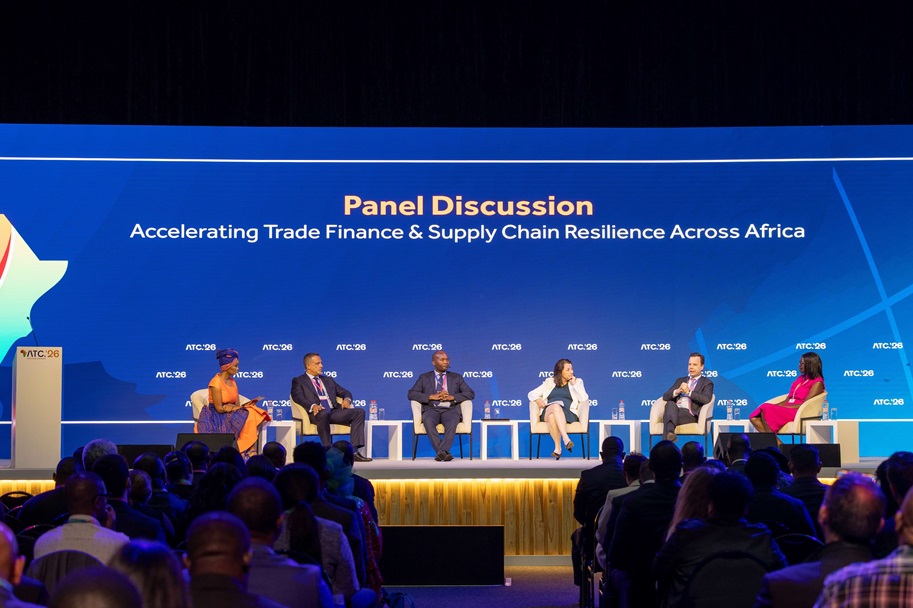
At the Africa Trade Conference (ATC) 2026 held in Cape Town, South Africa, policymakers, financiers, and global business leaders gathered to confront one of Africa’s most persistent economic constraints: the continent’s vast trade financing gap.

Hosted by Access Bank Plc, the conference brought together stakeholders from governments, development finance institutions and the private sector to explore how Africa can transform its fragmented trade ecosystem and unlock the promise of the African Continental Free Trade Area.

The central message emerging from the discussions was clear: Africa must move from being a continent of landlocked markets to a network of land-linked economies, connected through finance, infrastructure and digital trade systems.

Turning Vision into Velocity

The conference, themed “Turning Vision into Velocity: Building Africa’s Trade Ecosystem for Real-World Impact,” focused on translating policy ambition into practical solutions for businesses across the continent.

Delivering the welcome address, Roosevelt Ogbonna, Managing Director and Chief Executive Officer of Access Bank Plc, emphasised that Africa must confront the structural barriers that continue to limit intra-continental commerce.

“The reality is that Africa still controls a small share of global trade,” Ogbonna said. “The corridors are still fragmented and more aspirational than functional, and too many small businesses that aspire to trade across Africa remain constrained.”

According to him, the conference was convened to continue the conversation begun at its inaugural edition in 2025, focusing on how Africa can expand trade within the continent while strengthening its participation in global markets.

“This conference must not end as another talking shop,” he said. “It must become the birthplace of a movement that contributes to transforming intra-African trade.”

For Access Bank Plc, the role of financial institutions in that transformation is evolving.

“At Access Bank, we see ourselves as financiers and connectors of markets, ideas and opportunities,” Ogbonna noted. “Our role is to help African businesses move from ambition to impact, from local relevance to global competitiveness.”

Bridging Africa’s Trade Finance Gap

Despite its abundant natural resources and population of more than 1.3 billion people, Africa remains underrepresented in global trade flows.

One of the biggest barriers is the lack of accessible financing for exporters, manufacturers and small businesses seeking to expand across borders. The trade finance gap continues to constrain intra-African commerce, which remains significantly below levels recorded in other regional trading blocs.

To address this, Ogbonna highlighted three strategic priorities that emerged from the previous edition of the conference: breaking down silos between policymakers, financial institutions and businesses; building a trade ecosystem powered by reliable data and analytics, and developing systems that support both large corporations and smaller businesses expanding across borders

Encouragingly, he noted that progress is already emerging across several sectors.

“We have seen value chains emerging across agriculture, manufacturing and services, and we are seeing African brands crossing borders and building a global presence,” he said.

Nevertheless, the gains remain uneven across the continent, with progress concentrated in a few markets and trade corridors.

Financing the Future of African Trade

Beyond the structural challenges of trade finance and infrastructure, the conference also explored the evolving financial architecture required to unlock Africa’s full trade potential.

Keynote addresses were delivered by Kennedy Mbekeani, Director General for the Southern Africa Region at the African Development Bank, and Kwabena Ayirebi, Managing Director of Banking Operations at the African Export-Import Bank.

Both speakers emphasised the need for stronger collaboration among development finance institutions, commercial banks and governments to mobilise the capital required to drive infrastructure development and support trade across the continent.

Mbekeani stressed that private capital would be crucial in bridging Africa’s infrastructure financing gap.

“The mobilisation of private capital remains crucial as many African governments are constrained by limited fiscal space and overstretched balance sheets,” he said.

“The mobilisation of capital, particularly private capital, is something that we need to work on.”

The conversation was further enriched by insights from Tolu Oyekan, Managing Director and Partner at Boston Consulting Group, who presented the Africa Trade Outlook 2026.

His presentation highlighted the macroeconomic forces shaping the future of African trade, including shifting global supply chains, the growing importance of regional value chains and emerging opportunities for African industries to capture greater value in global markets.

Digital infrastructure and payments were also central to the conversation.

Mike Ogbalu, Chief Executive Officer of the Pan-African Payment and Settlement System, underscored the importance of payment interoperability in enabling seamless cross-border transactions across the continent.

Efficient payment systems, he noted, are essential to reducing the cost and complexity of trading across African borders, particularly for small and medium-sized enterprises.

Policy, Finance and Partnerships

The conference also convened a high-level ministerial panel that brought together policymakers and financial sector leaders to examine the policy environment required to accelerate Africa’s economic integration.

Participants included Elizabeth Ofosu Adjare, Ghana’s Minister for Trade, Agribusiness and Industry, and Tiroeaone Ntsima, Botswana’s Minister of Trade and Entrepreneurship, alongside senior executives from international financial institutions.

Together, they explored how regulatory alignment, infrastructure development and innovative financing structures can accelerate the implementation of the African Continental Free Trade Area and unlock intra-African trade.

The objective, participants agreed, was not merely dialogue but partnership, bringing together the policymakers, financiers and businesses capable of translating Africa’s trade ambitions into tangible outcomes.

Reimagining Africa’s Economic Geography

Beyond policy discussions and financing strategies, the conference reflected a deeper shift in how Africa views its economic geography.

For decades, the continent’s development challenges have often been framed in terms of physical constraints: landlocked economies, fragmented markets and weak infrastructure.

But the emerging vision presented in Cape Town suggests a different future,  one where integrated banking networks, digital payment systems and trade finance platforms transform isolated markets into connected trade corridors.

For Access Bank Plc, that transformation is already underway.

With operations spanning 25 countries globally, including 16 across Africa, the bank is building financial corridors that link African businesses to each other and to global markets.

From Potential to Participation

The conversations at the Africa Trade Conference reinforced a growing consensus across the continent: Africa’s economic transformation will depend on policy reforms and institutions capable of financing and facilitating trade.

Banks, development finance institutions and payment platforms are increasingly becoming the connective tissue linking African markets.

For Access Bank, the ambition is clear,  helping reshape the narrative of African trade.

From isolated markets to integrated corridors. From landlocked constraints to land-linked opportunity. And from economic potential to meaningful participation in the global trading system.


Banking

The Inside Story: How Stanbic IBTC’s EVB Programme is Revolutionising Corporate Banking

Published

on

Stanbic IBTC Bank Logo white

In today’s rapidly evolving business environment, organisations face heightened competition, shifting workforce expectations, and increasing pressure to optimise productivity. Amid these dynamics, one truth has become increasingly clear: employees’ financial well-being is directly tied to organisational performance.

Employees who are financially secure demonstrate greater commitment, higher productivity, reduced absenteeism, and stronger alignment with company objectives. Conversely, financial stress has emerged as a leading contributor to disengagement, declining morale, and weakened performance across all levels of the workforce.

At Stanbic IBTC, we recognise this critical relationship between employee financial health and business outcomes. This insight led us to engineer Employee Value Banking (EVB)—a strategic, comprehensive, and future-proof solution designed to help organisations strengthen their workforce, elevate their value proposition, and drive long-term business sustainability.

EVB is a transformational partnership model aligning employee wellbeing with corporate productivity, risk reduction, and efficiency.

A Holistic, Employee-Centric Banking Architecture

EVB is built on the understanding that employees across varying grades and income brackets have unique financial realities. By offering a robust suite of banking, investment, insurance, and advisory services tailored to diverse needs, EVB empowers organisations to meaningfully enhance their workforce’s financial security and stability.

Key Components of the EVB Suite

  1. Digital Unsecured Personal Loans with Flexible Repayment

Employees gain access to seamless, digitally processed loans that allow them to meet immediate financial needs with ease.

Flexible repayment structures reduce financial strain while supporting responsible borrowing behaviour.

  1. Tailored Savings and Investment Solutions

Through structured savings plans, mutual funds, and diverse investment options, employees are empowered to build wealth over time.

This fosters discipline, long-term planning, and financial resilience.

  1. Pension and Asset Management Services

With Stanbic IBTC Pension Managers and Stanbic IBTC Asset Management, employees benefit from expert retirement guidance, wealth advisory, and long-term financial structuring—ensuring a secure and predictable future.

  1. Comprehensive Insurance Cover (Life, Health & Assets)

Employees and their families enjoy protection against major life risks, including health emergencies, life insurance, and property coverage.

This security enhances peace of mind and reduces workplace anxiety.

  1. Mortgage Support at a Competitive Single-Digit Rate of 9.75%

Homeownership remains a powerful symbol of stability and success.

Through EVB’s highly competitive mortgage solution, 774 families have successfully become homeowners from 2024 to date, demonstrating the program’s profound and measurable impact.

A Structured, Responsible, and Risk-Free Lending Model

One of the core strengths of EVB is its cadre-based lending framework, which aligns all loan offerings with employee grade levels, income bands, and organisational hierarchy. This ensures:

  • Responsible and sustainable lending behaviours
  • Protection against over-borrowing
  • Stronger financial discipline
  • Greater alignment with corporate HR structures

What distinctly sets EVB apart is its employer-focused risk mitigation. EVB’s structure ensures employers face no risk, making it uniquely designed for seamless adoption compared to standard banking programs.

All loans provided under the program are fully insured, meaning organisations carry:

  • Zero liability
  • Zero indemnity exposure
  • Zero financial risk

This allows HR and management teams to expand their employee value proposition without adjusting internal financial structures or bearing additional costs.

Beyond Banking: Building a Financially Resilient Workforce

Financial empowerment is not achieved solely through products; it requires education, behavioural change, and consistent guidance.

Further differentiating EVB, Financial Fitness Workshops and complimentary Financial Health Checks are embedded as core components, giving employees ongoing support that competitors rarely offer.

These workshops cover:

  • Personal budgeting and cash flow management
  • Savings and investment strategies
  • Smart debt management
  • Retirement and pension planning
  • Wealth creation principles

By equipping employees with financial knowledge, organisations reduce anxiety, enhance decision-making, and cultivate a more confident, resilient, and empowered workforce.

A Strategic Partnership That Delivers Sustained Organisational Value

EVB enables organisations to build a healthier, more motivated, and higher-performing workforce.

It is not a product—it is a strategic collaboration that enhances organisational culture, strengthens HR capability, and improves employer brand reputation.

Through EVB, organisations benefit from:

  • Higher employee engagement
  • Improved productivity and performance
  • Reduced financial stress across all workforce levels
  • Enhanced talent attraction and retention
  • A stronger, richer reward and well-being structure
  • A fully digital, modern, and efficient employee banking experience

EVB reflects Stanbic IBTC’s long-standing commitment to supporting organisations by empowering the individuals who drive their success.

Employee Value Banking (EVB) is a pivotal advancement in corporate banking. Where traditional bank–corporate relationships focused on organisational accounts and financial transactions, EVB introduces a holistic, human-centric model that puts employees’ well-being at the core of corporate financial services.

Through EVB, Stanbic IBTC has:

  • Transitioned corporate banking from a transactional model to a value-driven partnership
  • Expanded the definition of the corporate customer to include the entire workforce
  • Integrated banking, pensions, investments, mortgages, insurance, and financial education into a unified ecosystem
  • Elevated corporate banking into a strategic enabler of productivity, well-being, and business sustainability
  • Positioned financial well-being as a competitive advantage for modern organisations

EVB has redefined the future of corporate banking, transforming it from a service function into a lever for organisational excellence, employee empowerment, and value creation.

Stanbic IBTC drives this change, enabling businesses to build secure, high-performing workforces.

Continue Reading

Banking

Unity Bank, Experts Call for Increased Investment in Green Economy

Published

on

Unity Bank UnityCares

By Modupe Gbadeyanka

The need for increased investment in the green economy and the adoption of frontier technologies as critical pathways to driving economic resilience and reducing the impact of climate change on vulnerable populations across Africa has again been stressed.

At a thought-provoking webinar hosted by Unity Bank Plc to commemorate this year’s Earth Day, themed The True Cost of Climate Change and Who Pays? leading climate innovation experts highlighted the disproportionate burden which climate change places on underserved communities and the need for inclusive solutions.

For example, the chief executive of Instollar, Ms Chinwe Udo-Davis, submitted that, “The true cost of climate change is not evenly distributed.”

“Communities with the least resources are often the most affected, whether through energy poverty, environmental degradation, or limited access to sustainable alternatives. Addressing this imbalance requires intentional investment in clean energy solutions that are both accessible and scalable,” she noted.

Also, the Programme Manager at the Nigeria Climate Innovation Centre, Oluwatosin Ajide, underscored the importance of coordinated, system-wide approaches in tackling climate challenges, particularly through innovation and policy alignment.

“Climate change is fundamentally a structural problem, and its solution requires a paradigm shift: from innovation and policy to financing and implementation. Stakeholders must work collaboratively to drive solutions that are sustainable and inclusive,” Ajide stated.

In his opening remarks, Unity Bank’s Head of Strategy and Innovation, Mr Ibukun Coker, emphasised the urgency of addressing climate risks from both a societal and business perspective.

“Climate change is no longer a distant or abstract challenge. It is an existential threat with direct consequences for individuals, businesses, and economies.

“At Unity Bank, we recognise the role institutions must play in incorporating sustainability in project financing, supporting businesses and promoting solutions that build resilience in communities where we operate,” he stated.

The programme provided an avenue for stakeholders to examine the human, economic, and institutional costs of climate change, while spotlighting practical solutions to address its growing impact.

It also explored emerging opportunities in climate technology, renewable energy, and ecosystem financing, reinforcing the role of innovation and cross-sector collaboration in building long-term resilience.

By hosting the webinar, Unity Bank continues to demonstrate its commitment to advancing sustainability-focused dialogue and supporting initiatives that promote responsible growth and environmental stewardship.

Continue Reading

Banking

CBN Warns Public Against Increase in Impersonation Scams

Published

on

CBN’s N75trn Credit private sector

By Adedapo Adesanya

The Central Bank of Nigeria (CBN) has issued an alert about the spread of fraudulent messages, emails, and online communications falsely bearing the identity of the bank, to scam unsuspecting members of the public.

The apex bank warned that the fake materials are designed to hack personal accounts and mislead Nigerians on matters of bank leadership, licensing, and policy.

In a notice signed by Mrs Hakama Sidi-Ali, the Acting Director of Corporate Communications, the lender said the fraudulent communications are already in circulation and are prompting recipients to click embedded links, which is the primary mechanism through which the attackers seek to gain unauthorised access to private accounts and personal data.

The bank laid out three clear directives for members of the public. First, Nigerians are advised to refrain from clicking links or providing personal information on any website they cannot confirm as legitimate.

Second, it stated that all communications purporting to come from the CBN must be verified through the bank’s sole official website — www.cbn.gov.ng — or through recognised media organisations.

Thirdly, it warned that anyone who encounters a suspected fraudulent site, email, or message is urged to report it to law enforcement authorities without delay.

“The CBN remains fully committed to safeguarding the Nigerian financial system and continues to strengthen its cybersecurity frameworks in collaboration with relevant agencies to protect the public against digital fraud.”

Continue Reading

Trending