
Banking
Agusto & Co. Rates Stanbic IBTC Best Digital Bank in Nigeria

By Dipo Olowookere
A new report released by Nigeria’s first credit rating and research agency, Agusto & Co., has placed Stanbic IBTC Bank Plc as the best digital bank in the country.
Agusto & Co., in its Digital Banking Satisfaction Index report, disclosed that the bank was rated based on its seamless e-banking experience.
It was stated that the 2018 Digital Banking Satisfaction Index report highlighted customer’s preferences and attitude towards digital banking platforms provided by banks in Nigeria.
Digital banking in Nigeria is constantly evolving but one thing we are almost certain of is that it has come to stay, with new technologies introduced by banks regularly.
Looking at consumer behaviour towards online transactions, people are more likely to adopt solutions that are simple, convenient and fast, especially because the internet is now an integral part of our lives.
However, with online banking, customers more often than not have varying experiences with the quality of service rendered by these banks – some, more satisfied than others.
Therefore, it is essential for banks to strengthen their online banking presence by discovering these unique experiences, evolve with trends in consumer behaviour towards online banking and provide solutions to fill any existing gaps.
Agusto & Co., in a statement, explained that the objective of this report was for banks to use these preferences highlighted in the survey to create innovative techniques to enhance customer experiences on digital banking platforms.
Also, through this survey, Agusto & Co. said it assigned four banks with a “5 star” rating for Consumer Digital Banking Satisfaction of which Stanbic IBTC Bank Plc scored the highest.
The rating agency noted that findings from its report showed that there was room for improvement on online banking services in Nigeria, as majority of Nigerian customers crave an upgraded user interface, enhanced security features, speedy notifications on account activities, and a less cumbersome experience! It further revealed that personalized services and modification of these preferences can enhance the overall banking performance.
The launch of this report concludes the Agusto & Co. report launch campaign, which awarded participants who shared their unique digital banking experiences across social media, with a Samsung smartphone, and loads of airtime vouchers! The Digital Banking Satisfaction Index conducted by the agency includes the results of a focus group of respondents drawn from the formal and informal sector segments of the economy.












By Modupe Gbadeyanka
The Central Bank of Nigeria (CBN) has confirmed that 30 banks have met its new minimum capital requirements ahead of the March 31, 2026, deadline.
In a notice on Friday night, the banking sector regulator disclosed that the remaining lenders were undergoing its verification and should be concluded before the deadline.
In the statement signed by its acting Director for Corporate Communications, Mrs Hakama Sidi Ali, the apex bank stated that the companies, which have already met the deadline, raised additional funds through the approved means, including rights issues, private placements, and initial public offerings (IPOs).
In 2024, the CBN asked banks operating in the country to raise their capital base from N25 billion set in 2004 to about N500 billion or less, depending on their area of coverage.
For lenders with an international licence, they were to have at least N500 billion as a capital base, while banks with a national licence were to have N200 billion. Regional and national merchant banks were told to raise their capital base to N50 billion, while national non-interest banks should have at least N20 billion, and regional non-interest banks are expected to have N10 billion.
In the update yesterday, the central bank said it was satisfied with the compliance level, noting that it took this step “to strengthen the resilience, stability, and long-term capacity of the financial system to support Nigeria’s economic development
“The Central Bank of Nigeria (CBN) introduced a recapitalisation programme for the banking sector in 2024 to strengthen the resilience, stability, and long-term capacity of the financial system to support Nigeria’s economic development.
“Since the introduction of the policy, banks across the industry have taken steps to strengthen their capital base in line with the revised regulatory requirements.
“As of March 6, 2026, the recapitalisation exercise is progressing steadily. Thirty banks have met the new minimum capital requirements applicable to their respective licence authorisations.
“In total, 33 banks have raised additional capital through rights issues, initial public offerings (IPOs), and private placements as part of the programme.
“The capital positions of the remaining banks are currently undergoing the central bank’s routine verification process ahead of final confirmation of compliance within the recapitalisation timeline.
“The CBN reiterates that the Nigerian banking system remains stable and sound. The recapitalisation programme remains firmly on track and will further strengthen the capacity of the banking sector to support households, businesses, and sustainable economic growth.
“The Central Bank of Nigeria will continue to maintain close supervisory engagement with regulated institutions to ensure full compliance with prudential and capital requirements,” the statement read.
By Modupe Gbadeyanka
A new digital-first remittance solution known as Absa Global Pay has been launched through a partnership between Absa Group and Thunes.
The Absa–Thunes collaboration helps to make international remittances seamless in Africa through intuitive, transparent and cost-effective solutions.
The partnership combines Absa’s trusted Pan-African banking footprint with Thunes’ agile Direct Global Network to deliver an end‑to‑end, real‑time money movement experience.
Absa Global Pay makes sending money across borders faster, simpler and more affordable for millions of customers across Africa.
Absa customers can send funds directly from the Absa Banking App or Connected Banking (Absa Online) with instant settlement to 18 countries, with six countries forming part of the first release (UK, Kenya, India, Malawi, Pakistan and Zimbabwe). Customers can choose from multiple payout methods — bank accounts, mobile wallets or approved cash pick‑up points — with real‑time notifications and full transaction visibility for added confidence and control.
By leveraging Thunes’ trusted Direct Global Network and Absa’s scale across key African markets, the solution offers lower fees, clear pricing, competitive FX rates, and greater value, ensuring that more of each transaction reaches the families and businesses that depend on remittances as a financial lifeline.
“At Absa, we are committed to building financial services that are innovative, intuitive and deeply connected to the everyday needs of our customers.
“Remittances remain essential for keeping families supported across borders, and our research shows a significant opportunity to unlock more value in this space. “Together with Thunes, we are delivering a solution that is simpler, faster and more affordable — empowering customers with choice, transparency and meaningful value,” the Managing Executive for Transactional and Deposits at Absa Personal and Private Banking, Mr Nick Nkosi, said.
On his part, the Chief Commercial Officer at Thunes, Mr Simon Nelson, said, “By combining Absa’s deep local insights with Thunes’ expansive Direct Global Network, we are making international money movement seamless and accessible for anyone, anywhere. This launch is an important milestone in our mission to support the growth of the continent by powering intra-Africa money movement and bringing inclusive financial connectivity to communities across the world.”
By Modupe Gbadeyanka
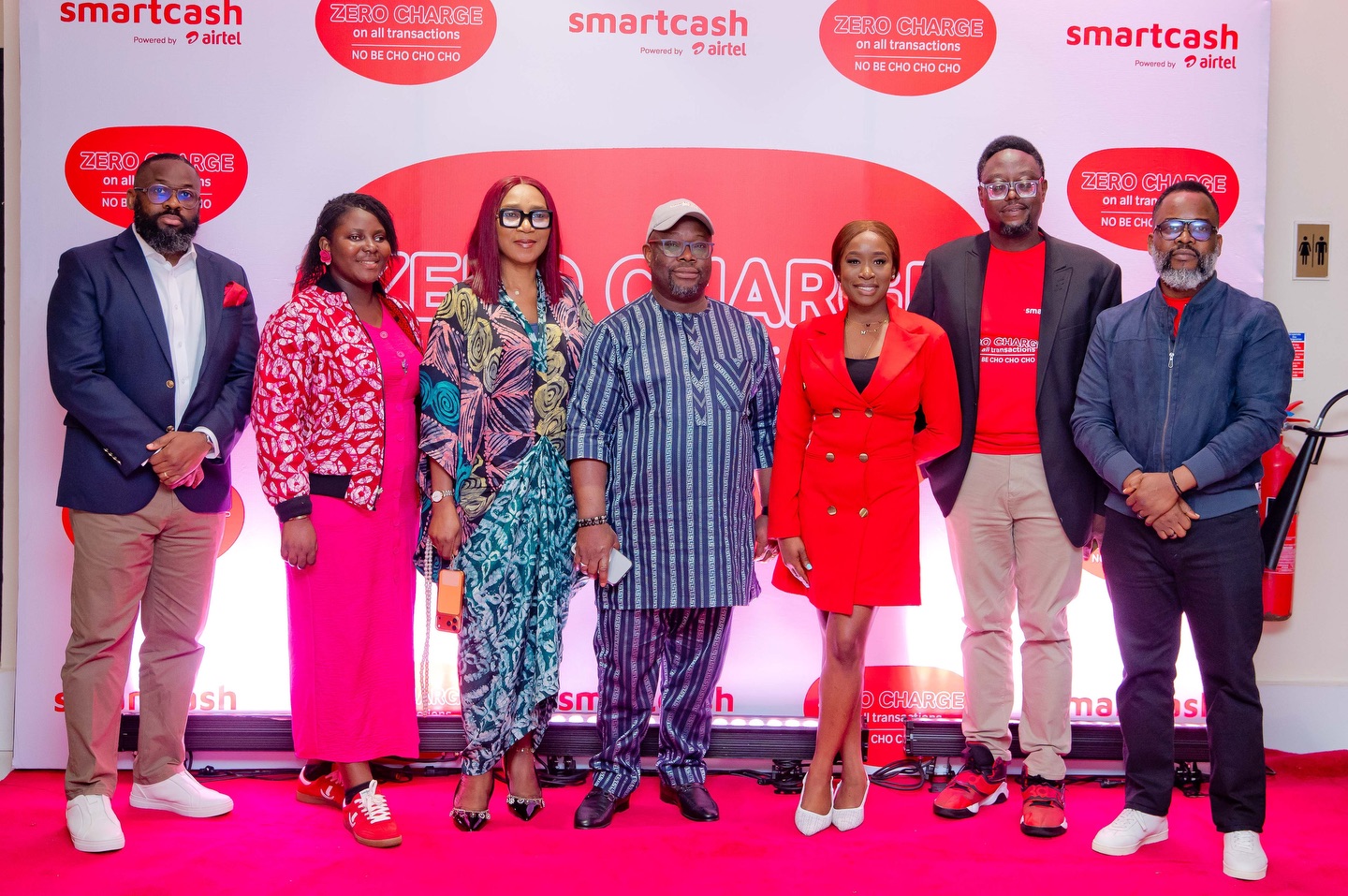
A nationwide marketing campaign signalling a strategic shift toward proof-led messaging in Nigeria’s fast-evolving fintech sector has been launched by Smartcash Payment Service Bank (PSB).
At the unveiling of this initiative in Lagos on Tuesday, the Airtel-owned digital financial services platform said the No Be Cho Cho Cho campaign represents a new chapter for Smartcash, following its earlier Money Matter Na Sense positioning, reflecting the company’s rapid growth and increasing role in Nigeria’s digital financial ecosystem. The platform now serves nearly three million active wallets, with users spanning students, traders, households and small businesses across the country.
The phrase, Cho Cho Cho, a popular expression in Nigerian street parlance meaning “talking without action,” is used deliberately by the company to challenge the hype-driven marketing culture that has often characterised the fintech sector. Instead, Smartcash says the campaign will focus on demonstrable performance and measurable value for customers, which means “Smartcash dey show workings”.
The initiative centres on the three pillars of reliability, transparency and demonstrable service delivery and addresses what the company describes as a widening trust gap in Nigeria’s digital payments market.
The chief executive of Smartcash PSD, Mr Ayotunde Kuponiyi, described financial inclusion as a critical pillar of the United Nations Sustainable Development Goals, noting that with the launch of No Be Cho Cho Cho, the firm is proving its commitment to this vision.
“We have built an accessible banking service that breaks barriers for everyone, from corporate executives to the previously unbanked, pulling them from the sidelines to centre stage. Through our flagship zero-charge service, we promise no fees on P2P transfers or bill payments.
“Furthermore, our savings account offers 15 per cent per annum compounded interest, paid daily without penalties. Unlike conventional banks, we charge you nothing, ensuring your money truly works for you,” he explained to newsmen at the event.
Smartcash’s zero-charge model, which eliminates fees on transfers and bill payments, has become one of the platform’s defining features, alongside instant transfers and everyday payments for utilities, airtime, data and cable TV.
Mr Kuponiyi noted that the campaign reflects a broader philosophy of accountability in digital finance, saying, “Nigerians have experienced inconsistency and unclear charges across various platforms in the past. With No Be Cho Cho Cho, we are saying clearly: don’t just listen to what we say; experience the proof.”
Smartcash operates as a PSB licensed by the Central Bank of Nigeria and is wholly owned by Airtel Nigeria, a part of the Airtel Africa Group, which operates across 14 countries. This backbone allows the platform to serve customers through both smartphone applications and USSD channels, enabling access for users without smartphones or traditional bank accounts.
Beyond consumer banking, the platform is also expanding its footprint through a nationwide network of agents that facilitate transactions and financial services in underserved communities.
Providing further insight into the bank’s financial architecture and long-term roadmap, Mr Kuponiyi emphasised that the campaign reflects the strength of the institution’s operational foundation.
“At Smartcash, we have matched our ambitious growth targets with disciplined investment in secure, high-volume processing capabilities. The No Be Cho Cho Cho initiative is a testament to our financial health and our unwavering focus on driving financial inclusion through sustainable incentives that provide real value to the Nigerian economy,” he said.
As part of the rollout, the No Be Cho Cho Cho campaign will run nationwide across television, radio, outdoor advertising and digital platforms, targeting young, mobile-first consumers while also reaching traders and small businesses through agent networks and USSD channels.
For Smartcash, the campaign marks more than a marketing refresh; it signals an attempt to redefine how financial technology companies communicate with Nigerian consumers in an increasingly competitive sector.
As Kuponiyi concluded at the launch: “The evidence is plenty. Nigerians can see it for themselves.”











-
 Feature/OPED6 years ago
Davos was Different this year
-
Travel/Tourism10 years ago
Lagos Seals Western Lodge Hotel In Ikorodu
-

 Showbiz3 years ago
Estranged Lover Releases Videos of Empress Njamah Bathing
-
 Banking8 years ago
Sort Codes of GTBank Branches in Nigeria
-

 Economy3 years ago
Subsidy Removal: CNG at N130 Per Litre Cheaper Than Petrol—IPMAN
-

 Banking3 years ago
Sort Codes of UBA Branches in Nigeria
-

 Banking3 years ago
First Bank Announces Planned Downtime
-

 Sports3 years ago
Highest Paid Nigerian Footballer – How Much Do Nigerian Footballers Earn