
Banking
Apprehension as Hackers Compromise Polaris Bank Application


By Modupe Gbadeyanka
Some customers of Polaris Bank (formerly Skye Bank Plc) are getting agitated following a recent report that some persons broke into a banking application of the company to tamper with a customer’s account.
This is now raising questions about the safety of their deposits with the financial institution.
Recall that recently, a hacker said most banks operating in Nigeria were prone to hacking because their systems are not too secured.
In the latest development, some young men allegedly hacked into Polaris Bank’s application and fraudulently increased the N781,000 in one of the customer’s bank account to N466 million.
It was gathered that the hackers, five in numbers, carried out the nefarious act last year in Kaduna State, but the long hands of the law has finally caught up with them.
On January 16, 2019, the Economic and Financial Crimes Commission (EFCC) arraigned the suspects before Justice Mohammed Tukur of a Kaduna State High Court.
The accused persons; Bashir Abdullahi Mohammed, Oche Ogenyi, Adefila Taofile Kayode, Rabiu Aliko Lawal and Mmadu Mathew were charged on a two-count charge bordering on conspiracy and stealing to the tune of N466 million.
“That you Bashir Abdullahi Mohammed, Oche Ogenyi, Adefila Taofile Kayode, Rabiu Aliko Lawal, Mmadu Mathew Onyekachi, and others now at large, sometime in 2018 in Kaduna within the judicial Division of the High Court, did conspire amongst yourselves to commit theft of the sum of N466 million and you thereby committed an offence contrary to 58(1) of the Penal Code Law Kaduna State 2017 and punishable under Section 59(1) of the same Law,” one of the counts read.
However, when the charges were read to them, they pleaded “not guilty” and the prosecuting counsel, Onyeka Ekweozor, thereafter asked the court to fix a date for “commencement of trial”, and asked that they be remanded in EFCC custody.
“The defendants have separate charges before a Federal High Court pending arraignment, and remanding them in prison custody will make it difficult for the prosecution to arraign them,” he said.
Counsel for the first defendant, A. Ashat, in his oral bail application urged the court to grant his client bail, arguing that he will not jump bail.
Sylvester Ogbelu, Defence counsel for the second and fourth defendants, also moved the bail application for them, and urged the Court to grant them bail on “liberal terms”, as they had no criminal record.
Ekweozor, however, opposed the bail application arguing that there were no fix addresses, and “some of them were arrested in hotels, some at the airport; granting them bail will jeopardise our attempt to arrest others at large and will even interfere with witnesses on the matter”.
“We urged my lord to reject their bail,” Ekweozor said. Justice Tukur, afterwards, ordered that they be remanded in EFCC custody pending the determination of the bail applications, and adjourned to January 21, 2019.








By Modupe Gbadeyanka
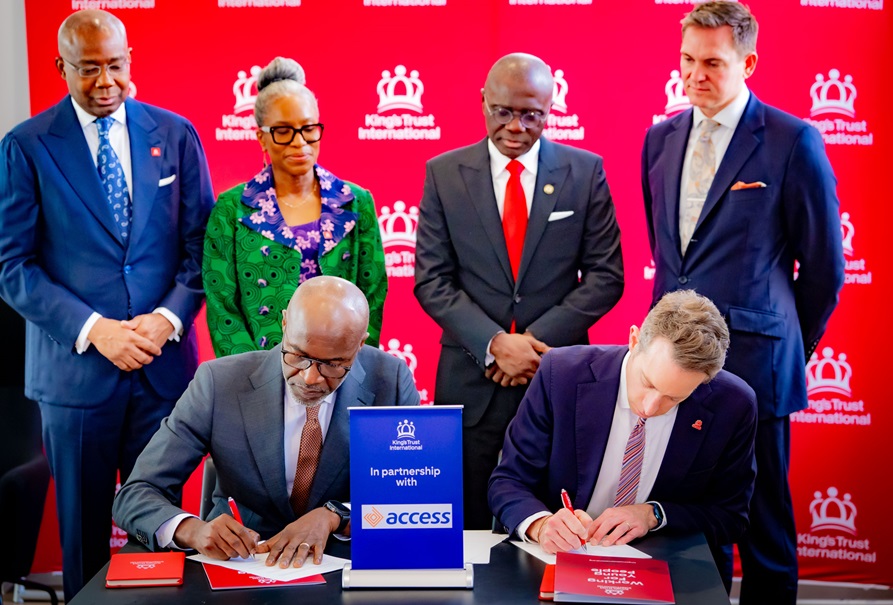
A partnership to expand opportunity, entrepreneurship, and sustainable livelihoods for young people across Africa has been signed by Access Bank and King’s Trust International (KTI).
The cooperation marks a significant milestone in advancing cross‑sector collaboration to address youth unemployment, foster entrepreneurship, and drive inclusive growth across Africa.
Under the agreement, Access Bank will support the delivery of KTI’s programmes that empower young people across several African countries, supporting them to gain skills and find pathways into meaningful employment and self-employment across Africa.
It was learned that the collaboration brings together KTI’s expertise in youth development with Access Bank’s pan‑African reach and long‑standing commitment to inclusive and sustainable growth.
Through this alliance, the two organisations will work to equip young people with the skills, confidence and support needed to build successful futures through employment and entrepreneurship.
“At Access Bank, we believe that empowering young people is fundamental to Africa’s sustainable growth. Our partnership with King’s Trust International reinforces our commitment to entrepreneurship, job creation and inclusive development, while enabling us to play a purposeful role in shaping the continent’s future,” the chief executive of Access Bank, Mr Roosevelt Ogbonna, stated.
The chief executive of KTI, Mr Will Straw, while also commenting, said, “This partnership with Access Bank reflects a shared commitment to unlocking the potential of young people across Africa. By combining our experience in youth development with Access Bank’s scale and leadership across the continent, we can create meaningful pathways to opportunity and long‑term impact.”
The signing ceremony was witnessed by senior leaders and representatives from both organisations, alongside distinguished guests, including Mr Aigboje Aig‑Imoukhuede, who is the co-Chair of KTI Africa Advisory Board and Chairman of Access Holdings Plc.

By Aduragbemi Omiyale
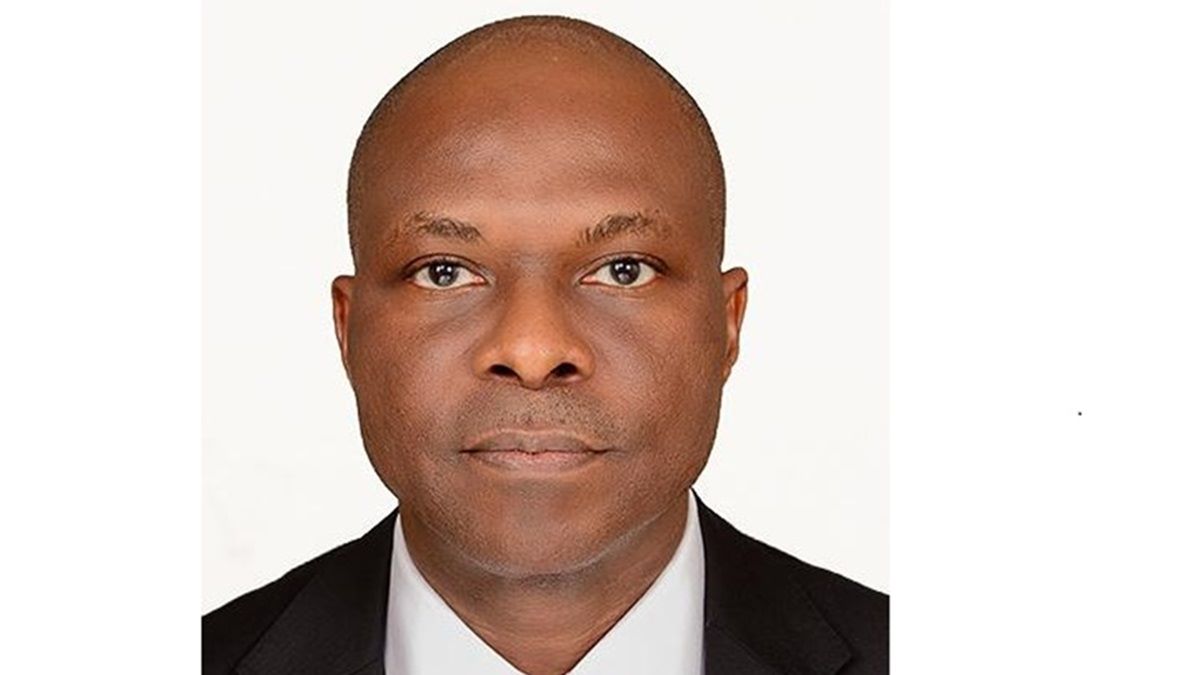
Mr Kennedy Onuwa Okwudili has been appointed to the board of Zenith Bank Plc as an executive director with effect from May 1, 2026.
A statement signed by the company secretary, Mr Michael Otu, disclosed that the appointment aligns with the financial institution’s “tradition and succession strategy of grooming leaders from within” to strengthen its executive management further.
He is joining the board with over 25 years of cognate banking experience spanning credit and marketing, treasury, compliance, as well as operations and has at different times worked in various zones and departments of the lender.
Mr Okwudili graduated with a Bachelor of Science (Honours) in Accounting from the University of Maiduguri, Nigeria, in 1998, with a Second Class Upper Division. He obtained a Master’s of Business Administration (MBA) from Ahmadu Bello University, Zaria, Nigeria, in 2008 and a Master’s of Science in Accounting from Veritas University, Abuja, Nigeria, in 2021.
He is a Fellow of the Institute of Chartered Accountants of Nigeria (ICAN), 2013, and also a Fellow of the Chartered Institute of Bankers of Nigeria, 2024. He is an Associate of the Chartered Institute of Taxation of Nigeria (CITN), 2016.
The banker has attended several executive education programmes both within and outside the country, including Senior Leadership Development Programme at the Lagos Business School, Corporate Directorship Programme at the Harvard Business School and Oxford Advanced Management and Leadership Programme at the University of Oxford, SAID Business School.
He is currently the President of Catholic Bankers Association of Nigeria (CBAN) and a member of the Noble Order of the Knights of St. John International (KSJI).

By Aduragbemi Omiyale
A high-level virtual webinar focused on helping public institutions to strengthen revenue systems, improve fiscal transparency, and build smarter digital structures for collections, oversight, and accountability is being planned by Fidelity Bank Plc.
This event is slated for Tuesday, March 24, 2026, under the theme Digital Fiscal Transparency: Unlocking Sub-national Opportunities for International Partners.
The programme will bring together a cross-section of public sector leaders, development institutions, heads of parastatals and agencies, as well as financial experts, to explore practical solutions for stronger public finance management.
It is expected to offer timely insights into how modern revenue infrastructure can help institutions improve efficiency, drive accountability, and support better fiscal outcomes.
The webinar will address key issues facing many public institutions today, including revenue leakages, fragmented collection channels, weak visibility into revenue performance, poor reconciliation processes, and the growing need for more transparent and technology-driven systems.
“As public institutions seek ways to improve internally generated revenue and strengthen public trust, there has been a renewed focus on fiscal transparency.
“This is particularly important in the face of recent macro and micro economic developments with many public sector agencies under pressure to do more with limited resources,” the Divisional Head of Public Sector at Fidelity Bank, Mr Richard Madiebo, said.
“It is against this background that we have conceptualised this session with a particular focus on how digital platforms can support structured invoicing, seamless collections, payment automation, contractor disbursement transparency, real-time revenue oversight, amongst other pertinent areas of revenue mobilisation and administration in Nigeria,” he added.
“The webinar forms part of our commitment to provide practical solutions that support public sector transformation and stronger sub-national development. This is in line with Fidelity Bank’s mandate to help individuals to grow, businesses to thrive, and economies to prosper,” Mr Madiebo further disclosed.













-
 Feature/OPED6 years ago
Davos was Different this year
-
Travel/Tourism10 years ago
Lagos Seals Western Lodge Hotel In Ikorodu
-

 Showbiz3 years ago
Estranged Lover Releases Videos of Empress Njamah Bathing
-
 Banking8 years ago
Sort Codes of GTBank Branches in Nigeria
-

 Economy3 years ago
Subsidy Removal: CNG at N130 Per Litre Cheaper Than Petrol—IPMAN
-

 Banking3 years ago
Sort Codes of UBA Branches in Nigeria
-

 Banking3 years ago
First Bank Announces Planned Downtime
-

 Sports3 years ago
Highest Paid Nigerian Footballer – How Much Do Nigerian Footballers Earn