Connect with us

Auto

Bank Introduces New Vehicle Financing Initiative With 10% Deposit

Published

on

Access Bank New Vehicle Financing Initiative

By Aduragbemi Omiyale

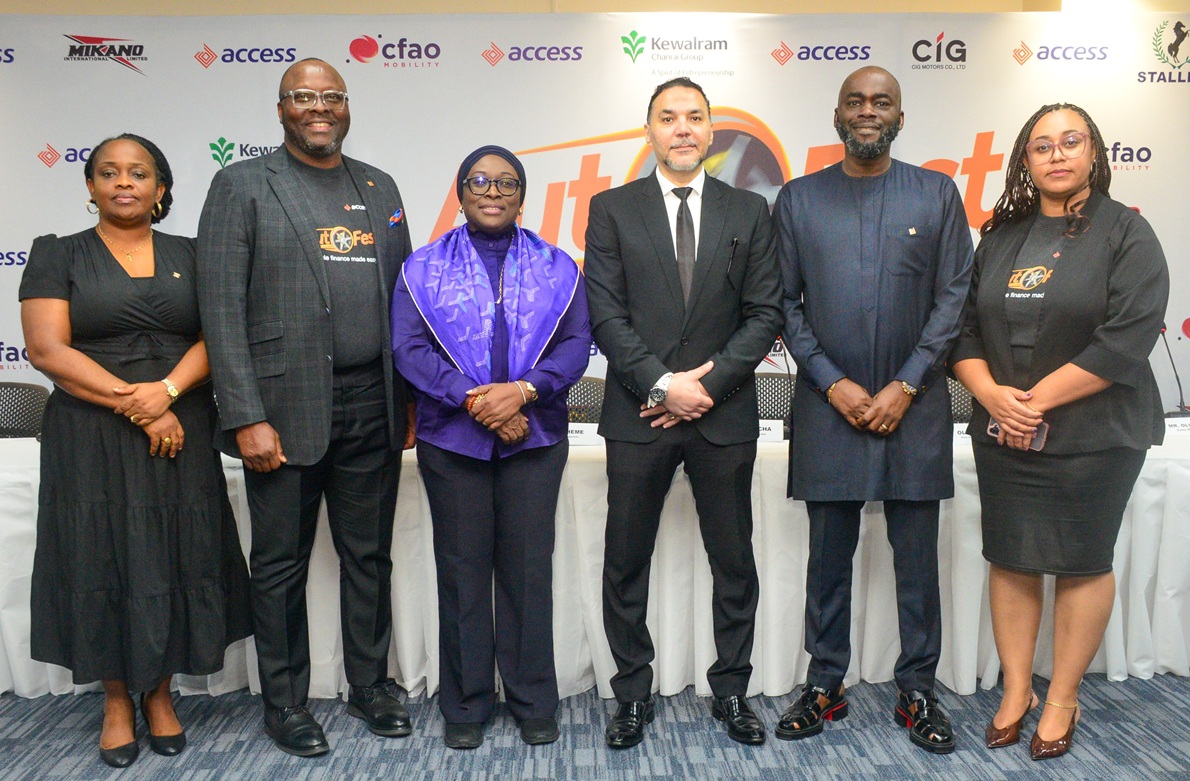
A new vehicle financing initiative designed to allow funding support of up to 90 per cent of a vehicle’s value and repayment tenures of more than four years has been introduced by Access Bank Plc.

This is part of the lender’s vehicle asset financing programme aimed at expanding access to vehicle ownership and mobility services across the country.

Application for the service is through a digital process, the bank’s Executive Director of Corporate and Investment Banking Division, Ms Iyabo Soji-Okusanya, disclosed.

Customers can access vehicles from top distributors like CIG Motors, Mikano Motors, Kewalram Motors, Stallion Motors, Elizade JAC, CFAO and other mobility dealers. They can purchase both new and certified pre-owned vehicles through a single process, she added.

“You apply online, and you go home with the keys to your car already in your pocket,” Ms Soji-Okusanya stated, noting that for businesses, the initiative will provide access to vehicles needed for operations while helping dealers improve inventory turnover and unlock capital tied down in unsold stock.

While explaining how the process works, the Group Head of Access Bank Mobility, Mr Ishmael Nwokocha, said the bank spent the last six months engaging dealers and other stakeholders in the automotive value chain before rolling out the programme.

According to him, Nigeria records annual vehicle sales of about 100,000 units, with only about 10 per cent being brand-new vehicles, while the remaining 90 per cent are pre-owned vehicles, adding that rising vehicle prices have significantly reduced affordability for many Nigerians.

“What are we offering today? Come with 10 per cent equity contribution, and we’ll finance the 90 per cent,” Mr Nwokocha said, noting that customers would also have access to insurance, after-sales services, and a digital loan application process that allows applicants, dealers and the bank to monitor progress.

He said the initiative extends beyond individual consumers to corporate organisations, schools, hospitals and other businesses requiring vehicle fleets, revealing plans to expand financing access to operators in the ride-hailing and transport sectors that are currently outside the formal banking system.

On her part, the Group Head of Product and Segment at Access Bank, Ms Chizoba Iheme, said the bank had put measures in place to support customers who encounter financial difficulties during the repayment period, explaining that affected borrowers could seek loan restructuring rather than risk losing their vehicles immediately.

“So long as the vehicle is still valid, it’s still running on the road, we can look at your finance, and then we’ll repackage your loan,” she said, also clarifying that customers are not required to maintain loans for the full approved tenor and can repay outstanding obligations earlier if they choose.

On the scope of the programme, she said financing is available to individuals, corporates and small businesses seeking vehicles for commercial or operational use.

The Managing Director of CIG Motors, Ms Eniola Olutimilehin, whose company is one of the participating dealers, said the partnership would help connect vehicle buyers with financing while supporting mobility and business operations.

She said the collaboration is expected to improve access to vehicles for individuals and entrepreneurs requiring transportation assets for personal and commercial activities.


Click to comment

Leave a Reply

Your email address will not be published. Required fields are marked *

Auto

Senate Passes Bill to Sanction Trading, Preaching in Buses

Published

on

trading inside buses

By Modupe Gbadeyanka

A bill aimed at prohibiting hawking, trading or preaching inside commercial vehicles in Nigeria has been passed by the Senate.

The bill known as the Federal Road Safety Corps (Amendment) Bill, 2026, imposes fines between N50,000 and N100,000 for violations if assented to by the President.

The piece of legislation was passed by the red chamber of the National Assembly on Thursday and should later be transmitted to President Bola Tinubu for assent.

Members of the upper chamber of the parliament explained that the law was amended to discourage distractions in commercial vehicles and improve the safety of commuters.

In addition, motorists who fail to cooperate with officials of the Federal Road Safety Corps (FRSC) during roadside breath tests conducted on reasonable suspicion are liable to fines or imprisonment or both.

Lawmakers noted that this was to improve compliance with road safety regulations and reduce road crashes, as fines for driving under the influence of alcohol or intoxicating drugs were raised to N100,000 from N5,000, with the risk of spending two years behind bars.

It was also proposed that disobedience to traffic lights, road signs, pavement markings and other traffic control devices will now attract N100,000, while the fine for speed limit violations is now N100,000, with reckless driving now a fine of N100,000 or two years’ imprisonment.

Continue Reading

Auto

Company Gets Ultimatum to Stop Indiscriminate Truck Parking on Aina Obembe Road Baruwa

Published

on

Aina Obembe Road traffic agbaje

By Dipo Olowookere

Residents and motorists plying the Aina Obembe Road in Baruwa, Ipaja, Lagos, may soon heave a sigh of relief as the excruciating traffic gridlock being experienced in the area both day and night may soon be a thing of the past.

This is because the chairman of Ayobo-Ipaja LCDA, Mr Lukmon Agbaje, has directed those involved in indiscriminate truck parking along the road to remove the heavy-duty vehicles within one week, threatening to invoke appropriate enforcement measures for noncompliance with this directive.

Speaking during a meeting on Wednesday with the management of SENA Company, which owns the affected trucks, as well as the leadership of Oluwadara CDA and other key stakeholders like the Lagos State Traffic Management Authority (LASTMA), at the council’s secretariat, Mr Agbaje frowned at the prolonged inconvenience suffered by the community, stressing that public roads must remain accessible and safe for all users.

He emphasised the need for a collaborative approach in resolving the issue without undermining legitimate business operations, noting that he’s focused on finding a lasting solution to the gridlock experienced between Oluwaga and Aina Obembe, where parked trucks have continued to obstruct traffic, disrupt business activities, and pose safety concerns for residents and motorists.

He tasked the firm and the CDA to jointly identify and implement alternative parking arrangements that would remove all trucks from the affected roads and restore the free flow of traffic.

He declared that, “The welfare of our people remains our highest priority. No individual or corporate organisation should obstruct public infrastructure or create avoidable hardship for residents. We must ensure that economic activities coexist with public safety, order, and convenience.”

The council chief reaffirmed his administration’s commitment to promoting orderly development, ensuring safe and accessible roads, improving traffic management, and creating an environment where businesses can thrive alongside the well-being of residents.

Continue Reading

Auto

FG Rolls Out Green Tax, Cuts Vehicle Import Levies

Published

on

Green Tax Surcharge

By Adedapo Adesanya

The federal government has cut import levies on new and used vehicles by as much as 10 per cent in a move aimed at reducing the cost of vehicle importation, even as it commenced the implementation of a new Green Tax surcharge.

According to an update issued by the Nigeria Customs Service (NCS) on Wednesday, the import levy on new vehicles has been reduced from 20 per cent to 10 per cent, while the levy on used vehicles has been slashed from 15 per cent to five per cent under the 2026 Fiscal Policy Measures, which took effect on July 1, 2026.

The customs said the policy is designed to ease the cost of vehicle imports while advancing the government’s environmental sustainability objectives through the newly introduced Green Tax.

The implementation also reduces the overall import duty on fully built passenger vehicles from 70 per cent to 40 per cent.

As part of the Green Tax framework, a new environmental surcharge of between two per cent and four per cent will apply to petrol-powered vehicles with engine capacities exceeding 2,000cc. However, mass transit buses, electric vehicles, and passenger cars with engines below 2,000cc are exempt from the surcharge.

Beyond the automobile sector, the fiscal measures also lower import duties on several essential goods. The duty on imported rice has been reduced from 70 per cent to 47.5 per cent, while crude palm oil now attracts a 28.75 per cent duty.

In addition, import duties on agricultural and manufacturing machinery have been completely removed to support local production, while Waste PET has been added to the export prohibition list to encourage domestic recycling.

Continue Reading