Connect with us

Banking

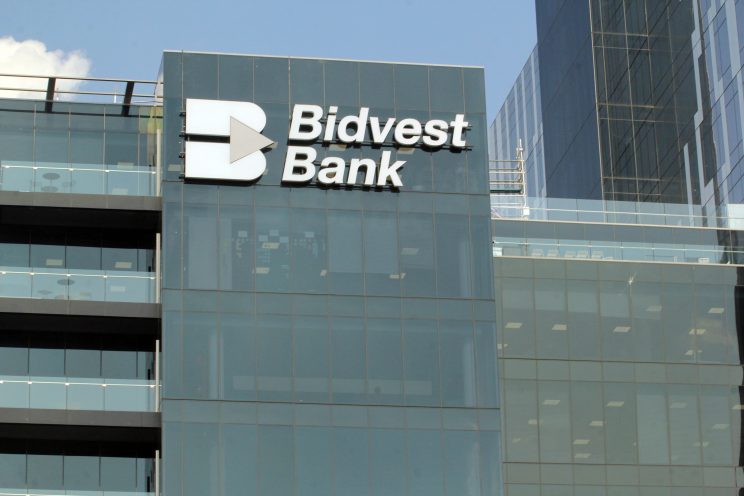
Bidvest Risks Moody’s Downgrade Over Access Bank Takeover

Published

on

bidvest bank

By Adedapo Adesanya

Ratings agency, Moody’s, has placed the ratings of Bidvest Bank on review for downgrade, raising worries of Access Bank to properly fund the bank amid takeover plans.

Access Bank Plc, the banking subsidiary of Access Holdings Plc, entered into a binding agreement for the acquisition of 100 per cent equity stake in Bidvest Bank Limited in December.

The deal for the 24-year-old South African lender is due to be completed in the second half of 2025, upon regulatory approval.

However, in its new rating, Moody’s flagged the capacity of the Nigerian lender to fund the bank, in comparison with that of its owner, the Bidvest Group.

Bidvest, valued at R88 billion on the Johannesburg Stock Exchange (JSE) in December announced Access Bank as the preferred buyer of its banking unit, Bidvest Bank, in a deal worth R2.8 billion subject to the usual regulatory approvals.

The Bidvest Bank book, which mainly consists of leased assets, loans and advances, totalled R6 billion in December, funded by deposits of R8 billion.

Bidvest Bank generated a trading profit of R371 million and an operating income of R377 million in its most recent financial year.

After the finalisation of the acquisition, Bidvest Bank will be merged with Access Bank’s existing South African subsidiary to create an enlarged platform to anchor the regional growth strategy for the SADC region.

However, Moody’s has placed Bidvest Bank on review for downgrade to the following ratings: the Ba2 domestic-currency long-term issuer rating; the Aa2.za national scale domestic-currency long-term issuer rating; the P-1.za national scale short-term issuer rating; the ba3 Adjusted Baseline Credit Assessment (Adjusted BCA); and the b2 BCA.

The main reason for the potential downgrade is that Access Bank’s rating (long-term deposit ratings of Caa1 positive, Baseline Credit Assessment of caa1) is far lower than Bidvest Bank’s current rating (long-term Corporate Family Ratings of Ba2 stable).

Access Bank’s Caa1 rating is judged as poor quality and very high credit risk.

“The review for downgrade on the domestic-currency long-term issuer rating and the Adjusted BCA of Bidvest Bank will primarily focus on assessing the progress in the acquisition process, including the obtention of regulatory approvals, and the likelihood of the acquisition being completed,” said Moody’s.

“A successful completion of the acquisition by Access Bank could lead to a multi-notch downgrade of Bidvest Bank’s issuer rating due to the loss of two of the notches of parental support uplift from Bidvest Group.”

“This is because the potential new shareholder, Access Bank, has both a lower capacity than Bidvest Group to support the bank, as indicated by the lower rating of Access Bank in comparison to that of Bidvest Group; and a lower rating than Bidvest Bank itself.”

Moody’s said that Bidvest Bank’s current Ba2 domestic-currency long-term issuer rating benefits from two notches of uplift from its b2 BCA. This reflects the high chance of affiliate support from Bidvest Group if the need arises.

The Bidvest Group is expected to safeguard the bank’s financial health and operational stability despite the impending divestment.

The review for downgrade on the bank’s standalone BCA looks at the uncertainties regarding the future strategic direction of the bank post-disposal.

Moody’s said that this “includes the potential disruption to its activities during the disposal process as well as the bank’s post-acquisition financial fundamentals, which will depend on how it is combined with Access Bank’s existing South African operations.”

It added that the review will also assess whether the current positioning of Bidvest Bank’s b2 standalone BCA two notches above Access Bank’s caa1 standalone BCA would remain appropriate in case of successful completion of the acquisition.

Moody’s said a parent entity’s creditworthiness can directly and indirectly affect the credit standing of its bank subsidiaries.

“The bank’s b2 BCA reflects the bank’s solid capitalisation, high liquidity and improving profitability, underpinned by solid niche franchises in the fleet finance and management segment, as well as in the foreign exchange segment,” said Moody’s

“These strengths are moderated by the bank’s weak asset quality and relatively modest deposit-gathering franchise.”

“There is limited upside potential on the ratings given the review for downgrade.”

Adedapo Adesanya is a journalist, polymath, and connoisseur of everything art. When he is not writing, he has his nose buried in one of the many books or articles he has bookmarked or simply listening to good music with a bottle of beer or wine. He supports the greatest club in the world, Manchester United F.C.

Banking

Paystack Enters Banking Space With Ladder Microfinance Bank Acquisition

Published

on

Paystack

By Adedapo Adesanya

Nigerian-born payments company, Paystack, has announced its entry into the banking sector with the launch of Paystack Microfinance Bank (Paystack MFB) after the acquisition of Ladder Microfinance Bank.

The bank continues Paystack’s push into consumer products and adds a banking layer to its business-focused payment product, coming ten years after the company was founded with the goal of simplifying payments for businesses using modern technology.

In Nigeria alone, the company says its systems process trillions of Naira every month, supporting more than 300,000 businesses and millions of customers. According to Paystack, this growth highlighted a broader need beyond payments, prompting the decision to build a more comprehensive financial offering.

Paystack MFB will begin lending to businesses before expanding to consumers. It will also offer banking-as-a-service (BaaS) products to companies building financial products and treasury management products.

The company explained that while payments are a critical part of the financial journey, businesses and individuals increasingly require a full financial operating system. This includes the ability to store money securely, move funds easily, gain clarity from financial data, and access tools that support long-term growth. Developers, Paystack added, also need reliable, secure, and compliant infrastructure to build new financial solutions efficiently.

To address these needs, Paystack said it has established Paystack Microfinance Bank as a separate and independent entity from Paystack Payments Limited.

The new microfinance bank operates with its own license, governance structure, and product roadmap, although it will work closely with its sister company.

“By adding Paystack MFB to our family of brands, we’re finding the right balance through combining the rapid innovation of a tech-first platform with the stability of traditional banking,” said Ms Amandine Lobelle, Paystack’s chief operating officer.

Last year, it launched its controversial consumer payments app Zap, and now it is taking a step further with the company securing regulatory backing to become a deposit-taking institution. According to a statement, the bank will be guided by the same principles that shaped Paystack’s early success, including reliability, simplicity, transparency, and trust.

Paystack MFB has begun operations with a small group of early members and plans a gradual rollout to more businesses and individuals. The company also announced the opening of a waitlist for interested users and confirmed it is recruiting a dedicated team to help build its long-term banking infrastructure.

Continue Reading

Banking

N1.3bn Transfer Error: EFCC Recovers N802.4m from Customer for First Bank

Published

on

EFCC First Bank N802.4m transfer error

By Modupe Gbadeyanka

The Economic and Financial Crimes Commission (EFCC) has helped First Bank of Nigeria to recover the sum of N802.4 million from a suspect, Mr Kingsley Eghosa Ojo, who unlawfully took possession of over N1.3 billion belonging to the bank.

The funds were handed over the financial institution by the Benin Zonal Directorate of the anti-money laundering agency on Monday, January 12, 2026, a statement on Tuesday confirmed.

First Bank approached the EFCC for the recovery of the money through a petition, claiming that the suspect received the money into his account after system glitches.

The commission in its investigation; discovered that the suspect, upon the receipt of the money, transferred a good measure of it to the bank accounts of his mother, Mrs Itohan Ojo and that of his sister, Ms Edith Okoro Osaretin, and committed part of the money to completion of his building project and the funding of a new flamboyant lifestyle.

With the recovery of the money from the identified bank accounts, the EFCC handed it over in drafts to First Bank.

While handing over the lender, the acting Director for the Directorate, Mr Sa’ad Hanafi Sa’ad, stressed his organisation would continue to discharge its mandate effectively in the overall interests of society.

“The EFCC Establishment Act empowers us to trace and recover proceeds of crime and restitute the victim. In this case, First Bank was the victim and that is exactly what we have done.

“We will continue to discharge our duties to ensure that fraudsters do not benefit from fraud and that economic and financial crimes are nipped in the bud,” he said.

In his response, the Business Manager for First Bank in Benin City, Mr Olalere Sunday Ajayi, who received the drafts on behalf of the bank, commended the EFCC for the swiftness and the professionalism it brought to bear in the handling of the matter and expressed the bank’s gratitude to the commission.

He described the EFCC as one of Nigeria’s most effective and reliable institutions.

Meanwhile, Mr Kingsley and all other suspects in the matter have been charged to court for stealing by the EFCC.

Continue Reading

Banking

Why Technology-Enabled Banking is a Multiplier for Nigeria’s 2036 Goal

Published

on

Henry Obiekea FairMoney

By Henry Obiekea

Nigeria is at a defining moment in 2026. After several years of bold macroeconomic adjustments, including foreign exchange unification and structural reforms, the country is moving from stabilization into expansion. With the Central Bank of Nigeria restoring confidence in the Naira and foreign reserves reaching a five-year high of over 45 billion dollars, the next phase of growth will be shaped by how effectively Nigerians can participate in the formal financial system.

Technology-enabled banking is playing a critical role in this transition. Commercial banks remain the backbone of the system, providing balance sheet strength, regulatory depth, and long-term capital essential for national development. Yet in a country of over 220 million people, physical access alone cannot deliver financial inclusion at scale.

Mobile-first and digitally delivered financial services are bridging this gap. By extending regulated banking beyond physical locations into everyday devices, licensed microfinance banks and other regulated institutions are bringing millions of Nigerians into the formal economy. This approach helped push formal financial inclusion to over 64 percent in 2025, ensuring the last mile is no longer excluded.

Achieving the Federal Government’s target of a one trillion dollar GDP by 2036 requires efficient capital flow. In the first quarter of 2025 alone, Nigeria recorded over 295 trillion naira in electronic payment transactions. Faster, secure financial infrastructure supports modern commerce, strengthens trade, and improves overall economic productivity.

Micro, small, and medium-scale enterprises, which contribute nearly 48 percent of GDP, are central to this growth. Technology-driven banking models are helping to close long-standing credit gaps. By responsibly using alternative data to assess risk, small-ticket working capital loans provide the “pocket capital” businesses need to grow. This builds a pipeline of enterprises that can mature into larger corporate clients within the broader banking ecosystem.

Digitally delivered financial services also strengthen public revenue mobilisation. Increased transaction transparency supports a broader tax net and contributes directly to government revenues through stamp duty, reinforcing fiscal sustainability.

This evolution is supported by a maturing regulatory environment. The Central Bank of Nigeria’s Open Banking framework, rolling out in phases from early 2026, ensures that all regulated institutions operate under consistent oversight. Secure data sharing standards mean customers’ financial histories can move with them across institutions, strengthening trust and accountability.

At FairMoney Microfinance Bank, we see this framework as a social contract. Knowing that deposits are protected by NDIC insurance and supported by clear dispute resolution mechanisms gives customers the confidence to participate actively in the economy.

The future of Nigerian banking is defined by structural harmony. Traditional banks provide depth and stability, while technology-enabled institutions provide reach, speed, and accessibility. Together, they turn financial access into economic resilience.

By working in alignment, we can ensure every Nigerian, from the Lagos professional to the rural trader, is equipped to contribute meaningfully to our shared one trillion dollar future.

Henry Obiekea is the Managing Director of FairMoney Microfinance Bank

Continue Reading

Trending