
Banking
CBN Gives Operators 60 Days to Geotag POS Machines

By Adedapo Adesanya
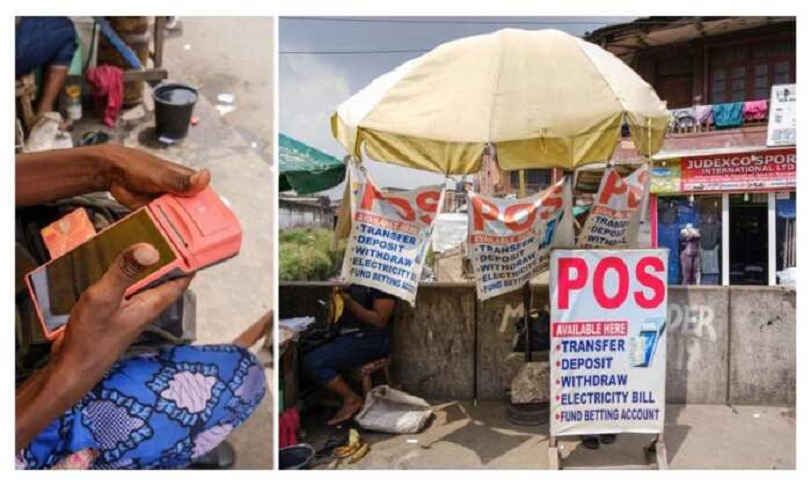
The Central Bank of Nigeria (CBN) has mandated Point of Sale (PoS) operators to geotag their terminals within 60 days or risk being shut down.
In a circular released on August 25, 2025, the regulator ordered all licensed operators, which includes Moniepoint, OPay, and PalmPay, as well as other banks with agency banking licenses, to geotag every PoS terminal before October 20, 2025.
This means that the millions of POS devices currently used by agents and merchants across Nigeria must now be registered with exact GPS coordinates showing where each device is being used.
According to the CBN, the move is meant to curb fraud, stop the use of cloned or “ghost” terminals, and make it easier to track transactions in real time.
Under the new rule, all existing POS machines must be updated with built-in GPS systems and connected to the National Central Switch, which will monitor locations through a special software development kit (SDK).
Merchants will only be allowed to process payments within a 10-metre radius of their registered business address. Any device that is not geo-tagged within the deadline will no longer be allowed to operate.
The directive also applies to newly deployed POS devices, which must be geo-tagged before activation. Operators such as Payment Terminal Service Providers (PTSPs) and mobile money companies will be responsible for ensuring that all devices in their network comply.
The directive also aims to reduce fraud and unauthorised POS activity by ensuring each terminal’s location is verified and continuously monitored.
The central bank said it would begin compliance checks from October 20, 2025, a development that gives operators just about two months to upgrade.
This could come as a challenge with Nigeria having an estimated 2 million POS agents> The number is also growing daily.
The increasing number of POS agents and terminals is a major reason why the apex bank is introducing new directives for their operation.
In 2024, the CBN required that POS transactions be routed through licensed Payment Terminal Service Aggregators (PTSA) to improve tracking and transparency. That same year, POS operators were mandated to register their devices with the Corporate Affairs Commission (CAC).










By Modupe Gbadeyanka
A Federal High Court sitting in Ikoyi, Lagos, has ordered the final forfeiture of N81.1 million to the Federal Government of Nigeria in favour of Sterling Bank.
The money was part of the N2.5 billion stolen by some customers of Sterling Bank and transferred to their own use as well as to the use of some third-party beneficiaries, owing to a system glitch experienced by the bank.
On October 2, 2025, the court granted an interim forfeiture order of the fund and also directed the publication of the same in a national newspaper for any interested party to show cause why the money should not be finally forfeited to the federal government.
When no one came forward to claim the money, Justice Yelim Bogoro on Monday, March 9, 2026, ordered the final forfeiture of the funds.
The matter was brought before the court by the Economic and Financial Crimes Commission (EFCC) after a petition from the financial institution on July 18, 2022.
The anti-graft agency, in its investigations, traced the stolen funds to various accounts, including that of a customer, Sulaiman Kehinde Ojora, who was one of the major beneficiaries of the monumental fraud.
Investigation further revealed that Sulaiman Kehinde Ojora fraudulently concealed the sum of N43.0 million in the account of his friend, Taiwo Oluwaseyi Alawode (Account No. 1233126860), domiciled in Access Bank, and the sum of N122.2 million in the account of his wife, Aminat Olatanwa Ojora (Account No. 0072889319), domiciled in Sterling Bank.
By Adedapo Adesanya
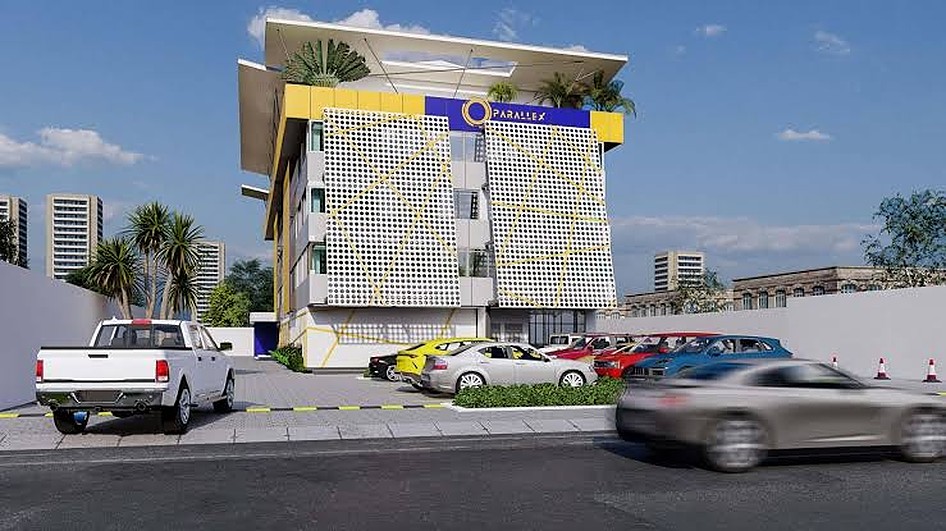
Parallex Bank Limited said it has completed the recapitalisation requirement of the Central Bank of Nigeria, surpassing the N50 billion minimum capital threshold for regional commercial banks ahead of the March 31, 2026, deadline.
The feat reinforces the bank’s position as a financially resilient and strategically forward-looking institution within Nigeria’s evolving banking landscape while positioning it for accelerated growth.
The development now places Parallex Bank among financial institutions that have complied with the apex bank’s directive aimed at strengthening the capital base of deposit money banks, improving financial system stability, and enhancing the sector’s capacity to support economic growth.
Speaking on the development, Mr Olufemi Bakre, the managing director of the lender, said the milestone underscores the belief that excellence, when consistently pursued, delivers sustainable results.
He added that the strengthened capital position will enable Parallex Bank to expand its lending capacity, deepen financial inclusion, and continue delivering innovative, customer-focused financial solutions across various segments of the economy.
“With this strengthened capital position, Parallex Bank is better equipped to expand lending, deepen financial inclusion and continue delivering innovative, customer-focused banking solutions across the retail, SME and corporate segments of the economy,” he said.
The recapitalisation exercise, announced in March 2024 by the CBN, is expected to strengthen the resilience of Nigeria’s banking sector and enhance its capacity to support economic growth.
Mr Bakre commended the bank’s stakeholders, particularly the Board of Directors, for their strategic guidance, oversight, and timely support, which he said were instrumental in ensuring that the recapitalisation requirement was met within the stipulated timeframe.
According to him, the Board’s commitment to strong governance and long-term value creation provided the foundation for disciplined capital planning and effective execution across the institution.

By Modupe Gbadeyanka
A leading provider of consumer and business financing solutions in Nigeria, Zedvance Finance Limited, intends to increase its lending to commercial entities in the country by 160 per cent in 2026.
Last year, it provided N96 billion loans to support enterprises across key sectors of the economy, including oil and gas, automotive, logistics, renewable energy, fintech, e-commerce, trade distribution value chains, agri-businesses and others.
This year, Zedvance, a subsidiary of Zedcrest Group, plans to push this amount higher to N250 billion across key economic sectors, including off-grid power, smart devices and home equipment, vehicle dealerships and mobility platforms, agribusiness and manufacturing, consumer and industrial goods distribution and hospitality.
This expansion reinforces its mission to accelerate enterprise growth by providing faster and broader access to credit across Africa.
“We are proud of our accomplishments so far, especially the impact we’ve made in sectors that are critical to economic development,” said the Managing Director of Zedcrest Group, Mr Adedayo Amzat.
“Through solar and asset on-lending, we have helped to expand energy access and improve income opportunities for gig workers by financing mobility asset platforms across Nigeria.
“Because our customers are at the heart of our business, we were intentional about designing our flagship product, Liquidity Solutions, to allow businesses to unlock faster credit delivery across all high-growth sectors. This has proven impactful as we continue to witness our clients record great successes,” Mr Amzat further said.
Leveraging its 11-year legacy, Zedvance’s Commercial Solutions business, launched in 2025, has in just one year become a major driver of credit expansion, achieving one of the highest loan disbursement rates among financial institutions, empowering thousands of local enterprises and boosting economic growth.
Through offerings such as working capital, invoice/PO financing, equipment and trade finance, and ecosystem-based solutions, Zedvance enables access to liquidity for buy-now-pay-later providers, asset acquisition, and cross-border credit lines for imports & exports, aiding business expansion and strengthening operational resilience in a dynamic economic environment.
On his part, the acting executive director for Commercial Solutions, Mr Ayooluwa Oladimeji, said Zedvance leverages technology, product innovation, deep sector expertise and risk-moderated structures to deploy diverse funding solutions, including multi-currency credit lines, BNPL facilities, and equipment financing across automotive, renewable energy, manufacturing, fintech, and trade distribution sectors.
“In 2025 alone, Zedvance Commercial Solutions business recorded tremendous growth, driven by strong partnerships and a rapidly expanding portfolio. We are proud to have supported a range of businesses, including Shekel Mobility, Tradegrid, Sapphire, CredPal and other ecosystem partners.
“Beyond these successes, our focus remains on strengthening credit access across Africa’s commercial ecosystems to enable businesses to scale with confidence and resilience,” he said.












-
 Feature/OPED6 years ago
Davos was Different this year
-
Travel/Tourism10 years ago
Lagos Seals Western Lodge Hotel In Ikorodu
-

 Showbiz3 years ago
Estranged Lover Releases Videos of Empress Njamah Bathing
-
 Banking8 years ago
Sort Codes of GTBank Branches in Nigeria
-

 Economy3 years ago
Subsidy Removal: CNG at N130 Per Litre Cheaper Than Petrol—IPMAN
-

 Banking3 years ago
Sort Codes of UBA Branches in Nigeria
-

 Banking3 years ago
First Bank Announces Planned Downtime
-

 Sports3 years ago
Highest Paid Nigerian Footballer – How Much Do Nigerian Footballers Earn