Sports
Run Am With Your Padi: The Culture of Companionship Behind Nigeria’s Biggest Marathon
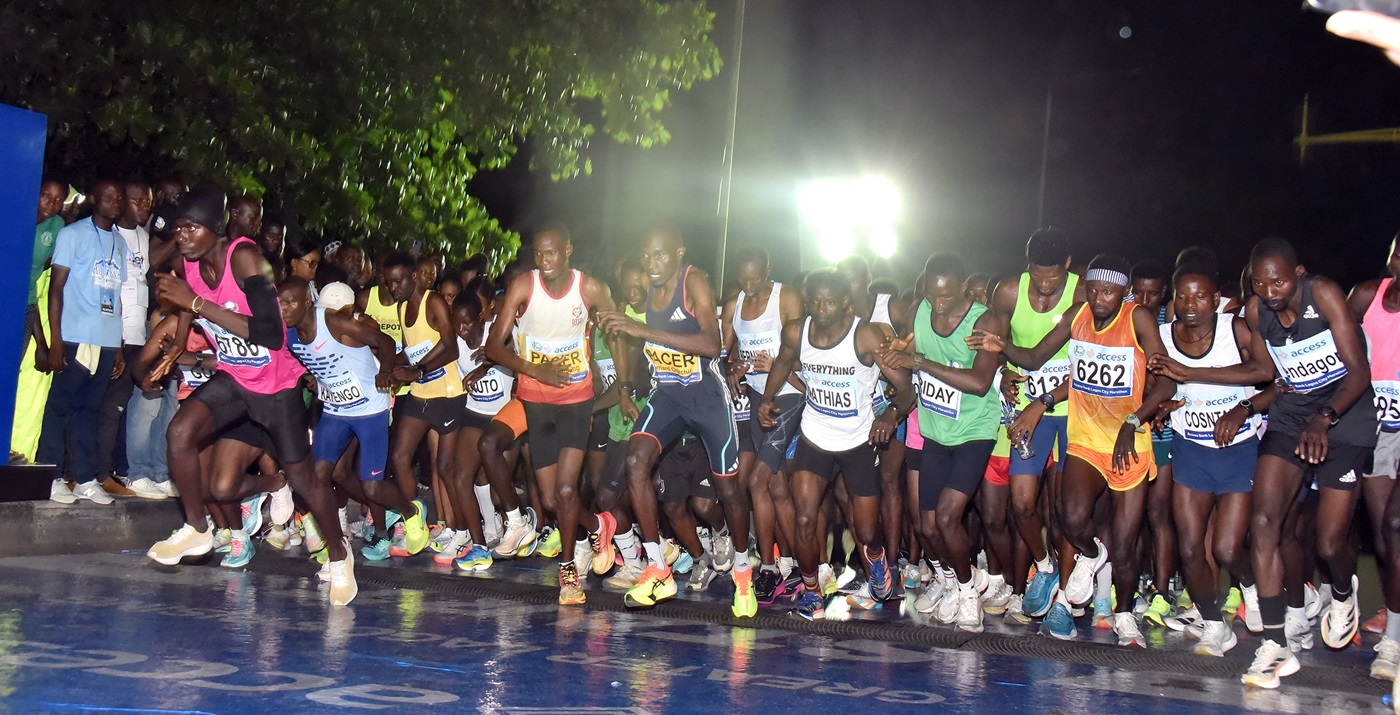
The 11th edition of Nigeria’s biggest road race reflected a familiar truth. In this country, big goals are rarely pursued alone. On race morning, runners were joined by families, volunteers and supporters who lined parts of the route at dawn. Water stations provided by Aquafina were staffed and ready, offering premium hydration for runners from start to finish. The event belonged to the athletes, but it also drew in the city around them.
Over the years, the marathon has grown into one of West Africa’s most recognisable road races, attracting elite athletes, recreational runners, corporate teams and fitness communities. Beyond official times and rankings, another feature stands out: participants often approach the race as a shared effort. For Aquafina, this culture of companionship presented a natural alignment.
Before sunrise on February 14, 2026, small groups gathered near the starting point. Some adjusted their laces. Others stretched or said brief prayers. Friends took photos. Teammates exchanged reassurances. Even before the horn sounded, the sense of togetherness was unmistakable, a spirit the Aquafina brand amplified through its 2026 campaign theme for the marathon, “Run am with your Padi.”
Created around a familiar Nigerian expression, the “Run am with your Padi” campaign draws from Pidgin, where “padi” represents a dependable friend; someone who shows up and stays the course. Nowhere was this more evident than in the 10-kilometre category. Colleagues who trained together arrived in matching shirts. Friends who set fitness goals at the start of the year ran side by side. Running clubs assembled in organised clusters at the starting grid, determined to finish together, embodying the very spirit Aquafina set out to celebrate.
On race day, Aquafina extended this notion beyond messaging and into visible action. Along the course, participants slowed down for struggling teammates and regrouped at checkpoints. Hydration stations became brief meeting points where runners paused, encouraged one another, and pushed forward again. In Lagos’s demanding climate, steady access to bottled water is not optional; it is essential. Consistent distribution across the route ensured runners could focus on endurance and pacing with confidence. Volunteers coordinated bottle handouts, marshals maintained flow, and runners approached each station knowing relief was within reach.
Nigeria’s urban fitness culture has expanded steadily over the last decade. Running clubs have multiplied. Weekend group runs have become social routines. Many corporate organisations now integrate wellness into team-building activities. As this culture grows, brands like Aquafina have increasingly positioned themselves within spaces that promote active living and shared achievement.
Recognising that the marathon’s energy is driven not only by elite athletes but by everyday participants, Aquafina introduced one of the most talked-about initiatives of the 2026 edition: a ₦1 million cash reward for each of the first 10 groups to complete the 10-kilometre race. This initiative intentionally shifted attention from individual speed to collective effort.
By rewarding groups rather than only podium finishers, Aquafina reinforced the value of teamwork and mutual accountability. For running clubs, corporate teams and groups of friends, the incentive validated months of shared preparation. It elevated the competitive spirit of the 10km category while remaining consistent with the brand’s “Padi of Life” positioning.
Aquafina’s leadership of the 2026 activation builds on Seven-Up Bottling Company’s 11-year presence at the marathon, where its brands have become woven into the marathon experience. As the “Padi of Life,” Aquafina’s focus on companionship mirrors the race itself, a shared journey rather than a solitary pursuit.
By the time the final waves crossed the finish line, groups gathered for photos, compared times and discussed plans for the next edition. Medals were received collectively. Celebrations were shared.
The race continues to test endurance, but it also reflects how Nigerians pursue ambition together. Through “Run am with your Padi,” steady support across every mile, and the ₦1 million group initiative, Aquafina positioned itself not just at the marathon, but within its culture.
From the starting line to the finish arch, companionship defined the day. And across every mile, no one truly ran alone.
Sports
Wellness Technologies Changing Everyday Life
Not long ago, tracking your heart rate required a visit to the doctor’s office. Meditation meant sitting in silence with no guidance. Sleep quality was something you guessed at based on how groggy you felt in the morning. Today, wellness technologies have woven themselves into the fabric of daily routines so seamlessly that many people barely notice how much their habits have shifted. From smart rings that monitor recovery to apps that coach breathing exercises, the tools available now address physical, mental, and emotional health in ways that were unimaginable a decade ago.
Wearable Devices That Go Beyond Step Counting
The first generation of fitness trackers offered little more than a pedometer strapped to your wrist. Modern wearables have evolved dramatically. Devices from companies like Apple, Garmin, and Oura now track blood oxygen saturation, skin temperature variations, heart rate variability, and even electrodermal activity linked to stress responses.
What makes these devices genuinely transformative is the shift from passive data collection to actionable insights. A smartwatch no longer simply tells you that you walked 8,000 steps. It interprets patterns over weeks and months, alerting you when your resting heart rate creeps upward or when your sleep architecture deteriorates. This continuous feedback loop encourages users to make small, informed adjustments rather than relying on annual checkups to catch problems after they develop.
Mental Health Tools Powered by Artificial Intelligence
Perhaps the most significant wellness shift involves mental health support. AI-driven platforms such as Woebot and Wysa offer cognitive behavioral therapy techniques through conversational interfaces, making evidence-based strategies accessible around the clock. These tools do not replace licensed therapists, but they fill a critical gap for people who face long wait times, financial barriers, or stigma around seeking help.
Meditation and mindfulness apps like Calm and Headspace have also matured considerably. They now use machine learning to personalize session recommendations based on user behavior, mood logging, and even biometric data pulled from connected wearables. The result is a tailored experience that adapts as your needs change.
Sleep Optimization Through Smart Environments
Sleep technology has become its own wellness subcategory. Smart mattresses from brands like Eight Sleep regulate temperature throughout the night based on individual sleep stages. White noise machines have given way to adaptive soundscapes that respond to ambient noise levels. Even smart lighting systems now simulate natural sunrise patterns to support circadian rhythm alignment.
The integration between these devices matters as much as the devices themselves. A sleep tracker on your wrist communicates with your smart thermostat, which adjusts bedroom temperature as you transition between sleep cycles. This kind of coordinated environment design represents a meaningful leap forward from simply setting an alarm and hoping for the best.
The Role of Gamification in Building Healthy Habits
One reason wellness technologies succeed where good intentions alone fail is gamification. Streak tracking, achievement badges, social challenges, and progress visualizations tap into the same psychological reward mechanisms that keep people engaged in entertainment platforms. Much like the engaging experience you might find at a casino Ice environment, wellness apps understand that sustained engagement depends on making the experience feel rewarding in the moment, not just beneficial in the long run.
This design philosophy shows up everywhere. Fitness apps award points for consistency. Hydration trackers celebrate milestones. Even corporate wellness programs now use leaderboard-style competitions to encourage movement during the workday. The underlying principle is simple: habits stick when they feel good to maintain.
Where Everyday Wellness Is Heading
Wellness technology has crossed a threshold. It is no longer a niche interest for fitness enthusiasts or early adopters — it is embedded in the phones, watches, beds, and homes of mainstream consumers. The common thread across every category is personalization. Generic advice is giving way to data-informed, adaptive guidance that meets people where they are and adjusts as they grow. The quiet revolution is not in any single device but in the ecosystem of tools working together to make healthier living the path of least resistance.
| Wellness technology category | Key examples | Primary benefit |
| Wearable devices | Apple Watch, Oura Ring, Garmin | Continuous health monitoring with actionable insights |
| Mental health tools | Woebot, Wysa, Calm, Headspace | Accessible, AI-personalized mental health support |
| Sleep optimization | Eight Sleep, smart lighting, adaptive soundscapes | Coordinated environment design for better sleep |
As these technologies continue to converge and improve, the line between health management and daily life will only blur further. The future of wellness is not about dramatic overhauls but about intelligent, incremental support woven into the routines people already follow — making it easier than ever to live a healthier, more balanced life.
Sports
From Spectator to Participant: The Digital Shift in Nigeria’s Sports and Entertainment Economy
The landscape of leisure in Nigeria is undergoing a massive transformation, heavily driven by digitalization, shifting consumer habits, and a resilient appetite for interactive media. Looking at recent economic data, Nigeria’s capital importation numbers show robust growth, reflecting a broader trend of market adaptability and consumer resilience. While traditional sectors navigate structural reforms, the digital entertainment and sports economies are experiencing unprecedented engagement.
Historically, sports and media consumption in the country was a passive experience—families and friends gathered around television sets to watch global football tournaments, European leagues, or local fixtures. Today, however, sports viewing has quietly changed its personality. It is no longer just about sitting in front of a screen; it has become deeply social, interconnected, and participatory.
The Convergence of Sports, Finance, and Leisure
This evolution from passive spectating to active participation is deeply linked to the rise of smartphone accessibility and fintech innovation. With the Central Bank of Nigeria pushing for advanced digital payment visions and financial institutions tailoring services for seamless transactions, everyday consumers have found it easier than ever to engage with global digital platforms.
As a result, sports culture has naturally merged with digital entertainment. Fans are no longer satisfied with just watching a match; they want a stake in the action. This desire for active engagement has fueled the explosive popularity of fantasy leagues, predictive gaming, and online gaming applications.
For many adults looking to complement their sports viewing with quick, engaging leisure activities during half-time breaks or match intervals, the digital landscape offers a wealth of options. Platforms providing high-quality, zero-cost entertainment options—such as 1xbet free casino games—have seamlessly integrated into this ecosystem. They offer a casual, risk-free environment for fans to test their analytical skills, enjoy diverse gaming themes, and experience the thrill of the stadium from the comfort of their mobile devices.
Driving Economic Growth through Digital Ecosystems
This synergy between tech infrastructure and entertainment content is creating a powerful economic multiplier effect. The continuous demand for high-speed data, stable digital payment channels, and localized content keeps the local tech ecosystem vibrant. Major global brands are heavily investing in localized tournaments—such as regional football cups and digital gaming leagues—proving that the intersection of competitive passion and interactive entertainment is here to stay.
As Nigeria’s digital economy matures, the lines between traditional broadcasting, sports fandom, and online interactive leisure will continue to blur. For a young, tech-savvy population, entertainment is no longer a one-way street—it is an interactive space where every fan can be an active participant in the action.
Sports
The Role of Live Sports in Modern Entertainment
Not many forms of entertainment still require people to show up in real time. Movies can be watched days later. Series can be binged over a weekend. Social media ensures that almost every major moment is available on demand. But live sports remain one of the few experiences where being present at the moment still matters.
The ongoing FIFA World Cup is proving exactly why. Every tournament comes with its own stories. There are the favourites expected to dominate, the underdogs rewriting expectations, and the players who suddenly become household names overnight. But beyond football itself, the World Cup continues to highlight something bigger: live sports have become one of the most powerful forces in modern entertainment.
What makes live sports different is simple: nobody knows how it ends. Unlike scripted television or pre-recorded content, sports thrive on unpredictability. A match can change in seconds. A last-minute goal can alter a nation’s mood. One decision, one save, or one upset can become a moment fans talk about for years. That uncertainty is what keeps people watching live rather than catching up later.
In an era where audiences increasingly consume content on their own schedules, live sports create a rare shared experience. Millions of people are reacting to the same moment at the same time. Conversations happen instantly online, and debates continue long after the final whistle.
The World Cup has once again shown how sports have evolved beyond competition into full-scale entertainment. The experience no longer begins at kick-off or ends at full-time. Pre-match analysis, expert commentary, post-match discussions, and digital conversations have become part of how fans engage with the game.
Access also plays a major role in this experience. Across Africa, fans continue to rely on platforms that bring the tournament closer to them. Through SuperSport on DStv and GOtv, viewers can follow the action live as it unfolds, experiencing every goal, upset and defining moment in real time rather than through highlights or social media clips.
This immediacy is part of why live sports remain so valuable in today’s entertainment landscape. While streaming has changed viewing habits and audiences have more content choices than ever before, sports still command attention in a way few other formats can.
The World Cup serves as a reminder that in a world of endless content, people still crave moments they can experience together. Live sports deliver exactly that: unscripted drama, shared emotions and memories that last long after the final whistle.
As entertainment continues to evolve, live sports have not lost their relevance. If anything, they have become even more important because in an age where almost everything can wait, some moments are simply better experienced live.
To make football’s biggest moment even more accessible, MultiChoice has introduced special World Cup bundle offers across DStv and GOtv ahead of the 2026 FIFA World Cup in the US, Mexico, and Canada. From June 1, 2026, new customers can get a full decoder kit plus a one-month subscription for ₦15,000 on either platform. The offer is aimed at helping more Nigerians stay connected to the tournament, which will feature 48 teams and 104 matches. Through SuperSport, viewers will enjoy full live coverage of all games, dedicated 24-hour World Cup channels, expert analysis, highlights, multilingual commentary including pidgin, and flexible viewing options on TV and streaming, so fans don’t miss any moment of the action.
-
Feature/OPED6 years agoDavos was Different this year
-
Travel/Tourism10 years ago
Lagos Seals Western Lodge Hotel In Ikorodu
-
Showbiz3 years agoEstranged Lover Releases Videos of Empress Njamah Bathing
-
Banking8 years agoSort Codes of GTBank Branches in Nigeria
-
Economy3 years agoSubsidy Removal: CNG at N130 Per Litre Cheaper Than Petrol—IPMAN
-
Banking3 years agoSort Codes of UBA Branches in Nigeria
-
Banking3 years agoFirst Bank Announces Planned Downtime
-
Sports3 years agoHighest Paid Nigerian Footballer – How Much Do Nigerian Footballers Earn