
Banking
CBN, NCC Set up Committees to Protect Consumers Against Fraud

By Modupe Gbadeyanka
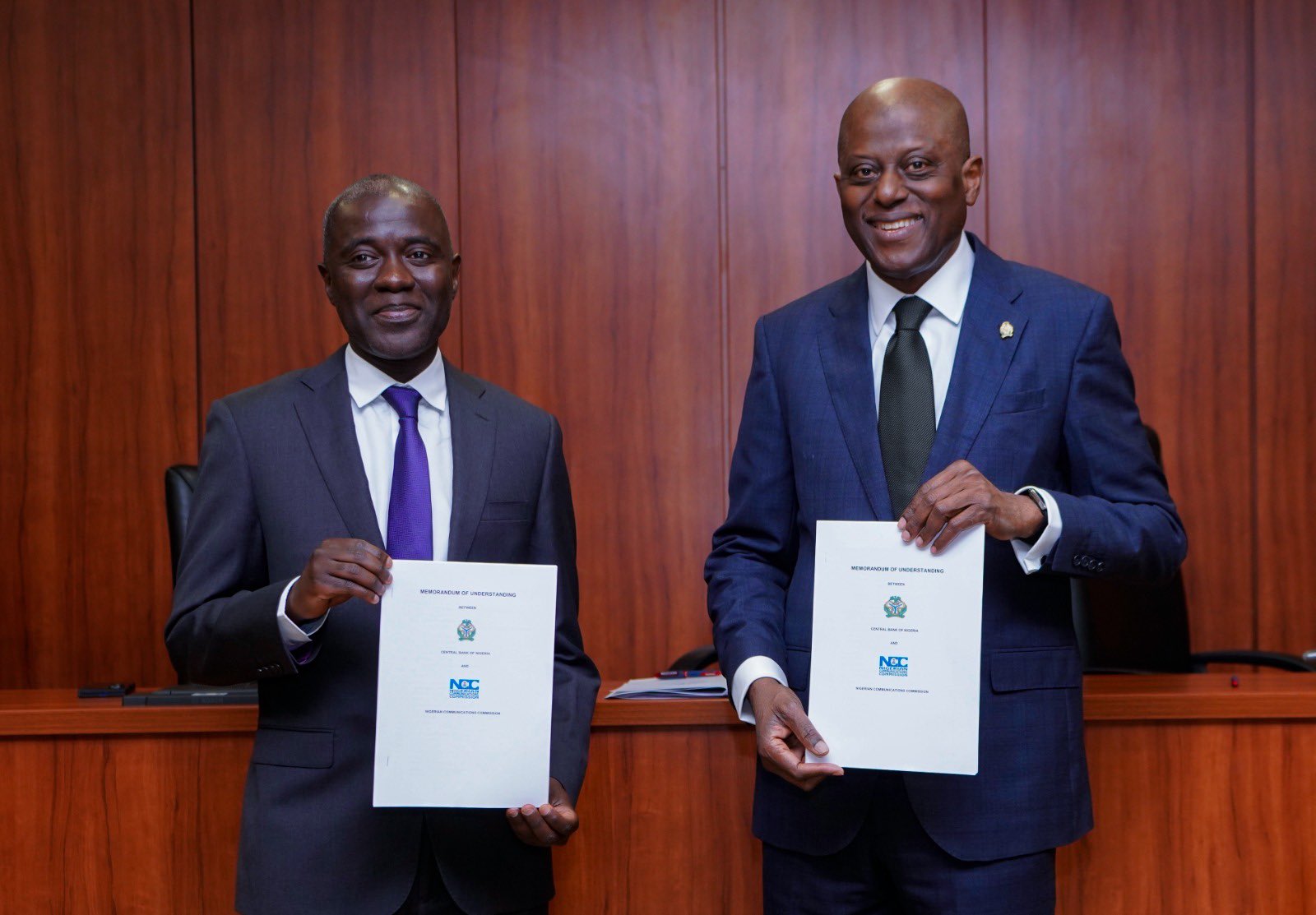
In a bid to ensure consumer safety across the telecommunications and financial services sectors, the Central Bank of Nigeria (CBN) and the Nigerian Communications Commission (NCC) have decided to work together.
On Monday, both organisations sealed a Memorandum of Understanding (MoU) for the establishment of joint committees for the protection of consumers against fraud in the sectors.
The two teams set up by the CBN and the NCC include the Joint Committee on Payment Systems and Consumer Protection, and the Joint Committee on Telecoms Identity Risk Management System (TIRMS) Portal.
Through the TIRMS portal, which aggregates data on churned (recycled) phone numbers, as well as numbers flagged within the financial services sector, it will now have enhanced visibility into the status of phone numbers, one of the most widely utilised resources in the sector, although regulated by the NCC.
With this, according to the chief executive of NCC, Mr Aminu Maida, financial institutions will be able to determine when a line is active, when it has been swapped, when it has been disconnected due to inactivity and reassigned to a new subscriber, and when it has been flagged for suspicious or fraudulent activity. “This ensures that our financial services industry is better equipped with timely and relevant information to effectively combat e-fraud, particularly those perpetuated using phone numbers, in the country,” he stated.
It was stated that the partnership between the two parties will reduce electronic fraud, which has become increasingly pervasive, with significant implications for the integrity of the digital economy.
In his remarks, the Governor of the CBN, Mr Yemi Cardoso, said the MoU will strengthen coordination on approvals, technical standards, and innovation trials, including sandbox testing that supports market-led solutions, while safeguarding stability.
“Going forward, the CBN remains fully committed to working with the NCC to deliver a safer, more resilient, and more inclusive digital financial system that supports national productivity, protects consumers, and strengthens trust in Nigeria’s digital economy,” the central bank chief said.




By Adedapo Adesanya
In a significant easing of foreign exchange (FX) procedures, the Central Bank of Nigeria (CBN) has exempted domiciliary account holders from obtaining Form A before making eligible foreign remittances.
The provision is contained in the newly issued Forex Manual (4th Edition), which took effect on June 1, 2026. Under the new framework, customers using funds already held in their domiciliary accounts can make remittances without processing Form A.
The change is expected to shorten processing times for legitimate foreign transfers and reduce paperwork for banks and customers.
Form A remains relevant for certain transactions involving the purchase of foreign exchange through the official market.
The broader manual introduces new measures covering imports, exports, travel allowances, trade finance, and foreign remittances as the CBN seeks to improve transparency and efficiency in the forex market.
The apex bank said the reforms are intended to strengthen market discipline, improve data accuracy, and support confidence in Nigeria’s foreign exchange framework.
Under the revised framework, all import transactions must be backed by a valid Form ‘M’, with strict timelines imposed for the submission of shipping and exchange control documents.
Importers are required to ensure that all documentation is genuine, verifiable, and routed through authorised banking channels, as part of efforts to eliminate trade-based money laundering and illicit capital flows.
The apex bank also standardised the exchange rate for import duty payments, directing that duties be calculated using the prevailing Nigerian Foreign Exchange Market (NFEM) rate published daily by the CBN.
In a move to limit capital flight, the manual caps advance payments for imports at 30 per cent of transaction value and places a ceiling on interest rates for trade-related credit at 0.5 per cent above the Secured Overnight Financing Rate (SOFR), with a maximum tenor of 180 days.
On the export side, the CBN has made it mandatory for all exporters to process Form NXP, regardless of the value of goods.
Export proceeds must be repatriated within 180 days for non-oil exports and 90 days for oil and gas shipments, reinforcing efforts to boost foreign exchange inflows.
The guidelines also introduce stricter inspection requirements, mandating pre-shipment verification and the issuance of Clean Certificates of Inspection before goods can be exported.
Exporters are further required to pay the Nigerian Export Supervision Scheme (NESS) levy, set at 0.5 per cent for non-oil exports and 0.12 per cent for oil and gas exports.
In addition, the manual strengthens oversight of insurance-related forex transactions, restricting foreign currency-denominated policies for residents and requiring regulatory clearance for certain offshore payments.
Banking
Strong Synergy in Customer Acquisition, Others Drive Alpha Morgan Bank Financial Performance

By Aduragbemi Omiyale
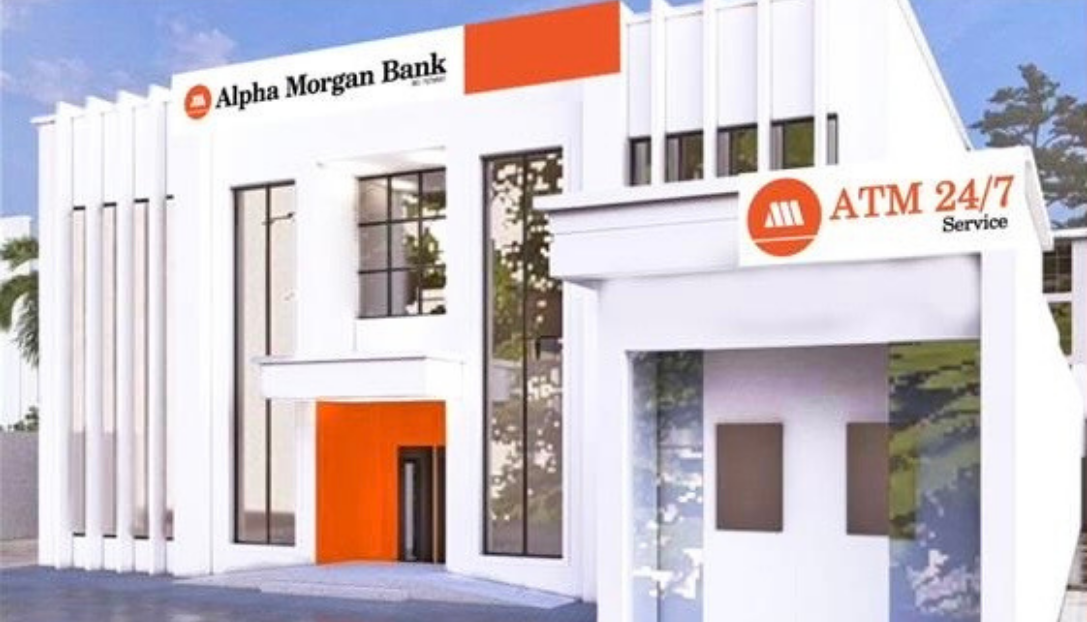
Alpha Morgan Bank has achieved a landmark financial performance in the first 10 months of its operations, largely due to strong synergy in customer acquisition and branch expansion, a deliberate focus on growth in demand deposits, creation of quality risk assets and balance sheet efficiency.
These achievements were further supported by robust operational processes powered by sound technology and systems, management depth and expertise, experience and strategic oversight provided by the company’s board.
An analysis of the lender’s books showed that pre-tax profit stood at N1.9 billion, reinforcing its emergence as one of the country’s most remarkable new-generation financial institutions. The post-tax profit was N1.1 billion.
With this performance, Alpha Morgan Bank not only broke even within an exceptionally short period, but also delivered what is believed to be a record-setting early-profit performance in the Nigerian banking sector, underlining the strength of its strategy, the discipline of its execution and the confidence the market has placed in its business model.
It was observed that in the period under review, gross earnings were N13.1 billion, the operating income was N9.6 billion, net interest margin was 67 per cent, customer deposits stood at over N103 billion, and the non-performing loan (NPL) ratio was 0 per cent after disbursing about N10.1 billion in loans to customers.
“This is more than a financial milestone; it is a strong statement of what is possible when vision, discipline, sound execution, and market opportunity come together,” the chief executive of the financial institution, Mr Ade Buraimo, commented.
“From inception, Alpha Morgan Bank was built to be a commercial bank that is solution-driven and committed to delivering value at scale.
“To record a PBT of N1.9 billion in our first 10 months of operations is both historic and deeply encouraging. It reflects the dedication of our people, the trust of our customers and the solid foundation we have laid for long-term growth,” he added.
By Aduragbemi Omiyale
A cross-border payments platform, PayAngel, has expanded its global payout capabilities by collaborating with Visa and Currencycloud.
The company, built by migrants and shaped by a lived understanding of the migrant journey, went into the partnership to support faster, more efficient cross-border payouts across multiple currencies and countries, enhancing how individuals and businesses move money internationally.
This capability supports everyday use cases that matter to PayAngel’s customers, from contributing to family milestones and fulfilling communal obligations to supporting businesses that operate across borders.
Born out of a desire to challenge the high costs, friction, and lack of transparency that have long defined traditional remittances, PayAngel enables fee-free transfers, competitive FX rates, and dependable settlement across 22 African countries, as well as India and Bangladesh. The platform also supports businesses through a web-based B2B payments portal that enables collections, disbursements, and cross-border settlement without the need for local presence or complex integrations.
By utilising Currencycloud’s regulated infrastructure, PayAngel is able to streamline settlement flows, improve operational efficiency, and expand its ability to serve customers with clarity, control, and confidence. The collaboration aligns with PayAngel’s long-term strategy to scale responsibly, deepen trust, and invest in resilient global payments infrastructure.
“Access to dependable, well-governed payment rails is essential to supporting globally connected communities,” the chief executive of PayAngel, Jones Amegbor, stated.
“This collaboration strengthens the infrastructure behind our platform, helping us deliver faster and more efficient cross-border payments while staying focused on the human connections those payments represent,” Amegbor added.
“Visa Direct is focused on enabling secure, seamless money movement across the global payments ecosystem,” said Philip Konopik, SVP, Head of CMS, Visa Europe. “It’s fantastic to be collaborating with fintechs such as PayAngel to help supercharge innovation that improves how money moves for consumers and businesses worldwide.”
-
 Feature/OPED6 years ago
Davos was Different this year
-
Travel/Tourism10 years ago
Lagos Seals Western Lodge Hotel In Ikorodu
-

 Showbiz3 years ago
Estranged Lover Releases Videos of Empress Njamah Bathing
-
 Banking8 years ago
Sort Codes of GTBank Branches in Nigeria
-

 Economy3 years ago
Subsidy Removal: CNG at N130 Per Litre Cheaper Than Petrol—IPMAN
-

 Banking3 years ago
Sort Codes of UBA Branches in Nigeria
-

 Banking3 years ago
First Bank Announces Planned Downtime
-

 Sports3 years ago
Highest Paid Nigerian Footballer – How Much Do Nigerian Footballers Earn