
Banking
CBN Slashes MPR to 12.5% to Support Economy


By Adedapo Adesanya
The Central Bank of Nigeria (CBN) on Thursday, May 28 reduced its Monetary Policy Rate (MPR) to 12.5 percent as part of efforts to combat the economic effects of the coronavirus pandemic.
CBN Governor, Mr Godwin Emefiele, announced the reduction during a Monetary Policy Council (MPC) briefing on Thursday.
He said the new rate fell from the previous rate of 13.50 percent that was retained at the last meeting.
However, the bank retained its Cash Reserve Ratio (CRR) at 27.5 percent and Liquidity Ratio (LR) at 30 percent.
According to him, seven members of the MPC voted to cut the MPR by 100 basis points, while two members voted for a 150 basis points rate cut, with one member electing for a 200 basis rate cut.
Mr Emefiele added that the asymmetric corridor around the MPR will remain at +200/-500 basis points, while the Cash Reserves Ratio (CRR) at 27.5 percent and Liquidity Ratio (LR) at 30 percent.
The committee also considered developments in the global and domestic economy since its last meeting including, the negative impact of COVID-19 on global growth and the responses of global central banks’ to the COVID-19.
On the domestic front, the committee noted that sustained inflationary pressure in April: +8 basis points to 12.34 percent year-on-year, and weaker but still positive output growth in the first quarter of 2020, as well as a sustained decline in manufacturing PMI.
MPR is the interest rate at which CBN lends to the commercial banks and also the benchmark against which other lending rates in the economy are pegged.
A reduction in the MPR rate will make lending cheaper and help to further stimulate the economy that has been hit by the COVID-19 pandemic.
Some analysts, including those at Business Post, project that lending to commercial bank customers should, by this action, be cheaper and at interest rates within 16 percent to 20 percent.


Banking
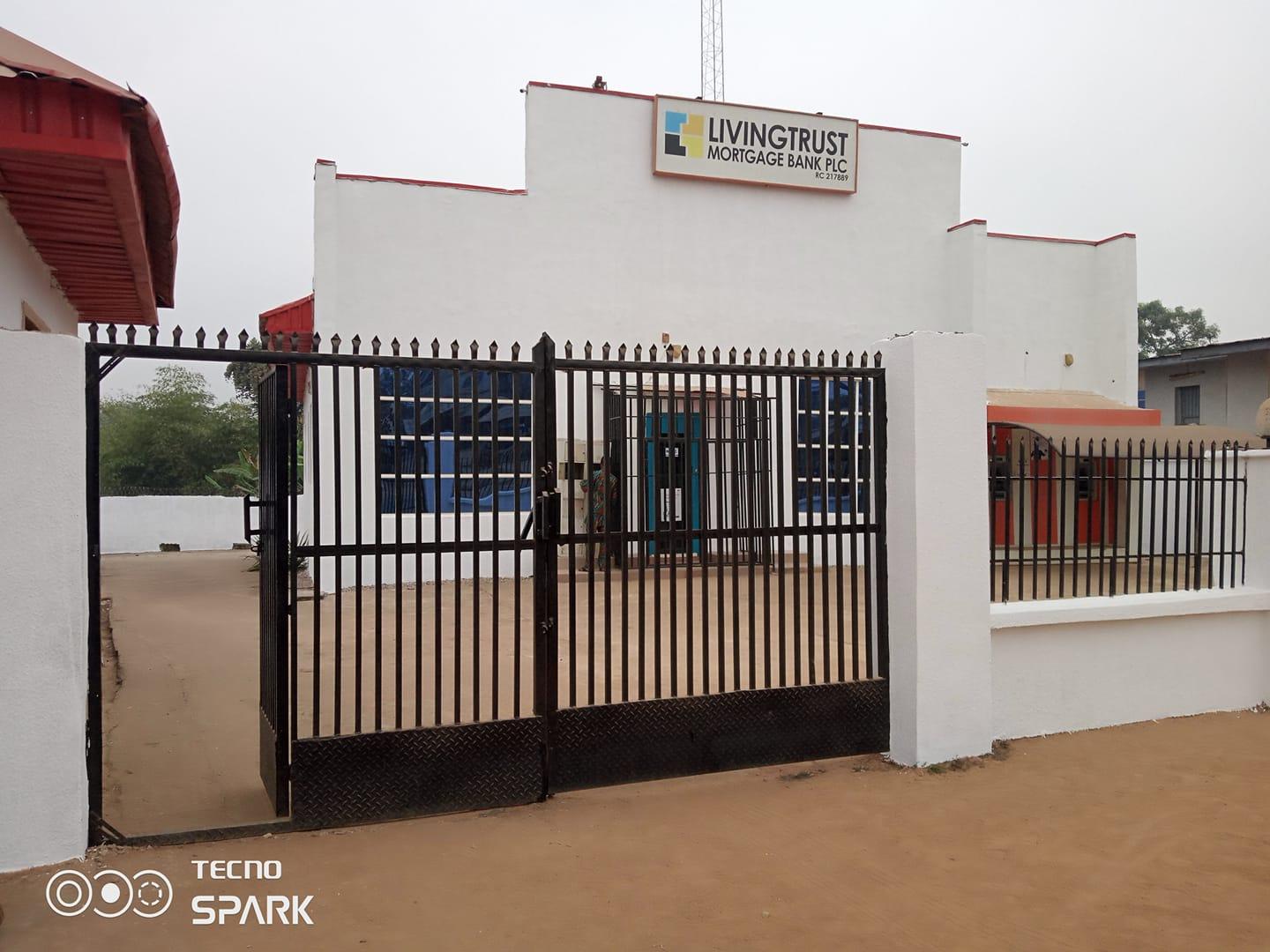
Proxy Share Acquisition: Nothing to Worry About—LivingTrust Mortgage Bank Assures Shareholders

By Aduragbemi Omiyale
The board of LivingTrust Mortgage Bank Plc has assured the investing public, particularly its shareholders, that its operations are not being affected by reports of an alleged proxy share acquisition surrounding the organisation.
It was claimed that an investor attempted to take over the control of the real estate lender with funds alleged to have been from questionable sources.
In a clarification to the investing public through the Nigerian Exchange (NGX) Limited on Tuesday, April 7, 2026, the company said it cannot confirm if security operatives investigating the claims have submitted their report to the Central Bank of Nigeria (CBN).
However, it assured that, “Our bank is stable and that in the event of any change in ownership, we will file the necessary formal notifications and publish detailed announcements.”
In the notice today, LivingTrust Mortgage Bank narrated that, “As a company listed on the Growth Board of NGX, there are regular movements on the bank’s shareholder register.
“The bank’s monitoring of material movements showed an acquisition of 2.24 per cent of its shareholding by Apel Asset Ltd-Nominee, as per its register of June 25, 2025, as obtained from our registrar. However, one month later, in July 2025, the register obtained from the bank’s registrar showed the same shares to be listed in favour of Deril Academy Limited. We are further aware that in July 2025, Deril Academy Limited teamed up with some other shareholders in a takeover attempt via a matter filed in the Federal High Court, Lagos. The attempt failed, and the matter has now been withdrawn.
“Please note that we do not reveal the veil of corporations of juridical entities investing in the shares of the bank, below the level considered statutorily significant.
“While the CBN assesses the source of funds invested in financial institutions, persons purchasing shares of less than 5 per cent of total shareholdings in the open market are not required to be reported to the CBN.”
Business Post reports that the majority shareholders of LivingTrust Mortgage Bank, formerly Omoluabi Mortgage Bank, are Cititrust Holdings Plc and the Osun State Government.
By Adedapo Adesanya
Nigeria’s Bank Verification Number (BVN) registry surged to 68.6 million in the first three months of 2026 from 67.8 million in the last quarter of 2025, reflecting continued uptake of the unique identity platform for bank customers amid new regulatory directives to strengthen the Nigerian financial landscape further.
Data released by the Nigeria Inter-Bank Settlement System (NIBSS) showed that the database expanded by 754,128 in the first quarter of the year.
Last year, the sector recorded 4.3 million new registrations, largely driven by the Non-Resident Bank Verification Number (NRBVN) initiative, which allows Nigerians in the diaspora to register remotely, thereby boosting cross-border financial inclusion.
The data for fresh enrolments in 2026 showed a slowing rate of registrations, with fewer than one million recorded in the first three months. The total number of active bank accounts in Nigeria stood at over 320 million as of March 2025, highlighting a gap between BVN coverage and the broader banking population. While a single BVN can be linked to multiple accounts, unlinked accounts remain a challenge for financial oversight.
Last month, the Central Bank of Nigeria (CBN) introduced a revised BVN regulatory framework to strengthen identity verification and fraud prevention. Among the new provisions, only individuals aged 18 and above are eligible for BVN enrolment, and customers are now permitted to update the phone number linked to their BVN only once.
The apex bank also directed financial institutions to maintain a temporary watch list of BVNs associated with suspected fraudulent transactions. Affected BVNs remain on the list for up to 24 hours, during which owners are contacted for clarification before further action is taken.
According to the CBN, the measures are designed to tighten fraud monitoring, protect transaction integrity, and enhance identity management across Nigeria’s banking system.

By Modupe Gbadeyanka
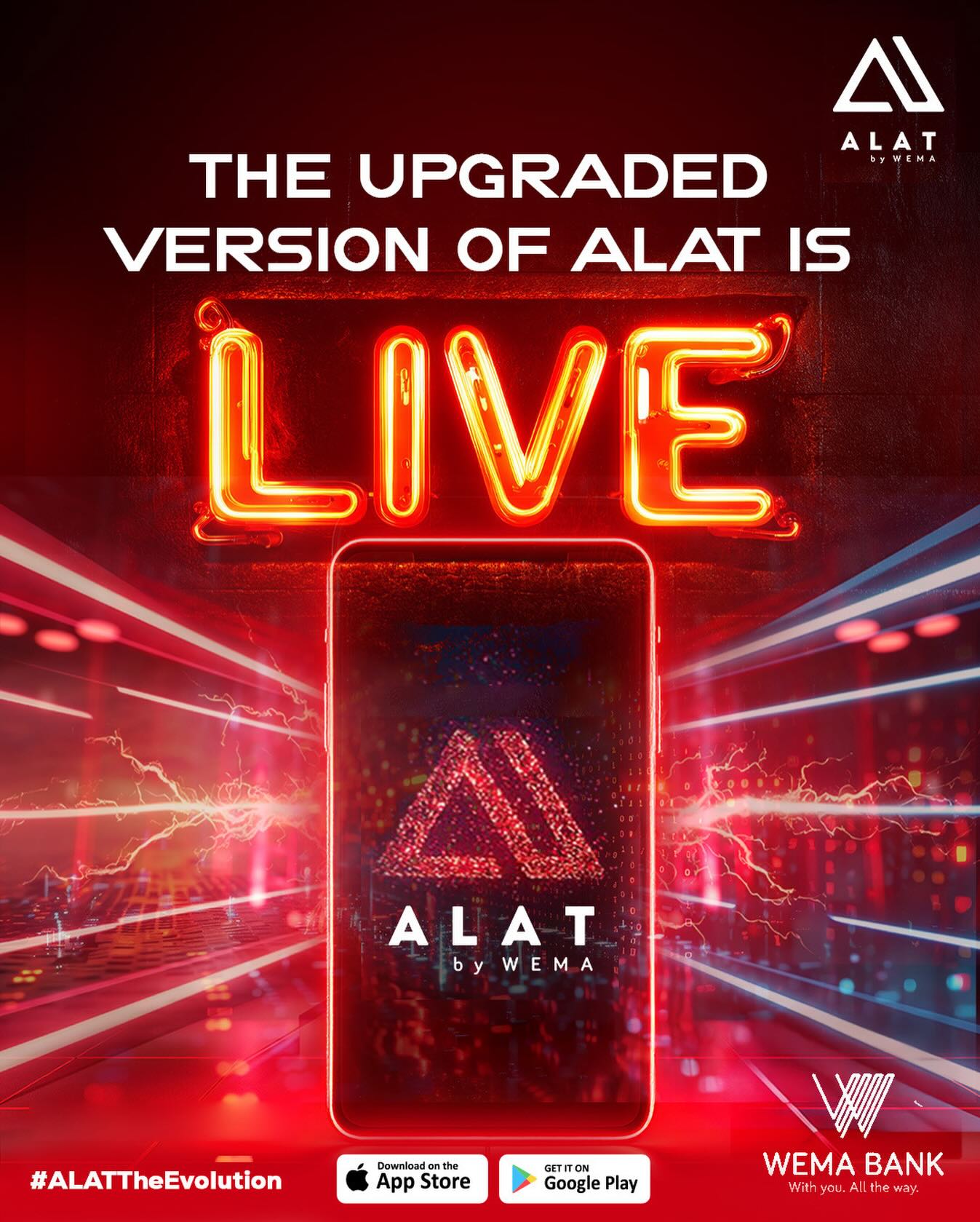
One tune that is on the lips of young and energetic Nigerians is the new ALAT: The Evolution jingle.
The melodious clink was designed to capture the energy of a smarter and more seamless banking experience. It is bright, catchy, and full of life.
The lender said the ALAT: The Evolution jingle is more than just music, as it represents a clear statement of intent. It signals a shift towards banking that feels natural, responsive, and in tune with the user.
As customers update their app and explore ALAT: The Evolution, the jingle serves as a reminder that a better, smoother way to bank is already here. Wema Bank is not just evolving its technology; it is shaping how banking feels.
It was stated that the tune was introduced to mark the next phase of the financial institution’s digital banking journey.
Everyday banking can often feel routine or even stressful, with multiple steps and delays slowing things down. The ALAT: The Evolution jingle reimagines that experience with a lively and confident tone that mirrors the app’s capabilities.
From voice banking with SAW to Tap and Pay and bank uptime prediction, each feature is echoed in the rhythm and flow of the sound. It brings to life the speed, convenience, and reliability that define this new phase of ALAT: The Evolution.
-
 Feature/OPED6 years ago
Davos was Different this year
-
Travel/Tourism10 years ago
Lagos Seals Western Lodge Hotel In Ikorodu
-

 Showbiz3 years ago
Estranged Lover Releases Videos of Empress Njamah Bathing
-
 Banking8 years ago
Sort Codes of GTBank Branches in Nigeria
-

 Economy3 years ago
Subsidy Removal: CNG at N130 Per Litre Cheaper Than Petrol—IPMAN
-

 Banking3 years ago
Sort Codes of UBA Branches in Nigeria
-

 Banking3 years ago
First Bank Announces Planned Downtime
-

 Sports3 years ago
Highest Paid Nigerian Footballer – How Much Do Nigerian Footballers Earn