
Banking
CIBN Lauds Ecobank on Professionalism, Capacity Building


The Registrar and Chief Executive Officer of Chartered Institute of Bankers of Nigeria (CIBN), Mr Seye Awojobi, has commended Ecobank Nigeria’s various initiatives targeted at building the capacity of its workforce.
He made this disclosure while speaking at the graduation ceremony of Ecobank pioneer management trainees in Lagos.
Mr Awojobi, who was represented by Group Head, Membership Services, CIBN, Mr Akin Morakinyo, observed that over the years, the bank has accorded priority to various learning and development initiatives that expose staff to new career development within the banking industry.
He emphasised that such competency improvement was important for the banking sector, stressing that it aligns with the current dynamics of the industry and global best practice.
He encouraged the young graduates to “make it happen”, by doing everything possible to excel in their chosen area in banking.
“You should see yourself as change agents. For you to grow in your career, you must possess integrity and honesty; you must also be consistent and aspire to achieve. Strive to do what is right at all times,” he noted.
Alluding to the state-of-the-art equipment, syllabus and faculty of the Ecobank Academy, Mr Awojobi disclosed that CIBN had granted exemptions in some of the courses in its professional examinations to graduates of the Academy.
He, therefore, urged the young graduates to take advantage of the Ecobank waiver to become chartered members of the institute.
Also speaking, Managing Director, Ecobank Nigeria, Mr Patrick Akinwuntan, charged the graduates to discharge their duties and assignments with a high level of professionalism. He stressed that Ecobank is a veritable platform for them to excel and attain their career aspirations.
According to the Managing Director, “Ecobank is a great place for you to exhibit what you have been taught in the last 18 months in this Academy. It is a place where you can achieve your career goals. Be ready to discharge your task effectively and efficiently and note that your future in the bank starts now.”
Mr Akinwuntan reiterated that Ecobank is highly committed to delivering on its promise of investing in creating leaders for the banking industry.
Ecobank Transnational Incorporated, Group Head, Talent, Learning and Organizational Development, Simon Rey, emphasized the power of synergy. He noted that young graduates need each other to excel and succeed in their job functions and career in the bank.
In his opening address, Acting Head, Human Resources, Ecobank Nigeria, Mr Adekunle Adewuyi advised the young graduates to adhere strictly to the bank’s core values. He said the core values should be internalized as a driving force to become credible bankers.
The Ecobank pioneer set of management trainees passed through rigorous training for 18 months at Ecobank Nigeria Academy.
The training involved classroom exercise, on the job rotation, special assignments to some Affiliates within the Group. The event tagged The Future Is Now was attended by the industry regulator, CIBN, industry experts as well as partners.









By Modupe Gbadeyanka
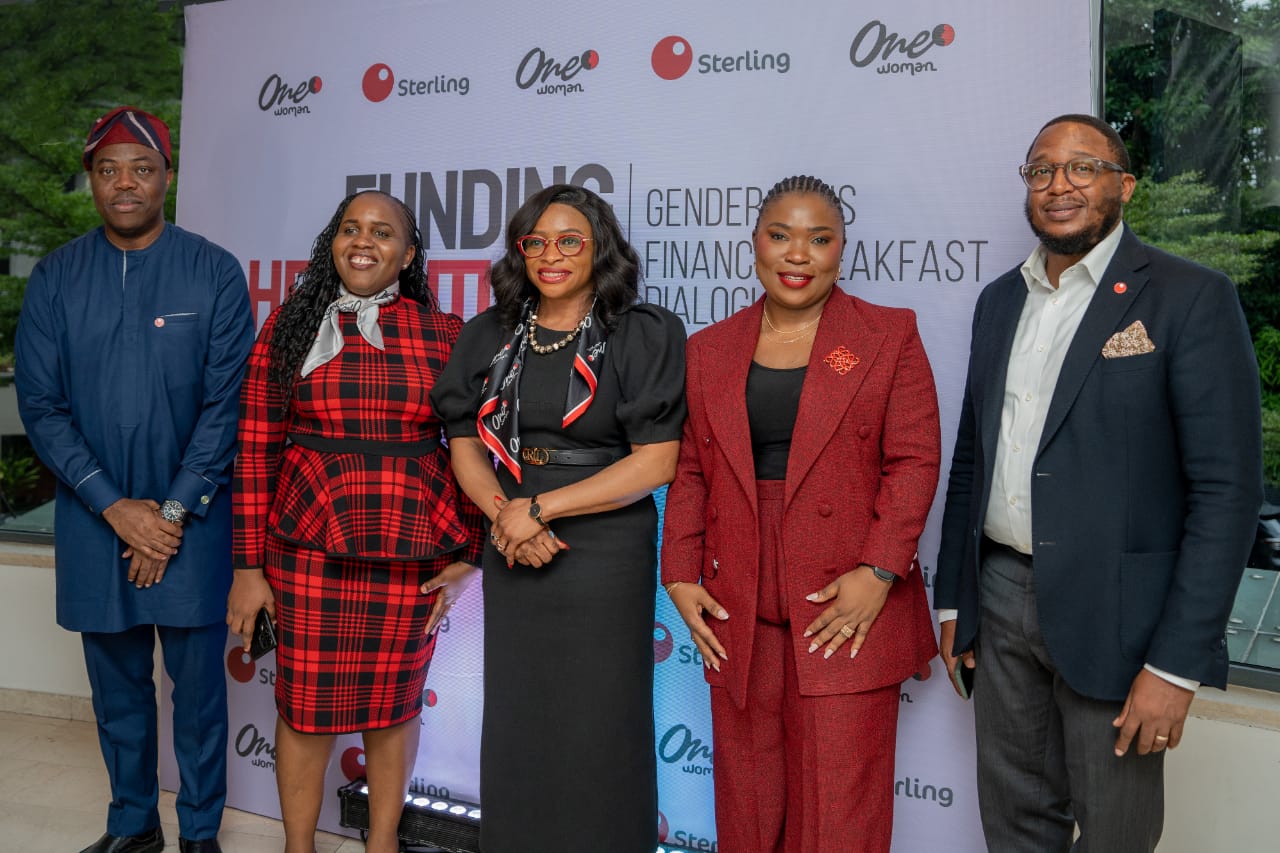
The women-focused initiative by Sterling Bank, OneWoman, is already yielding positive results, especially in promoting financial inclusion and empowering female-led enterprises in Nigeria.
Business Post reports that the programme was created to support women through three key pillars of capital, capacity, and community.
In 2025, according to the Head of the OneWoman Initiative, Ms Ezinne Nwokafor, the initiative gave out N43.9 billion loans to 2,450 female entrepreneurs, trained 6,000 of them, served about 380,000 women across three sectors of career women, women in business and freshers, and their vision 2030 is to give out N500 billion loans to one million women across their three sectors.
She noted that a significant majority of Nigerian women remain excluded from formal credit, with only a small percentage able to access structured financing. Despite improvements in financial inclusion, women continue to face systemic barriers that limit their ability to secure funding.
Ms Nwokafor pointed out that women account for a substantial share of micro, small, and medium enterprises and contribute meaningfully to the economy, yet face a financing gap estimated at $42 billion annually, according to the International Finance Corporation.
She also referenced data showing that more than half of women-led businesses identify access to finance as a major constraint, while rejection rates for loan applications remain significantly higher for women than for men.
According to her, these challenges are often linked to structural issues such as gaps in asset ownership, social norms, and limited access to financial data and visibility.
“Sterling’s OneWoman initiative is positioned to bridge this gap by combining financial solutions, mentorship, capacity building, and community support for women across different stages of their journey,” she said at the Funding Her Future Breakfast Dialogue in Lagos.
The session brought together voices from across sectors for a focused and necessary conversation on how to unlock more inclusive and effective financing pathways for women-led businesses in Nigeria.
On his part, the chief executive of Sterling Bank, Mr Abubakar Suleiman, said, “Women-led businesses need the right support systems, the right networks, and the right ecosystem to grow with confidence and scale with resilience.”

By Modupe Gbadeyanka
Alpha Morgan Bank has reaffirmed its commitment to supporting institutions that drive intellectual growth and national development.
The lender gave this reassurance at the commissioning of the Redeemer’s University Business School by Pastor (Mrs) Folu Adeboye, the wife of the General Overseer of the Redeemed Christian Church of God (RCCG), Pastor Enoch Adeboye.
Speaking at the event, the Managing Director of Alpha Morgan Bank, Mr Ade Buraimo, said the company was proud to be associated with the school, noting its commitment to education and institutional development.
As part of its broader focus on knowledge sharing and thought leadership, Alpha Morgan Bank will host its Economic Review Webinar in May 2026, bringing together experts to share insights on key economic trends and opportunities.
The commissioning of the business school was witnessed by distinguished guests, including the Pro-Chancellor and Chairman of the Governing Council of Redeemers University, Professor Oluwatoyin Ogundipe; the Vice Chancellor, Professor Shadrach Olufemi Akindele; Mrs Bola Obasanjo; and other notable dignitaries.

By Adedapo Adesanya
Zenith Bank Plc has announced the successful completion of its acquisition of the entire issued share capital of Paramount Bank Kenya Limited (PBL), following the receipt of all necessary regulatory approvals in both Nigeria and Kenya.
The development marks a significant milestone in the bank’s regional expansion strategy, reinforcing its ambition to deepen its presence across Sub-Saharan Africa.
The acquisition provides Zenith Bank with a strategic entry into the East African market, positioning it to better support cross-border trade and serve its growing base of regional and international clients.
“This acquisition marks a significant step towards our long-term strategic growth agenda and a strong inroad into the East African markets. It further reinforces the Bank’s position as a leading financial institution in Sub-Saharan Africa and affirms the Bank’s mantra of following our customers’ businesses,” the lender said in a statement.
The development comes after Zenith Bank previously refuted recent media reports and online commentary in November 2025, claiming that the bank is in the process of acquiring Paramount Bank in Kenya as part of its expansion into the East African market.
The move also strengthens Zenith Bank’s competitive positioning within Africa’s banking landscape, as Nigerian tier-one banks continue to pursue regional expansion to unlock new growth opportunities. Others like Access Bank and GT Bank have expanded reach in the last few years.
It will be recalled that the management of Zenith Bank, led by Ms Adara Umeoji, at the Nigeria Exchange (NGX), assured shareholders during the recapitalisation exercise that proceeds from the rights issue and public offer would be allocated to the global expansion of Zenith Bank operations, alongside increased funding for the real sector and upgrading technology infrastructure.
According to her, “35 per cent of the proceeds will fund the bank’s global expansion strategy, increasing its footprint in Africa and other parts of the world. 45 per cent will be deployed as working capital to support the real sector of the economy, and 20 per cent will be used to enhance the bank’s IT infrastructure and digital capabilities.”
Last month, Zenith Bank also expanded its operations to the United Kingdom by opening its Manchester branch office. It also unveiled plans to secure a full listing on the London Stock Exchange, one of the world’s leading stock exchanges.
-
 Feature/OPED6 years ago
Davos was Different this year
-
Travel/Tourism10 years ago
Lagos Seals Western Lodge Hotel In Ikorodu
-

 Showbiz3 years ago
Estranged Lover Releases Videos of Empress Njamah Bathing
-
 Banking8 years ago
Sort Codes of GTBank Branches in Nigeria
-

 Economy3 years ago
Subsidy Removal: CNG at N130 Per Litre Cheaper Than Petrol—IPMAN
-

 Banking3 years ago
Sort Codes of UBA Branches in Nigeria
-

 Banking3 years ago
First Bank Announces Planned Downtime
-

 Sports3 years ago
Highest Paid Nigerian Footballer – How Much Do Nigerian Footballers Earn