
Banking
Court Orders Warning Against Taking Fanta, Sprite with Vitamin C



By Dipo Olowookere
Justice Adedayo Oyebanji of Igbosere High Court has ordered the National Agency for Food and Drug Administration and Control (NAFDAC) to henceforth mandate the Nigerian Bottling Company (NBC) Plc to include on all bottles of Fanta and Sprite soft drinks manufactured by the company a written warning that the content of the said soft drinks cannot be taken with Vitamin C as same becomes poisonous.
Justice Oyebanji also declared that NAFDAC has failed the citizens of this great nation by its certification as satisfactory for human consumption, products in which in the United Kingdom failed sample test for human consumption and which become poisonous in the presence of Ascorbic Acid ordinarily known as Vitamin C, which can be freely taken by the unsuspecting public with the Fanta and Sprite.
The judgment of the court was sequel to a suit filed by a Lagos businessman, Dr Emmanuel Fijabi Adebo and his company, Fijabi Adebo Holdings Limited, against NBC and NAFDAC.
Mr Adebo also urged the court to declare that the firm was negligent and breached the duty of care owed to their valued customers and consumers in the production of contaminated soft drinks with excessive “benzoic acid and sunset” addictive.
He also prayed the court to direct NAFDAC to conduct and carry out routine laboratory tests of all the soft drinks and allied products of the company to ensure and guarantee the safety of the consumable products produced from the factory.
In an amended statement of claim filed before the court by counsel to the claimant, Mr Abiodun Onidare, it was alleged that sometimes in March 2007, Fijabi Adebo’s company purchased from the NBC large quantities of Coca-cola, Fanta orange, Sprite, Fanta Lemon, Fanta Pineapple and soda water for export to the United Kingdom for retail purposes and supply to their customers in United Kingdom (UK).
When the consignment of the soft drinks arrived in the UK, fundamental health related matters were raised on the contents and composition of the Fanta and Sprite products by the United Kingdom Health Authorities, specifically the Stockport Metropolitan Borough Council’s Trading Standard Department of Environment and Economy Directorate.
The findings were also corroborated by the Coca-cola European Union and the products were found to have excessive levels of “Sunset Yellow and Benzoic Acid “which are unsafe for human consumption.
And due to the irregularities and harmful content of the soft drinks, which can cause cancer to the consumers, the claimants could not sell the products resulting in appreciable losses, as they were certified unsuitable for consumption and were seized and destroyed by the UK health authorities.
The claimants alleged further that NAFDAC failed to carry out necessary tests to determine if the soft drinks were safe for human consumption.
However, in its amended statement of defence filed before the court by Mr T. O. Busari, the NBC admitted supplying the products but contended that the products manufactured by the company were meant for local distribution and consumption.
It denied that it was negligent in the manufacturing of its products as alleged. It said that stringent quality control procedures were adopted in its production process to ensure that its products are safe for consumption of the final user.
In her judgment, Justice Oyebanji said: “It is imperative to state that the knowledge of the NBC that the products were not to be exported is immaterial to its being fit for human consumption.
“The court is in absolute agreement with the learned counsel for the claimants that soft drinks manufactured by the NBC ought to be fit for human consumption irrespective of colour or creed.
“In consideration of the fact that this case was filed in 2008 and that it has been in court for nine years, cost of N2 million is awarded against NAFDAC. Interest shall be paid at the rate of 10 per cent yearly until liquidation of the said sum.”





By Aduragbemi Omiyale
One of the leading financial services firms, Guaranty Trust Holding Company (GTCO) Plc, has declared a record dividend of N12.75 for the 2025 financial year, reaffirming its unrivalled capacity to create value for shareholders.
The chief executive of the GTCO, Mr Segun Agbaje, said, “Our record dividend payout this year is not only a reflection of our current profitability but also of our confidence in the group’s long-term earnings potential.”
In the year, the company, according to its financial statements released to the Nigerian Exchange (NGX) Limited and the London Stock Exchange (LSE) on Tuesday, reported profit before tax of N1.23 trillion, underpinned by strong growth in core earnings, with interest income and fee income increasing y-o-y by 23.2 per cent and 25.9 per cent, respectively.
The performance reaffirms its capacity to generate sustainable earnings and builds on the momentum from 2024, when GTCO delivered a record profit of ₦1.27 trillion, driven in part by N517.5 billion in fair value gains, which did not recur in 2025.
Also, the post-tax profit shrank to N865.75 billion from N1.02 trillion due to recent fiscal policy adjustments to the taxation of investment securities, notably withholding tax on short-term instruments.
However, when normalised for this effect, underlying earnings remain robust, driven by growth in core operating income.
The organisation continues to maintain a well-structured, healthy, and diversified balance sheet in all the jurisdictions wherein it operates a banking franchise, as well as across its Payments, Pension and Funds Management business verticals.
In the year under review, total assets and shareholders’ funds closed at N17.8 trillion and N3.4 trillion, respectively, as Capital Adequacy Ratio (CAR) remained very robust and strong, closing at 43.8 per cent, likewise asset quality improved as evidenced by IFRS 9 Stage 3 Loans which closed at 3.4 per cent and 5.0 per cent at Bank and Group level in FY-2025 (Bank, 3.5 per cent, and Group, 5.2 per cent in December 2024).
In addition, Cost of Risk (COR) also improved to 2.2 per cent from 4.9 per cent in December 2024. In specific terms, the net loan book grew by 12.4 per cent from N2.79 trillion as of December 2024 to N3.13 trillion in December 2025.
Similarly, deposit liabilities grew by 23.8 per cent from N10.40 trillion to N12.87 trillion during the same period.
“Our 2025 result underscores the resilience and depth of our earnings capacity. Following a record 2024, which included significant fair value gains, our focus has been on strengthening the sustainability of our earnings by driving growth across our core banking and ecosystem businesses,” Mr Agbaje stated.
“The strength of our underlying earnings, despite a stronger Naira and tighter regulatory parameters, reflects the quality of our franchise and the discipline with which we execute our strategy.
“Importantly, this strong core earnings performance underpins our capacity to sustain and grow shareholder returns,” he added.
“Looking ahead, we remain focused on scaling our ecosystem, driving innovation across our financial services platform, and delivering consistent, high-quality earnings that support superior value creation for our shareholders,” he noted.

By Modupe Gbadeyanka
The Nigerian banking industry has been praised for its strength, capacity and resilience, following its compliance with the March 31, 2026, recapitalisation deadline.
In March 2024, the Central Bank of Nigeria (CBN) gave financial institutions operating in the country a March 2026 deadline to jack up their capital base from N25 billion.
Banks with an international licence were asked to have at least N500 billion, while national lenders were told to raise the capital base to N200 billion, with regional banks pegged at N50 billion.
Others included merchant banks, N50 billion; non-interest banks with national license, N20 billion and non-interest banks with regional license will now have N10 billion minimum capital.
The banking reform was to prepare operators for the $1 trillion economy target for 2030 set by the federal government.
Data showed that almost all the Nigerian banks have shored up their capital ahead of the CBN recapitalisation deadline.
According to the CBN Governor, Mr Yemi Cardoso, 32 banks have already met the new capital requirements under the ongoing recapitalisation programme.
“The banking sector recapitalisation programme has recorded commendable progress, with 32 banks having already met the revised capital requirements.
“This achievement has significantly strengthened the resilience and capacity of the Nigerian banking system, positioning it to effectively mobilise long-term capital, support productive investment, and play its critical role in enabling the transition towards a $1 trillion economy,” he said.
One group that is over the moon over this development is the Association of Corporate and Marketing Professionals in Banks (ACAMB), which applauded the disciplined execution of the exercise by all financial institutions and extended special praise to the regulator for its regulatory oversight.
The president of ACAMB, Mr Jide Sipe, said, “The Nigerian banking industry has once again demonstrated its innate strength and resilience.
“Achieving over 96 per cent compliance ahead of the recapitalisation deadline is no small feat; it is an indication of the capacity of our financial institutions to adapt and overcome.
“We commend the CBN for its visionary leadership, particularly under Governor Cardoso, whose bold reforms are reshaping the financial landscape,” he said.
Mr Sipe also congratulated the CBN on its recent recognition as Central Bank of the Year 2026 by the London-based Central Banking Awards Committee, a prestigious honour bestowed at a global gathering of central banks.
According to ACAMB, Mr Cardoso’s stewardship continues to reposition the nation’s economy with clarity, discipline, and a transformational outlook, earning Nigeria increased respect on the global stage.
The association reiterated its commitment to supporting policies that promote transparency, stability, and sustainable growth in the Nigerian banking industry.

By Adedapo Adesanya
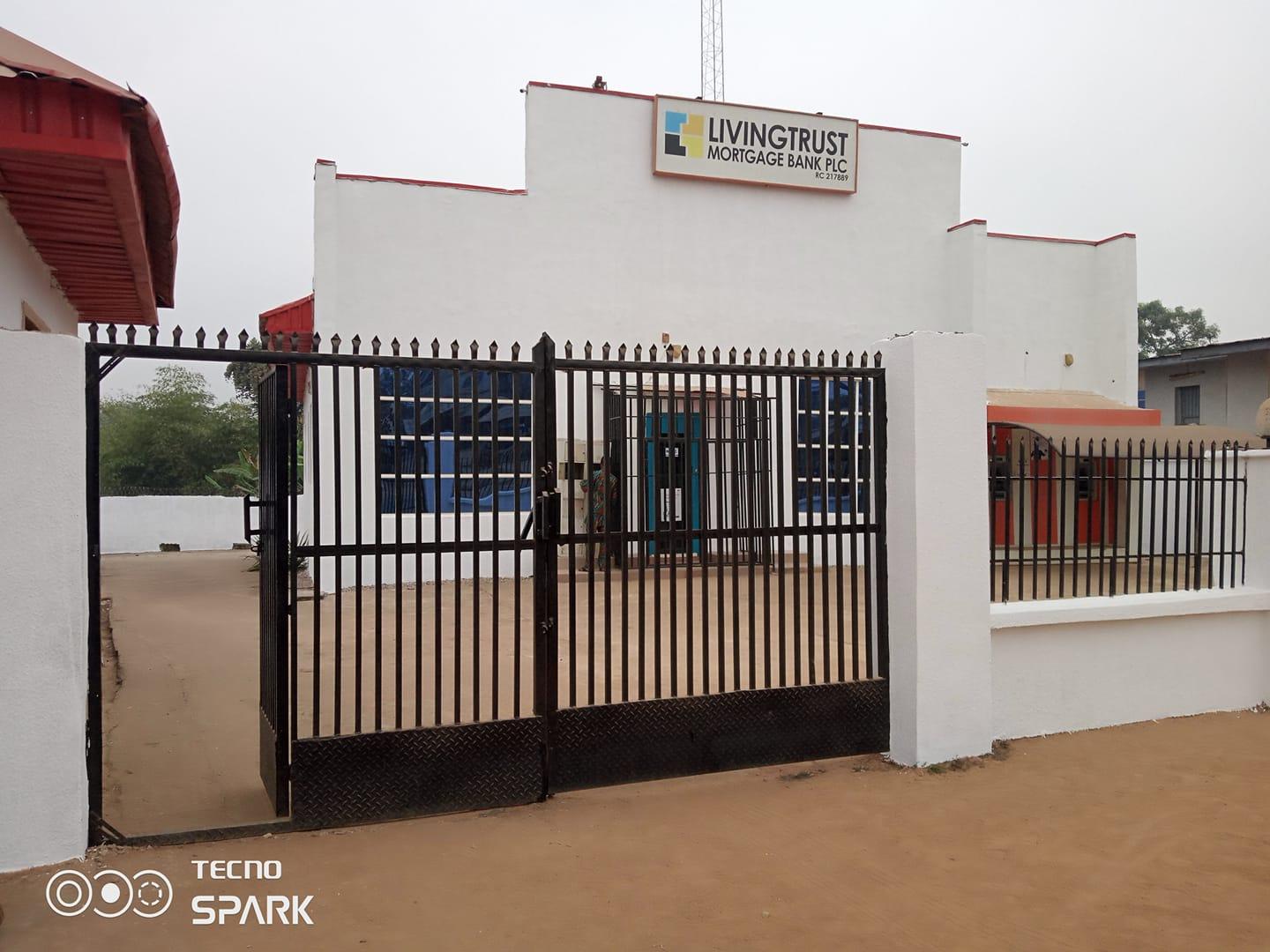
The Central Bank of Nigeria (CBN) has reaffirmed Mr Kamaldeen Adekilekun as the substantive Chairman of Living Trust Mortgage Bank Plc, easing recent uncertainty about the bank’s leadership.
In an official letter dated March 27, 2026, addressed to the Osun State Government, the banking sector regulator stated that Mr Adekilekun’s appointment remains valid and binding.
The CBN explained that once board nominations and appointments are approved by the regulator, they are tenured and guided by the Code of Corporate Governance for Primary Mortgage Banks in Nigeria, adding that such appointments cannot be withdrawn arbitrarily without clear regulatory grounds.
The CBN noted that its earlier communication (reference number OFI/DOL/CON/PLI/001/213) highlighted that the appointment was tenured in line with Sections 2.4.5 and 2.4.6 of the Code.
The apex bank also stated that there was no regulatory breach of relevant provisions of BOFIA 2020 or any CBN regulation that would disqualify him or prevent him from completing his term.
Rejecting the request for his removal, the CBN directed that the current board structure be maintained, stating, “Based on the foregoing, we therefore decline your request to withdraw Dr Adekilekun’s appointment.”
The development followed an earlier request seeking the withdrawal of the chairman’s appointment. The CBN said it had previously communicated the same position in a letter dated January 19, 2026.
The development reaffirms the central bank’s commitment to regulatory discipline, corporate governance, and institutional stability in Nigeria’s financial sector.
The clarification is expected to bring confidence to stakeholders, investors, and customers of Living Trust Mortgage Bank as operations continue under the existing leadership.
Incorporated on March 9, 1993, the bank converted from a Private Limited Liability Company to a Public Limited Liability Company on January 25, 2013 and subsequently listed on the Nigerian Exchange (NGX) on December 11, 2013, where its shares are being publicly traded.






-
 Feature/OPED6 years ago
Davos was Different this year
-
Travel/Tourism10 years ago
Lagos Seals Western Lodge Hotel In Ikorodu
-

 Showbiz3 years ago
Estranged Lover Releases Videos of Empress Njamah Bathing
-
 Banking8 years ago
Sort Codes of GTBank Branches in Nigeria
-

 Economy3 years ago
Subsidy Removal: CNG at N130 Per Litre Cheaper Than Petrol—IPMAN
-

 Banking3 years ago
Sort Codes of UBA Branches in Nigeria
-

 Banking3 years ago
First Bank Announces Planned Downtime
-

 Sports3 years ago
Highest Paid Nigerian Footballer – How Much Do Nigerian Footballers Earn