Connect with us

Banking

EFCC Accuses Banks of Aiding N18.7bn Investment, Airline Discount Scams

Published

on

EFCC Banks N18.7bn Investment Scams

By Modupe Gbadeyanka

One new generation bank and six financial technology (fintech) and microfinance banks have been accused of aiding fraudsters in defrauding Nigerians through fraudulent schemes.

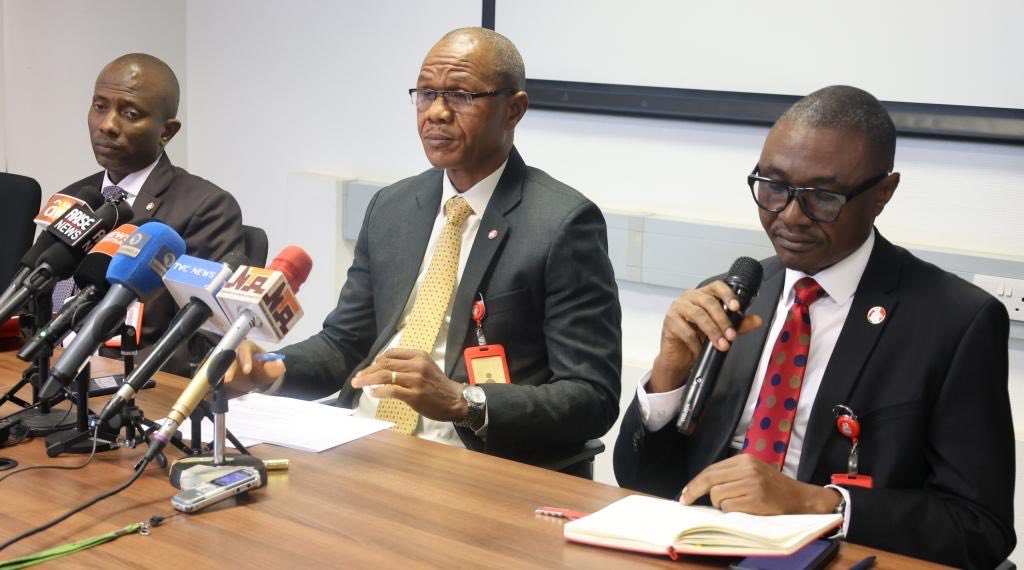
This allegation was made by the Economic and Financial Crimes Commission (EFCC) while addressing the media in Abuja on Thursday.

The Director of Public Affairs of the EFCC, Mr Wilson Uwujaren, said these schemes involved about N18.7 billion fraudulent investment and airline discount scams.

He disclosed that in the airline discount fraud, fraudsters lure their victims to lose their hard-earned money by involving “a string of carefully devised airline discount information that any unsuspecting foreign traveller will fall for.”

“What they do is to advertise a discount system in the purchase of flight tickets of a particular foreign carrier. The payment module is designed in such a way that their victims would be convinced that the payment is actually made into the account of the airline. No sooner the payment is made than the passenger’s entire funds in his bank account are emptied,” he narrated to newsmen.

According to him, over 700 victims have fallen into the trap of fraudsters through the scheme with a total loss of N651.1 million to them.

Though the commission succeeded in recovering and returning N33.6 million to victims of the scam, Mr Uwujaren cautioned Nigerians to be more vigilant as foreign actors involved in the scheme are converting their illicit sleaze into cryptocurrency and moving them into safer destinations through Bybit.

Narrating the second scheme, the EFCC spokesman said it involved a company named Fred and Farid Investment Limited, simply called FF investment, which lured Nigerians into bogus investment arrangements.

He said over 200,000 victims have been defrauded in this regard, with about N18.1 billion raked in through nine companies offering diverse investment packages.  .

In all, more than 900 Nigerians have been fleeced by fraudsters through the connivance of banks.

Mr Uwujaren claimed foreign nationals are behind the schemes, with three Nigerian accomplices who have been arrested and charged to court.

On the specific role of banks and fintechs in the schemes, two other directors of the EFCC, Abdulkarim Chukkol in charge of Investigations, and Mr Michael Wetcas in charge of Abuja Zonal Directorate, explained that, “a new generation bank and six fintechs and microfinance banks are involved in this. The financial institutions clearly compromised banking procedures and allowed the fraudsters to safely change their proceeds into digital assets and move into safe destinations”

“A total of N18,739, 999,027.35 had been moved through our financial system without due diligence of customers by the banks. It is worrisome that investigations by the commission showed that cryptocurrency transactions to the tune of N162 billion passed through a new generation bank without any due diligence. Investigations also showed that a single customer maintained 960 accounts in the new generation bank and all the accounts were used for fraudulent purposes.”

The EFCC called on regulatory bodies to bring financial institutions to compulsory compliance with regulations in the areas of Know Your Customers (KYC), Customer Due Diligence (CDD), Suspicious Transaction Reports (STRs) and others.

The agency charged regulatory bodies that Deposit Money Banks (DMBs), fintechs, MFBanks found to be aiding and abetting fraudsters should be suspended and referred to the EFCC for thorough investigation and possible prosecution.

It also warned that negligence and failure to monitor suspicious and structured transactions by banks would no longer be allowed, assuring that it will continue its work against money laundering by fraudulent actors.

Mr Uwujaren also tasked financial institutions to firm up their operational dynamics and save the nation from leakages and compromises bleeding the economy.


Modupe Gbadeyanka is a fast-rising journalist with Business Post Nigeria. Her passion for journalism is amazing. She is willing to learn more with a view to becoming one of the best pen-pushers in Nigeria. Her role models are the duo of CNN's Richard Quest and Christiane Amanpour.

Click to comment

Leave a Reply

Your email address will not be published. Required fields are marked *

Banking

Ecobank to Approach Offshore Investors for $350m Bond Refinancing

Published

on

Ecobank Business Account

By Aduragbemi Omiyale

Plans are underway by Ecobank Transnational Incorporated (ETI) to approach the international debt market for a capital raise.

The parent company of the Ecobank Group intends to use proceeds from the proposed exercise to refinance “the concurrent any-and-all tender offer of the ETI $350 million 8.750 per cent tier 2 notes due June 2031.”

However, the issuance of the notes is subject to prevailing market conditions and the conclusion of the necessary transaction documentation, a statement signed by the organisation’s chief financial officer, Mr Ayo Adepoju, stressed.

After issuance, the debt instrument may be listed on the London Stock Exchange, with the expectation that the bonds will be traded on its regulated market.

Ecobank noted that it would allocate an amount equivalent to the full net proceeds of the issue of the notes to finance or refinance, in part or in full, new and/or existing eligible assets as described in its Green Bond Framework (Ecobank-Sustainability), as amended and supplemented from time to time.

Ecobank, which has banking operations in 34 countries in Africa, is listed on the Nigerian Exchange (NGX) Limited, the Ghana Stock Exchange and the Bourse Régionale des Valeurs Mobilières (Stock Exchanges).

Continue Reading

Banking

Unity Bank Disburses Over N500m to Traders Via SHOCOF

Published

on

Unity Bank UnityCares

By Modupe Gbadeyanka

Over N500 million has been disbursed to small-scale traders and shop owners across Nigeria by Unity Bank Plc.

This is part of the financial institution’s efforts to promote SMEs and strengthen support for operators in the informal sector.

The funding support was given to beneficiaries through Unity Bank’s innovative loan product known as Shop Collateralised Facility (SHOCOF).

The package was designed to significantly improve access to financing, and further drive financial inclusion.

Originally introduced as a targeted intervention for traders in Southeast Nigeria, SHOCOF quickly gained traction and broad acceptance for its flexibility and tailored structure, prompting the Bank to expand the product nationwide.

Under the initiative, eligible customers can use their shops as collateral to access financing. The product simplifies access to credit by leveraging the commercial value and stability associated with fixed business locations, enabling traders to secure funds without the stringent collateral requirements associated with traditional lending structures.

The facility provides working capital support that enables beneficiaries to restock goods, increase inventory turnover, improve cash flow, and respond more effectively to market demand.

Recent reports indicate that more than 80 per cent of Nigeria’s small businesses operate informally, with many relying on personal savings and informal borrowing channels due to limited access to Bank credit. SHOCOF was developed to bridge this gap through a lending model tailored to the realities of market traders and small shop owners.

Speaking on the impact of the product, the Group Head, Risk Management, Unity Bank, Mr Olusegun Oladipo, said the Bank recognised the need for financing solutions aligned with the realities of informal sector businesses.

“SHOCOF was created to address a critical gap within the small business ecosystem by providing access to credit through a structure that traders can satisfactorily meet without much ado,” Mr Oladipo said.

“By recognising the value and stability embedded in their businesses, we have been able to support traders with the capital required to sustain and grow their operations,” he added.

Also commenting, the Divisional Head of SME and Retail Banking at Unity Bank, Ms Adenike Abimbola, said the nationwide adoption of the product reflects proper market segmentation to meet the growing demand for accessible financing among small business owners.

“What started as a targeted intervention in the Southeast, which quickly gained momentum because the product directly addressed the realities of everyday traders,” Ms Abimbola said.

Over the years, Unity Bank has continued to introduce targeted solutions aimed at empowering entrepreneurs, including its flagship Yanga account package developed to support female entrepreneurs.

The lender reaffirmed that expanding access to capital for underserved business segments remains critical to boosting trade, strengthening local economies, and driving sustainable economic growth.

Continue Reading

Banking

Stanbic IBTC Redefines Home Ownership in Nigeria

Published

on

stanbic ibtc Home Ownership

By Aduragbemi Omiyale

The banking segment of Stanbic IBTC Holdings Plc, Stanbic IBTC Bank, is making home ownership in Nigeria seamless.

In partnership with the Ministry of Finance Incorporated Real Estate Investment Fund (MREIF), the lender is offering Nigerians highly attractive terms, including a fixed interest rate of 9.75 per cent, providing up to N100 million, with a flexible repayment period of up to 20 years. These features are well-suited to both consistent professional incomes and business owners.

The aim is to help professionals, entrepreneurs, and married couples in the country and the diaspora achieve homeownership with greater ease and confidence.

In a market where housing supply significantly lags demand and traditional mortgage penetration remains low, Stanbic IBTC Bank is enabling more eligible Nigerians with the financial capacity to take the important step toward ownership. The financial institution focuses on removing common barriers through clear processes and dedicated support.

Clients benefit from Stanbic IBTC’s comprehensive range of services, which covers pre-qualification, documentation support (including mixed-income scenarios), digital verification, and clear communication throughout.

Many applications are now progressing smoothly, with completion within three to four weeks, subject to the provision of required documents. This practical approach has made the process far more accessible for Nigerians both at home and in the diaspora.

As more professionals secure homes in high-growth areas, couples build family stability, and entrepreneurs expand their asset base, the positive impact is becoming increasingly visible.

Stanbic IBTC Bank’s consistent focus on transparency, efficiency, and client support is helping to make homeownership a realistic and rewarding choice for more Nigerians ready to build long-term wealth.

The company has achieved notable successes through the MREIF scheme, with many clients completing seamless ownership transitions, securing properties in strategic locations, and effectively converting rental expenses into valuable equity-building assets.

Interested individuals have been encouraged to explore this established offering by visiting the dedicated MREIF Home Loans page at https://www.stanbicibtcbank.com/mrief or contacting the nearest Stanbic IBTC Bank branch to begin the journey toward homeownership.

Continue Reading

Trending