Connect with us

Banking

Export Potentials in Nigeria Largely Untapped—Ecobank

Published

on

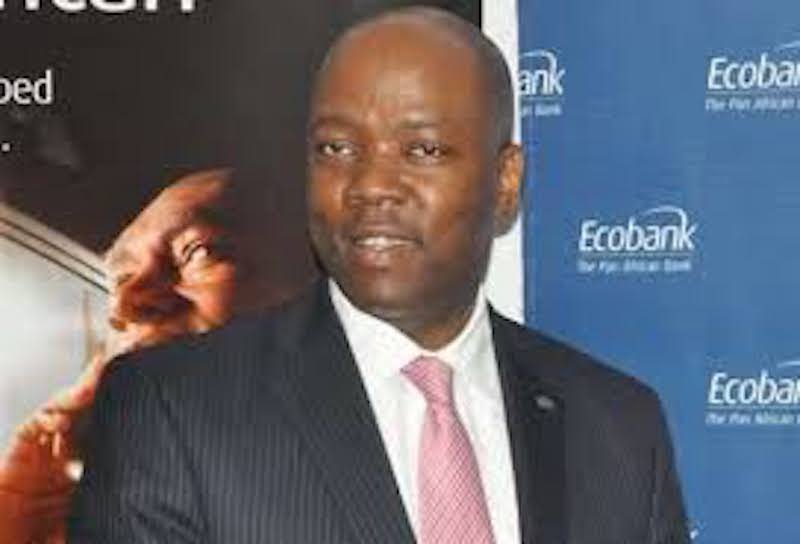
Patrick Akinwuntan Ecobank Nigeria

By Dipo Olowookere

The Executive Director in charge of Corporate Banking at Ecobank Nigeria, Mr Kola Adeleke, has lamented the inability of Nigeria to explore the several opportunities in the export segment of the nation’s economy as a result of too much focus on oil revenues.

Speaking at the Ecobank/Nigerian Export-Import Bank (NEXIM) webinar held last Thursday, the banker said the country can quickly tap into this through the African Continental Free Trade Area (AfCFTA), which became effective on January 1, 2021.

He further said Ecobank will offer its platform to assist exporters in the country to exploit the opportunities in the AfCFTA, noting that the lender remains the choice in Africa for export trade.

According to him, Ecobank has a presence in 33 of the over 50 countries on the continent, adding that the pan-African lender also said its unique positioning, wide network, pan African payment switch, settlement capabilities, award-winning digital products and strategic focus for being the best choice for businesses.

“Our unique positioning in 33 African countries enables us to leverage our extensive network to reduce the number of financial partners and relationships in executing a trade.

“We own the switch connecting countries where we operate across Africa. This centralized switch enables easy integration. We possess knowledge of the local markets in which we operate resulting in unparallel financial advisory.

“We offer real-time settlement across Africa and our customers enjoy instant transfers across 33 African countries.

“Ecobank has a reputation for developing innovative products as the bank has won us several international, regional and local awards and we aspire to be the gateway to pan-African payments and trade,” he said.

Mr Adeleke reaffirmed that Nigeria is poised to gain from the investment and trade opportunities that the AfCFTA will inevitably bring because of its market size, supply chain infrastructure and abundant supply of professionals/skilled players in various industries.

He emphasised that businesses must strategically position themselves, endeavour to understand the dynamics of the ratification to be able to maximize the benefit and opportunities.

Nigeria’s trade figures in 2020

Business Post reports that last week, the National Bureau of Statistics (NBS) in its Foreign Trade in Good Statistics said Nigeria recorded a total of N32.4 trillion in both its import and export in 2020 compared with N36.2 trillion in 2019.

An analysis of the report showed that Nigeria recorded higher imports than exports in the year due to the impact of the COVID-19 pandemic.

The value of total imports in 2020 stood at N19.9 trillion, 17.8 per cent higher than N16.9 trillion in 2019, while total exports dropped by 34.9 per cent to N12.5 trillion from N19.2 trillion in the previous period, leaving the country with a trade deficit of N7.4 trillion in the year under review.

Protection for exporters

At the Ecobank/ NEXIM webinar last week, speakers agreed that Nigeria can change the tide and grow its non-oil export earnings.

The acting Head of Export Credit Insurance at NEXIM, Mr Bashar Garba Illo, said the agency has put in place policies that will protect exporters in Nigeria against the risk of non-payment for goods and services exported on credit terms with a cover against political risk.

He stressed that the objective of ECI is to indemnify both internal and external exporting customers from losses incurred from any payment default that could arise from political events in the export destination country by providing cover up to 80 per cent of the value of receivables, subject to the Risk Asset Acceptance Criteria (RAAC) outlined for political risk.

He explained that the bank’s mandate is to support the non-oil export sector of manufacturing, agro-processing, solid mineral and services.

Ecobank’s support for exporters

On his part, the Head of Trade at Ecobank Nigeria, Mr Chijioke Uzoukwu, said the financial institution is ready to support exporters with the provision of loans.

“In the trade service, we support customers from initiation to execution in the areas of documentation and compliance, working with regulatory bodies and other stakeholders.

“We also offer trade advisory solution like market information across Africa, trade specialist support and after-sales services. We have an electronic e-trade platform which provides an electronic frontend where the customers can initiate transactions and instruction from the comfort of their home and it will be delivered to the bank,” he added.


Dipo Olowookere is a journalist based in Nigeria that has passion for reporting business news stories. At his leisure time, he watches football and supports 3SC of Ibadan. Mr Olowookere can be reached via [email protected]

Click to comment

Leave a Reply

Your email address will not be published. Required fields are marked *

Banking

Foreign Exhibitors in Nigeria as Ecobank Adire Lagos Kicks Off June 11

Published

on

Ecobank Adire Lagos Experience 2026

By Modupe Gbadeyanka

Some top foreign exhibitors participating in the much-anticipated Ecobank Adire Lagos Experience commencing on Thursday, June 11, 2026, are already in Nigeria.

The four-day event, closing on June 14, will witness participation from notable African fashion brands from Ghana, Sierra Leone, Senegal and the Benin Republic.

Among the international exhibitors confirmed for this year’s edition are Creative Hub Africa and Shades of Class from Sierra Leone, Drame Khadidatou from Senegal, Tampoori from Ghana, and Naylah Collection from the Republic of Benin. Their participation highlights the growing continental appeal of the Ecobank Adire Lagos Experience as a platform for cultural exchange, business collaboration and market access across Africa.

More than 100 exhibitors and vendors, including leading Nigerian brands such as Obida Design Associates, This Is Us, Imani Kids, Ashabi Fads, E25Dresses, Miné by Ejiro Amos Tafiri, Buss Fabrics Store, Aina Aladire and many others, will participate, showcasing the richness of African craftsmanship, innovation and entrepreneurship.

It was gathered that organisers are putting finishing touches to the venue of the exhibition, the prestigious Ecobank Pan African Centre (EPAC) on Victoria Island, Lagos.

All necessary arrangements to ensure a seamless, secure and memorable experience for exhibitors and attendees are being put in place by the bank, further underscoring its commitment to promoting African creativity, entrepreneurship and intra-African trade.

The Head of SMEs, Partnerships and Collaborations at Ecobank Nigeria, Mrs Omoboye Odu, said attendees can look forward to a vibrant showcase of fashion, craftsmanship, art, music, culture and entrepreneurship, with participants drawn from Nigeria and several other African countries.

“We are fully prepared and excited to welcome guests from across Nigeria and the African continent to another edition of the Ecobank Adire Lagos Experience. From exhibition spaces and cultural showcases to networking opportunities and customer engagement activities, every necessary arrangement has been put in place to ensure a seamless and rewarding experience for all attendees,” she stated.

“The Ecobank Adire Lagos Experience continues to evolve as a unique platform that connects creatives, entrepreneurs and consumers from across Africa. Attendees can look forward to exceptional products, interactive sessions, entertainment, cultural exhibitions and valuable opportunities to build relationships, explore new markets and expand their businesses,” Mrs Odu added.

Beyond the exhibition, participants will have opportunities to network, explore business partnerships, discover unique products and experience the diversity and vibrancy of African culture.

The event is open to the public, and visitors can look forward to an immersive experience that seamlessly blends tradition, innovation, fashion, enterprise and entertainment in a grand celebration of Africa’s creative economy.

Over the years, the Ecobank Adire Lagos Experience has grown into one of Nigeria’s foremost platforms for promoting indigenous textile production, supporting small and medium-sized enterprises, and showcasing the ingenuity of African creatives.

The programme has also played a significant role in expanding market access for businesses while preserving and celebrating Africa’s rich cultural heritage.

Continue Reading

Banking

Education Not Social Obligation, But Strategic Investment—Union Bank

Published

on

Union Bank of Nigeria New Logo

By Modupe Gbadeyanka

Union Bank of Nigeria has again stressed the importance of education to the nation, saying it is a strategic investment and not a social obligation.

The Chief Brand and Marketing Officer of Union Bank, Ms Olufunmilola Aluko, said this is why the company continues to throw its full weight behind quality educational programmes.

According to her, education is central to the financial institution’s purpose rather than a peripheral cause.

She was speaking in respect to the bank’s partnership with Nigerian Breweries Plc and the Felix Ohiwerei Education Trust Fund for the organisation of the 12th Maltina Teacher of the Year Competition.

The flag off of this year’s programme was held in Lagos on Monday, and it is the third consecutive year Union Bank has served as a partner.

“At Union Bank, we believe education is not a social obligation. It is a strategic investment. A nation that does not invest in its teachers and its learners is borrowing from its own future, and we are in the business of building futures, not mortgaging them,” Ms Aluko stated.

She pointed to Edu360, the bank’s flagship education initiative under the UnionCares platform, as the practical expression of that conviction.

Edu360 spans the full education value chain, from widening access for children in underserved communities and investing in the teachers who multiply learning outcomes, to building digital literacy and STEM capability, and preparing young people for employment or enterprise.

On the role of the financial sector, Ms Aluko challenged her peers to think differently.

“Financial institutions need to stop thinking of ourselves as donors and start thinking of ourselves as ecosystem builders. We can embed financial literacy into school curricula, design products that help parents save for their children’s education, and convene policymakers, educators and the private sector around shared goals. Above all, we can show up consistently, not only when it suits our brand calendars,” she disclosed.

She noted that lasting change requires sustained collaboration between the public and private sectors, and pointed to the strength of the signal sent when institutions commit to teachers at scale, citing the competition’s N100 million grand prize. With twelve editions and more than three hundred teachers recognised to date, she described MTOTY as a model of the consistency Union Bank embodies through Edu360.

Her closing message was directed at educators across the country, stating, “To every teacher in this country, what you do is not small. Your story deserves to be told, and Nigeria needs to know your name.”

Continue Reading

Banking

Funding Delays African Energy Bank H1 2026 Launch, Now September

Published

on

African Energy Bank Headquarters

By Adedapo Adesanya

The African Energy Bank (AEB) will now officially launch in September in Abuja after failing to meet its targeted first-half 2026 commencement date, marking a fresh timeline for the continent’s energy financing institution.

The Secretary General of the African Petroleum Producers’ Organisation (APPO), Mr Farid Ghezali, as per Argus Media, acknowledged “several postponements” but said the new deadline is “to make the bank operational in September 2026 in view of the incompressible deadlines from an administrative point of view”.

A planned April start was pushed back to June before APPO members were again mobilised around a third-quarter deadline. At a recent meeting, the Nigerian government reiterated the country’s commitment to the African Energy Bank’s formal commencement of operations.

The bank was established by the APPO and the African Export-Import Bank (Afreximbank) to address the critical financing needs of Africa’s oil, gas and broader energy sectors and mitigate the global funding pressure against hydrocarbon investments in Africa.

The APPO scribe said funding has remained a major challenge even when the Nigerian government said the headquarters of the bank was ready since 2025.

Mr Ghezali called on APPO members to redeem their pledges towards the $500 million start-up capital before the end of June.

Argus quoted sources as saying that 91 per cent of the capital had been raised and that the Nigerian National Petroleum Company (NNPC) Limited and the Nigerian Content Development and Monitoring Board (NCDMB) would make up the balance.

Mr Ghezali said AEB aims to reverse the situation that sees Africa importing more than 60 per cent of its oil products consumption and producing only 12 per cent of global upstream liquids while being home to many of the world’s largest national oil and gas reserves.

He stated that the bank will target the financing of 20–30 LNG, petroleum products pipeline, terminals and refining projects by 2030. Projects that monetise natural gas as a transition fuel will take up 40 per cent of AEB’s loan book, and priority will be given to projects that contribute towards the creation of “500,000 to 1 million direct and indirect jobs in the energy value chain”.

Speaking at a Nigerian energy summit in February, Mr Ghezali said the bank plans to raise $15 billion in its first three years of operations to fund strategic energy projects.

He also unveiled the three-phase road map for the AEB, including “Phase one, which, as I said in the first half of 2026, launches the African Energy Bank platform with 10-pillar projects involving countries such as Nigeria, Angola, and Libya. APPO certification and integration of IOCs such as Shell or ENI.”

“Phase two, in 2027, we plan to start a regional gas-oil trade, integrating the principles of the Bassari Declaration for 15 per cent local content.”

Phase three, reaching 2030, the African Energy Bank will be a true African financial hub, with $200 billion mobilised.”

Continue Reading

Trending