Connect with us

Banking

Fidelity Bank Raises Fresh N259bn to Overshoot CBN N500bn Capital Base

Published

on

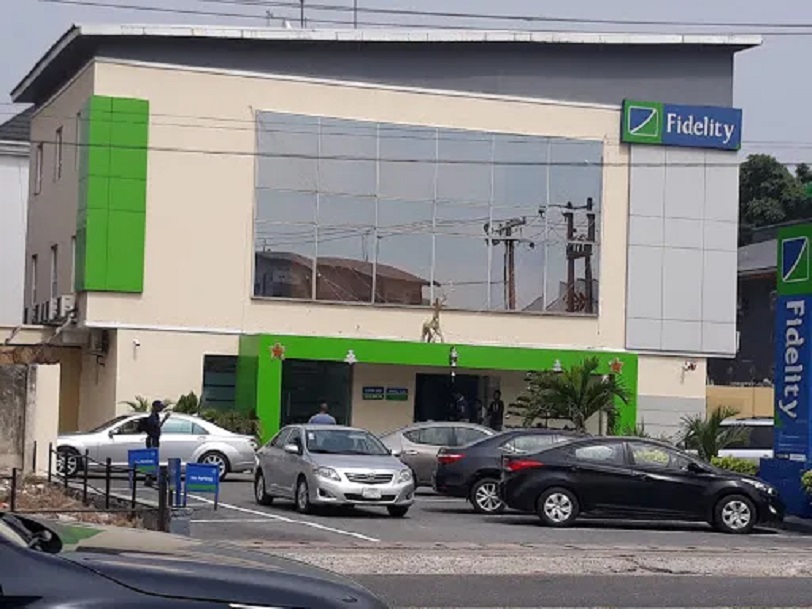
Fidelity Bank 10 Kobo interim dividend

By Aduragbemi Omiyale

The N500 billion minimum capital requirement of the Central Bank of Nigeria (CBN) for financial institutions with international banking licence has been met by Fidelity Bank Plc ahead of the March 2026 deadline.

The local lender met and surpassed the new capital base after raising about N259 billion from private placement, a notice on the Nigerian Exchange (NGX) Limited revealed.

Before the latest injection of funds, Fidelity Bank raised N175.85 billion through a public offer and rights issue in 2024, bringing its eligible capital to N305.5 billion and leaving a margin of N194.5 billion to meet the new regulatory capital requirement of N500 billion for commercial banks with international authorisation.

Giving an update on its recapitalisation exercise, Fidelity Bank said it got the fresh N259 billion from the private placement after approvals from the central bank and the Securities and Exchange Commission (SEC).

It was disclosed that “it successfully opened and closed a private placement of ordinary shares on December 31, 2025.”

“The private placement was conducted pursuant to the authorisation received from the bank’s shareholders at the Extraordinary General Meeting (EGM) of February 6, 2025, to issue up to 20 billion ordinary shares by way of private placement,” a part of the disclosure said.

A few days ago, First Bank of Nigeria also met the N500 billion capital base after injections of funds from one of its main shareholders, Mr Femi Otedola, who sold his stake in Geregu Power Plc for the purpose.


Banking

Jobberman Recognises Polaris Bank’s Contributions to Talent Development, Others

Published

on

Polaris Bank Rewards Customers

By Modupe Gbadeyanka

The stellar contributions of Polaris Bank Limited to youth employment, talent development, and workforce empowerment across Nigeria have not gone unnoticed, as the company was recently recognised at an event in Lagos.

At the 2026 Jobberman Partners’ Convening, the financial institution was bestowed with the Private Sector Champion Award.

The award recognises private sector organisations that have demonstrated exceptional commitment and leadership in advancing youth employability through impactful recruitment initiatives, graduate trainee programmes, executive hiring support, candidate assessment programmes, and strategic partnerships that create sustainable career opportunities for young Nigerians.

Themed From Impact to Action: Collectively Designing the Future of Youth Employment in Nigeria, the convening focused on fostering collaboration between the private sector and other stakeholders to expand access to meaningful employment opportunities and equip young Nigerians with the skills and opportunities required to succeed in an evolving economy.

On the recognition, Jobberman commended Polaris Bank for consistently going beyond transactional partnerships to deliver measurable impact within Nigeria’s employment ecosystem. The renowned recruitment firm described Polaris Bank as a credible and purpose-driven institution committed to advancing youth employability and supporting the future of work in Nigeria.

The Head of Talent Management at Polaris Bank, Ms Cynthia Sanyaolu, reaffirmed the lender’s commitment to empowering young Nigerians and strengthening the nation’s workforce through strategic people-focused initiatives designed to create long-term economic and social impact.

“This recognition reflects Polaris Bank’s unwavering belief in the potential of the Nigerian youths and our commitment to building platforms that enable them to thrive professionally and economically.

“At Polaris Bank, we see talent development and youth empowerment as critical drivers of national growth and sustainable development,” she stated.

Over the years, Polaris Bank has continued to invest in initiatives that promote learning, career growth, workforce inclusion, and economic empowerment.

Through strategic Graduate Trainee recruitment programmes via its flagship Polaris Graduate Intensive Training (PGIT) and Polaris Tech Ignite Training (TechIGNITE), among other talent development initiatives, and collaborative partnerships, the bank remains committed to supporting the next generation of Nigerian professionals while contributing to national development.

Continue Reading

Banking

Ecobank to Approach Offshore Investors for $350m Bond Refinancing

Published

on

Ecobank Business Account

By Aduragbemi Omiyale

Plans are underway by Ecobank Transnational Incorporated (ETI) to approach the international debt market for a capital raise.

The parent company of the Ecobank Group intends to use proceeds from the proposed exercise to refinance “the concurrent any-and-all tender offer of the ETI $350 million 8.750 per cent tier 2 notes due June 2031.”

However, the issuance of the notes is subject to prevailing market conditions and the conclusion of the necessary transaction documentation, a statement signed by the organisation’s chief financial officer, Mr Ayo Adepoju, stressed.

After issuance, the debt instrument may be listed on the London Stock Exchange, with the expectation that the bonds will be traded on its regulated market.

Ecobank noted that it would allocate an amount equivalent to the full net proceeds of the issue of the notes to finance or refinance, in part or in full, new and/or existing eligible assets as described in its Green Bond Framework (Ecobank-Sustainability), as amended and supplemented from time to time.

Ecobank, which has banking operations in 34 countries in Africa, is listed on the Nigerian Exchange (NGX) Limited, the Ghana Stock Exchange and the Bourse Régionale des Valeurs Mobilières (Stock Exchanges).

Continue Reading

Banking

Unity Bank Disburses Over N500m to Traders Via SHOCOF

Published

on

Unity Bank UnityCares

By Modupe Gbadeyanka

Over N500 million has been disbursed to small-scale traders and shop owners across Nigeria by Unity Bank Plc.

This is part of the financial institution’s efforts to promote SMEs and strengthen support for operators in the informal sector.

The funding support was given to beneficiaries through Unity Bank’s innovative loan product known as Shop Collateralised Facility (SHOCOF).

The package was designed to significantly improve access to financing, and further drive financial inclusion.

Originally introduced as a targeted intervention for traders in Southeast Nigeria, SHOCOF quickly gained traction and broad acceptance for its flexibility and tailored structure, prompting the Bank to expand the product nationwide.

Under the initiative, eligible customers can use their shops as collateral to access financing. The product simplifies access to credit by leveraging the commercial value and stability associated with fixed business locations, enabling traders to secure funds without the stringent collateral requirements associated with traditional lending structures.

The facility provides working capital support that enables beneficiaries to restock goods, increase inventory turnover, improve cash flow, and respond more effectively to market demand.

Recent reports indicate that more than 80 per cent of Nigeria’s small businesses operate informally, with many relying on personal savings and informal borrowing channels due to limited access to Bank credit. SHOCOF was developed to bridge this gap through a lending model tailored to the realities of market traders and small shop owners.

Speaking on the impact of the product, the Group Head, Risk Management, Unity Bank, Mr Olusegun Oladipo, said the Bank recognised the need for financing solutions aligned with the realities of informal sector businesses.

“SHOCOF was created to address a critical gap within the small business ecosystem by providing access to credit through a structure that traders can satisfactorily meet without much ado,” Mr Oladipo said.

“By recognising the value and stability embedded in their businesses, we have been able to support traders with the capital required to sustain and grow their operations,” he added.

Also commenting, the Divisional Head of SME and Retail Banking at Unity Bank, Ms Adenike Abimbola, said the nationwide adoption of the product reflects proper market segmentation to meet the growing demand for accessible financing among small business owners.

“What started as a targeted intervention in the Southeast, which quickly gained momentum because the product directly addressed the realities of everyday traders,” Ms Abimbola said.

Over the years, Unity Bank has continued to introduce targeted solutions aimed at empowering entrepreneurs, including its flagship Yanga account package developed to support female entrepreneurs.

The lender reaffirmed that expanding access to capital for underserved business segments remains critical to boosting trade, strengthening local economies, and driving sustainable economic growth.

Continue Reading

Trending