Connect with us

Banking

Fidelity Bank’s Kevin Ugwuoke Leads Nigerian Risk Managers’ Group

Published

on

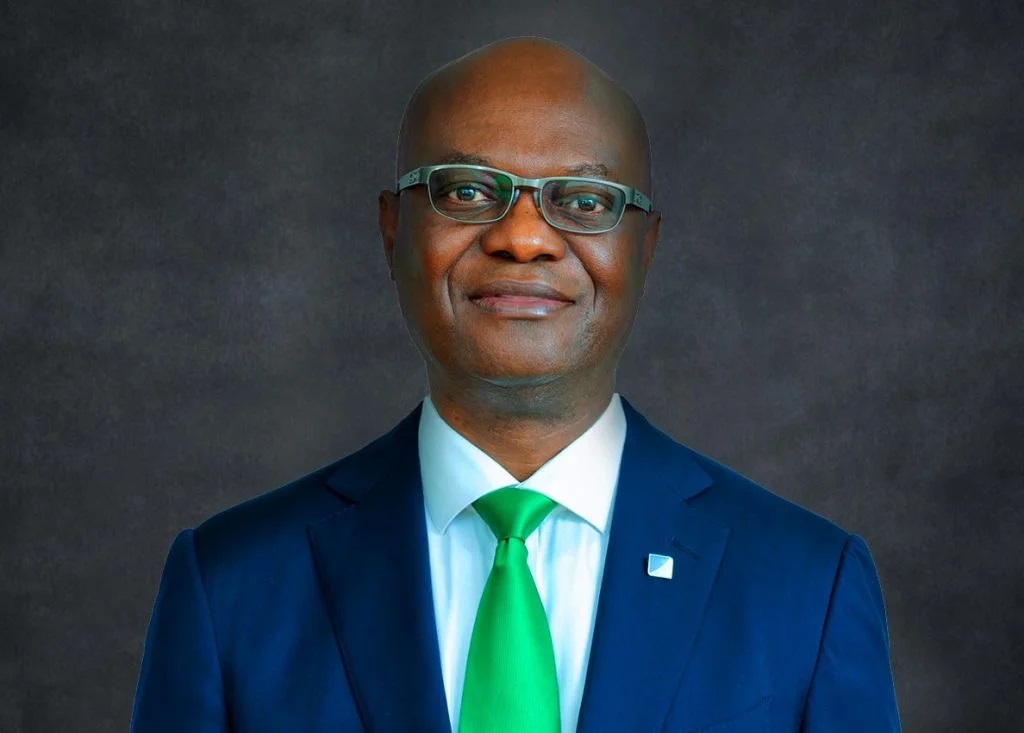
Kevin Ugwuoke

By Modupe Gbadeyanka

The Executive Director and Chief Risk Officer of Fidelity Bank Plc, Mr Kevin Ugwuoke, has resumed as the president of the Chartered Risk Management Institute of Nigeria (CRMI).

The banker assumed the new role at a handover ceremony in Lagos over the weekend, promising a reform-focused era anchored on policy advocacy, ethical standards, and digital innovation to deepen risk governance across sectors in the country.

He also pledged to reposition the group as a thought leader and institutional partner in shaping the future of risk management in Nigeria’s national development.

Mr Ugwuoke outlined a five-pronged strategy to guide his administration: strengthening professional education and certification; deepening policy and regulatory engagement; accelerating digital transformation; integrating ESG and climate risk into corporate strategies; and mentoring the next generation of risk practitioners.

He explained that CRMI will align its initiatives with key policy institutions — including the Nigerian Economic Summit Group, the National Assembly, and sub-national governments — to help embed robust risk frameworks into economic development plans.

“Our mission is more than just certification; it’s about strengthening the culture of risk governance across sectors. We will collaborate with regulators, raise awareness, and provide practical tools to help organizations embed risk discipline at all levels,” he declared.

“We must integrate risk thinking into how we plan, govern, and invest. We will advocate for more inclusive regulations to empower small and medium enterprises, improve macroeconomic stability, and foster institutional resilience,” he added.

At the ceremony, Mr Ugwuoke also announced plans to revise the institute’s curriculum, introduce specialized certifications to reflect emerging risks, and implement a new National Risk Observatory to provide real-time risk data to both the public and private sectors.

According to him, “Digital innovation will be central to how CRMI operates going forward. We are automating our backend, delivering more virtual training, and employing technology to scale our impact across the country and beyond.”

In his remarks, the outgoing President of CRMI, Mr Ezekiel Oseni, challenged the new leadership to consolidate on the achievements made under his tenure — from securing chartered status and strengthening partnerships to gaining greater international recognition — and take the Institute to the next level.

Also speaking on the occasion, the Deputy Managing Director of United Bank for Africa (UBA), Chukwuma Nweke, described Mr Ugwuoke as a worthy successor.

“As Professor Oseni hands over the baton to Kevin Ugwuoke — a well-respected leader in the risk management ecosystem — we are assured CRMI is poised for greater achievements under his watch.”

Nweke stressed that growing economic uncertainties — from inflation and exchange rate volatility to growing debt — underscore the need for a more strategic view of risk.

“Risk must be recognized not as a compliance obligation or a cost center but as a key enabler of resiliency and growth. Institutions that embed risk into their strategies will absorb shocks more effectively, unlock value, and inspire investor confidence.”

As part of the day’s ceremonies, 11 distinguished practitioners were conferred with the Fellow of Chartered Risk Manager (FCRMI) award, while 21 new members were formally inducted as Chartered Risk Managers (CRM).

Furthermore, a new Governing Council was inaugurated to oversee the affairs of the Institute for the 2025–2027 term, marking a decisive step forward in institutional renewal and policy direction.

Mr Ugwuoke is currently the acting president of the Federation of African Risk Management Associations (FARMA).


Modupe Gbadeyanka is a fast-rising journalist with Business Post Nigeria. Her passion for journalism is amazing. She is willing to learn more with a view to becoming one of the best pen-pushers in Nigeria. Her role models are the duo of CNN's Richard Quest and Christiane Amanpour.

Click to comment

Leave a Reply

Your email address will not be published. Required fields are marked *

Banking

CBN Unveils New Revised Manual to Modernise FX Market

Published

on

FX Market Segments

By Adedapo Adesanya

The Central Bank of Nigeria (CBN) has unveiled the fourth edition of its Foreign Exchange Manual as part of efforts to deepen liquidity, improve transparency and strengthen confidence in the country’s foreign exchange market.

Speaking at the launch of the revised manual in Abuja on Friday, the Governor of the apex bank, Mr Yemi Cardoso, said the document will take effect from June 1, 2026.

He said it was developed after extensive consultations with banks, exporters, importers, corporates, regulators and development partners.

He said the new framework reflects the apex bank’s commitment to modernising the country’s foreign exchange administration in line with international best practices.

Mr Cardoso described the foreign exchange market as a critical pillar of any open economy, noting that effective governance of the sector is essential for sustaining macroeconomic stability and investor confidence.

“Foreign exchange is more than a financial instrument. It anchors price stability, facilitates the flow of goods and capital, and shapes investor sentiment,” he said.

The CBN governor stressed that the revised manual became necessary due to changing global economic realities, domestic reforms and the need for a more coherent and forward-looking regulatory framework.

According to him, the last edition of the FX manual was issued in 2018, making the latest review both timely and necessary.

Mr Cardoso disclosed that Nigeria’s foreign exchange market has witnessed significant improvement in liquidity since the current administration began reforms in the sector.

He added that daily turnover in the FX market increased from an average of about $100 million in the early days of the administration to between $400 million and $600 million daily.

The CBN Governor added that the market had also recorded transactions of up to $1 billion per day on several occasions in recent months.

“We have gone from a situation where it was more or less a one-way market, where the central bank came in, intervened and went away, to a much more dynamic market,” he stated.

The apex bank boss noted that the reforms were gradually restoring confidence among investors and market participants, encouraging freer entry and exit in the market without unnecessary restrictions.

He also maintained that the nation’s foreign reserves should not be used as the primary tool for funding the foreign exchange market.

“Reserves are reserves. They are not what you look to fund a market,” he said.

The CBN Governor assured stakeholders that the revised manual would be distributed free of charge to authorised dealers while the bank strengthens monitoring mechanisms to ensure compliance, fairness and accountability across the foreign exchange market.

On his part, the Deputy Governor for Economic Policy, Mr Muhammad Abdullahi, said the review formed part of broader reforms initiated by Mr Cardoso to restore confidence, improve transparency and deepen liquidity in the foreign exchange market.

Mr Abdullahi explained that the revised manual introduces several changes aimed at improving ease of doing business and reducing transaction bottlenecks.

Among the notable changes, he noted, are provisions allowing unfettered access to export proceeds, the introduction of non-resident investment accounts and operational guidelines for Pan-African Payment and Settlement System (PAPSS) transactions to support regional trade.

Mr Abdullahi added that the manual also contains new provisions on service exports, revised documentation requirements and updated operational procedures designed to align Nigeria’s FX market with global standards.

He said the apex bank deliberately adopted an ease of doing business approach during the review process to eliminate inefficiencies and ambiguities identified by stakeholders.

“The revised manual is not a stand-alone exercise but part of a broader institutional reform effort designed to strengthen the integrity, credibility and effectiveness of Nigeria’s foreign exchange system,” he said.

Continue Reading

Banking

CBN Authorises Omodayo-Owotuga’s Inclusion into First Bank Board

Published

on

Julius Omodayo-Owotuga

By Aduragbemi Omiyale

The Central Bank of Nigeria (CBN) has approved the appointment of Mr Julius Omodayo-Owotuga to the board of First Bank of Nigeria Limited as an executive director.

A statement from the company said the appointment of Mr Omodayo-Owotuga became effective on Wednesday, May 13, 2026.

He was appointed to the board of the subsidiary of First Holdco Plc to further strengthen its leadership capacity across strategic finance, governance, risk management, and institutional transformation.

Before now, he served on the board of First Holdco as a non-executive director between 2021 and 2026.

The appointee brings to the board 24 years of experience spanning banking and financial services, infrastructure finance, power, oil & gas, and audit and consulting.

His appointment, according to the notice to the Nigerian Exchange (NGX) Limited, reflects the Bank’s continued commitment to strong governance, disciplined execution, financial resilience, and sustainable long-term growth.

He most recently served as deputy chief executive of Geregu Power Plc, Nigeria’s first listed power generation company, where he played a pivotal role in institutional transformation, governance strengthening, capital market positioning, operational optimisation, and major financing initiatives, including the company’s landmark listing on NGX.

Mr Omodayo-Owotuga previously served as group executive director, Finance & Risk Management at Forte Oil Plc (now Ardova Plc), where he was instrumental in the company’s financial and operational transformation, leading strategic restructuring, capital raising, treasury optimisation, enterprise risk management, and governance improvement initiatives that strengthened long-term shareholder value.

His professional career also includes roles at Africa Finance Corporation, Standard Chartered Bank, KPMG Professional Services and MBC International Bank (Now First Bank Nigeria Limited), providing him with deep experience in institutional finance, treasury management, financial controls, regulatory engagement, and corporate advisory.

Mr Omodayo-Owotuga is a CFA Charter Holder, KPMG-trained Accountant, and a Fellow of the Institute of Chartered Accountants of Nigeria (ICAN), the Chartered Institute of Taxation of Nigeria (CITN), and the Institute of Credit Administration. He is also a member of the Institute of Directors (IoD) Nigeria and a Certified Management Accountant.

He holds a Doctorate in Business Administration, a Master’s in Business Administration and a Bachelor’s degree in Accounting. He is an alumnus of Saïd Business School, University of Oxford, IE Business School, Geneva Business School, and the University of Lagos.

Continue Reading

Banking

ASBON Honours Union Bank for Advancing Growth of Nigerian SMEs

Published

on

union bank nigeria

By Modupe Gbadeyanka

In recognition of its strategic leadership in advancing the growth and resilience of small and medium-sized enterprises (SMEs), Union Bank of Nigeria Plc has been honoured by the Association of Small Business Owners of Nigeria (ASBON).

The lender was rewarded by the group for its suite of solutions designed to enable business expansion and long-term value creation.

At the Nigeria National SME Business Awards, held recently in Lagos, Union Bank was given the Best SME Growth Banking Initiatives Award for 2025.

The ceremony was organised by ASBON in partnership with the Lagos State government through the Ministry of Commerce, Cooperatives, Trade and Investment.

The event convened stakeholders from the public and private sectors to recognise individuals and organisations driving meaningful impact across Nigeria’s SME ecosystem.

Receiving the award on behalf of the bank, its Head of SME Segment, Mr Ayokunnumi Abraham, described the recognition as a strong endorsement of the organisation’s commitment to supporting small and medium-sized businesses.

“We are honoured to receive this recognition, which reflects Union Bank’s continued commitment to helping SMEs grow by making banking simpler, faster, and more accessible.

“Through enhancements to our specialised platforms such as Union360, we have meaningfully reduced the time it takes for businesses to come on board and begin transacting.

“These improvements have shortened onboarding, increased digital adoption among our SME customers, and supported the acquisition of new business clients. Our focus remains on delivering practical solutions that help Nigerian businesses thrive,” he stated.

Continue Reading

Trending