Banking
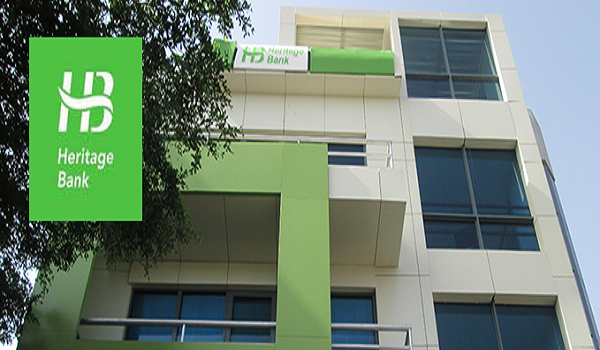
Heritage Bank Unveils New Advanced Intelligent Digital Platform
By Dipo Olowookere
Tier-two lender, Heritage Bank Plc, has taken a bold step to revolutionise the banking sector with the introduction of an advanced intelligent digital experience known as Octopus.
The solution, which is full-fledged digital bank, has been described by financial technology experts as a game-changing innovation that is poised to connect all bank accounts with holder’s debit card details or account holder information.
Octopus by Heritage Bank represents an omni-channel multi-platform experience squarely targeted at the customers of tomorrow; young, smart, professional, tech savvy pioneers of the new digital economy.
The new initiative will provide all customers of any Nigerian bank the opportunity to access a platform that consolidates and connects all their bank accounts delivering convenience and ease of access on an innovative platform and digital community
It is designed to deliver omni-channel user experience across multiple devices; where most of customer’s daily city activities (banking, cinemas, stock markets, social interactions, churches, universities, meetings, restaurants, utility [e.g. DSTV, PHCN], fans clubs, associations and any other communities) have been digitized and consolidated.
It serves as a single window into several players of the same industry and it is embedded in the same social media platforms where people are such as Facebook and Telegram.
Announcing the launch of Octopus, Managing Director of Heritage Bank, Mr Ifie Sekibo, described this initiative “as a truly intelligent adventure that does everything differently.”
According to him, “Octopus is an intelligent digital experience that combines digital transactions and a community lifestyle that empowers customers with the power to build their world and perform digital transactions how they want.”
He further added that Octopus would be available across all major platforms, including the revolutionary Octopus Bot on the Telegram platform, Facebook as well as Octopus Apps on the Google Play store (for Android) and Apple store (for iOS), which could be used by non-Heritage Bank customers.
All the information customers would need to begin to enjoy the Octopus service is available on www.octopus.ng
The platform owes numerous benefits to the users, thereby enable small businesses key into electronic payment system easily, efficient collections, social integration, retention strategy, bills payment, mobile virtual top-up, funds transfer, balance enquiry, movie show time, news.
Other benefits involve, engage customers, send messages, advertise, auto reminders for due payments, sell products, visible to millions, automatic product recommendation, create any kind of community and engage them freely.
Some of the transaction types, including both domestic and Intra-Africa, the transaction channels are mobile devices, tablets and desktops, whilst the acquiring platforms are Mobile App, mobile USSD-based App and internet banking.
Banking
Paystack Integrates AI into Dashboard with New Command Centre
By Adedapo Adesanya
Leading payments technology company, Paystack, has tapped into the AI wave for businesses with the introduction of an AI-powered “Command Centre” that allows businesses to interact with their payment data using plain-language questions instead of manually navigating dashboards.
The redesigned launch marks a major evolution in how businesses interact with the company’s 10-year-old product, which has helped to monitor transactions, manage settlements, review disputes, and run day-to-day payment operations for thousands of merchants.
The revamped dashboard, built on Pax, Paystack’s internal design system, includes the AI-native Command Centre, which is embedded directly into the Dashboard, allowing businesses to ask questions in plain language and receive answers grounded in their own Paystack data, as text, tables, or charts.
The system combines GPT models, structured data retrieval, and visualisation tools to deliver responses in the most relevant format.
It also has a simpler product architecture, with navigation reorganised into two core sections: Payments and Products, making it easier for merchants to find what they need and scale as Paystack’s offerings grow.
In a statement, the company said it also has full mobile parity that makes every screen, feature, and action available on mobile as well as desktop. It also offers a dark mode feature, as well as stronger analytics and clearer navigation built into the foundation of the product
“Businesses don’t come to their dashboard because they want to click through pages. They come because they have questions,” said Ms Dara Assim-Ita, Senior Product Designer at Paystack, who led the rebuild.
“Over the last decade, we have seen firsthand how much time merchants lose navigating tools that were built to display data rather than deliver answers. With this rebuild, we have changed that. Merchants can now simply ask ‘What happened with this transaction?’ or ‘Why is revenue down this week?’ and get a direct answer. The goal is to make the Dashboard feel less like a static reporting tool and more like an intelligent command centre – one that helps merchants understand what’s happening, find what they need faster, and make better decisions.”
To support the experience, Paystack built a new service called Project Canvas API, which handles conversations, connects to model providers, and interfaces with existing Paystack systems.
As the Dashboard handles sensitive financial data, the system was built to ensure responses are grounded in real merchant data and screened against safety and compliance requirements before being returned.
The company also worked closely with its Data Protection and Privacy team, completed a Data Protection Impact Assessment, and ran extensive adversarial testing ahead of launch.
“We are at a point where artificial intelligence is rapidly becoming integral to how businesses operate, and Paystack is committed to being on that curve for our merchants. The most powerful application of AI disappears into the work people are already trying to do, and that was the design principle behind this,” Ms Assim-Ita added.
Banking
Post-Recapitalisation: Cardoso Warns Banks to Guard Against Emerging Risks
By Adedapo Adesanya
The Governor of the Central Bank of Nigeria (CBN), Mr Yemi Cardoso, has urged banks to remain vigilant and take proactive measures against emerging risks following the conclusion of the banking sector recapitalisation exercise.
He made the call while announcing the outcome of the Monetary Policy Committee (MPC) meeting, where the Monetary Policy Rate (MPR) was retained at 26.5 per cent amid sustained inflationary pressures and global economic uncertainties.
According to him, the MPC welcomed the successful recapitalisation exercise, which resulted in the emergence of 33 stronger banks with improved financial soundness indicators and greater capacity to support economic growth.
However, he warned that the strengthening of balance sheets must be matched with strong risk management frameworks to safeguard financial system stability.
“The MPC also noted with satisfaction the successful conclusion of the banking recapitalisation exercise, which culminated in the emergence of 33 banks with stronger financial soundness indicators enhancing their capacity to support the economy,” Mr Cardoso said.
The central banker added that the committee “urged the banks to remain proactive and adopt necessary measures to address potential post-recapitalisation risks towards preserving financial system stability.”
Mr Cardoso said the decisions were based on a “comprehensive assessment of risks to the outlook,” noting that despite marginal increases in inflation, the broader macroeconomic environment remained stable.
“Although inflation has risen marginally for two consecutive months, largely induced by external shocks, the committee recognises its transitory nature and remains confident that the current macroeconomic environment is sufficiently robust to support a return to disinflation,” he stated.
The committee also highlighted spillover effects from the Middle East crisis, which have pushed up global energy and logistics costs. However, it said the impact on Nigeria had been muted due to earlier policy reforms.
“These include exchange rate stability, improvements in external reserve buffers, strengthened monetary policy transmission, a well-capitalised banking system and ongoing fiscal consolidation, which have significantly bolstered the economy’s ability to absorb external shocks,” Mr Cardoso explained.
He further said the committee noted that a cautious and vigilant policy stance remains necessary to anchor inflation expectations and maintain macroeconomic stability.
“The committee was therefore convinced that the essential conditions for price stability remain firmly in place,” Mr Cardoso said, adding that policymakers will continue to monitor both domestic and global developments closely.
Banking
Fidelity Bank Feeds Over 1,500 Residents in Surulere Lagos
By Modupe Gbadeyanka
Over 1,500 residents in Surulere, Lagos State, have received food packs from Fidelity Bank Plc under its Fidelity Food Bank initiative.
The items were distributed to beneficiaries in partnership with the Office of the Personal Assistant to the President on Constituency Affairs and the Sodiq Abiodun Ogundare (SAO) Foundation.
The financial institution developed the scheme to reinforce its commitment to community welfare and sustainable development.
The Regional Bank Head for Victoria Island/Lekki at Fidelity Bank, Mr Nnamdi Edekobi, described the initiative as a reflection of the lender’s unwavering dedication to improving the well-being of its host communities.
“Today goes beyond the distribution of food items; it is about uplifting lives, creating opportunities, and strengthening our commitment to the well-being of families in this community.” Mr Edekobi, represented by the Branch Leader for Adeola Odeku Branch, Ms Ifeyinwa Asomugha, stated.
He disclosed that since its inception, the initiative has distributed more than 150,000 food packs across Nigeria’s six geopolitical zones, positively impacting hundreds of communities nationwide.
“Today’s outreach has provided over 1,500 beneficiaries with essential feeding supplies that will help address hunger, support healthy living, and improve the overall well-being of families. This initiative also aligns with the United Nations Sustainable Development Goal 2, which focuses on achieving Zero Hunger,” he added.
Mr Edekobi further commended the Personal Assistant to the President on Constituency Affairs, Ms Khadijat Kareem Omotayo, for supporting the initiative and fostering impactful partnerships that benefit underserved communities.
On her part, Ms Omotayo praised Fidelity Bank and the SAO Foundation for bringing meaningful support to residents of Surulere.
“I am very happy that the foundation is growing. Fidelity Bank are our people, and I appreciate this collaboration that has brought this massive opportunity to our people in Surulere Constituency 1,” she stated.
She expressed optimism about sustaining future partnerships with the bank to continue improving the lives and livelihoods of Nigerians.
-
Feature/OPED6 years agoDavos was Different this year
-
Travel/Tourism10 years ago
Lagos Seals Western Lodge Hotel In Ikorodu
-
Showbiz3 years agoEstranged Lover Releases Videos of Empress Njamah Bathing
-
Banking8 years agoSort Codes of GTBank Branches in Nigeria
-
Economy3 years agoSubsidy Removal: CNG at N130 Per Litre Cheaper Than Petrol—IPMAN
-
Banking3 years agoSort Codes of UBA Branches in Nigeria
-
Banking3 years agoFirst Bank Announces Planned Downtime
-
Sports3 years agoHighest Paid Nigerian Footballer – How Much Do Nigerian Footballers Earn