Connect with us

Banking

How to Get a Quick Loan in Nigeria With No Collateral

Published

on

Smart loan Collateral

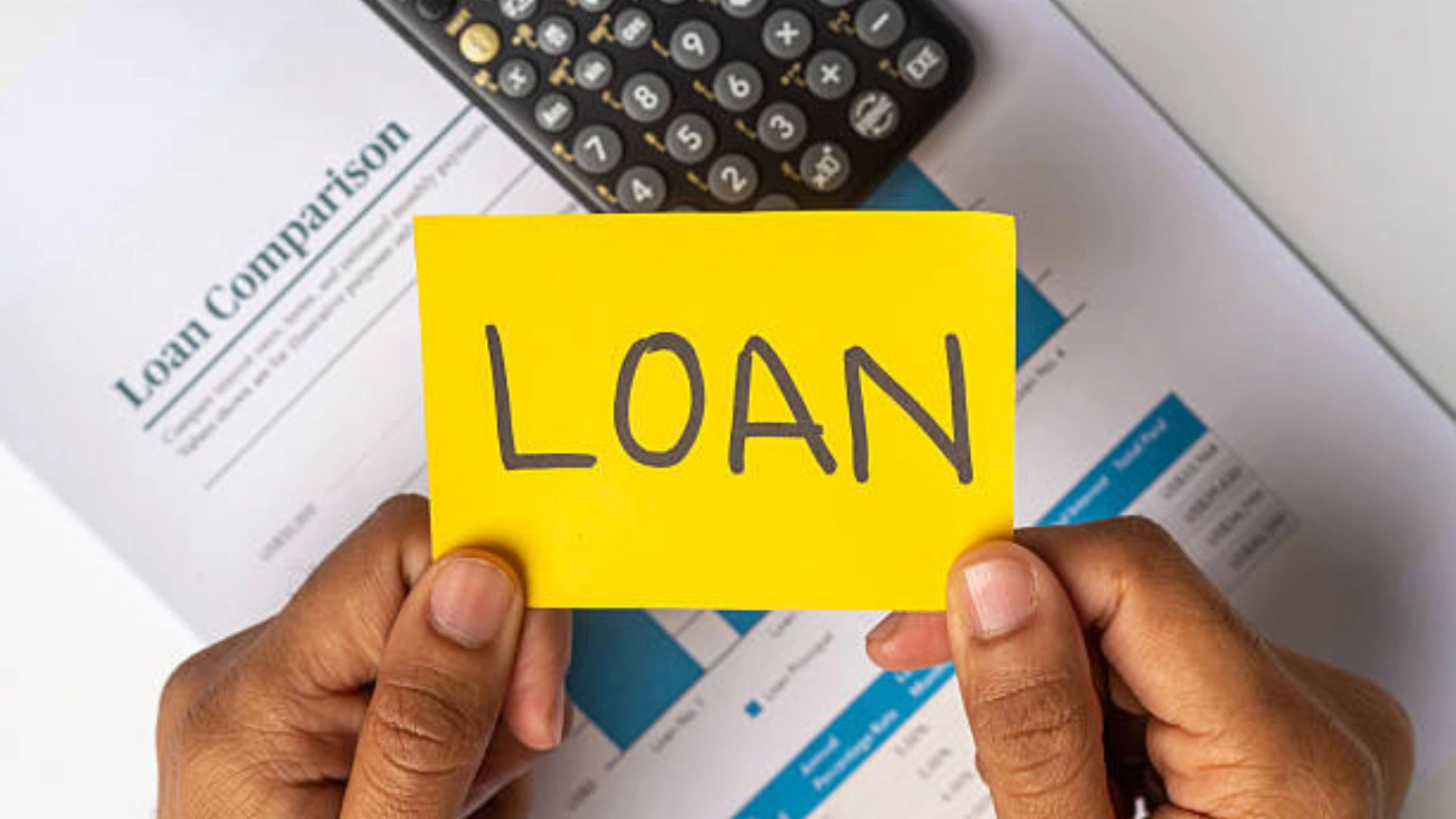
Needing money fast is a common problem in Nigeria. Rent is due, or a small business runs short on stock money before the next sale. In the past, getting a loan from a bank meant paperwork, a guarantor, and sometimes property as collateral. That process could take weeks. Today, things have changed. Several licensed digital lenders in Nigeria now offer personal loans without collateral, and the entire process can be completed from a phone in under an hour.

This article explains how no collateral loans work in Nigeria, what lenders actually check before approving you, and how to avoid the mistakes that get loan applications rejected or, worse, land borrowers with apps that are not properly registered.

What “No Collateral” Really Means

A collateral loan asks you to pledge something of value, like land, a car, or a fixed deposit, as security. If you fail to repay, the lender has a legal right to seize that asset. Most working Nigerians do not have assets like this sitting idle, which is exactly why no collateral loans exist.

Instead of asking for property, digital lenders look at other signals to judge whether you can repay:

  • Your Bank Verification Number (BVN) or National Identification Number (NIN), used to confirm your identity
  • Your bank account history, which shows whether money moves in and out regularly
  • Your mobile money or airtime usage in some cases, which hints at your financial activity
  • Your repayment history with other lenders, if you have borrowed digitally before

This is why an app like LendSafe can approve a loan in minutes. There is no waiting for a bank manager to review your file. The decision is based on data you provide once, during registration.

Steps to Get a Quick Loan Without Collateral

The process is fairly similar across most reputable Nigerian loan apps, though the details differ slightly.

  1. Download a licensed loan app: Always check that the app is registered with the Federal Competition and Consumer Protection Commission (FCCPC) before installing it. Unregistered apps are the ones most often linked to harassment and hidden charges.
  2. Register with your phone number and basic details: Most apps ask for your name, phone number, and BVN or NIN to verify who you are.
  3. Answer a few simple questions: This usually covers your employment status, income range, and sometimes your address.
  4. Wait for your credit limit: Based on the information provided, the app calculates how much you qualify to borrow. This step typically takes a few minutes.
  5. Choose your loan amount and repayment plan: Pick an amount you are confident you can repay on time, not the maximum offered.
  6. Receive the funds: Once approved, money is sent directly to your bank account, often within minutes.

What to Check Before You Borrow

Before accepting any loan offer, confirm the following:

  • The interest rate and total repayment amount: A lender should show you exactly how much you will repay, not just how much you will receive.
  • The repayment date and any penalty for late payment: Missing a date by accident should not lead to extreme charges.
  • The lender’s registration status: Reputable lenders, such as those operating under the FCCPC’s Digital, Electronic, Online and Non-Traditional Consumer Lending Regulations, are required to disclose their licensing details. If an app cannot show this, treat it as a warning sign.
  • What permissions the app is requesting: A lender does not need access to your entire photo gallery or contact list to process a personal loan. Be cautious of apps that ask for more access than necessary.

Why ‘No Collateral’ Does Not Mean No Responsibility

Some borrowers assume that because no asset is on the line, a missed payment carries no real consequence. This is not true. Digital lenders report repayment behaviour to credit bureaus in Nigeria, including CRC Credit Bureau and CreditRegistry. A pattern of late or missed payments can affect your ability to borrow in the future, even from a different lender entirely.

The safest approach is to borrow only what you need and only when you are sure of your repayment date. A loan app should support a short-term need, not become a constant source of stress.

Conclusion

No collateral loans have made it possible for ordinary Nigerians, salaried or self-employed, to access quick cash without the long process traditional banks require. The key is choosing a lender that is properly licensed, transparent about costs, and respectful of your data and privacy. Apps that are upfront about their fees and regulatory status, like LendSafe by SmartLoans, are generally a safer place to start than apps with no clear company information behind them.

Before your next financial emergency arrives, it is worth knowing which licensed apps you can trust and how the no-collateral process actually works. That knowledge alone can save you from a costly mistake.


Click to comment

Leave a Reply

Your email address will not be published. Required fields are marked *

Banking

ProvidusUnity Bank, gener8tor Launch Nigeria Lightning Rounds for Startups

Published

on

ProvidusUnity Bank Logo

By Aduragbemi Omiyale

An initiative known as Nigeria Lightning Rounds, designed to expand funding opportunities for Nigerian startups and small businesses by connecting founders with local and international investors, has been launched by ProvidusUnity Bank, in partnership with US-based global venture firm and accelerator, gener8tor.

Scheduled to be held on July 15, 2026, Nigeria Lightning Rounds will feature carefully selected startups engaging with targeted investors who have expressed interest in supporting Nigerian innovation.

Participating founders will have the opportunity to pitch their businesses through focused 15-minute virtual sessions facilitated by gener8tor and ProvidusUnity Bank’s networks.

The program will focus on high-growth sectors including fintech, healthtech, manufacturing, sustainability, and AI, but welcomes SMEs from all industries, with intending participants urged to apply via https://www.gener8tor.com/lightning-rounds/nigeria.

“We recognise that access to capital remains one of the biggest challenges facing entrepreneurs in Nigeria. Through our partnership with gener8tor, we are creating a platform that connects promising Nigerian founders with investors who can provide the support required to scale their businesses,” the Head of Business Development at ProvidusUnity Bank, Mr Ernest Elue, stated.

“The partnership reinforces ProvidusUnity Bank’s commitment to strengthening Nigeria’s entrepreneurial ecosystem by supporting innovation, enabling access to opportunities, and creating pathways for businesses with high-growth potential,” he added.

Also commenting, the Director of Lightning Rounds at gener8tor, Ms Elizabeth Larios, said, “gener8tor is thrilled to partner with ProvidusUnity Bank to extend the Lightning Rounds model into Nigeria.

“This collaboration reflects our commitment to building equitable ecosystems and driving capital to the most promising and underrepresented entrepreneurs.”

Lightning Rounds are a signature initiative of gener8tor’s investment platform, which has facilitated thousands of investor-startup meetings globally. The format is optimised to eliminate friction, reduce bias in early-stage fundraising, and help founders secure capital from investors aligned with their mission and stage. gener8tor’s previous Lightning Rounds for Nigerian Founders in 2025 featured 18 participating Investors and led to 50 investment meetings facilitated.

Continue Reading

Banking

NDIC Begins Verification of Depositors of 46 Failed Microfinance Banks

Published

on

NDIC

By Modupe Gbadeyanka

The verification of the depositors of the 46 microfinance banks, whose operating licenses were revoked by the Central Bank of Nigeria (CBN) over a week ago, has commenced.

The exercise, aimed at refunding those whose funds were trapped in the small lenders, is being conducted by the Nigeria Deposit Insurance Corporation (NDIC).

In a statement on Thursday, the agency said its staff members have been positioned at the offices of the affected banks across the country to attend to depositors.

It was disclosed that depositors of the defunct banks, who had their Bank Verification Numbers (BVNs) linked to their accounts in the failed banks, will be paid through their alternative accounts in existing banks.

However, depositors whose BVNs were not linked to their accounts in the failed banks have been encouraged to visit the affected banks’ offices with proof of account ownership, a passport photograph, verifiable means of identification (Driver’s Licence, Permanent Voter’s Card, International Passport or National ID Card) and BVN.

NDIC also stated that depositors can alternatively file their claims online through its website: www.ndic.gov.ng, to complete the Pre-Verification Claims Form by clicking on the Search Bar, and typing Pre-Verification Claims Form; opening the Form and filling in their details. They can also do so by clicking the link: https://ndic.gov.ng/ndic-pre-verification-claims-form/ or by visiting any of the NDIC offices closest to them to file their claims.

For further enquiries, the corporation can be reached on any of the following lines: 09037273810, 09038197064, 08104220807, 09064657140.

Continue Reading

Banking

Strict CBN Framework Dampens New BVN Registrations Despite Marginal Rise

Published

on

CBN’s N75trn Credit private sector

By Adedapo Adesanya

Nigeria’s Bank Verification Number (BVN) enrolment has slowed significantly in 2026 following the introduction of a stricter regulatory framework by the Central Bank of Nigeria (CBN), with the latest data from the Nigeria Inter-Bank Settlement System (NIBSS) showing that registrations are on course to fall well below last year’s record.

The BVN database stood at 69.55 million as of July 5, 2026, up from 69.32 million in June, indicating that only 228,947 new registrations were recorded over the period. Since the end of 2025, when the database stood at 67.8 million, total enrolments have increased by 1.75 million.

At the current pace, however, BVN registrations are unlikely to match the 4.3 million new enrolments recorded in 2025, suggesting a sharp deceleration in growth this year.

The slowdown comes after the CBN introduced a revised BVN regulatory framework in March, with the new rules taking effect on May 1, 2026. The framework tightened controls around enrolment, identity verification and fraud monitoring as part of efforts to strengthen the integrity of the banking system.

Among the key changes was the introduction of a minimum enrolment age of 18 years, effectively preventing minors from registering for a BVN.

The new framework also limits customers to a one-time change of the phone number linked to their BVN and requires financial institutions to place BVNs linked to suspected fraudulent transactions on a temporary watch-list for up to 24 hours while investigations are carried out.

The stricter rules contrast with last year’s surge in registrations, which was largely driven by the introduction of the Non-Resident Bank Verification Number (NRBVN) initiative that enabled Nigerians in the diaspora to complete BVN enrolment remotely, removing physical barriers and expanding access to the financial system.

Launched on February 14, 2014, the BVN scheme was introduced by the CBN in collaboration with the Bankers’ Committee, NIBSS and German technology firm Dermalog to assign every bank customer a unique biometric identity that can be verified across Nigeria’s banking industry.

Continue Reading