
Banking
How Wema Bank Paid Dividend After Rethinking Digital Strategy

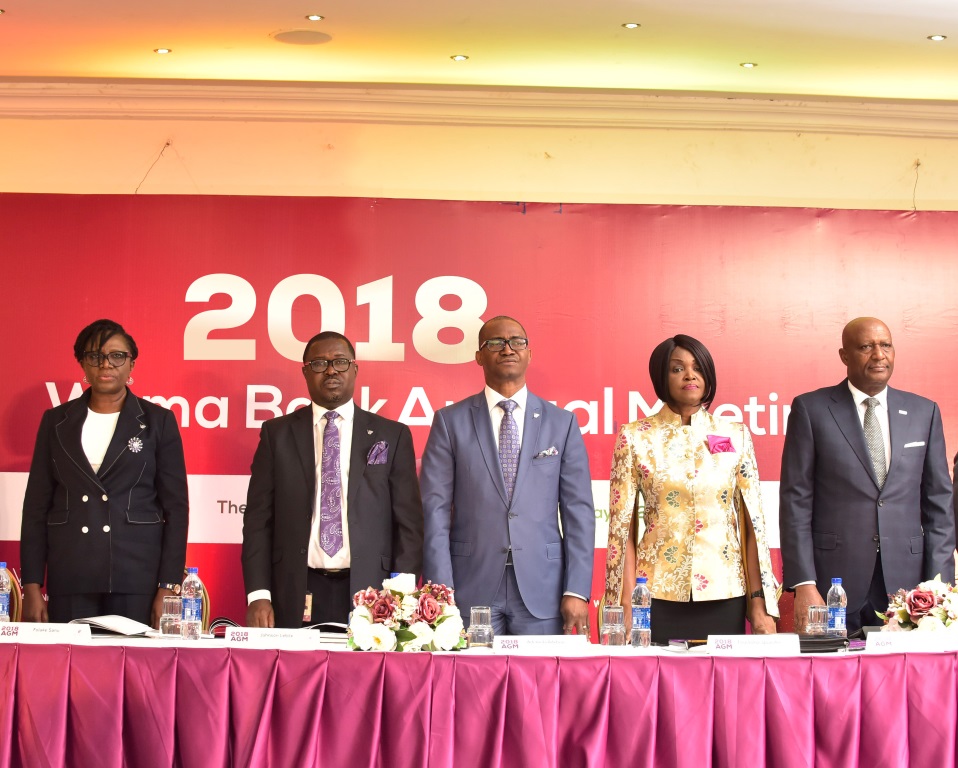
On May 8, 2019, shareholders of Nigeria’s oldest indigenous lender, Wema Bank Plc, agreed to the proposed N0.03 dividend payment proposed by the management of the bank, amid celebration, as the shares of the bank listed on the Nigeria Stock Exchange (NSE) traded at N0.73 each.
The shareholders celebrated the proposed N0.03 per share dividend payout, not just because of a payout ratio of 34.79 percent but also because it was the first time they were getting any return from Wema Bank in 15 years.
The bank, founded in 1945, had survived different reforms and restructuring in the country’s economy and financial services industry.
Following the 2008 banking crisis in Nigeria which saw the collapse of many banks, Wema Bank had negative capital in excess of N66 billion and was declared a bank in grave financial situation by the banking industry regulator in Nigeria, but years of effective leadership have turned around the fortunes of the financial institution.
While the work to rebuild the lender was ongoing, shareholders had to forfeit their annual dividend as the bank was in no position to do so. However, following its capital reconstruction, a major constraint to Wema Bank’s dividend payment ability was lifted.
The journey to recapitalize Wema Bank, return it to profitability and consistently grow has been an arduous one for the management of the company and the shareholders alike, who year after year had to put up with the bank’s reasons for not paying dividend. Nevertheless, they were strong in their belief of the path the Bank has chosen to ensure growth.
For the management of Wema Bank, it was going to be difficult to get the kind of results needed for exponential growth with the traditional banking methods, which every lender in the industry already use to serve their customers.
Chances of getting bank customers to choose a new bank are getting slimmer as it was becoming very difficult to present any unique proposition.
Therefore, any bank that was keen about growth had to, either run after the unbanked and hope that would be enough, or think up something new altogether. That was what Wema Bank did.
After years of research, the management of Wema Bank concluded that the only way to achieve the kind of growth needed to deliver value to all its stakeholders was to build a bank of the future today.
In 2017, Wema Bank launched ALAT, which offers branchless banking services. It is Africa’s first digital bank and it changed everything that banking was all about in Nigeria before its arrival. It got other financial services providers thinking, with many introducing similar products/services and retooling existing infrastructure to deliver more value to customers.
While ALAT might not have been able to corner the millennial/digitally savvy consumer market for itself, it got some who did not join ALAT to start asking their banks for more.
With more than a million active customers who are enjoying the digital bank that is fast becoming part of their lifestyle, Wema Bank has through a rethink of its digital strategy which birthed ALAT, changed the game in the Nigerian banking industry and achieved its quest for exponential growth.
In 2018, the bank’s profit after tax grew 47.5 percent to N3.3 billion from N2.3 billion in 2017. Its gross earnings went up by 9.6 percent to N71.53 billion in 2018 from N65.27 billion in 2017.
ALAT played a huge role in seeing savings deposit grow by 26.2 percent to N62.89 billion in 2018 from N49.83 billion in 2017. Current account deposit also grew by 46.80 percent from N12.47 billion in 2017 to N18.30 billion.
Wema Bank’s Chairman, Mr Babatunde Kasali, said the bank remained highly committed to using it “technological edge to drive and deliver on our goals for the year”.
He added that the bank would also deepen its focus on the commercial and corporate business while it continues to leverage technology to get ahead of competitors, even in the retail space.





By Modupe Gbadeyanka
A new digital-first remittance solution known as Absa Global Pay has been launched through a partnership between Absa Group and Thunes.
The Absa–Thunes collaboration helps to make international remittances seamless in Africa through intuitive, transparent and cost-effective solutions.
The partnership combines Absa’s trusted Pan-African banking footprint with Thunes’ agile Direct Global Network to deliver an end‑to‑end, real‑time money movement experience.
Absa Global Pay makes sending money across borders faster, simpler and more affordable for millions of customers across Africa.
Absa customers can send funds directly from the Absa Banking App or Connected Banking (Absa Online) with instant settlement to 18 countries, with six countries forming part of the first release (UK, Kenya, India, Malawi, Pakistan and Zimbabwe). Customers can choose from multiple payout methods — bank accounts, mobile wallets or approved cash pick‑up points — with real‑time notifications and full transaction visibility for added confidence and control.
By leveraging Thunes’ trusted Direct Global Network and Absa’s scale across key African markets, the solution offers lower fees, clear pricing, competitive FX rates, and greater value, ensuring that more of each transaction reaches the families and businesses that depend on remittances as a financial lifeline.
“At Absa, we are committed to building financial services that are innovative, intuitive and deeply connected to the everyday needs of our customers.
“Remittances remain essential for keeping families supported across borders, and our research shows a significant opportunity to unlock more value in this space. “Together with Thunes, we are delivering a solution that is simpler, faster and more affordable — empowering customers with choice, transparency and meaningful value,” the Managing Executive for Transactional and Deposits at Absa Personal and Private Banking, Mr Nick Nkosi, said.
On his part, the Chief Commercial Officer at Thunes, Mr Simon Nelson, said, “By combining Absa’s deep local insights with Thunes’ expansive Direct Global Network, we are making international money movement seamless and accessible for anyone, anywhere. This launch is an important milestone in our mission to support the growth of the continent by powering intra-Africa money movement and bringing inclusive financial connectivity to communities across the world.”

By Modupe Gbadeyanka
A nationwide marketing campaign signalling a strategic shift toward proof-led messaging in Nigeria’s fast-evolving fintech sector has been launched by Smartcash Payment Service Bank (PSB).
At the unveiling of this initiative in Lagos on Tuesday, the Airtel-owned digital financial services platform said the No Be Cho Cho Cho campaign represents a new chapter for Smartcash, following its earlier Money Matter Na Sense positioning, reflecting the company’s rapid growth and increasing role in Nigeria’s digital financial ecosystem. The platform now serves nearly three million active wallets, with users spanning students, traders, households and small businesses across the country.
The phrase, Cho Cho Cho, a popular expression in Nigerian street parlance meaning “talking without action,” is used deliberately by the company to challenge the hype-driven marketing culture that has often characterised the fintech sector. Instead, Smartcash says the campaign will focus on demonstrable performance and measurable value for customers, which means “Smartcash dey show workings”.
The initiative centres on the three pillars of reliability, transparency and demonstrable service delivery and addresses what the company describes as a widening trust gap in Nigeria’s digital payments market.
The chief executive of Smartcash PSD, Mr Ayotunde Kuponiyi, described financial inclusion as a critical pillar of the United Nations Sustainable Development Goals, noting that with the launch of No Be Cho Cho Cho, the firm is proving its commitment to this vision.
“We have built an accessible banking service that breaks barriers for everyone, from corporate executives to the previously unbanked, pulling them from the sidelines to centre stage. Through our flagship zero-charge service, we promise no fees on P2P transfers or bill payments.
“Furthermore, our savings account offers 15 per cent per annum compounded interest, paid daily without penalties. Unlike conventional banks, we charge you nothing, ensuring your money truly works for you,” he explained to newsmen at the event.
Smartcash’s zero-charge model, which eliminates fees on transfers and bill payments, has become one of the platform’s defining features, alongside instant transfers and everyday payments for utilities, airtime, data and cable TV.
Mr Kuponiyi noted that the campaign reflects a broader philosophy of accountability in digital finance, saying, “Nigerians have experienced inconsistency and unclear charges across various platforms in the past. With No Be Cho Cho Cho, we are saying clearly: don’t just listen to what we say; experience the proof.”
Smartcash operates as a PSB licensed by the Central Bank of Nigeria and is wholly owned by Airtel Nigeria, a part of the Airtel Africa Group, which operates across 14 countries. This backbone allows the platform to serve customers through both smartphone applications and USSD channels, enabling access for users without smartphones or traditional bank accounts.
Beyond consumer banking, the platform is also expanding its footprint through a nationwide network of agents that facilitate transactions and financial services in underserved communities.
Providing further insight into the bank’s financial architecture and long-term roadmap, Mr Kuponiyi emphasised that the campaign reflects the strength of the institution’s operational foundation.
“At Smartcash, we have matched our ambitious growth targets with disciplined investment in secure, high-volume processing capabilities. The No Be Cho Cho Cho initiative is a testament to our financial health and our unwavering focus on driving financial inclusion through sustainable incentives that provide real value to the Nigerian economy,” he said.
As part of the rollout, the No Be Cho Cho Cho campaign will run nationwide across television, radio, outdoor advertising and digital platforms, targeting young, mobile-first consumers while also reaching traders and small businesses through agent networks and USSD channels.
For Smartcash, the campaign marks more than a marketing refresh; it signals an attempt to redefine how financial technology companies communicate with Nigerian consumers in an increasingly competitive sector.
As Kuponiyi concluded at the launch: “The evidence is plenty. Nigerians can see it for themselves.”

By Adedapo Adesanya
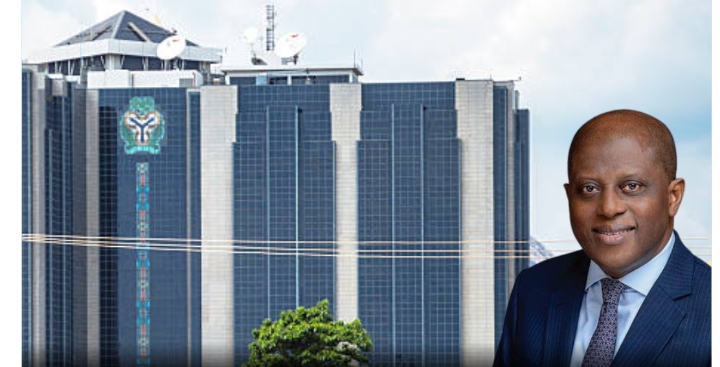
The Senate has called for a strengthened regulatory framework that positions the Central Bank of Nigeria (CBN) at the centre of oversight of the country’s fast-growing fintech sector.
The recommendation was made by Chairman of the Senate Committee on Banking, Insurance, and Other Financial Institutions, Mr Adetokunbo Abiru, during a one-day public hearing at the National Assembly complex on Wednesday.
The event focused on the proposed amendment to the Banks and Other Financial Institutions Act (BOFIA) 2020 (SB. 959) and included an investigative session into fraudulent investment platforms, notably the recent Crypto Bullion Exchange (CBEX) incident.
Mr Abiru, who is a former Group Managing Director of Polaris Bank and Executive Director at First Bank Nigeria, emphasised that fintechs, including mobile money operators, digital lenders, payment platforms, and settlement companies, have become systemically important to Nigeria’s financial ecosystem.
While their growth has expanded financial inclusion, existing laws, he said, do not fully address the scale, data sensitivity, and systemic impact of these technology-driven institutions.
“The question has arisen as to whether a new standalone regulatory agency would be preferable for supervising fintechs,” Mr Abiru said.
“However, creating a separate agency would duplicate functions, fragment oversight, and increase bureaucratic costs. It is far more effective to strengthen the BOFIA framework, modernise CBN supervisory powers, and mandate coordination with key agencies such as the Securities and Exchange Commission, Nigerian Communications Commission, Corporate Affairs Commission, Federal Competition and Consumer Protection Commission, and the Office of the National Security Adviser,” he added.
The lawmaker proposed that the amendment should explicitly empower the CBN to designate qualifying fintechs as Systemically Important Institutions, establish a national registry for transparency and beneficial ownership disclosure, and strengthen risk-based supervision tailored to technology-driven financial services.
Beyond fintech regulation, the Senate intensified scrutiny on Ponzi schemes and fraudulent investment platforms.
Mr Abiru described the rising prevalence of such schemes as a threat to financial stability and public trust, citing the CBEX debacle, which reportedly caused severe financial losses to individuals across Nigeria, including professionals, traders, students, and retirees.












-
 Feature/OPED6 years ago
Davos was Different this year
-
Travel/Tourism10 years ago
Lagos Seals Western Lodge Hotel In Ikorodu
-

 Showbiz3 years ago
Estranged Lover Releases Videos of Empress Njamah Bathing
-
 Banking8 years ago
Sort Codes of GTBank Branches in Nigeria
-

 Economy3 years ago
Subsidy Removal: CNG at N130 Per Litre Cheaper Than Petrol—IPMAN
-

 Banking3 years ago
Sort Codes of UBA Branches in Nigeria
-

 Banking3 years ago
First Bank Announces Planned Downtime
-

 Sports3 years ago
Highest Paid Nigerian Footballer – How Much Do Nigerian Footballers Earn