Connect with us

Banking

Keep Developing New Skills—Yusuf Urges 672 New Bankers

Published

on

672 New Bankers

By Sodeinde Temidayo David

The Managing Partner of Verraki Business Solution for Africa, Mr Niyi Yusuf, has advised the newly inducted 672 bankers by the Chartered Institute of Bankers of Nigeria (CIBN) to position themselves for the world of tomorrow.

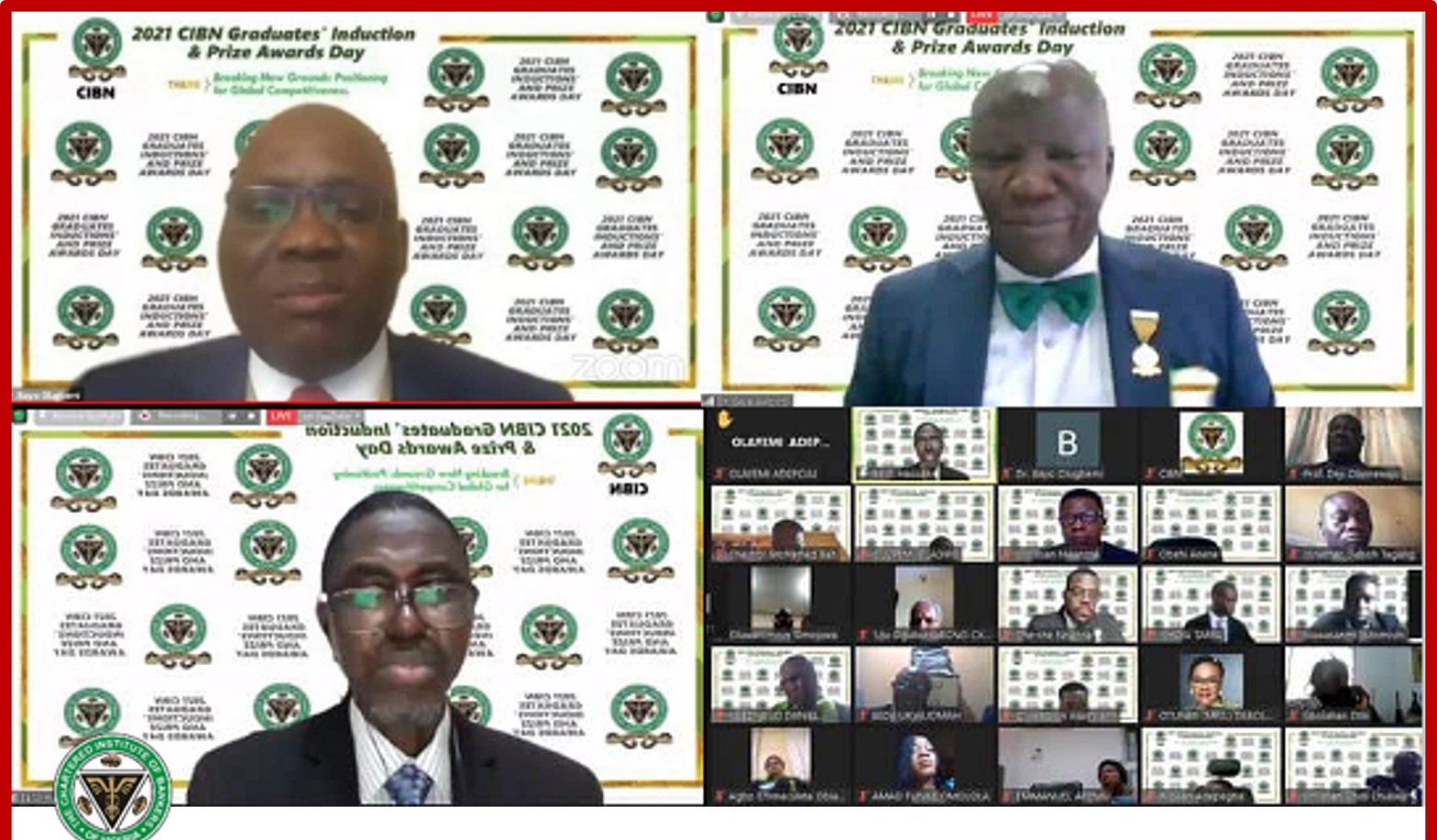
Over the weekend, a total of 672 new bankers were admitted into the institute from various categories of membership at the virtual 2021 CIBN Graduates Induction and Prize Awards Day.

The induction, an annual ceremony of the institute, is the forum where student members who have completed their examinations and fulfilled all other conditions set by the governing council are formally admitted into full professional membership of the group.

While addressing the new bankers, Mr Yusuf reminded them that the global economy evolved from agriculture to the connection economy, identifying technology as the main driver of growth and change.

Mr Yusuf explained that financial technology has improved financial services into a new future, stating that instead of using a branch as the sole means of service delivery, the use of the Internet, web, ATM and mobile apps has taken over as a way of service delivery.

He also added that as an alternative to the use of cash or cheque, cards and electronic money were now accepted, attributing this development to technology.

“I suggest that for us as bankers, old skills will not be sufficient for today’s world, and you will need to keep developing new skills. It would help if you kept reinventing yourself so that you also can be relevant in the world of tomorrow,” the Verraki chief said.

In his comments, Managing Director, Nigeria Deposit Insurance Corporation (NDIC), Mr Hassan Bello, reassured CIBN of his organisations’ support, commending the institute for its various initiatives in banking services, associateship examinations and certification programmes.

In his speech, the Chairman of Council of CIBN, Mr Bayo Olugbemi, urged banks and employees to leverage more than ever on technology to deliver products and services to their numerous customers at their convenience.

He noted that the COVID-19 pandemic has accelerated the speed of digital transformation and technological advancements, as Artificial Intelligence (AI), Robotics, Machine Learning (ML), coding and programming, blockchain, cloud computing and others are being used to develop unique and bespoke products suited to customers changing needs.

“The world is yours to take, the world is waiting for you, be the best that you can be, be the best version of yourself, believe in yourself, reach for your peak and aim for the top,” he said.


Banking

Ecobank, DHL Organise Programme to Unlock Fresh Possibilities for SMEs

Published

on

Ecobank DHL Fresh Possibilities for SMEs

By Modupe Gbadeyanka

Some entrepreneurs across diverse sectors recently completed a three‑week intensive capacity‑building programme organised by Ecobank Nigeria, in partnership with DHL.

The event was put together to equip Small and Medium Enterprises (SMEs) with the skills, tools, and insights required to scale beyond local markets and compete globally.

The focus was on critical growth enablers such as cross‑border trade, e‑commerce opportunities, logistics, customs procedures, and international shipping—key pillars for sustainable expansion in today’s increasingly connected global marketplace.

In one of the sessions, titled Trade and Grow Beyond Borders: Welcome to E‑commerce, the Relationship Channel Manager for DHL Customers/Global Express, Mr Charles Eke, underscored logistics as a critical success factor for SMEs, identifying key challenges such as access to finance, markets, and efficient logistics.

He also provided practical guidance on customs processes, international shipping, documentation, and shipment tracking, while emphasising the immense opportunities e‑commerce presents for cross‑border expansion.

According to him, international markets often offer greater growth potential than domestic markets for well‑positioned SMEs.

The Head of SMEs, Partnerships and Collaborations at Ecobank Nigeria, Mrs Omoboye Odu, described the programme as a catalyst for meaningful growth and mindset change.

“Over the past three weeks, something truly powerful has taken place. This programme has gone far beyond knowledge sharing—it has inspired new thinking and unlocked fresh possibilities for our SMEs. The message is clear: no business should be limited by geography,” she said.

Mrs Odu reiterated Ecobank’s deliberate focus on SMEs as key drivers of Africa’s economic development, saying, “Beyond building capacity, we are intentionally opening doors by connecting businesses to new markets and opportunities. With our presence in over 30 African countries, coupled with integrated payment, trade finance, and e‑commerce solutions, Ecobank is uniquely positioned as the Pan‑African bank enabling seamless cross‑border trade.”

One of the participants, Ms Dolapo Fatoki of Debsfray, a Lagos-based fashion brand, described the initiative as impactful, practical, and transformative.

“The sessions were highly informative. I gained a deeper understanding of documentation and pricing, two areas that previously posed major challenges for me. The collaboration between DHL and Ecobank has been exceptional and truly beneficial,” she noted.

Similarly, the Creative Director of FC Accessories, Mr Tosin Olukuade, described the programme as “an eye‑opener,” adding that it reshaped his approach to business growth.

“The insights I gained will help me scale my business exponentially. I am grateful to Ecobank and DHL for creating this opportunity,” he said.

Reflecting on the programme’s digital focus, the chief executive of Needle Point, Mrs Theresa Onwuka, highlighted how the sessions broadened her outlook on growth and innovation.

“The class was so good—it got my mind thinking of possibilities. My main takeaway is clear: digitalisation is the way forward,” she remarked.

Continue Reading

Banking

Banks to Submit Monthly Reports on Failed Digital Transactions

Published

on

cbn gov. banks recapitalisation

By Adedapo Adesanya

The Central Bank of Nigeria (CBN) has directed banks and other financial institutions to submit monthly reports on failed electronic transactions across digital channels, as part of new compliance measures introduced in its revised Guide to Charges.

The directive was contained in a circular titled Exposure Draft of the Guide to Charges by Banks and Other Financial Institutions in Nigeria, 2026 (The Guide) and signed by the Director of the Financial Policy and Regulation Department, Mrs Rita Sike.

According to the apex bank, Chief Compliance Officers and Heads of Information Technology in financial institutions are required to jointly render electronic reports of all failed transactions conducted via Automated Teller Machines, Point of Sale terminals, mobile channels, web platforms, and other electronic systems.

The circular read, “The Chief Compliance Officer and Head Information Technology shall jointly render monthly reports electronically, of all failed electronic transactions via various e-channels (ATM, PoS, mobile, web/internet and related channels) that originate or terminate in the institution.”

The reports are to be submitted to designated CBN email addresses, reinforcing the regulator’s push for stricter monitoring of service failures across the banking system.

Beyond the reporting requirement, the CBN also introduced broader accountability measures, placing responsibility on top management of financial institutions to ensure strict adherence to the new guide.

Executive Compliance Officers or Managing Directors are mandated to cascade compliance expectations across all business units and ensure that banking systems are configured to apply only approved charges.

Specifically, the regulator directed that Heads of Information Technology must ensure that “all systems configurations only capture and allow posting of charges as permitted and described in this Guide,” while Chief Compliance Officers are to monitor strict compliance with the framework.

The revised guide, effective May 1, 2026, replaces the 2020 version and provides a comprehensive framework for charges across banking and other financial services.

The CBN explained that the review was aimed at promoting a safe and sound financial system, encouraging innovation, and expanding financial inclusion through lower tariffs on micropayments and transactions.

It added that the revised framework would strengthen oversight and accountability, encourage the adoption of electronic payment channels, and accommodate new industry participants.

Business Post also reported that the regulator has raised ATM card fees by 50 per cent to N1,500 and scrapped the monthly maintenance charge.

Continue Reading

Banking

CBN Proposes N1,500 ATM Card Fee, N150 e-Dividend Mandate Processing Fee

Published

on

ATM card pin with biometrics

By Aduragbemi Omiyale

The Central Bank of Nigeria (CBN) has proposed that financial institutions operating in the country should charge N150 for the e-dividend mandate processing fee from May 1, 2026.

This was contained in the latest Guide to Charges by Banks and Other Financial Institutions in Nigeria, signed by the Director of the Financial Policy and Regulation Department of the CBN, Ms Rita Sikе.

The move is to promote a safe and sound financial system in Nigeria, accelerate the adoption of innovative financial services, financial inclusion and micropayments/transactions.

The reviewed guide, according to the central bank, provides for an increased range of financial services, encourages development of innovative products, strengthens responsibility for oversight and accountability and promotes financial inclusion through lower tariffs for micropayments/transactions.

It also reviewed some charges for banking services to encourage increased adoption of electronic channels and accommodate new industry participants since the issuance of the 2020 guide.

“In view of the above, the draft guide is hereby exposed to members of the public for their comments/input on the proposed fees contained therein. Comments are to be sent to [email protected] on or before May 08, 2026,” a part of the note stated.

In the draft, the banking sector regulator is suggesting the payment of N1,500 for local debit card issuance and replacement by customers and a $10 annual fee for foreign currency-denominated debit/credit cards.

For on-site ATM transactions, a charge of N100 per N20,000 withdrawal was proposed and N100 plus a surcharge of not more than N500 per N20,000 withdrawal. It emphasised that the surcharge, which is an income of the ATM deployer/acquirer, shall be disclosed at the point of withdrawal to the consumer.

The bank also said that for electronic fund transfers below N5,000, no fee would be collected, but from N5,000 to N50,000, customers would part with N10, and for transfers above N50,000, the fee of N50 would be paid, while for microfinance banks, there would be the settlement bank’s charge plus 10 per cent of the charge.

The CBN noted that this guide applies to commercial banks, merchant banks, Payment Service Banks (PSBs), non-interest banks, microfinance banks, finance companies, Primary Mortgage Banks (PMBs), Development Finance Institutions (DFIs), credit guarantee companies, Mobile Money Operators (MMOs), and any other institution as may be designated by it.

Continue Reading

Trending