Banking
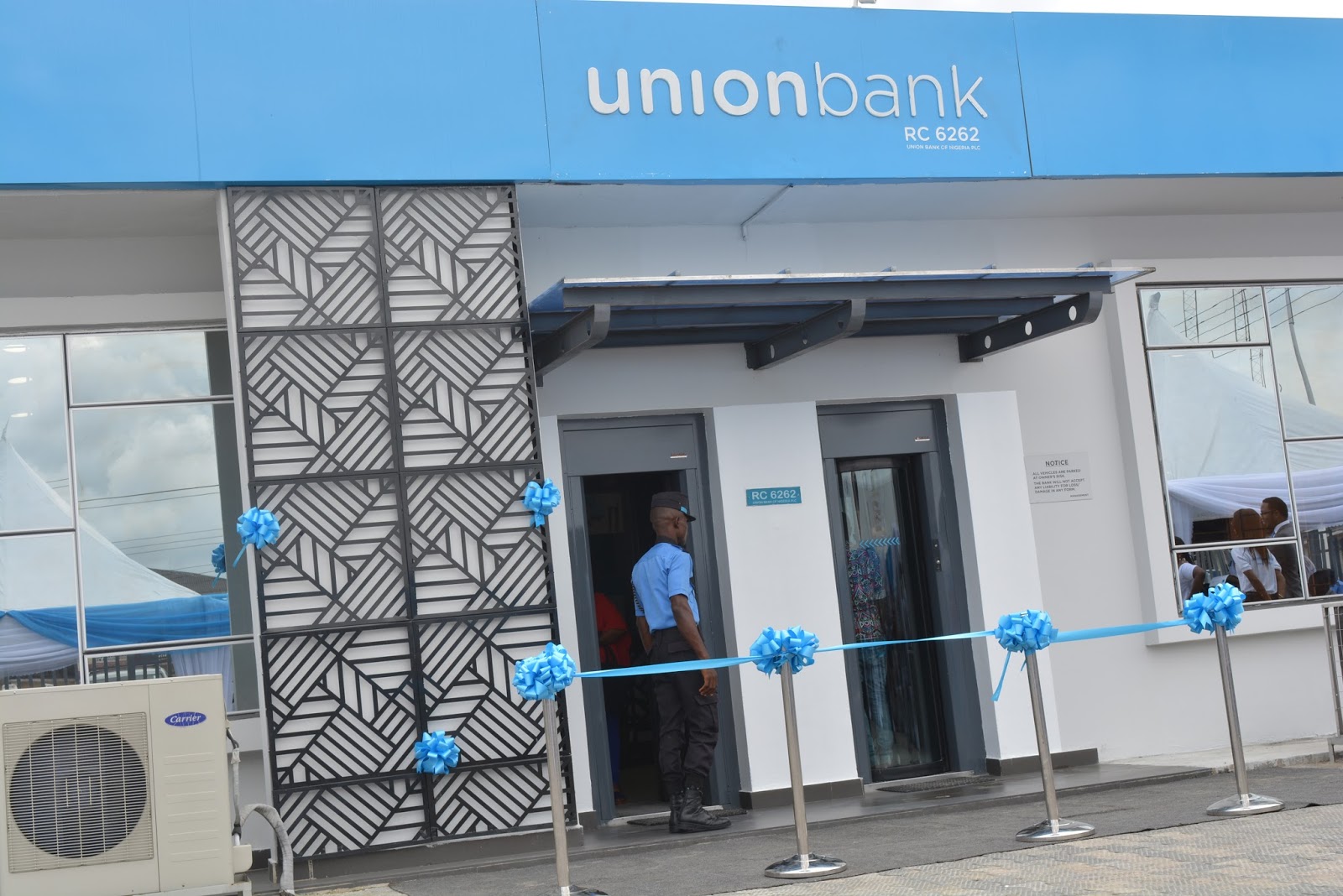
Kwargana, Three Other Directors Leave Union Bank Board
By Dipo Olowookere
Four members of the Board of Directors of Union Bank of Nigeria (Union Bank) Plc have left the financial institution.
This information was confirmed by the lender in a statement released on Friday.
It was gathered Mr Ibrahim Kwargana has retired as an Executive Director of the bank, while the trio of Engr. Mansur Ahmed, Mrs Onikepo Akande, and Mrs Arina McDonald have resigned as Non-Executive Directors of the lender.
Mr Kwargana’s retirement comes after 33 years in the banking sector. He was appointed as an Executive Director in 2009 by the Central Bank of Nigeria (CBN), and until his retirement, was responsible for the Bank’s Public Sector business as well as commercial business development for the northern region.
It was learned that Engr. Ahmed, Mrs Akande and Mrs McDonald resigned following the successful completion of their tenures on the Board.
As a result of the resignations of the above persons, Union Bank has announced the appointments of Mr Taimoor Labib as Non-Executive Director as well as Mrs Obafunke Alade-Adeyefa and Mrs Furera Isma Jumare as Independent Non-Executive Directors.
Union Bank said all the appointments have been approved by the CBN.
Commenting on the reconstitution of the Board, Mr Cyril Odu, Chairman of the Board of Directors, stated that, “I am grateful to our outgoing Directors for their immense contributions during a critical time, and I am proud of the accomplishments we achieved together as we worked to transform the Bank. On behalf of the Board, I thank them for their service and wish them much success in their future endeavours.
“I am also pleased to welcome Mr Taimoor Labib, Mrs Obafunke Alade-Adeyefa and Mrs Furera Isma Jumare who bring dynamic experience to the Board which will be valuable as we work to continue to move the bank forward.”
Also commenting, Chief Executive Officer, Mr Emeka Emuwa, said, “The contributions of our outgoing Directors were key to the success of our transformation programme. As we embark on a new phase of growth, we welcome our new Directors who will bring fresh perspectives to our Board deliberations.”
Banking
FairMoney Unveils Asset Financing Solution for Mobility Entrepreneurs
By Aduragbemi Omiyale
A new product known as Asset Financing Solution, tailored for those in the Nigerian transportation and logistics sector, has been introduced by a technology-enabled financial institution, FairMoney Microfinance Bank.
This initiative marks a significant expansion of FairMoney’s product ecosystem, moving beyond personal and working capital loans into commercial asset financing. By helping entrepreneurs build a verifiable credit history through vehicle repayments, the company is supporting financial inclusion and participation within the formal economy.
Asset Financing Solution forms part of the lender’s broader commitment to responsible lending and structured financing for eligible operators, as it expands access to asset financing for mobility entrepreneurs across the country through an application process subject to credit assessment and eligibility requirements.
The sector continues to record sustained market activity with reported growth rates of approximately 9.87 per cent–10.1 per cent in late 2025.
As road freight and passenger transport remain the nation’s dominant modes of transit, FairMoney’s new initiative aims to improve access to structured asset financing for thousands of transporters and delivery merchants. By providing access to business-use transport assets, the product helps address limited access to structured financing for micro-SMEs and supports activities within Nigeria’s logistics and mobility sector.
Mobility entrepreneurs seeking to acquire vehicles can now access flexible repayment plans through an application process that is subject to credit assessment and eligibility requirements.
Leveraging its technology-enabled onboarding and risk assessment capabilities, applicants can move through a structured onboarding and evaluation process.
Repayment structures are specifically tailored to the daily and weekly cash-flow realities of mobility businesses, supporting operational continuity and business growth within structured repayment arrangements.
The programme is open to eligible applicants via the FairMoney Business platform and through designated partner hubs across major cities.
“Our mission has always been to increase financial inclusion and create income opportunities by supporting individuals and small business operators in growing their businesses.
“With this solution, we are focused on supporting small business operators and mobility entrepreneurs who contribute significantly to transportation and commercial activity. The solution is designed to provide structured asset financing for eligible operators,” the Managing Director of FairMoney MFB, Mr Henry Obiekea, stated.
Speaking further, he said, “The intra-state transportation sector in Nigeria is experiencing sustained demand and market activity, offering opportunities for mobility and transport operators. The Asset Financing Solution ensures that costs are spread into manageable instalments, thereby supporting small business operations and broader economic participation.”
Banking
Court Convicts Ex-Access Bank Staff for Unauthorised Withdrawals on 305 Customers’ Account
By Modupe Gbadeyanka
Two former employees of Access Bank Plc, identified as Mr Obadofin Daniel Bamise and Ms Hadiza Oyiza Yakubu, have been convicted and sentenced by Justice A.A. Bello of the Kaduna State High Court for theft.
The convicts were found guilty of a separate one-count charge of theft against them by the Kaduna Zonal Directorate of the Economic and Financial Crimes Commission (EFCC).
They carried out unauthorised withdrawals on the accounts of 305 customers of Access Bank, who were beneficiaries of the federal government’s Palliative Scheme, totalling N7.8 million. They posted the unauthorised withdrawals to the Palliative Scheme’s coordinators’ accounts.
After pleading “guilty” to the charges against them, Justice Bello convicted and sentenced both of them to seven years imprisonment each, with an option of a N50,000 fine each.
According to a statement from the EFCC, the charge against Mr Bamise was, “That you, Obadofin Bamise Daniel sometime between the 5th of November, 2024 and 23rd of January, 2025 in Kaduna, within the jurisdiction of this Honourable Court, while being an employee of Access Bank Plc did in your capacity as an employee committed theft in the sum of N433.000 being property in possession of Access Bank Plc and you thereby committed an offence contrary to Section 274 of the Kaduna State Penal Code Law, 2017 and punishable under same Law.”
The charge against Ms Yakubu was, “That you, Hadiza Oyiza Yakubu sometimes between the 5th of November, 2024 and 23rd of January, 2025 in Kaduna, within the jurisdiction of this Honourable Court, while being an employee of Access Bank Plc did in your capacity as an employee committed theft in the sum of N806,000 being property in possession of Access Bank Plc and you thereby committed an offence contrary to Section 274 of the Kaduna State Penal Code Law, 2017 and punishable under same Law.”
Banking
Paystack Integrates AI into Dashboard with New Command Centre
By Adedapo Adesanya
Leading payments technology company, Paystack, has tapped into the AI wave for businesses with the introduction of an AI-powered “Command Centre” that allows businesses to interact with their payment data using plain-language questions instead of manually navigating dashboards.
The redesigned launch marks a major evolution in how businesses interact with the company’s 10-year-old product, which has helped to monitor transactions, manage settlements, review disputes, and run day-to-day payment operations for thousands of merchants.
The revamped dashboard, built on Pax, Paystack’s internal design system, includes the AI-native Command Centre, which is embedded directly into the Dashboard, allowing businesses to ask questions in plain language and receive answers grounded in their own Paystack data, as text, tables, or charts.
The system combines GPT models, structured data retrieval, and visualisation tools to deliver responses in the most relevant format.
It also has a simpler product architecture, with navigation reorganised into two core sections: Payments and Products, making it easier for merchants to find what they need and scale as Paystack’s offerings grow.
In a statement, the company said it also has full mobile parity that makes every screen, feature, and action available on mobile as well as desktop. It also offers a dark mode feature, as well as stronger analytics and clearer navigation built into the foundation of the product
“Businesses don’t come to their dashboard because they want to click through pages. They come because they have questions,” said Ms Dara Assim-Ita, Senior Product Designer at Paystack, who led the rebuild.
“Over the last decade, we have seen firsthand how much time merchants lose navigating tools that were built to display data rather than deliver answers. With this rebuild, we have changed that. Merchants can now simply ask ‘What happened with this transaction?’ or ‘Why is revenue down this week?’ and get a direct answer. The goal is to make the Dashboard feel less like a static reporting tool and more like an intelligent command centre – one that helps merchants understand what’s happening, find what they need faster, and make better decisions.”
To support the experience, Paystack built a new service called Project Canvas API, which handles conversations, connects to model providers, and interfaces with existing Paystack systems.
As the Dashboard handles sensitive financial data, the system was built to ensure responses are grounded in real merchant data and screened against safety and compliance requirements before being returned.
The company also worked closely with its Data Protection and Privacy team, completed a Data Protection Impact Assessment, and ran extensive adversarial testing ahead of launch.
“We are at a point where artificial intelligence is rapidly becoming integral to how businesses operate, and Paystack is committed to being on that curve for our merchants. The most powerful application of AI disappears into the work people are already trying to do, and that was the design principle behind this,” Ms Assim-Ita added.
-
Feature/OPED6 years agoDavos was Different this year
-
Travel/Tourism10 years ago
Lagos Seals Western Lodge Hotel In Ikorodu
-
Showbiz3 years agoEstranged Lover Releases Videos of Empress Njamah Bathing
-
Banking8 years agoSort Codes of GTBank Branches in Nigeria
-
Economy3 years agoSubsidy Removal: CNG at N130 Per Litre Cheaper Than Petrol—IPMAN
-
Banking3 years agoSort Codes of UBA Branches in Nigeria
-
Banking3 years agoFirst Bank Announces Planned Downtime
-
Sports3 years agoHighest Paid Nigerian Footballer – How Much Do Nigerian Footballers Earn