Banking
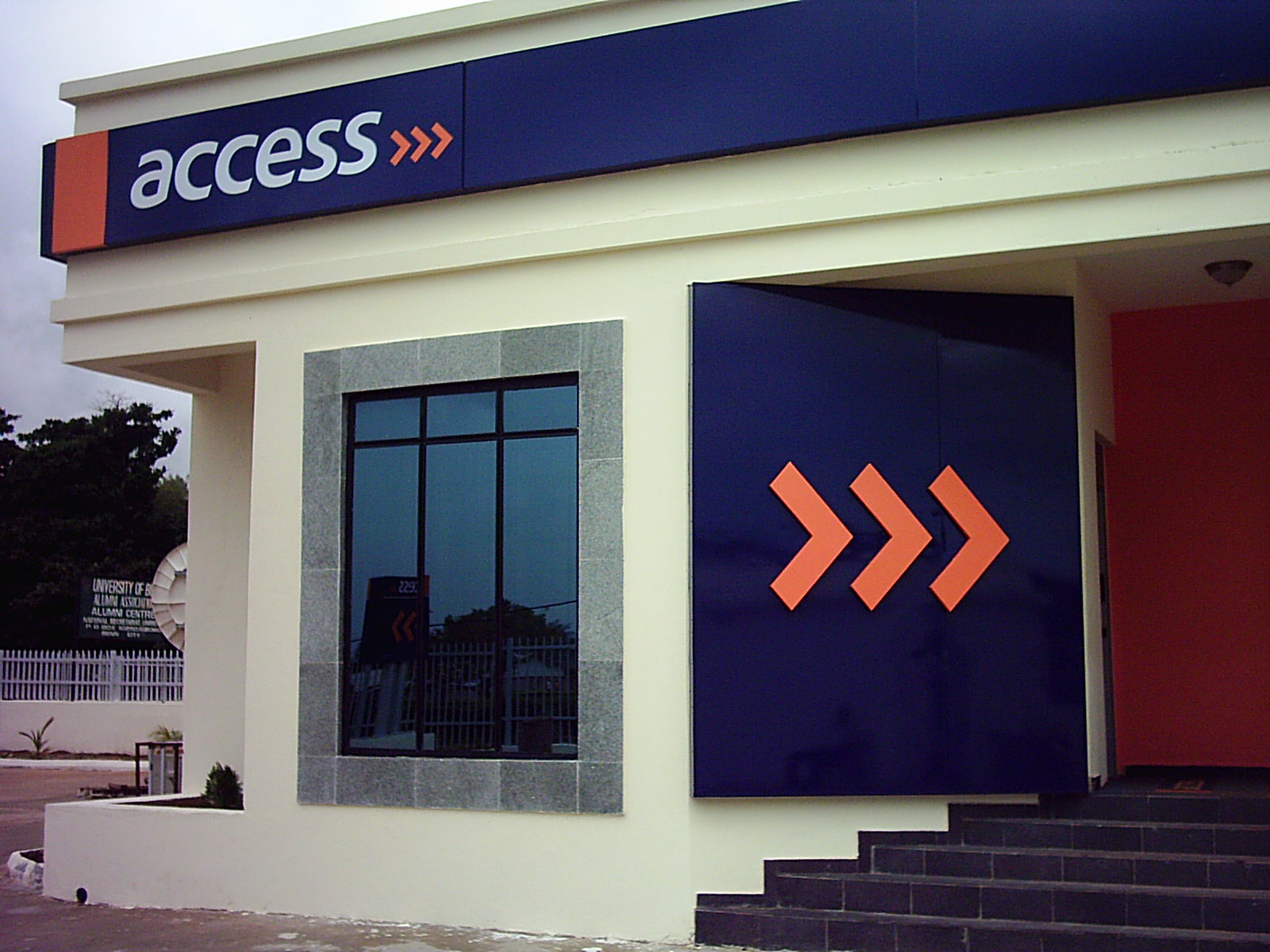
Moody’s Assigns Provisional (P)B2 Rating to Access Bank
By Modupe Gbadeyanka
The proposed issuance of up to N15 billion ($41.2 million) five-year senior unsecured notes of Access Bank Plc have been assigned provisional ratings of (P)B2 by Moody’s Investors Service.
In a statement obtained by Business Post, Moody’s noted that it issued provisional ratings in advance of the final sale of securities.
Upon a conclusive review of the transaction and associated documentation, Moody’s said it will endeavour to assign definitive ratings to the securities, which may differ from provisional ratings.
Explaining, the rating agency said the (P)B2 long-term local currency senior unsecured rating assigned to the senior unsecured notes was aligned with Access Bank’s B2 local currency deposit rating and issuer ratings, reflecting that the debt securities will be unsecured and unsubordinated obligations of the Nigerian lender and will rank at least equally with all other senior unsecured and unsubordinated obligations of the bank at all times.
The statement said Access Bank’s ratings reflect its strong asset quality metrics and relatively robust loan underwriting standards and risk management processes, large local currency liquidity buffers, and resilient capital buffers.
“These strengths are balanced against Nigeria’s still challenging operating environment which negatively affects banks’ asset quality and revenue growth, and concentration risks in the bank’s loan book, including its exposure to loans denominated in foreign currencies,” Moody’s said.
However, it stressed that given the alignment described above, the senior unsecured ratings will reflect any rating actions taken on Access Bank’s deposit and issuer ratings.
Currently, Nigeria’s issuer rating of B2 acts as a constraint to Access Bank’s local currency deposit rating and issuer ratings, given the bank’s high sovereign exposure.
“Any upgrade of the bank’s ratings needs to be preceded by a sovereign rating upgrade while the bank maintains its strong financial metrics.
Access Bank’s ratings could be downgraded if its asset quality deteriorates meaningfully, putting pressure on the bank’s profitability and capital buffers.
“A substantial deterioration of the bank’s liquidity buffers would also likely trigger a downgrade, as would a downgrade of the sovereign itself,” the rating firm noted.
Banking
Sewa Capital Invests in Mathesis Analytics to Expand AI-Powered Credit Infrastructure
By Modupe Gbadeyanka
Sewa Capital Investment, an investment banking and financial advisory firm focused on supporting high-growth businesses across Africa, has made a strategic investment in Mathesis Analytics, a Nigerian financial technology company providing Artificial Intelligence (AI)-powered credit decisioning infrastructure.
The investment is expected to support Mathesis Analytics’ expansion drive for its AI-powered credit infrastructure in Nigeria.
Currently, Nigerian lenders face a critical structural gap: the fragmentation of verifiable consumer data makes it difficult to accurately price risk at scale. Mathesis directly addresses this bottleneck by aggregating disparate transactional and behavioural data into a real-time measure of creditworthiness.
The investment will support product development, institutional integrations, expansion of Mathesis’ lender network, and the strengthening of its data and technology infrastructure, a statement from the fintech firm stated.
By embedding this infrastructure, financial institutions can expand underwriting capacity, support more accurate risk-based lending decisions, and reach new market segments without compromising established risk thresholds.
For Mathesis Analytics, this investment represents an important milestone in its strategy to build Africa’s next-generation credit infrastructure to drive true financial inclusion.
Mathesis has already supported more than 8 million loans for over 2 million unique borrowers in Nigeria, providing a substantial operating base from which to deepen institutional adoption and expand into additional markets.
The company will leverage Sewa Capital’s backing to accelerate the expansion of its institutional footprint.
“At Sewa Capital, we are interested in businesses building the infrastructure that enables African economies to allocate capital more efficiently and inclusively.
“Mathesis Analytics is addressing a fundamental constraint in credit markets: the information gap that limits lenders’ ability to assess risk confidently.
“Its technology has the potential to expand responsible access to credit in Nigeria and, over time, across Africa. We are pleased to support the team through its next phase of growth,” the Managing Director of Sewa Capital, Ms Angela Jide-Jones, commented.
The chief executive of Mathesis Analytics, Mr Winston Osuchukwu, in his reaction, said, “Credit inclusion begins with information visibility.
“Partnering with Sewa Capital accelerates the rollout of our infrastructure; equipping a wider network of lenders with the capabilities required to accurately evaluate risk and ultimately deliver credit services to previously excluded populations across the continent.”
Banking
Entries Open for Second CBN Regulatory Sandbox
By Aduragbemi Omiyale
Eligible innovators, financial institutions, Virtual Asset Service Providers (VASPs), financial technology (fintech) companies, and technology firms have been invited to apply for the second cohort of the Central Bank of Nigeria (CBN) Regulatory Sandbox Programme.
A statement signed by the acting Director of Corporate Communications and Investor Relations Department of the apex bank, Mrs Hakama Sidi-Ali, disclosed that entries opened on Wednesday, August 12, 2026, and will close on Monday, August 31, 2026.
Cohort 2 of the initiative introduces two dedicated testing tracks to support emerging technologies with the potential to strengthen Nigeria’s financial system while upholding high standards of consumer protection, financial stability, and market integrity.
According to the central bank, the two tracks are VASP and Data-Enabled Financial Services (Non-VASP).
VASP track is to support innovative virtual asset, stablecoin, payment, settlement, custody, wallet, and related financial infrastructure solutions that require supervised live testing, while the non-VASP track supports innovations that leverage secure digital infrastructure and permission-based data sharing to improve financial inclusion, payments, credit, risk management, operational efficiency, and consumer outcomes.
The CBN Regulatory Sandbox provides a controlled environment in which eligible participants may test innovative financial products, services, business models, and enabling technologies under the supervision of the CBN.
The programme enables the CBN and innovators to engage constructively throughout the testing process, supporting regulatory learning while encouraging responsible innovation that benefits consumers and the wider financial system.
Eligible organisations whose proposed innovations fall within the programme’s scope are encouraged to apply.
Applications will be assessed based on the level of innovation, readiness for controlled live testing, potential consumer or market benefit, governance arrangements, risk management capability, and the suitability of the proposed testing plan.
Successful participants will undertake supervised testing within clearly defined parameters agreed with the CBN, including appropriate safeguards for consumer protection, operational resilience, cybersecurity, and regulatory reporting.
The central bank emphasised that participation in the scheme does not constitute a licence, authorisation, or approval to operate outside the approved testing parameters.
It noted that the Sandbox is intended to facilitate responsible experimentation, strengthen regulatory engagement, and support evidence-based policy development in line with the CBN’s statutory mandate.
Banking
Offshore Spending Limit on GTBank Naira Card Now $40,000 As FX Liquidity Improves
By Aduragbemi Omiyale
The international spending limit on the GTBank Naira card has been increased by the financial institution to $40,000.
This information was revealed by the lender in an email to customers on Tuesday, August 11, 2026.
The banking subsidiary of GTCO Plc disclosed that the new offshore spending limit is for a quarter.
This development comes as the Nigerian foreign exchange (FX) market is witnessing stability against the United States Dollar.
The forex volatility experienced a few years ago has eased, allowing companies and others to plan within a reasonable exchange rate band.
“The Dollar limit on your GTBank Naira Card is now $40,000 quarterly,” the tier-1 commercial bank said in the message sighted by Business Post.
Improvement in forex liquidity in the domestic FX ecosystem has allowed Nigerians to use their local cards to complete financial transactions on foreign platforms, which was not possible a few years ago because of Dollar scarcity and arbitrage.
At the official market on Tuesday, the exchange rate closed at N1,364/$1. It was exchanged at N1,367/$1 at the GTBank FX desk and N1,395/$1 at the parallel market.