Connect with us

Banking

NDIC Increases Deposit Insurance Coverage for Banks

Published

on

deposit insurance coverage

By Adedapo Adesanya

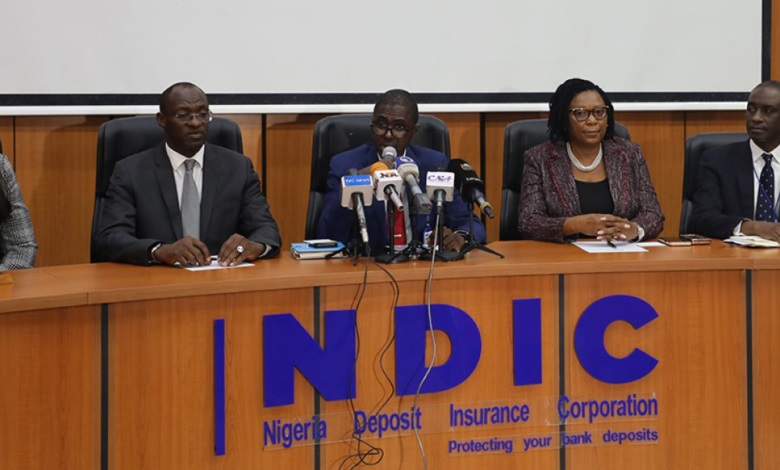
The Nigeria Deposit Insurance Corporation (NDIC) has raised the maximum deposit insurance coverage for depositors of all licenced Deposit Money Banks (DMBs) in the event of bank failure by 900 per cent from N500,000 to N5 million.

Deposit insurance is the government’s guarantee that an account holder’s money at an insured bank is safe up to a certain amount.

The Managing Director of NDIC, Mr Bello Hassan said the insurance coverage for Micro-finance Banks (MFBs) had also been increased from N200,000 to N2 million which would provide 99.27 per cent coverage of total depositors.

He said that Primary Mortgage Banks (PMBs) were increased from N500,000 to N2 million with full coverage of 99.34 per cent compared with the current 97.98 per cent.

For subscribers of Mobile Money Operators (MMOs), he said that the deposit insurance coverage had increased from N500,000 to N5 million per subscriber, per MMO.

Mr Bello said the Payment Service Banks (PSBs) insurance coverage had also increased from N500,000 to N2 million.

He said the adoption of the revised maximum deposit insurance coverage would be supported by the Corporation’s funding, represented by the balances in the various Deposit Insurance Funds (DIFs) and expected annual premium collection.

Other support would be enhanced supervision to reduce the likelihood of bank failures, effective bank resolution frameworks and other funding arrangements provided by the NDIC Act.

Mr Bello also said that factors considered in the upward review of the coverage level were deposit distribution, the impact of inflation, per capita Gross Domestic Product (GDP), exchange rate and other statistical models.

“NDIC’s mandate of Deposit Guarantee is a critical component of depositors’ protection, as it guarantees the payment of deposits up to a maximum set limit in the event of bank failure.

“The deposit guarantee covers depositors of all deposit-taking financial institutions licenced by the Central Bank of Nigeria (CBN), which include DMBs, MFBs, PMBs, Non-Interest Banks (NIBS), Payment Service Banks (PSBs) and subscribers of MMOs.

”We need to stress that the high level of uninsured deposits posed a risk of bank runs.

”This is in line with our commitment to enhancing depositors’ protection, public confidence, financial inclusion, and stability of the financial system.

“I am pleased to announce that the NDIC’s Interim Management Committee (IMC), approved an increase in the maximum deposit insurance coverage levels for all licenced deposit-taking financial institutions.

”The revised deposit insurance coverage has balanced the NDIC’s goals of deposit protection and financial system stability with incentives for depositors to practice market discipline and prevent banks from unnecessary risk-taking and moral hazard.

“Consideration was given to ensure that the coverage was limited but adequate enough to protect a large number of depositors,” he said.

The managing director reaffirmed the corporation’s commitment to protecting depositors and contributing to the stability of the financial system.


Adedapo Adesanya is a journalist, polymath, and connoisseur of everything art. When he is not writing, he has his nose buried in one of the many books or articles he has bookmarked or simply listening to good music with a bottle of beer or wine. He supports the greatest club in the world, Manchester United F.C.

Click to comment

Leave a Reply

Your email address will not be published. Required fields are marked *

Banking

NDIC Begins Verification of Depositors of 46 Failed Microfinance Banks

Published

on

NDIC

By Modupe Gbadeyanka

The verification of the depositors of the 46 microfinance banks, whose operating licenses were revoked by the Central Bank of Nigeria (CBN) over a week ago, has commenced.

The exercise, aimed at refunding those whose funds were trapped in the small lenders, is being conducted by the Nigeria Deposit Insurance Corporation (NDIC).

In a statement on Thursday, the agency said its staff members have been positioned at the offices of the affected banks across the country to attend to depositors.

It was disclosed that depositors of the defunct banks, who had their Bank Verification Numbers (BVNs) linked to their accounts in the failed banks, will be paid through their alternative accounts in existing banks.

However, depositors whose BVNs were not linked to their accounts in the failed banks have been encouraged to visit the affected banks’ offices with proof of account ownership, a passport photograph, verifiable means of identification (Driver’s Licence, Permanent Voter’s Card, International Passport or National ID Card) and BVN.

NDIC also stated that depositors can alternatively file their claims online through its website: www.ndic.gov.ng, to complete the Pre-Verification Claims Form by clicking on the Search Bar, and typing Pre-Verification Claims Form; opening the Form and filling in their details. They can also do so by clicking the link: https://ndic.gov.ng/ndic-pre-verification-claims-form/ or by visiting any of the NDIC offices closest to them to file their claims.

For further enquiries, the corporation can be reached on any of the following lines: 09037273810, 09038197064, 08104220807, 09064657140.

Continue Reading

Banking

Strict CBN Framework Dampens New BVN Registrations Despite Marginal Rise

Published

on

CBN’s N75trn Credit private sector

By Adedapo Adesanya

Nigeria’s Bank Verification Number (BVN) enrolment has slowed significantly in 2026 following the introduction of a stricter regulatory framework by the Central Bank of Nigeria (CBN), with the latest data from the Nigeria Inter-Bank Settlement System (NIBSS) showing that registrations are on course to fall well below last year’s record.

The BVN database stood at 69.55 million as of July 5, 2026, up from 69.32 million in June, indicating that only 228,947 new registrations were recorded over the period. Since the end of 2025, when the database stood at 67.8 million, total enrolments have increased by 1.75 million.

At the current pace, however, BVN registrations are unlikely to match the 4.3 million new enrolments recorded in 2025, suggesting a sharp deceleration in growth this year.

The slowdown comes after the CBN introduced a revised BVN regulatory framework in March, with the new rules taking effect on May 1, 2026. The framework tightened controls around enrolment, identity verification and fraud monitoring as part of efforts to strengthen the integrity of the banking system.

Among the key changes was the introduction of a minimum enrolment age of 18 years, effectively preventing minors from registering for a BVN.

The new framework also limits customers to a one-time change of the phone number linked to their BVN and requires financial institutions to place BVNs linked to suspected fraudulent transactions on a temporary watch-list for up to 24 hours while investigations are carried out.

The stricter rules contrast with last year’s surge in registrations, which was largely driven by the introduction of the Non-Resident Bank Verification Number (NRBVN) initiative that enabled Nigerians in the diaspora to complete BVN enrolment remotely, removing physical barriers and expanding access to the financial system.

Launched on February 14, 2014, the BVN scheme was introduced by the CBN in collaboration with the Bankers’ Committee, NIBSS and German technology firm Dermalog to assign every bank customer a unique biometric identity that can be verified across Nigeria’s banking industry.

Continue Reading

Banking

CBN Urges Nigerians to Accept Both Standard, Special N100 Banknotes

Published

on

old and new N100 notes

By Adedapo Adesanya

The Central Bank of Nigeria (CBN) has clarified that both the standard N100 banknote and the commemorative N100 banknote remain valid legal tender across the country, urging members of the public and businesses to accept both notes for all transactions amid reports that the standard version is being rejected in some quarters.

In a release signed by its Acting Director of Corporate Communications, Mrs Hakama Sidi-Ali, “the CBN reiterates that both the commemorative N100 banknote and the standard N100 banknote remain legal tender in Nigeria and must be accepted for all transactions nationwide. The commemorative N100 banknote, which was introduced to mark Nigeria’s centenary, did not replace the existing standard N100 banknote.”

The apex bank warned that rejecting the standard N100 banknote violates the provisions of the CBN Act and undermines public confidence in the national currency.

According to the bank, individuals, businesses, financial institutions, and other economic agents who reject the note could face appropriate enforcement measures.

The CBN reiterated its commitment to safeguarding the integrity of the naira, ensuring confidence in all duly issued banknotes, and promoting seamless currency circulation throughout the economy.

The central bank also advised members of the public to accept all banknotes legally issued by the bank and encouraged anyone seeking clarification to use its official communication channels.

First introduced on December 1, 1999, the N100 note which features the portrait of Chief Obafemi Awolowo on the front and Zuma Rock on the reverse, was last updated in 2014, when the CBN issued a commemorative version to mark Nigeria’s centenary, introducing enhanced security features such as a Quick Response (QR) code, window micro-optics, improved tactile markings for the visually impaired, and stronger anti-counterfeiting elements.

Unlike the N200, N500 and N1,000 notes, which were redesigned in 2022 under former CBN Governor Godwin Emefiele, the N100 note has remained unchanged since the centenary update, with both the standard and commemorative versions continuing to circulate.

Continue Reading