Banking
Nigeria May Win Bid to Host African Energy Bank Headquarters
By Adedapo Adesanya
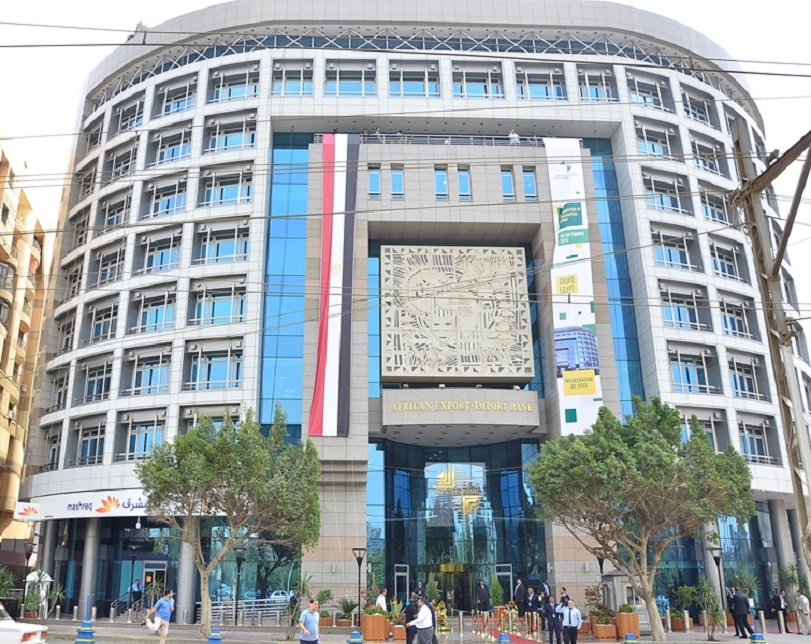
Nigeria is in the clear to host the $5 billion African Energy Bank headquarters despite a recent aversion to the institution sited in the country.
This is as a technical inspection team comprising representatives from the African Petroleum Producers Organization (APPO) and Afreximbank has concluded its assessment, affirming Nigeria’s readiness to host the headquarters of the African Energy Bank (AEB), slated to be established by July 2024.
After the initial bidding phase earlier this year, Nigeria, alongside Ghana, Benin, and Algeria, emerged as finalists competing for the privilege to host the supranational, multilateral $5 billion energy bank.
This institution aims to finance Africa’s hydrocarbon resources, bolster energy transition efforts, and align with net zero 2060 commitments.
Six nations including Ghana, Egypt, South Africa, Benin Republic, Cote d’Ivoire and Algeria had mounted fierce resistance against Nigeria from hosting the headquarters.
According to a statement signed by the Permanent Secretary of the Ministry of Petroleum Resources, Mr Nicholas Agbo Ella, in preparation for the bid, the Ministry engaged expert opinions from the Federal Ministry of Justice and consultants in January 2024.
Their review and endorsement of the Bank’s proposed Charter, Establishment Agreement, and Headquarters Host Agreement provided the necessary momentum to proceed.
He said the Federal Executive Council (FEC) and National Assembly are now finalizing the ratification process, ensuring that the AEB operates with the required privileges and immunities.
According to the statement, “To demonstrate its commitment, Nigeria has earmarked a prestigious building in Abuja as the temporary headquarters and established a secured data room for the technical team’s scrutiny.”
Additionally, it was revealed that an application for land for the permanent headquarters in Abuja’s Central Business District has been submitted for approval.
“President Bola Ahmed Tinubu has approved a $100 million investment from four Agencies of the Ministry of Petroleum Resources, exceeding the minimum equity requirement of $83.33 million for class A shares. This decision positions Nigeria favourably to win the bid, potentially reshaping the country’s oil and gas ecosystem,” the statement said
The Ministry also confirmed Nigeria’s collaboration with Nigerian National Petroleum Company Ltd. (NNPCL) and the Nigerian Content Development Monitoring Board (NCDMB) to fulfil all eligibility criteria.
Hosting the $5 billion Africa Energy Bank in Nigeria is anticipated to yield significant benefits, including boosting the nation’s GDP, employment, financial architecture, and inclusion, while driving economic diversification and supporting foreign exchange management strategies.
Furthermore, the bank’s presence is expected to catalyze development, exploration, and investment initiatives within the oil and gas sector, enhancing market proximity and scaling up production and capacity.
The launch of the African Energy Bank is projected to attract an additional $2 billion in equity from African Sovereign wealth funds, National oil companies, and other institutional investors, aligning with the bank’s vision and mission. Afrexim-Bank has pledged $1.250 billion as a major investor in class A shares alongside APPO members.
Banking
First Bank Introduces Naira Visa Debit Card to Ease Everyday Payments
By Adedapo Adesanya
Nigerian tier-1 lender, First Bank, has announced the introduction of its Naira Visa Debit Card in partnership with the global payments giant to extend accessible, reliable electronic payment capabilities to a broader segment of the Nigerian population.
The card is targeted at everyday consumers who require a dependable payment instrument for routine domestic and international transactions. Accepted across POS terminals, ATMs, and online platforms through Visa’s payments network, the Naira Visa Debit Card is designed to reduce friction for customers transitioning from cash to electronic payments across retail, utilities, and digital commerce.
According to the bank, the partnership aligns with Nigeria’s ongoing drive toward a cashless economy, a policy direction that has gained significant momentum following successive Central Bank of Nigeria directives encouraging the adoption of electronic payment channels, adding that the card is intended to serve customers across the country’s diverse economic segments.
The Naira Visa Debit Card is available to all eligible FirstBank account holders through any of the bank’s branches nationwide.
Speaking on the launch, Mr Chuma Ezirim, Group Executive, eBusiness & Retail Products, FirstBank, said: “Everyday transactions should be simple, secure, and rewarding. The Naira Visa Debit Card is designed to make life easier for our customers, whether they are paying for groceries, settling utility bills, or shopping online.
“By extending reliable electronic payment access across Nigeria, we are helping more people transition confidently from cash to digital payments, supporting the nation’s cashless policy and empowering communities with greater financial inclusion.”
Commenting on the strategic importance of the partnership, Mr Andrew Uaboi, Vice President and Cluster Head, West Africa, Visa, noted: “A strong payments ecosystem works for everyone. The Naira Visa Debit Card extends reliable electronic payment access to everyday Nigerian consumers, and this in addition to the cards in our portfolio, continues to demonstrate what a truly comprehensive card portfolio looks like for the Nigerian market. Visa is proud to power this offering with FirstBank.”
The launch of the Naira Visa Debit Card broadens Visa’s card portfolio at FirstBank, which already includes products spanning credit cards and High-end premium lifestyle spending cards. The addition completes its offering across customer segments, ensuring that cardholders at every income level have access to a product suited to their needs.
Banking
CBN Unveils New Revised Manual to Modernise FX Market
By Adedapo Adesanya
The Central Bank of Nigeria (CBN) has unveiled the fourth edition of its Foreign Exchange Manual as part of efforts to deepen liquidity, improve transparency and strengthen confidence in the country’s foreign exchange market.
Speaking at the launch of the revised manual in Abuja on Friday, the Governor of the apex bank, Mr Yemi Cardoso, said the document will take effect from June 1, 2026.
He said it was developed after extensive consultations with banks, exporters, importers, corporates, regulators and development partners.
He said the new framework reflects the apex bank’s commitment to modernising the country’s foreign exchange administration in line with international best practices.
Mr Cardoso described the foreign exchange market as a critical pillar of any open economy, noting that effective governance of the sector is essential for sustaining macroeconomic stability and investor confidence.
“Foreign exchange is more than a financial instrument. It anchors price stability, facilitates the flow of goods and capital, and shapes investor sentiment,” he said.
The CBN governor stressed that the revised manual became necessary due to changing global economic realities, domestic reforms and the need for a more coherent and forward-looking regulatory framework.
According to him, the last edition of the FX manual was issued in 2018, making the latest review both timely and necessary.
Mr Cardoso disclosed that Nigeria’s foreign exchange market has witnessed significant improvement in liquidity since the current administration began reforms in the sector.
He added that daily turnover in the FX market increased from an average of about $100 million in the early days of the administration to between $400 million and $600 million daily.
The CBN Governor added that the market had also recorded transactions of up to $1 billion per day on several occasions in recent months.
“We have gone from a situation where it was more or less a one-way market, where the central bank came in, intervened and went away, to a much more dynamic market,” he stated.
The apex bank boss noted that the reforms were gradually restoring confidence among investors and market participants, encouraging freer entry and exit in the market without unnecessary restrictions.
He also maintained that the nation’s foreign reserves should not be used as the primary tool for funding the foreign exchange market.
“Reserves are reserves. They are not what you look to fund a market,” he said.
The CBN Governor assured stakeholders that the revised manual would be distributed free of charge to authorised dealers while the bank strengthens monitoring mechanisms to ensure compliance, fairness and accountability across the foreign exchange market.
On his part, the Deputy Governor for Economic Policy, Mr Muhammad Abdullahi, said the review formed part of broader reforms initiated by Mr Cardoso to restore confidence, improve transparency and deepen liquidity in the foreign exchange market.
Mr Abdullahi explained that the revised manual introduces several changes aimed at improving ease of doing business and reducing transaction bottlenecks.
Among the notable changes, he noted, are provisions allowing unfettered access to export proceeds, the introduction of non-resident investment accounts and operational guidelines for Pan-African Payment and Settlement System (PAPSS) transactions to support regional trade.
Mr Abdullahi added that the manual also contains new provisions on service exports, revised documentation requirements and updated operational procedures designed to align Nigeria’s FX market with global standards.
He said the apex bank deliberately adopted an ease of doing business approach during the review process to eliminate inefficiencies and ambiguities identified by stakeholders.
“The revised manual is not a stand-alone exercise but part of a broader institutional reform effort designed to strengthen the integrity, credibility and effectiveness of Nigeria’s foreign exchange system,” he said.
Banking
CBN Authorises Omodayo-Owotuga’s Inclusion into First Bank Board
By Aduragbemi Omiyale
The Central Bank of Nigeria (CBN) has approved the appointment of Mr Julius Omodayo-Owotuga to the board of First Bank of Nigeria Limited as an executive director.
A statement from the company said the appointment of Mr Omodayo-Owotuga became effective on Wednesday, May 13, 2026.
He was appointed to the board of the subsidiary of First Holdco Plc to further strengthen its leadership capacity across strategic finance, governance, risk management, and institutional transformation.
Before now, he served on the board of First Holdco as a non-executive director between 2021 and 2026.
The appointee brings to the board 24 years of experience spanning banking and financial services, infrastructure finance, power, oil & gas, and audit and consulting.
His appointment, according to the notice to the Nigerian Exchange (NGX) Limited, reflects the Bank’s continued commitment to strong governance, disciplined execution, financial resilience, and sustainable long-term growth.
He most recently served as deputy chief executive of Geregu Power Plc, Nigeria’s first listed power generation company, where he played a pivotal role in institutional transformation, governance strengthening, capital market positioning, operational optimisation, and major financing initiatives, including the company’s landmark listing on NGX.
Mr Omodayo-Owotuga previously served as group executive director, Finance & Risk Management at Forte Oil Plc (now Ardova Plc), where he was instrumental in the company’s financial and operational transformation, leading strategic restructuring, capital raising, treasury optimisation, enterprise risk management, and governance improvement initiatives that strengthened long-term shareholder value.
His professional career also includes roles at Africa Finance Corporation, Standard Chartered Bank, KPMG Professional Services and MBC International Bank (Now First Bank Nigeria Limited), providing him with deep experience in institutional finance, treasury management, financial controls, regulatory engagement, and corporate advisory.
Mr Omodayo-Owotuga is a CFA Charter Holder, KPMG-trained Accountant, and a Fellow of the Institute of Chartered Accountants of Nigeria (ICAN), the Chartered Institute of Taxation of Nigeria (CITN), and the Institute of Credit Administration. He is also a member of the Institute of Directors (IoD) Nigeria and a Certified Management Accountant.
He holds a Doctorate in Business Administration, a Master’s in Business Administration and a Bachelor’s degree in Accounting. He is an alumnus of Saïd Business School, University of Oxford, IE Business School, Geneva Business School, and the University of Lagos.
-
Feature/OPED6 years agoDavos was Different this year
-
Travel/Tourism10 years ago
Lagos Seals Western Lodge Hotel In Ikorodu
-
Showbiz3 years agoEstranged Lover Releases Videos of Empress Njamah Bathing
-
Banking8 years agoSort Codes of GTBank Branches in Nigeria
-
Economy3 years agoSubsidy Removal: CNG at N130 Per Litre Cheaper Than Petrol—IPMAN
-
Banking3 years agoSort Codes of UBA Branches in Nigeria
-
Banking3 years agoFirst Bank Announces Planned Downtime
-
Sports3 years agoHighest Paid Nigerian Footballer – How Much Do Nigerian Footballers Earn