
Banking
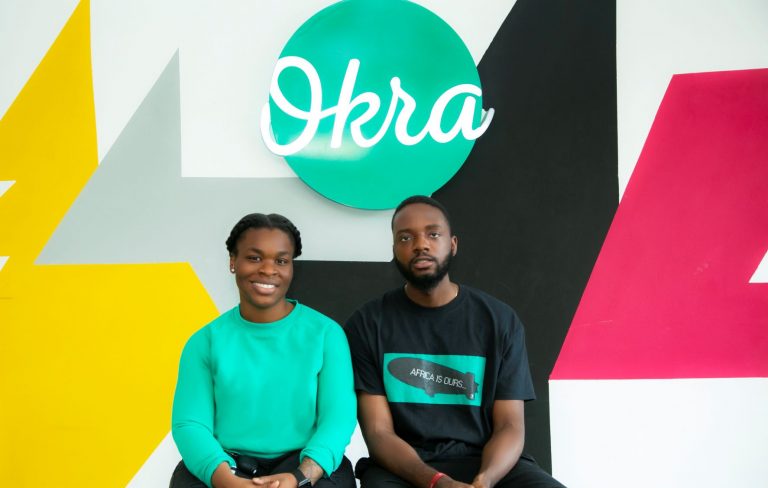
Okra Co‑founder Fara Ashiru Jituboh Quits to Join British Startup Kernel

By Aduragbemi Omiyale
The co-founder of a Nigerian open finance platform, Okra, Ms Fara Ashiru Jituboh, has left the company to pitch tent with a United Kingdom-based start-up firm, Kernel.
She left Okra fintech in May 2025 as the chief executive of operating officer, and is now with Kernel as the Head of Engineering.
Her exit from the organisation followed the shutting down of operations of Okra in May 2025 shortly after the launch of its in‑house cloud infrastructure product, Nebula.
Nebula was introduced to the market in October 2024 to cushion the rising cloud costs due to the devaluation of the Naira at the foreign exchange (FX) market.
Okra only operated for five years after it was established in 2019 by Ms Jituboh and Mr David Peterside, pioneering open finance in Africa.
The firm built Application Programming Interfaces (APIs) designed to allow users to securely connect their bank accounts to third‑party apps
During its existence, a total of $16.5 million was raised by the company, with $1 million secured in pre‑seed from TLcom Capital and a further $3.5 million led by Susa Ventures.
As of the time of filing this report, Business Post observed that the website of Okra is still operational, though access to its Blog section was not possible.
Okra was formed to digitize financial services for Africa as financial institutions, for many years, have built barriers around consumer data and the way money moves around the world.
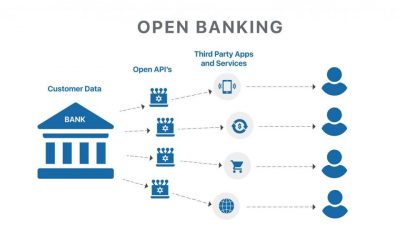
It came up with its open banking system to break down these barriers, enabling secure and scalable access to financial data and payments.
The organisation provided the infrastructure layer that powers the next wave of financial innovation by unlocking the power of open banking, connecting to thousands of banks using a secure open API, removing the complexity and enabling seamless access to financial information and payment infrastructure.



By Aduragbemi Omiyale
One of the leading financial services firms, Guaranty Trust Holding Company (GTCO) Plc, has declared a record dividend of N12.75 for the 2025 financial year, reaffirming its unrivalled capacity to create value for shareholders.
The chief executive of the GTCO, Mr Segun Agbaje, said, “Our record dividend payout this year is not only a reflection of our current profitability but also of our confidence in the group’s long-term earnings potential.”
In the year, the company, according to its financial statements released to the Nigerian Exchange (NGX) Limited and the London Stock Exchange (LSE) on Tuesday, reported profit before tax of N1.23 trillion, underpinned by strong growth in core earnings, with interest income and fee income increasing y-o-y by 23.2 per cent and 25.9 per cent, respectively.
The performance reaffirms its capacity to generate sustainable earnings and builds on the momentum from 2024, when GTCO delivered a record profit of ₦1.27 trillion, driven in part by N517.5 billion in fair value gains, which did not recur in 2025.
Also, the post-tax profit shrank to N865.75 billion from N1.02 trillion due to recent fiscal policy adjustments to the taxation of investment securities, notably withholding tax on short-term instruments.
However, when normalised for this effect, underlying earnings remain robust, driven by growth in core operating income.
The organisation continues to maintain a well-structured, healthy, and diversified balance sheet in all the jurisdictions wherein it operates a banking franchise, as well as across its Payments, Pension and Funds Management business verticals.
In the year under review, total assets and shareholders’ funds closed at N17.8 trillion and N3.4 trillion, respectively, as Capital Adequacy Ratio (CAR) remained very robust and strong, closing at 43.8 per cent, likewise asset quality improved as evidenced by IFRS 9 Stage 3 Loans which closed at 3.4 per cent and 5.0 per cent at Bank and Group level in FY-2025 (Bank, 3.5 per cent, and Group, 5.2 per cent in December 2024).
In addition, Cost of Risk (COR) also improved to 2.2 per cent from 4.9 per cent in December 2024. In specific terms, the net loan book grew by 12.4 per cent from N2.79 trillion as of December 2024 to N3.13 trillion in December 2025.
Similarly, deposit liabilities grew by 23.8 per cent from N10.40 trillion to N12.87 trillion during the same period.
“Our 2025 result underscores the resilience and depth of our earnings capacity. Following a record 2024, which included significant fair value gains, our focus has been on strengthening the sustainability of our earnings by driving growth across our core banking and ecosystem businesses,” Mr Agbaje stated.
“The strength of our underlying earnings, despite a stronger Naira and tighter regulatory parameters, reflects the quality of our franchise and the discipline with which we execute our strategy.
“Importantly, this strong core earnings performance underpins our capacity to sustain and grow shareholder returns,” he added.
“Looking ahead, we remain focused on scaling our ecosystem, driving innovation across our financial services platform, and delivering consistent, high-quality earnings that support superior value creation for our shareholders,” he noted.

By Modupe Gbadeyanka
The Nigerian banking industry has been praised for its strength, capacity and resilience, following its compliance with the March 31, 2026, recapitalisation deadline.
In March 2024, the Central Bank of Nigeria (CBN) gave financial institutions operating in the country a March 2026 deadline to jack up their capital base from N25 billion.
Banks with an international licence were asked to have at least N500 billion, while national lenders were told to raise the capital base to N200 billion, with regional banks pegged at N50 billion.
Others included merchant banks, N50 billion; non-interest banks with national license, N20 billion and non-interest banks with regional license will now have N10 billion minimum capital.
The banking reform was to prepare operators for the $1 trillion economy target for 2030 set by the federal government.
Data showed that almost all the Nigerian banks have shored up their capital ahead of the CBN recapitalisation deadline.
According to the CBN Governor, Mr Yemi Cardoso, 32 banks have already met the new capital requirements under the ongoing recapitalisation programme.
“The banking sector recapitalisation programme has recorded commendable progress, with 32 banks having already met the revised capital requirements.
“This achievement has significantly strengthened the resilience and capacity of the Nigerian banking system, positioning it to effectively mobilise long-term capital, support productive investment, and play its critical role in enabling the transition towards a $1 trillion economy,” he said.
One group that is over the moon over this development is the Association of Corporate and Marketing Professionals in Banks (ACAMB), which applauded the disciplined execution of the exercise by all financial institutions and extended special praise to the regulator for its regulatory oversight.
The president of ACAMB, Mr Jide Sipe, said, “The Nigerian banking industry has once again demonstrated its innate strength and resilience.
“Achieving over 96 per cent compliance ahead of the recapitalisation deadline is no small feat; it is an indication of the capacity of our financial institutions to adapt and overcome.
“We commend the CBN for its visionary leadership, particularly under Governor Cardoso, whose bold reforms are reshaping the financial landscape,” he said.
Mr Sipe also congratulated the CBN on its recent recognition as Central Bank of the Year 2026 by the London-based Central Banking Awards Committee, a prestigious honour bestowed at a global gathering of central banks.
According to ACAMB, Mr Cardoso’s stewardship continues to reposition the nation’s economy with clarity, discipline, and a transformational outlook, earning Nigeria increased respect on the global stage.
The association reiterated its commitment to supporting policies that promote transparency, stability, and sustainable growth in the Nigerian banking industry.

By Adedapo Adesanya
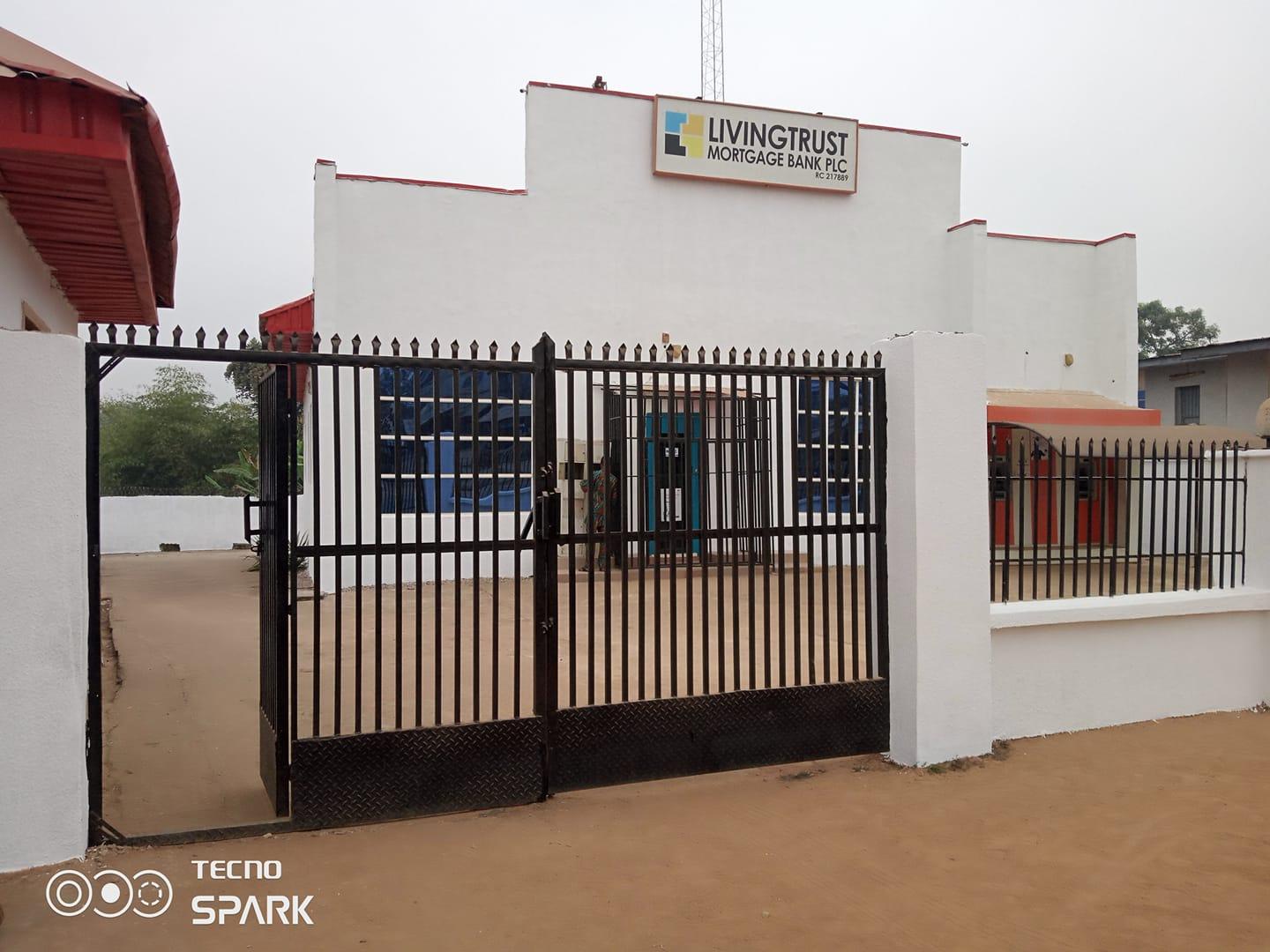
The Central Bank of Nigeria (CBN) has reaffirmed Mr Kamaldeen Adekilekun as the substantive Chairman of Living Trust Mortgage Bank Plc, easing recent uncertainty about the bank’s leadership.
In an official letter dated March 27, 2026, addressed to the Osun State Government, the banking sector regulator stated that Mr Adekilekun’s appointment remains valid and binding.
The CBN explained that once board nominations and appointments are approved by the regulator, they are tenured and guided by the Code of Corporate Governance for Primary Mortgage Banks in Nigeria, adding that such appointments cannot be withdrawn arbitrarily without clear regulatory grounds.
The CBN noted that its earlier communication (reference number OFI/DOL/CON/PLI/001/213) highlighted that the appointment was tenured in line with Sections 2.4.5 and 2.4.6 of the Code.
The apex bank also stated that there was no regulatory breach of relevant provisions of BOFIA 2020 or any CBN regulation that would disqualify him or prevent him from completing his term.
Rejecting the request for his removal, the CBN directed that the current board structure be maintained, stating, “Based on the foregoing, we therefore decline your request to withdraw Dr Adekilekun’s appointment.”
The development followed an earlier request seeking the withdrawal of the chairman’s appointment. The CBN said it had previously communicated the same position in a letter dated January 19, 2026.
The development reaffirms the central bank’s commitment to regulatory discipline, corporate governance, and institutional stability in Nigeria’s financial sector.
The clarification is expected to bring confidence to stakeholders, investors, and customers of Living Trust Mortgage Bank as operations continue under the existing leadership.
Incorporated on March 9, 1993, the bank converted from a Private Limited Liability Company to a Public Limited Liability Company on January 25, 2013 and subsequently listed on the Nigerian Exchange (NGX) on December 11, 2013, where its shares are being publicly traded.






-
 Feature/OPED6 years ago
Davos was Different this year
-
Travel/Tourism10 years ago
Lagos Seals Western Lodge Hotel In Ikorodu
-

 Showbiz3 years ago
Estranged Lover Releases Videos of Empress Njamah Bathing
-
 Banking8 years ago
Sort Codes of GTBank Branches in Nigeria
-

 Economy3 years ago
Subsidy Removal: CNG at N130 Per Litre Cheaper Than Petrol—IPMAN
-

 Banking3 years ago
Sort Codes of UBA Branches in Nigeria
-

 Banking3 years ago
First Bank Announces Planned Downtime
-

 Sports3 years ago
Highest Paid Nigerian Footballer – How Much Do Nigerian Footballers Earn