
Banking
Rand Merchant Bank Adopts Kachasi to Strengthen Trade Finance Operations


By Modupe Gbadeyanka
As part of its commitment to deliver quality service to customers, Rand Merchant Bank (RMB) has finally embraced the trade finance software of Union Systems Limited (USL), Kachasi.
The lender said its migration from Finastra’s Trade Innovation (TI) to USL’s Kachasi is a testament to the strength, reliability and competitiveness of this homegrown solution.
Kachasi is Nigeria’s leading indigenous trade finance software built to empower banks with seamless automation, regulatory compliance, and enhanced operational efficiency.
The platform has consistently proven to be a game-changer in the trade finance sector, offering key features such as full compliance with statutory and local regulatory requirements, end-to-end automation of trade finance processes, compliance with international trade regulations, advanced risk management and reporting tools, as well as seamless integration with core banking, local portals and third-party systems.
RMB said its decision to integrate Kachasi into its operations reinforces the platform’s reputation as a trusted trade finance solution.
As international trade becomes more complex, financial institutions require cutting-edge technology to navigate regulatory requirements, mitigate risks, and ensure operational excellence.
“This win affirms our commitment to revolutionizing trade finance automation across Africa. As more financial institutions embrace Kachasi, we remain dedicated to delivering cutting-edge solutions that drive efficiency and elevate the banking sector,” the financial institution stated.
Also, the chief executive of USL, Mr Chuks Onyebuchi, said, “This partnership with Rand Merchant Bank marks a defining moment, not just for Union Systems Limited but for African-built fintech solutions on the global stage.
“The successful transition from Finastra’s Trade Innovation (TI) to Kachasi proves that our homegrown technology is not only competitive but also better suited to the evolving needs of banks and trade finance institutions.
“Kachasi’s seamless automation, deep integration capabilities, and understanding of the local and international trade landscape make it the ideal choice for financial institutions looking to drive efficiency and innovation. This achievement is a testament to our commitment to building world-class technology, and we are excited to support RMB in revolutionizing their trade finance operations.”









By Dipo Olowookere
Shareholders of Wema Bank Plc will receive a dividend of N1.25 for the 2025 financial year if approved at the next Annual General Meeting (AGM).
The board proposed the cash reward to investors after achieving record-breaking growth and unparalleled performance across several key metrics in the year under review.
Details of the FY 2025 audited financial results of the lender showed that pre-tax profit went up by 116.4 per cent to N221.9 billion from N102.5 billion, while net profit soared by 125.4 per cent to N194.5 billion from N86.2 billion in 2024.
Last year, the financial institution grew its gross earnings by 52.8 per cent to N660.6 billion from N432.3 billion in the preceding year, driven largely by a 62.7 per cent growth in interest income, reflecting improved yields on earning assets and growth in the loan book.
As for its balance sheet, it was observed that total assets chalked up 41.5 per cent to N5.07 trillion from N3.59 trillion, and customer deposits grew by 30.3 per cent to N3.29 trillion from N2.52 trillion, demonstrating sustained customer confidence.
This growth in deposits provided stable funding for asset growth while supporting liquidity and balance sheet resilience. Net interest income more than doubled, rising by 103.9 per cent to N361.0 billion, supported by improved asset pricing and balance sheet expansion. Non-interest income also grew modestly by 8.3 per cent to N85.3 billion. Net loans and advances increased by 44.7 per cent to N1.74 trillion, up from N1.20 trillion in FY 2024, thus reflecting Wema Bank’s continued support for key sectors of the economy while maintaining a disciplined risk management approach.
“Wema Bank has delivered one of the strongest growth trajectories in its history. From a PBT of N14.75 billion three years ago, we grew to N43.59 billion in 2023 and reached N102 billion in 2024. In 2025, we have taken an even bolder step forward, recording a PBT of N221 billion,” the chief executive of Wema Bank, Mr Moruf Oseni, commented.
“As of September 2025, Wema Bank successfully surpassed the N200 billion recapitalisation minimum threshold for commercial banks with national authorisation.
“Our FY2025 Financial Results only corroborate what has become abundantly clear—Wema Bank is here not just to stay, but to lead the future of banking in Africa,” he added.


By Adedapo Adesanya
The Central Bank of Nigeria (CBN) is considering the recapitalisation and restructuring of Development Finance Institutions (DFIs) to address the significant financing gap facing micro, small, and medium-sized enterprises (MSMEs).
The Deputy Governor of the apex bank in charge of Economic Policy, Mr Muhammad Abdullahi, disclosed this during a panel session at the launch of the Nigeria Development Update by the World Bank in Abuja on Tuesday.
He explained that a recent review by the apex bank found that existing DFIs were too small to meet the credit needs of businesses.
DFIs are specialised, government-backed financial entities designed to promote economic growth by funding critical sectors like agriculture, infrastructure, and SMEs. Key institutions include the Bank of Industry (BOI), Development Bank of Nigeria (DBN), Nigeria Export Import Bank (NEXIM Bank), Bank of Agriculture (BOA), National Credit Guarantee Company Limited, and Nigerian Consumer Credit Corporation, among others.
“We conducted a review last year of the development finance space. Across all the DFIs in Nigeria, the total asset base is slightly above N8 trillion, whereas what is required in development finance for MSMEs is over N130 trillion,” he said.
He said that simply injecting capital would not solve the problem.
“The only way to address this is not only through public sector capital injections into these institutions, but also by making them bankable and investable,” he said.
Abdullahi said the CBN and the Ministry of Finance are reviewing DFI structures to improve their efficiency and risk appetite.
“We are reviewing the entire sector to ensure that we can correct the incentives, improve risk appetite, and also strengthen capital levels,” the deputy governor added.
He also said the reforms aim to introduce stronger market-based principles.
“We are looking at the structure to see how more market fundamentals can be incorporated, because the way it has been done in the past has not delivered the desired results,” Mr Abdullahi said.
On the persistent financing challenge for MSMEs, he said lending to the real sector has always been one of the structural challenges “Nigeria’s economy faces in terms of ensuring that credit reaches businesses that require it”.
Business Post reports that the CBN recently concluded the recapitalisation of the Nigerian banking sector, while the insurance sector is ongoing.
By Modupe Gbadeyanka
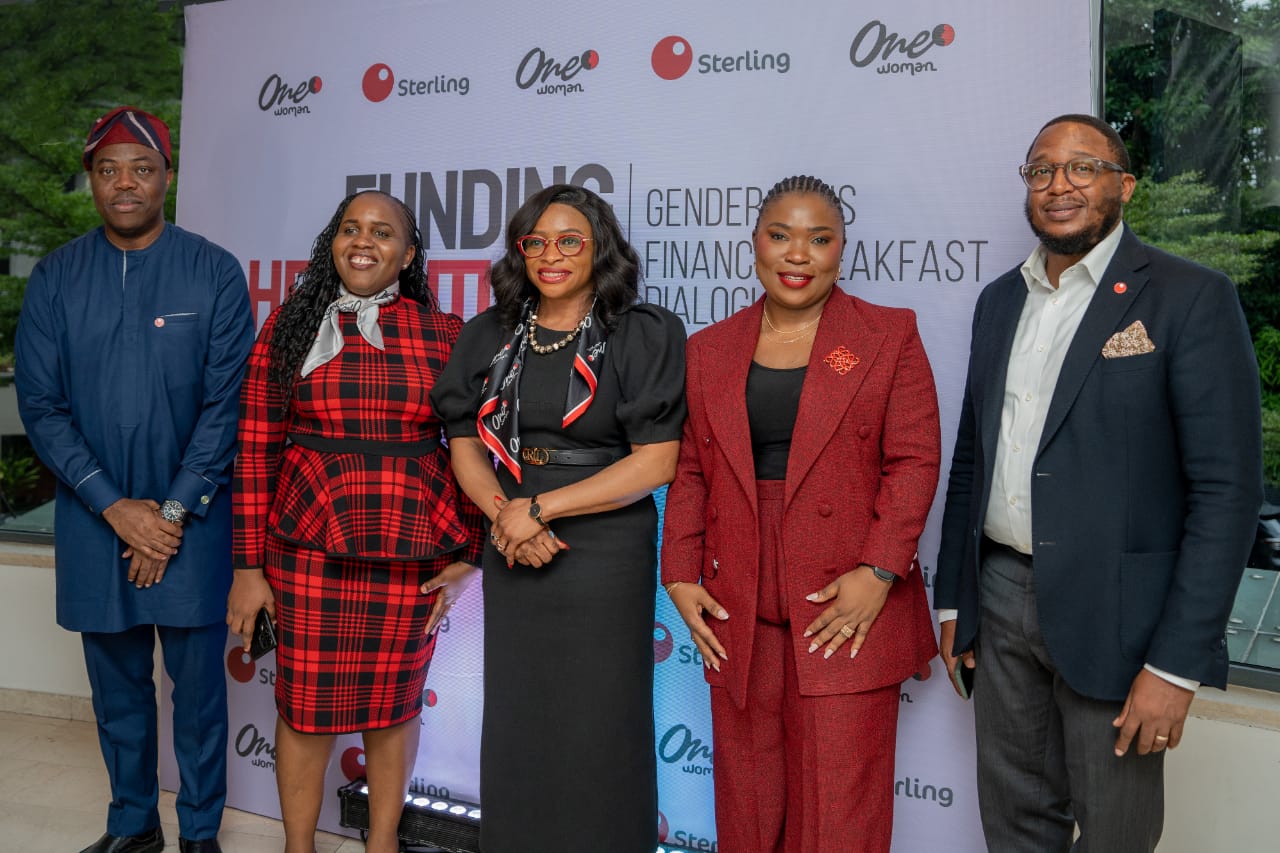
The women-focused initiative by Sterling Bank, OneWoman, is already yielding positive results, especially in promoting financial inclusion and empowering female-led enterprises in Nigeria.
Business Post reports that the programme was created to support women through three key pillars of capital, capacity, and community.
In 2025, according to the Head of the OneWoman Initiative, Ms Ezinne Nwokafor, the initiative gave out N43.9 billion loans to 2,450 female entrepreneurs, trained 6,000 of them, served about 380,000 women across three sectors of career women, women in business and freshers, and their vision 2030 is to give out N500 billion loans to one million women across their three sectors.
She noted that a significant majority of Nigerian women remain excluded from formal credit, with only a small percentage able to access structured financing. Despite improvements in financial inclusion, women continue to face systemic barriers that limit their ability to secure funding.
Ms Nwokafor pointed out that women account for a substantial share of micro, small, and medium enterprises and contribute meaningfully to the economy, yet face a financing gap estimated at $42 billion annually, according to the International Finance Corporation.
She also referenced data showing that more than half of women-led businesses identify access to finance as a major constraint, while rejection rates for loan applications remain significantly higher for women than for men.
According to her, these challenges are often linked to structural issues such as gaps in asset ownership, social norms, and limited access to financial data and visibility.
“Sterling’s OneWoman initiative is positioned to bridge this gap by combining financial solutions, mentorship, capacity building, and community support for women across different stages of their journey,” she said at the Funding Her Future Breakfast Dialogue in Lagos.
The session brought together voices from across sectors for a focused and necessary conversation on how to unlock more inclusive and effective financing pathways for women-led businesses in Nigeria.
On his part, the chief executive of Sterling Bank, Mr Abubakar Suleiman, said, “Women-led businesses need the right support systems, the right networks, and the right ecosystem to grow with confidence and scale with resilience.”
-
 Feature/OPED6 years ago
Davos was Different this year
-
Travel/Tourism10 years ago
Lagos Seals Western Lodge Hotel In Ikorodu
-

 Showbiz3 years ago
Estranged Lover Releases Videos of Empress Njamah Bathing
-
 Banking8 years ago
Sort Codes of GTBank Branches in Nigeria
-

 Economy3 years ago
Subsidy Removal: CNG at N130 Per Litre Cheaper Than Petrol—IPMAN
-

 Banking3 years ago
Sort Codes of UBA Branches in Nigeria
-

 Banking3 years ago
First Bank Announces Planned Downtime
-

 Sports3 years ago
Highest Paid Nigerian Footballer – How Much Do Nigerian Footballers Earn