Banking
Sterling Bank Disburses N43.9bn Loans to 2,450 Female Entrepreneurs
By Modupe Gbadeyanka
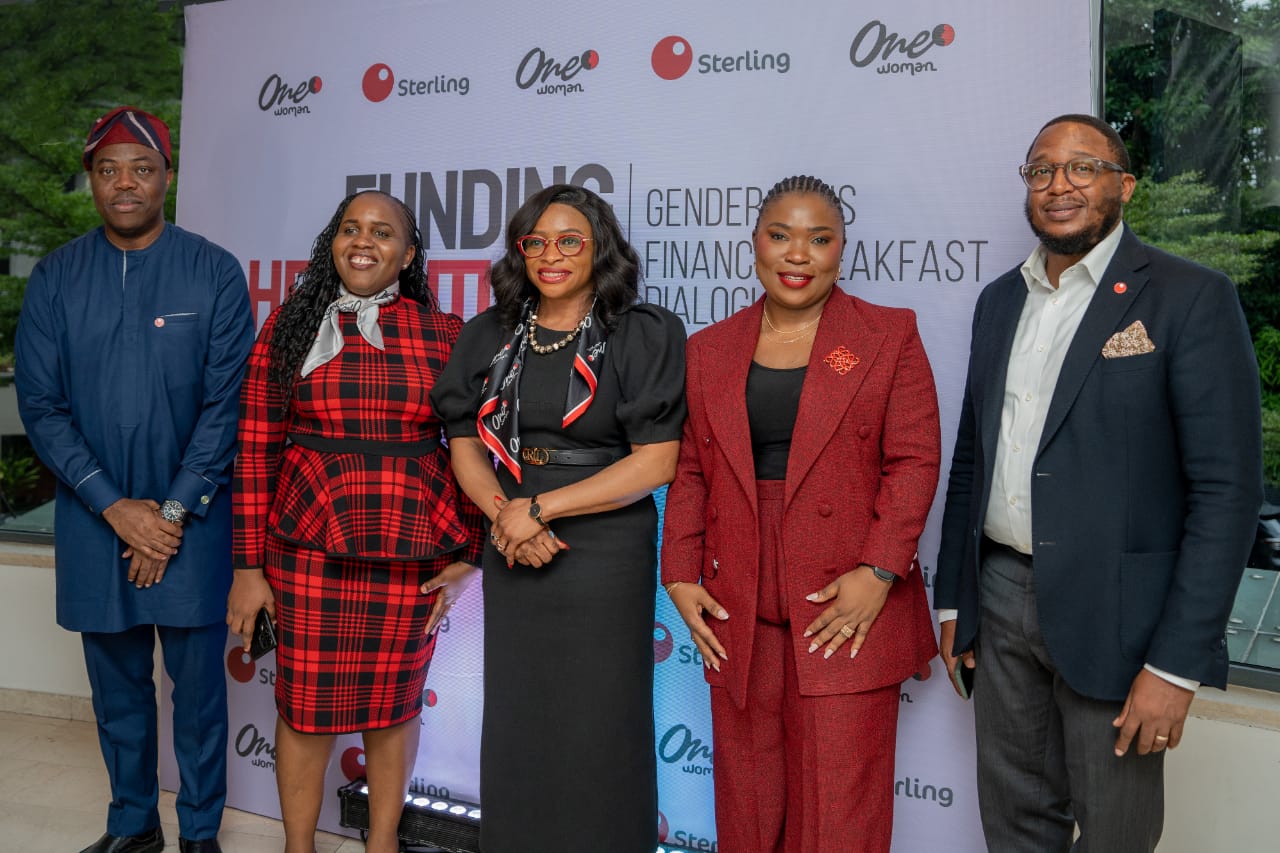
The women-focused initiative by Sterling Bank, OneWoman, is already yielding positive results, especially in promoting financial inclusion and empowering female-led enterprises in Nigeria.
Business Post reports that the programme was created to support women through three key pillars of capital, capacity, and community.
In 2025, according to the Head of the OneWoman Initiative, Ms Ezinne Nwokafor, the initiative gave out N43.9 billion loans to 2,450 female entrepreneurs, trained 6,000 of them, served about 380,000 women across three sectors of career women, women in business and freshers, and their vision 2030 is to give out N500 billion loans to one million women across their three sectors.
She noted that a significant majority of Nigerian women remain excluded from formal credit, with only a small percentage able to access structured financing. Despite improvements in financial inclusion, women continue to face systemic barriers that limit their ability to secure funding.
Ms Nwokafor pointed out that women account for a substantial share of micro, small, and medium enterprises and contribute meaningfully to the economy, yet face a financing gap estimated at $42 billion annually, according to the International Finance Corporation.
She also referenced data showing that more than half of women-led businesses identify access to finance as a major constraint, while rejection rates for loan applications remain significantly higher for women than for men.
According to her, these challenges are often linked to structural issues such as gaps in asset ownership, social norms, and limited access to financial data and visibility.
“Sterling’s OneWoman initiative is positioned to bridge this gap by combining financial solutions, mentorship, capacity building, and community support for women across different stages of their journey,” she said at the Funding Her Future Breakfast Dialogue in Lagos.
The session brought together voices from across sectors for a focused and necessary conversation on how to unlock more inclusive and effective financing pathways for women-led businesses in Nigeria.
On his part, the chief executive of Sterling Bank, Mr Abubakar Suleiman, said, “Women-led businesses need the right support systems, the right networks, and the right ecosystem to grow with confidence and scale with resilience.”
Banking
CBN Warns Public Against Increase in Impersonation Scams
By Adedapo Adesanya
The Central Bank of Nigeria (CBN) has issued an alert about the spread of fraudulent messages, emails, and online communications falsely bearing the identity of the bank, to scam unsuspecting members of the public.
The apex bank warned that the fake materials are designed to hack personal accounts and mislead Nigerians on matters of bank leadership, licensing, and policy.
In a notice signed by Mrs Hakama Sidi-Ali, the Acting Director of Corporate Communications, the lender said the fraudulent communications are already in circulation and are prompting recipients to click embedded links, which is the primary mechanism through which the attackers seek to gain unauthorised access to private accounts and personal data.
The bank laid out three clear directives for members of the public. First, Nigerians are advised to refrain from clicking links or providing personal information on any website they cannot confirm as legitimate.
Second, it stated that all communications purporting to come from the CBN must be verified through the bank’s sole official website — www.cbn.gov.ng — or through recognised media organisations.
Thirdly, it warned that anyone who encounters a suspected fraudulent site, email, or message is urged to report it to law enforcement authorities without delay.
“The CBN remains fully committed to safeguarding the Nigerian financial system and continues to strengthen its cybersecurity frameworks in collaboration with relevant agencies to protect the public against digital fraud.”
Banking
CBN, NCC Set up Committees to Protect Consumers Against Fraud
By Modupe Gbadeyanka
In a bid to ensure consumer safety across the telecommunications and financial services sectors, the Central Bank of Nigeria (CBN) and the Nigerian Communications Commission (NCC) have decided to work together.
On Monday, both organisations sealed a Memorandum of Understanding (MoU) for the establishment of joint committees for the protection of consumers against fraud in the sectors.
The two teams set up by the CBN and the NCC include the Joint Committee on Payment Systems and Consumer Protection, and the Joint Committee on Telecoms Identity Risk Management System (TIRMS) Portal.
Through the TIRMS portal, which aggregates data on churned (recycled) phone numbers, as well as numbers flagged within the financial services sector, it will now have enhanced visibility into the status of phone numbers, one of the most widely utilised resources in the sector, although regulated by the NCC.
With this, according to the chief executive of NCC, Mr Aminu Maida, financial institutions will be able to determine when a line is active, when it has been swapped, when it has been disconnected due to inactivity and reassigned to a new subscriber, and when it has been flagged for suspicious or fraudulent activity. “This ensures that our financial services industry is better equipped with timely and relevant information to effectively combat e-fraud, particularly those perpetuated using phone numbers, in the country,” he stated.
It was stated that the partnership between the two parties will reduce electronic fraud, which has become increasingly pervasive, with significant implications for the integrity of the digital economy.
In his remarks, the Governor of the CBN, Mr Yemi Cardoso, said the MoU will strengthen coordination on approvals, technical standards, and innovation trials, including sandbox testing that supports market-led solutions, while safeguarding stability.
“Going forward, the CBN remains fully committed to working with the NCC to deliver a safer, more resilient, and more inclusive digital financial system that supports national productivity, protects consumers, and strengthens trust in Nigeria’s digital economy,” the central bank chief said.
Banking
Wema Bank Looks to Deepen Role as Catalyst for Growth, Market Presence
By Aduragbemi Omiyale
Mid-level Nigerian lender, Wema Bank Plc, has set its eyes on expanding its market presence and supporting the government in achieving its $1 trillion economy by 2030.
In a statement, the financial institution said it hopes to achieve these and others through its recently recapitalisation exercise, which saw its capital base rise to about N265 billion, well above the N200 billion-threshold set by the Central Bank of Nigeria (CBN) for its category of licence.
Wema Bank operates with a national licence, and based on the regulator’s requirement, the capital base must be at least N200 billion.
Before the March 31, 2026-deadline set be the CBN, banks were required to have at least N25 billion, but to meet up with the 2030 target of the federal government, this threshold was raised, with banks operating branches out the country asked to have at least N500 billion, while regional banks were told to have a minimum of N50 billion.
To comply with the new directive, Wema Bank embarked on a strategic capital raise through the stock market, successfully strengthening its shareholder base and securing the required capital through strong participation from existing investors.
Its N150 billion rights issue, which opened on April 14, 2025, and closed on May 21, 2025, marked a significant step in this journey. This was subsequently complemented by a N50 billion special placement later in the year, ensuring the bank not only met but exceeded the regulatory threshold well ahead of schedule.
“The successful completion of our recapitalisation exercise is a defining moment for Wema Bank. It is a strong validation of our strategy, our performance, and the enduring confidence our shareholders and stakeholders have in our vision.
“We have not only met the CBN’s requirements; we have exceeded them, reinforcing our position as a National Bank with the scale, strength, and stability to compete and lead,” the chief executive of Wema Bank, Mr Moruf Oseni, stated.
“Looking ahead, we remain focused on deepening our market presence, driving customer-centric innovation, and strengthening our role as a catalyst for growth across retail, SME, and corporate segments.
“This is not just about retaining our license; it is about building a bigger, stronger, and more impactful Wema Bank,” the bank executive further stated.
-
Feature/OPED6 years agoDavos was Different this year
-
Travel/Tourism10 years ago
Lagos Seals Western Lodge Hotel In Ikorodu
-
Showbiz3 years agoEstranged Lover Releases Videos of Empress Njamah Bathing
-
Banking8 years agoSort Codes of GTBank Branches in Nigeria
-
Economy3 years agoSubsidy Removal: CNG at N130 Per Litre Cheaper Than Petrol—IPMAN
-
Banking3 years agoSort Codes of UBA Branches in Nigeria
-
Banking3 years agoFirst Bank Announces Planned Downtime
-
Sports3 years agoHighest Paid Nigerian Footballer – How Much Do Nigerian Footballers Earn