
Banking
Stanbic IBTC Bank Introduces Senior Citizens Account


By Modupe Gbadeyanka
A bank account targeted at Nigerians who are 50 years and above known as Senior Citizens Account has been introduced by Stanbic IBTC Bank.
Senior Citizens Account is an all-encompassing banking solution designed to meet the immediate and long-term financial needs of individuals approaching retirement or those already in their retirement phase.
The package comprises comprehensive features such as zero account opening balance, zero account maintenance fee, free debit card and chequebook, health insurance and telemedicine, wills service and funds management.
Stanbic IBTC Bank described it as an innovative solution exclusively designed for customers in the age category and is expected to serve over 15 million Nigerians estimated to be within this age range, according to Index Mundi.
Through this very thoughtful banking service for the elderly, the financial institution can provide tailored financial services solutions that meet the special needs of this unique clientele.
According to the chief executive of the lender, Mr Wole Adeniyi, it is an excellent opportunity for people who are nearing retirement to consolidate their banking needs, investment management, and wealth transfer across generations and for retirees who rely on Stanbic IBTC Pension Managers to manage their pension funds, to also use Stanbic IBTC Bank to receive their gratuity payments while enjoying excellent benefits.
He said the Senior Citizens Account aims to provide people in their 50s and older with essential support and services, ensuring their financial well-being and stability.
Senior Citizens Account is not just another banking product; it represents a paradigm shift towards creating a banking experience that significantly enhances its users’ lifestyles.
It is crafted to offer senior citizens a sense of financial security, unparalleled convenience, and an improved sense of well-being.
This commitment to exceeding customers’ expectations is further demonstrated by the bank’s initiative to introduce cutting-edge features aimed at making banking services more accessible and convenient.
The financial institution has substantially improved its technical infrastructure, reducing system downtime from 3 per cent to a mere 0.5 per cent.
This reduction in downtime confirms its dedication to providing reliable and uninterrupted service, ensuring that customers’ banking experiences are smooth and hassle-free.
Through these initiatives, Stanbic IBTC Bank reaffirms its commitment to innovation and customer satisfaction, aiming to bridge the gap between modern banking and the evolving needs of the ageing population.
By developing products like the Senior Citizens Account, the Bank addresses a previously overlooked market segment and sets new standards in offering tailored financial solutions that contribute to their overall quality of life.
For individuals interested in discovering more about Vitality Plus and the enrollment process, information is readily available at www.stanbicibtcbank.com or at any Stanbic IBTC Bank branch nationwide. This initiative is part of Stanbic IBTC Bank’s ongoing efforts to refine and adapt its services to meet the evolving needs of its customers better, ensuring that every client, regardless of age, has access to top-tier banking solutions that reflect their lifestyle and aspirations.















By Adedapo Adesanya
The Central Bank of Nigeria (CBN) is considering the recapitalisation and restructuring of Development Finance Institutions (DFIs) to address the significant financing gap facing micro, small, and medium-sized enterprises (MSMEs).
The Deputy Governor of the apex bank in charge of Economic Policy, Mr Muhammad Abdullahi, disclosed this during a panel session at the launch of the Nigeria Development Update by the World Bank in Abuja on Tuesday.
He explained that a recent review by the apex bank found that existing DFIs were too small to meet the credit needs of businesses.
DFIs are specialised, government-backed financial entities designed to promote economic growth by funding critical sectors like agriculture, infrastructure, and SMEs. Key institutions include the Bank of Industry (BOI), Development Bank of Nigeria (DBN), Nigeria Export Import Bank (NEXIM Bank), Bank of Agriculture (BOA), National Credit Guarantee Company Limited, and Nigerian Consumer Credit Corporation, among others.
“We conducted a review last year of the development finance space. Across all the DFIs in Nigeria, the total asset base is slightly above N8 trillion, whereas what is required in development finance for MSMEs is over N130 trillion,” he said.
He said that simply injecting capital would not solve the problem.
“The only way to address this is not only through public sector capital injections into these institutions, but also by making them bankable and investable,” he said.
Abdullahi said the CBN and the Ministry of Finance are reviewing DFI structures to improve their efficiency and risk appetite.
“We are reviewing the entire sector to ensure that we can correct the incentives, improve risk appetite, and also strengthen capital levels,” the deputy governor added.
He also said the reforms aim to introduce stronger market-based principles.
“We are looking at the structure to see how more market fundamentals can be incorporated, because the way it has been done in the past has not delivered the desired results,” Mr Abdullahi said.
On the persistent financing challenge for MSMEs, he said lending to the real sector has always been one of the structural challenges “Nigeria’s economy faces in terms of ensuring that credit reaches businesses that require it”.
Business Post reports that the CBN recently concluded the recapitalisation of the Nigerian banking sector, while the insurance sector is ongoing.
By Modupe Gbadeyanka
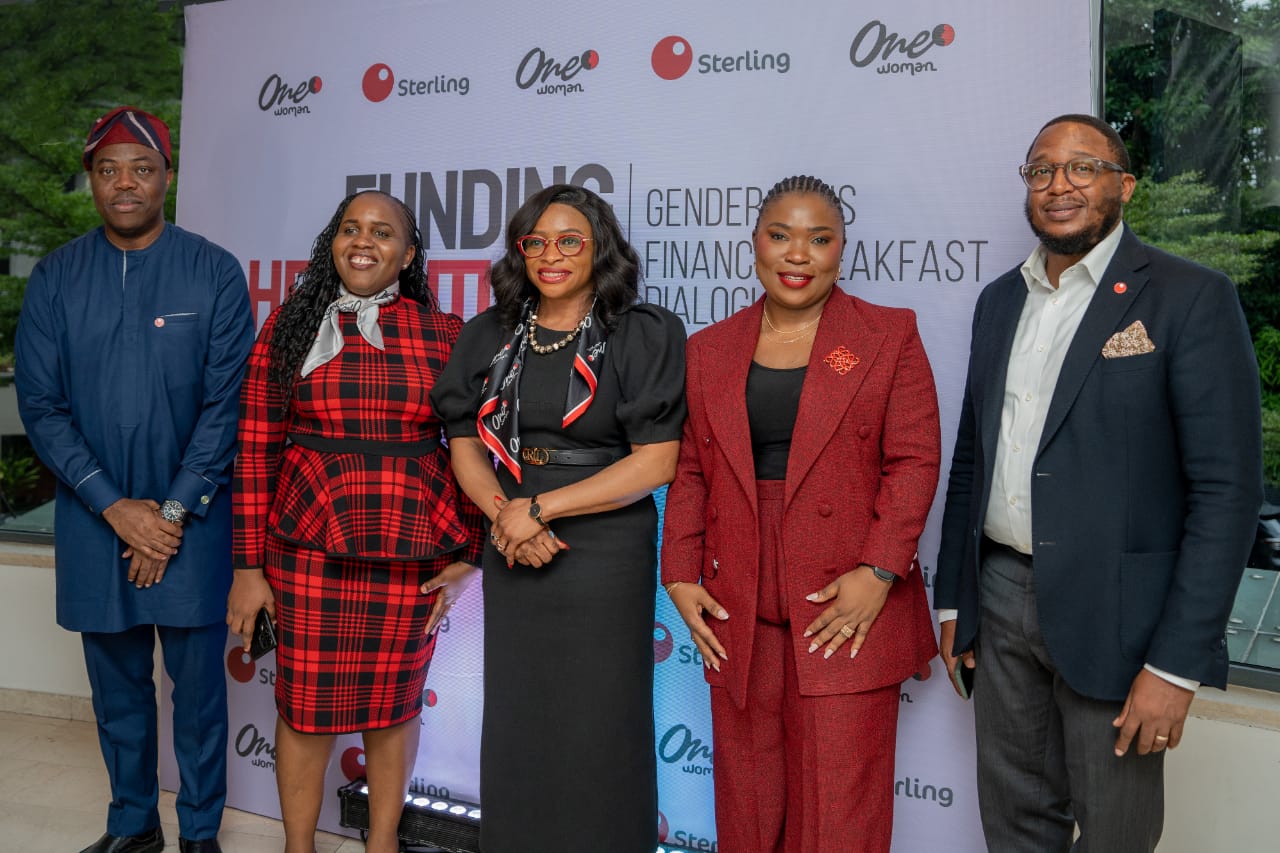
The women-focused initiative by Sterling Bank, OneWoman, is already yielding positive results, especially in promoting financial inclusion and empowering female-led enterprises in Nigeria.
Business Post reports that the programme was created to support women through three key pillars of capital, capacity, and community.
In 2025, according to the Head of the OneWoman Initiative, Ms Ezinne Nwokafor, the initiative gave out N43.9 billion loans to 2,450 female entrepreneurs, trained 6,000 of them, served about 380,000 women across three sectors of career women, women in business and freshers, and their vision 2030 is to give out N500 billion loans to one million women across their three sectors.
She noted that a significant majority of Nigerian women remain excluded from formal credit, with only a small percentage able to access structured financing. Despite improvements in financial inclusion, women continue to face systemic barriers that limit their ability to secure funding.
Ms Nwokafor pointed out that women account for a substantial share of micro, small, and medium enterprises and contribute meaningfully to the economy, yet face a financing gap estimated at $42 billion annually, according to the International Finance Corporation.
She also referenced data showing that more than half of women-led businesses identify access to finance as a major constraint, while rejection rates for loan applications remain significantly higher for women than for men.
According to her, these challenges are often linked to structural issues such as gaps in asset ownership, social norms, and limited access to financial data and visibility.
“Sterling’s OneWoman initiative is positioned to bridge this gap by combining financial solutions, mentorship, capacity building, and community support for women across different stages of their journey,” she said at the Funding Her Future Breakfast Dialogue in Lagos.
The session brought together voices from across sectors for a focused and necessary conversation on how to unlock more inclusive and effective financing pathways for women-led businesses in Nigeria.
On his part, the chief executive of Sterling Bank, Mr Abubakar Suleiman, said, “Women-led businesses need the right support systems, the right networks, and the right ecosystem to grow with confidence and scale with resilience.”

By Modupe Gbadeyanka
Alpha Morgan Bank has reaffirmed its commitment to supporting institutions that drive intellectual growth and national development.
The lender gave this reassurance at the commissioning of the Redeemer’s University Business School by Pastor (Mrs) Folu Adeboye, the wife of the General Overseer of the Redeemed Christian Church of God (RCCG), Pastor Enoch Adeboye.
Speaking at the event, the Managing Director of Alpha Morgan Bank, Mr Ade Buraimo, said the company was proud to be associated with the school, noting its commitment to education and institutional development.
As part of its broader focus on knowledge sharing and thought leadership, Alpha Morgan Bank will host its Economic Review Webinar in May 2026, bringing together experts to share insights on key economic trends and opportunities.
The commissioning of the business school was witnessed by distinguished guests, including the Pro-Chancellor and Chairman of the Governing Council of Redeemers University, Professor Oluwatoyin Ogundipe; the Vice Chancellor, Professor Shadrach Olufemi Akindele; Mrs Bola Obasanjo; and other notable dignitaries.
-
 Feature/OPED6 years ago
Davos was Different this year
-
Travel/Tourism10 years ago
Lagos Seals Western Lodge Hotel In Ikorodu
-

 Showbiz3 years ago
Estranged Lover Releases Videos of Empress Njamah Bathing
-
 Banking8 years ago
Sort Codes of GTBank Branches in Nigeria
-

 Economy3 years ago
Subsidy Removal: CNG at N130 Per Litre Cheaper Than Petrol—IPMAN
-

 Banking3 years ago
Sort Codes of UBA Branches in Nigeria
-

 Banking3 years ago
First Bank Announces Planned Downtime
-

 Sports3 years ago
Highest Paid Nigerian Footballer – How Much Do Nigerian Footballers Earn