Connect with us

Banking

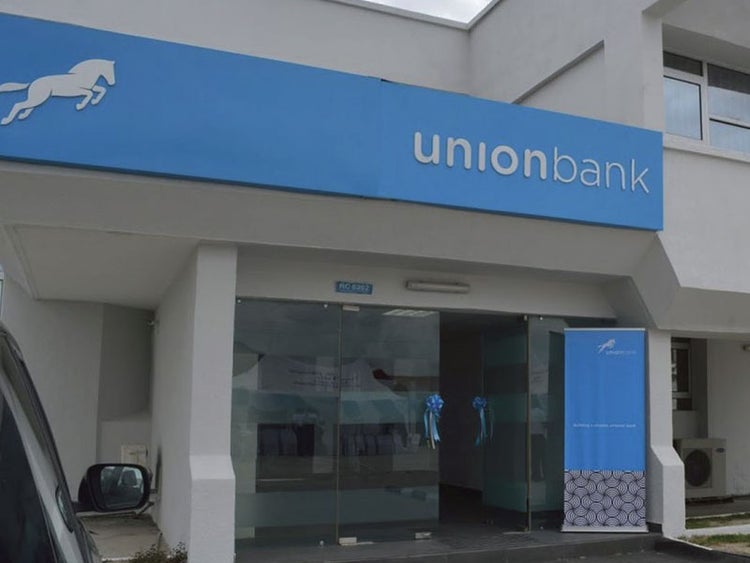
Union Bank Assures Smooth Transition Following Titan Trust Merger

Published

on

union bank nigeria

By Adedapo Adesanya

Customers have been assured of a smooth transition as one of Nigeria’s oldest banks, Union Bank of Nigeria, completed its merger with Titan Trust Bank Limited, following final approval from the Central Bank of Nigeria (CBN).

It emphasised that there will be no disruption to existing services. Account details remain unchanged, and customers will continue to access a full suite of products and services seamlessly, with an accelerated push towards enhanced digital solutions.

According to a statement from Union Bank’s Head of Brand and Marketing, Mrs Olufunmilola Aluko, the merger concludes a process that began with the signing of a Share Sale Agreement in 2021 and positions Union Bank as an even stronger force within Nigeria’s financial services sector.

Under the terms of the merger, Union Bank has fully absorbed Titan Trust Bank’s operations and assets. The combined institution will continue to operate under the Union Bank brand, while Titan Trust Bank ceases to exist as a separate entity.

With an expanded footprint of over 293 service centres and 937 ATMs nationwide, supported by strengthened digital channels, Union Bank is poised to deliver enhanced value across retail, SME, and corporate segments.

The merger combines Union Bank’s trusted heritage with Titan Trust’s agility and innovation, creating a platform for sustainable growth and broader financial inclusion.

The chief executive of Union Bank, Mrs Yetunde Oni, described the development as “a pivotal moment in our 108-year journey, and a launchpad for delivering greater value to our customers,” stating, “By blending stability with innovation, we are better positioned to meet the evolving needs of Nigerians and to be their most trusted financial partner.”

Also speaking on the transaction, the chairman of Union Bank, Mr Bayo Adeleke, said: “This is a new era of growth, collaboration, and shared prosperity. By bringing together the strengths of both institutions, we are committed to creating lasting value for our customers, shareholders, and communities while advancing Nigeria’s financial inclusion agenda.”


Adedapo Adesanya is a journalist, polymath, and connoisseur of everything art. When he is not writing, he has his nose buried in one of the many books or articles he has bookmarked or simply listening to good music with a bottle of beer or wine. He supports the greatest club in the world, Manchester United F.C.

Click to comment

Leave a Reply

Your email address will not be published. Required fields are marked *

Banking

ProvidusUnity Bank, gener8tor Launch Nigeria Lightning Rounds for Startups

Published

on

ProvidusUnity Bank Logo

By Aduragbemi Omiyale

An initiative known as Nigeria Lightning Rounds, designed to expand funding opportunities for Nigerian startups and small businesses by connecting founders with local and international investors, has been launched by ProvidusUnity Bank, in partnership with US-based global venture firm and accelerator, gener8tor.

Scheduled to be held on July 15, 2026, Nigeria Lightning Rounds will feature carefully selected startups engaging with targeted investors who have expressed interest in supporting Nigerian innovation.

Participating founders will have the opportunity to pitch their businesses through focused 15-minute virtual sessions facilitated by gener8tor and ProvidusUnity Bank’s networks.

The program will focus on high-growth sectors including fintech, healthtech, manufacturing, sustainability, and AI, but welcomes SMEs from all industries, with intending participants urged to apply via https://www.gener8tor.com/lightning-rounds/nigeria.

“We recognise that access to capital remains one of the biggest challenges facing entrepreneurs in Nigeria. Through our partnership with gener8tor, we are creating a platform that connects promising Nigerian founders with investors who can provide the support required to scale their businesses,” the Head of Business Development at ProvidusUnity Bank, Mr Ernest Elue, stated.

“The partnership reinforces ProvidusUnity Bank’s commitment to strengthening Nigeria’s entrepreneurial ecosystem by supporting innovation, enabling access to opportunities, and creating pathways for businesses with high-growth potential,” he added.

Also commenting, the Director of Lightning Rounds at gener8tor, Ms Elizabeth Larios, said, “gener8tor is thrilled to partner with ProvidusUnity Bank to extend the Lightning Rounds model into Nigeria.

“This collaboration reflects our commitment to building equitable ecosystems and driving capital to the most promising and underrepresented entrepreneurs.”

Lightning Rounds are a signature initiative of gener8tor’s investment platform, which has facilitated thousands of investor-startup meetings globally. The format is optimised to eliminate friction, reduce bias in early-stage fundraising, and help founders secure capital from investors aligned with their mission and stage. gener8tor’s previous Lightning Rounds for Nigerian Founders in 2025 featured 18 participating Investors and led to 50 investment meetings facilitated.

Continue Reading

Banking

NDIC Begins Verification of Depositors of 46 Failed Microfinance Banks

Published

on

NDIC

By Modupe Gbadeyanka

The verification of the depositors of the 46 microfinance banks, whose operating licenses were revoked by the Central Bank of Nigeria (CBN) over a week ago, has commenced.

The exercise, aimed at refunding those whose funds were trapped in the small lenders, is being conducted by the Nigeria Deposit Insurance Corporation (NDIC).

In a statement on Thursday, the agency said its staff members have been positioned at the offices of the affected banks across the country to attend to depositors.

It was disclosed that depositors of the defunct banks, who had their Bank Verification Numbers (BVNs) linked to their accounts in the failed banks, will be paid through their alternative accounts in existing banks.

However, depositors whose BVNs were not linked to their accounts in the failed banks have been encouraged to visit the affected banks’ offices with proof of account ownership, a passport photograph, verifiable means of identification (Driver’s Licence, Permanent Voter’s Card, International Passport or National ID Card) and BVN.

NDIC also stated that depositors can alternatively file their claims online through its website: www.ndic.gov.ng, to complete the Pre-Verification Claims Form by clicking on the Search Bar, and typing Pre-Verification Claims Form; opening the Form and filling in their details. They can also do so by clicking the link: https://ndic.gov.ng/ndic-pre-verification-claims-form/ or by visiting any of the NDIC offices closest to them to file their claims.

For further enquiries, the corporation can be reached on any of the following lines: 09037273810, 09038197064, 08104220807, 09064657140.

Continue Reading

Banking

Strict CBN Framework Dampens New BVN Registrations Despite Marginal Rise

Published

on

CBN’s N75trn Credit private sector

By Adedapo Adesanya

Nigeria’s Bank Verification Number (BVN) enrolment has slowed significantly in 2026 following the introduction of a stricter regulatory framework by the Central Bank of Nigeria (CBN), with the latest data from the Nigeria Inter-Bank Settlement System (NIBSS) showing that registrations are on course to fall well below last year’s record.

The BVN database stood at 69.55 million as of July 5, 2026, up from 69.32 million in June, indicating that only 228,947 new registrations were recorded over the period. Since the end of 2025, when the database stood at 67.8 million, total enrolments have increased by 1.75 million.

At the current pace, however, BVN registrations are unlikely to match the 4.3 million new enrolments recorded in 2025, suggesting a sharp deceleration in growth this year.

The slowdown comes after the CBN introduced a revised BVN regulatory framework in March, with the new rules taking effect on May 1, 2026. The framework tightened controls around enrolment, identity verification and fraud monitoring as part of efforts to strengthen the integrity of the banking system.

Among the key changes was the introduction of a minimum enrolment age of 18 years, effectively preventing minors from registering for a BVN.

The new framework also limits customers to a one-time change of the phone number linked to their BVN and requires financial institutions to place BVNs linked to suspected fraudulent transactions on a temporary watch-list for up to 24 hours while investigations are carried out.

The stricter rules contrast with last year’s surge in registrations, which was largely driven by the introduction of the Non-Resident Bank Verification Number (NRBVN) initiative that enabled Nigerians in the diaspora to complete BVN enrolment remotely, removing physical barriers and expanding access to the financial system.

Launched on February 14, 2014, the BVN scheme was introduced by the CBN in collaboration with the Bankers’ Committee, NIBSS and German technology firm Dermalog to assign every bank customer a unique biometric identity that can be verified across Nigeria’s banking industry.

Continue Reading