Brands/Products
FCCPC, NAFDAC to Tackle Unsafe Products, Unfair Market Practices
By Adedapo Adesanya
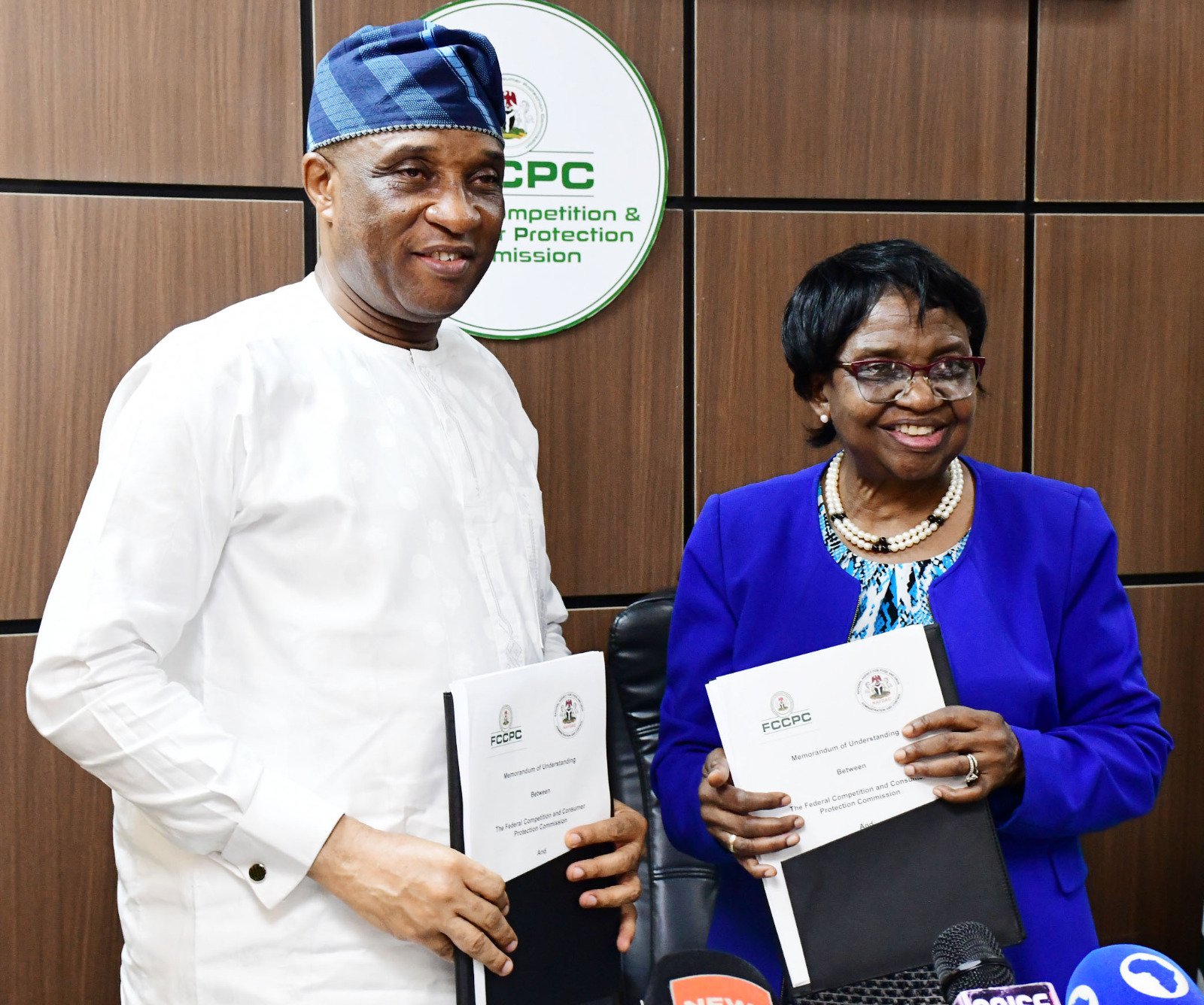
The Federal Competition and Consumer Protection Commission (FCCPC) and the National Agency for Food and Drug Administration and Control (NAFDAC) have signed a Memorandum of Understanding (MoU) aimed at closing regulatory gaps and strengthening enforcement against unsafe products and unfair market practices.
The agreement, signed in Abuja on Wednesday, is expected to deepen collaboration between both agencies in areas such as product safety, consumer protection, and enforcement of standards.
The deal also introduced a structured system for information exchange between both regulators, aimed at eliminating delays that often hinder investigations and enforcement.
Speaking at the event held at the commission’s corporate headquarters, the Executive Vice Chairman of FCCPC, Mr Tunji Bello, said the pact marks a deliberate step towards coordinated regulation in Nigeria’s consumer market.
He said, “This event marks a deliberate step towards strengthening collaboration in the service of Nigerian consumers, particularly in areas where product safety and consumer protection overlap and require coordinated action.
“The mandates of the FCCPC and the National Agency for Food and Drug Administration and Control NAFDAC, are clearly set out in law, although their functions increasingly overlap in practice.”
Mr Bello explained that while both agencies have distinct legal mandates, their responsibilities increasingly intersect in practice, especially in dealing with substandard goods, unsafe pharmaceuticals, and misleading product claims.
According to him, “FCCPC focuses on protecting consumers from unfair, deceptive, or exploitative market behaviour. It also promotes competition, investigates complaints, and enforces remedies where consumer welfare has been undermined. NAFDAC’s responsibilities are more product-specific.
“It regulates the manufacture, importation, distribution, advertisement, and use of food, drugs, cosmetics, medical devices, chemicals, and packaged water. Its central concern is safety and quality, ensuring that regulated products meet required standards both before and after they enter the market.”
Mr Bello acknowledged that their regulatory functions increasingly overlap in practice, particularly in areas affecting both product safety and consumer rights.
He noted that issues such as misleading product claims, substandard goods, unsafe pharmaceuticals, and deceptive advertising often cut across the mandates of both agencies, requiring coordinated intervention.
He further explained that a harmful product in the market is not only a public health concern under NAFDAC’s jurisdiction, but also a consumer protection issue that falls within the enforcement scope of the FCCPC.
Similarly, cases involving false or misleading advertising of regulated products typically demand joint action from both institutions.
Against this backdrop, the agencies said the newly signed MoU provides a structured framework to address these overlaps, enabling more effective collaboration, clearer responsibilities, and improved regulatory outcomes.
The FCCPC boss stated, “In reality, the work of both agencies often converges. Issues such as misleading product claims, substandard goods, unsafe pharmaceuticals, and deceptive advertising raise questions that fall within both product safety and consumer protection. For instance, a harmful product that reaches the market is not only a public health concern under NAFDAC’s remit, but also a consumer protection issue for FCCPC.
“The same applies to false advertising of regulated products, which typically requires input from both bodies. Given this overlap, a formal Memorandum of Understanding provides a practical basis for cooperation. The MoU being executed today, therefore, establishes a clearer and more workable framework for collaboration between the two institutions.”
He added that the new framework would eliminate confusion for consumers and improve response time to complaints.
“Rather than leaving consumers to decide which agency to approach, complaints can now be received and reviewed in one place, and then directed through clearly defined channels. This will make the system more efficient and more responsive,” Mr Bello said.
The FCCPC boss also disclosed that the agreement provides for data sharing, joint investigations, and coordinated enforcement actions, as well as capacity building through training and technical collaboration.
He stressed that the ultimate goal is to build trust in the market.
“Effective regulation is not just about enforcement. It builds confidence. When consumers trust that products are safe and their rights are protected, markets function more efficiently,” he added.
In a stern warning to violators, Mr Bello said the collaboration would strengthen oversight and deter non-compliance.
“This will send shivers down the spine of those who are mischievous in our society, those who try to circumvent the rules. The message is clear: enforcement will be stronger and more coordinated,” he said.
On her part, the Director-General of NAFDAC, Mrs Mojisola Adeyeye, described the agreement as critical to protecting Nigerians from harmful products and ensuring that consumer rights are upheld.
She said the partnership goes beyond documentation and must translate into action.
“This MoU is extremely important for the nation. But beyond the document, what matters is action. We do not need theory when it comes to consumer protection; we need results,” she said.
Mrs Adeyeye recounted instances where FCCPC responded swiftly to complaints she personally raised as a consumer, leading to immediate corrective actions by erring businesses.
“The two times that I complained, he responded almost immediately, and the enterprise made amends. That is the way it is supposed to be. That is the kind of leadership we need,” she said.
She emphasised that while NAFDAC ensures product safety and quality, FCCPC plays a critical role in protecting the rights of consumers who use those products.
“NAFDAC is about the safety and efficacy of products, but it is people who use those products. That is where FCCPC comes in. Consumers have the right to complain, and we must ensure those complaints lead to action,” she added.
The NAFDAC boss further noted that the collaboration would strengthen enforcement tools, including sanctions against violators, while enhancing public awareness through coordinated communication.
She said, “NAFDAC has the mandate to act against violators, FCCPC will fight for the consumer, and together we will ensure that Nigerians are protected. For the people who are watching us. Because this will be televised, just know that you are on our minds.
“In terms of product quality, safety and efficacy. In terms of your rights as a consumer to complain. We are watching your back.”
The MoU is expected to streamline complaint handling, improve regulatory coordination, and ensure faster resolution of consumer issues, while also creating a more predictable compliance environment for businesses.
The move comes at a time when Nigeria is battling the proliferation of substandard products, fake drugs, and deceptive advertising, all of which have continued to undermine consumer confidence and public health.
With both agencies now working under a unified framework, stakeholders say the success of the agreement will depend on sustained implementation and consistent enforcement.
Brands/Products
MultiChoice Nigeria Strengthens Dealer Partnerships at Engagement Forum
MultiChoice Nigeria, a CANAL+ company, has reaffirmed its commitment to strengthening collaboration with its dealer network at the MultiChoice Dealer Enterprise 2.0 forum held on Monday in Lagos.
The forum brought together the company’s mega dealers across Nigeria to discuss evolving market realities, customer expectations and new initiatives designed to support long-term business growth.
In her opening remarks, the Chief Executive Officer of MultiChoice Nigeria, Kemi Omotosho, described dealers as critical partners in the company’s growth journey and customer experience delivery.
“Our dealers remain the bridge between our business and millions of customers across the country. As the market evolves, it is important that our partnership model also evolves to ensure sustainable growth and shared value across the ecosystem,” she said.
The company unveiled enhancements to its dealer engagement across its DStv and GOtv businesses, reinforcing its commitment to supporting dealer profitability, operational growth and long-term sustainability.
Speaking on the initiatives, Chimaobi Eluigwe, Vice President, Sales, MultiChoice Nigeria, said the move reflects MultiChoice Nigeria’s intention to build a stronger and more rewarding partnership while positioning the dealer network for future growth.
“We are intentional about creating opportunities that allow our dealers to grow sustainably with the business. This is about strengthening partnerships, improving value creation and ensuring our dealers remain well-positioned for the future,” he said.
Dealers at the forum welcomed the initiatives, describing them as a positive step toward strengthening collaboration and improving business confidence.
According to Cordelia Ikeanyi, Managing Director at Eastland General Resources, the renewed engagement and enhanced benefits structure demonstrate MultiChoice Nigeria’s commitment to recognising the value dealers bring to the business.
“This is a step in the right direction for dealers. The improved communication and engagement from MultiChoice have made partners feel more valued and included, and the new initiatives will support business expansion and help us explore untapped opportunities,” she said.
Also speaking at the forum, Ifeanyi Onyibo, CEO of Radac Communications Limited, noted that dealers have experienced more engagement and clearer communication in recent months, describing the renewed approach as a positive development for the dealer ecosystem.
“There has been a noticeable improvement in communication and engagement, and initiatives like this give partners greater confidence in the direction of the business,” he said.
The forum also featured a feedback session where dealers shared market insights, customer trends, and recommendations aimed at improving service delivery and strengthening customer experience across the country.
Awards were presented to top-performing dealers in recognition of their sales performance, customer service excellence and commitment to growing the MultiChoice business nationwide.
With the Dealer Enterprise 2.0, MultiChoice Nigeria reaffirmed its commitment to working closely with dealers to strengthen partnerships, improve collaboration and drive shared growth across the country.
Brands/Products
Choose Milk Campaign: FG, Others Urge Nigerians to Prioritise Real Milk for Healthier Families
By Modupe Gbadeyanka
Nigerians have been advised to prioritise the consumption of real milk, not creamer, because of its nutritional value.
This piece of advice was given by the federal government and some of its partners at the launch of the Choose Milk Campaign in Lagos.
This is a strategic national initiative focused on helping Nigerian households make informed dairy choices by strengthening consumer education and awareness on the nutritional benefits of milk and the differences between real milk and creamers.
According to the Senior Project Manager from the Danish Dairy Board, Mr Lars Jensen, the initiative seeks to address widespread misconceptions about dairy consumption while drawing a clear distinction between dairy milk and creamers commonly found in the Nigerian market.
He said at the unveiling that, “Not all products marketed within the dairy category deliver the same nutritional value,” noting that, “It is important for consumers to understand that creamers do not offer the key nutrients found in dairy milk. This campaign is about clarity, transparency, and better health outcomes.
“We are taking this message directly to communities, schools and nutrition advocates because education at the grassroots level is key to driving lasting behavioural change,” he added.
Also speaking, the Danish Consul General to Nigeria, Ms Jette Bjerrum, emphasised the importance of stronger collaboration between the public and private sectors in driving nutrition awareness and improving health outcomes.
She noted that sustainable progress in nutrition education and dairy development can only be achieved through partnerships among governments, healthcare institutions, development organisations, and responsible industry stakeholders.
Echoing this call for collaboration and shared responsibility in improving nutrition outcomes was the Minister of Livestock Development, Mr Idi Mukhtar Maiha, who, in a video message played during the event, commended the initiative and reaffirmed the Ministry’s commitment to improving nutrition and strengthening the dairy sector in Nigeria.
“This ‘Choose Milk’ campaign strongly aligns with the Ministry’s objectives to improve national nutrition, promote sustainable dairy consumption, and strengthen the local dairy value chain,” he said. “By encouraging Nigerians to prioritise dairy milk, we are taking a significant step towards building a healthier and more food-secure nation.”
In her remarks, the Director of Food and Drugs Services of the Federal Ministry of Health and Social Welfare, Mrs Olufowolabi-Yusuf Adeola, described the campaign as timely and aligned with the federal government’s broader efforts to tackle malnutrition and improve nutrition outcomes across the country.
“Nutrition remains one of the most important public health priorities for any nation seeking sustainable growth and development. Consumers are faced with numerous food options and varied information about nutrition.
“Therefore, people must understand what to consume, why it matters, and how it contributes to their health and well-being. Campaigns like this help bring the nutrition literacy gap by empowering consumers with accurate information that enables them to make informed dietary choices for themselves and their entire families,” she stated.
The Choose Milk Campaign is expected to run for three years, driving sustained nationwide awareness efforts designed to help Nigerian consumers better understand authentic dairy products and make informed nutritional decisions that support healthier families and communities.
The campaign will reach consumers across the country through community engagement initiatives, school educational sessions, social media campaigns, TV and radio awareness programmes, and other public education activities.
The launch was attended by several personalities, including Funke Akindele, Dr Ayodele Renner (Noisy Naija Paediatrician), several senior government officials, respected media personalities, digital creators, and lifestyle influencers.
Brands/Products
bPOWERd Launches Cheap Solar Battery Rental Service Across Lagos Mobil Stations
By Adedapo Adesanya
Clean energy tech startup, bPOWERd, has expanded into Nigeria to offer solar solutions to businesses and homes for as low as N1,500 per day.
The startup has established operational presence across seven initial sites in Lagos, Nigeria, in partnership with 11 Plc, which now operates the country’s famous Mobil service stations.
According to a statement, the bp-developed startup is utilising these locations to deliver its solar-powered battery rental “business-in-a-box” infrastructure.
It comes at a time when Nigeria continues to face a significant energy access deficit. According to the World Bank data on global energy access deficits, 43 per cent of the population lacks grid access.
According to the company, powering a small, entry-level generator (0.9 kVA to 1.2 kVA) costs Nigerians an average of N10,000 daily, but a bPOWERd battery delivers up to 12 hours of power for just N3,000, a 70 per cent cost reduction.
bPOWERd offers an on-demand, solar-powered battery rental model for urban households and small business owners. Portable, solar-charged batteries are available to rent with a refundable N15,000 deposit. Daily rates are small battery (300Wh): From N1,500 per day, with larger battery (1,000Wh): From N3,000 per day.
These units power essential appliances like lighting, TVs, fans, refrigerators, and small business equipment.
The Nigeria expansion will seek to replicate the first phase, which was launched in South Africa in 2025, where it claimed it facilitated 125,000 rentals in its first 12 months of operations.
According to the Managing Director at bPOWERd, Mr Jonathan Lule, “Small businesses sit at the centre of everyday economic activity, yet many continue to operate against the backdrop of unstable and expensive power. At a time of continued grid instability, bPOWERd is helping households and small and medium-sized enterprises access dependable pay-per-use power they can rely on”.
On his part, Mr Oluwole Ogidan, Head bp Global West Africa, said, “Our focus is on delivering diversified energy solutions that are affordable, resilient, and adaptable to how people live and work. Beyond expanding access to reliable power, this rollout also supports the growth of a local green workforce through on-site sales roles and partnerships with Nigerian solar technicians.”
-
Feature/OPED6 years agoDavos was Different this year
-
Travel/Tourism10 years ago
Lagos Seals Western Lodge Hotel In Ikorodu
-
Showbiz3 years agoEstranged Lover Releases Videos of Empress Njamah Bathing
-
Banking8 years agoSort Codes of GTBank Branches in Nigeria
-
Economy3 years agoSubsidy Removal: CNG at N130 Per Litre Cheaper Than Petrol—IPMAN
-
Banking3 years agoSort Codes of UBA Branches in Nigeria
-
Banking3 years agoFirst Bank Announces Planned Downtime
-
Sports3 years agoHighest Paid Nigerian Footballer – How Much Do Nigerian Footballers Earn