Connect with us

Brands/Products

Glo, Goldberg, Orijin Lead Brand Exposure at 2025 Ojude Oba

Published

on

2025 Ojude Oba

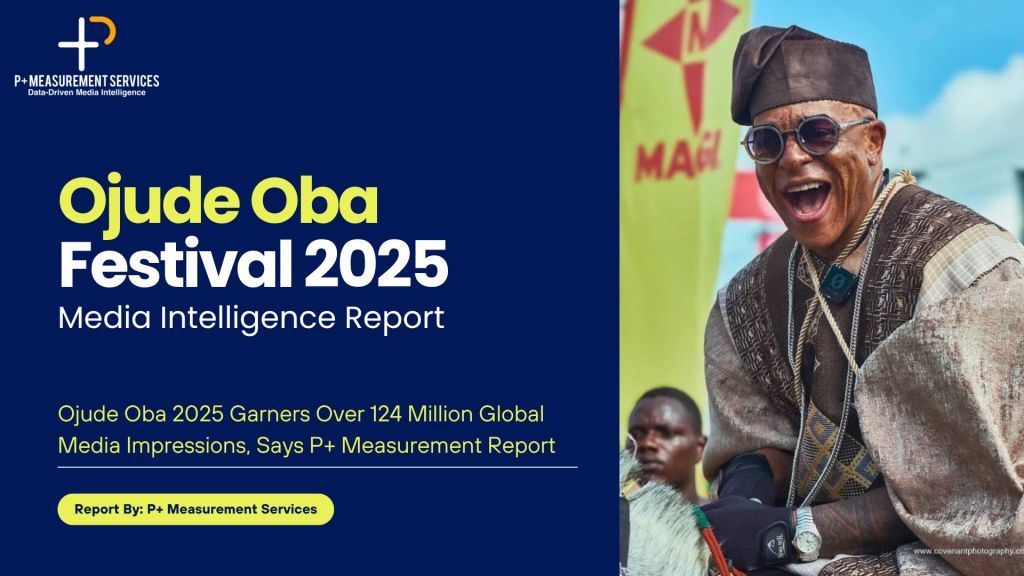
The 2025 edition of the iconic Ojude Oba Festival has emerged as one of Nigeria’s most impactful cultural events in terms of media performance, with strong local resonance and measurable international interest. A comprehensive report released by P+ Measurement Services, a Lagos-based independent media intelligence consultancy, offers a data-driven audit of the media footprint of the festival based on media data harvested from June 1 to June 23, 2025.

Analysis reveals that the Ojude Oba Festival maintained a healthy media sentiment profile. 60% of the coverage across print, broadcast, and digital platforms was classified as positive, citing the festival’s vibrant cultural displays, its economic impact on Ijebu Ode, and the successful coordination of high-profile participation. Thirty percent of the content was neutral, focused on news reportage and factual event summaries. Only 10% of total coverage recorded negative sentiment, primarily tied to logistics such as congestion, travel delays, and crowd management.

Geographically, 85% of media exposure originated from Nigerian media, driven by extensive coverage from national and regional outlets such as Channels TV, The Guardian, Arise News, Tribune Online, and Ogun State Television. The remaining 15% of the coverage came from international outlets including CNN, BBC Africa, Africa News, and Reuters, signifying a growing appetite for Nigerian cultural content on the global stage. The United Kingdom, France, the United States, Ghana and South Africa were identified as key foreign media sources contributing to the international spread of the festival’s image.

In terms of media distribution, online and digital platforms led by a wide margin, accounting for 70% of total media mentions. The near-real-time amplification of festival highlights via X (formerly Twitter), Instagram, YouTube, and blogs significantly shaped the public conversation. Print media retained relevance with 20% of the total share, focusing on pictorial storytelling and editorial features, while broadcast channels, including live event coverage and cultural documentaries, made up the remaining 10%.

The cumulative global media reach of Ojude Oba 2025 was recorded at 124,833,210 individuals, according to analytics pulled from social listening and media database indexing. This figure indicates substantial public engagement and a rising interest in Yoruba traditions, particularly among diaspora communities and heritage tourism advocates.

Among the most visible search terms and hashtags that drove engagement during the festival period were #OjudeOba2025, #IjebuHeritage, #AwujaleLive, #IjebuOde, #FestivalOfColors, #CulturalHeritage, and #AfricanCulture. These were not only driven by official media coverage but also by influencer marketing, user-generated content, and brand activations tied to the event.

Corporate sponsorship played a key role in shaping the visibility and tone of the media narratives. The top five most-mentioned brands during the festival period were Globacom, Goldberg (Nigerian Breweries), Orijin (Diageo Nigeria), FCMB, and Rite Foods (producers of Fearless and Bigi). Their presence was amplified through branded installations, promotional giveaways, community initiatives, and high-visibility event partnerships, reflecting the festival’s growing significance as a strategic marketing platform.

Ojude Oba’s media performance in 2025 points to three key outcomes: the event is not only a vibrant cultural expression but also an evolving asset for cultural diplomacy, brand storytelling, and heritage-based tourism development. The favorable sentiment score (60%), significant audience reach (124 million+), and expanding global footprint suggest that the festival is well-positioned to attract more structured public-private investments.

From a strategic communication standpoint, P+ Measurement Services recommends that the festival’s PR team prioritize four core focus areas going forward:

  1. Advance Digital Integration: Strengthen cross-platform storytelling using influencers, vlogs, and immersive content formats (e.g., 360° video, virtual parades).
  2. Global Syndication Strategy: Deepen relationships with international media correspondents and diaspora cultural platforms to drive sustained coverage before and after the event.
  3. Media WatchDog Sentiment Monitoring: Implement near-real-time crisis response frameworks with media monitoring services support for managing potential risks like crowd control incidents or political hijacking of narratives.
  4. Data-Driven Brand Partnerships: Encourage sponsors to activate with community-focused narratives and measurable ROO outcomes to build long-term association equity.

As Nigeria continues to redefine its cultural exports and tourism offerings, Ojude Oba Festival stands out as a case study in leveraging tradition for modern relevance, media amplification, and brand alignment. The 2025 media footprint confirms its status not just as a celebration of heritage, but as a powerful soft power tool with growing international appeal.


Click to comment

Leave a Reply

Your email address will not be published. Required fields are marked *

Brands/Products

FoodCourt Pauses Operations as Unpaid Salaries, Debt Mount

Published

on

FoodCourt

By Adedapo Adesanya

FoodCourt, a Nigerian cloud kitchen startup backed by Y Combinator, has suspended operations after months of unpaid salaries and mounting debts to vendors triggered a staff strike and forced the company to halt customer orders, according to a report by TechCabal.

The publication reported that customers first noticed on March 4 that they could no longer place orders through the FoodCourt app after the company disabled ordering as kitchen workers, delivery personnel and branch staff embarked on strike over unpaid wages. The company also owed outstanding payments to vendors.

By April 19, FoodCourt had temporarily shut its last operating branch after suspending activities across its Lagos and Abuja locations while seeking fresh funding and restructuring the business, according to the report.

The company’s chief executive, Mr Henry Nneji, said the decision to pause operations was not caused by a single issue but by a combination of operational, organisational and working-capital challenges.

“It’s important to clarify that the decision to pause operations wasn’t driven by one single issue. We reached a point where it became clear that continuing to patch those issues while operating wasn’t the right long-term decision,” he said.

“The objective is to build a stronger business than the one that existed before the suspension. We fully intend to bring FoodCourt back,” he added in an emailed response.

The company acknowledged outstanding obligations to employees, vendors, riders and service providers, but declined to disclose the number of affected workers or the total amount owed. It said efforts were underway to resolve the liabilities as part of its restructuring process.

It was also reported that the startup’s financial difficulties worsened after expansion into additional locations increased operating costs, while its cloud kitchen model came under pressure from rising labour, logistics, food and marketing expenses.

Despite the shutdown, Mr Nneji said FoodCourt intends to relaunch after completing its restructuring, adding that the company believes demand for its products remains strong.

Founded in 2021 by Henry Nneji and Paul Adokiye Iruene, FoodCourt operates cloud kitchens under multiple virtual restaurant brands through its consumer app. According to TechCabal, the startup had previously disclosed raising $1.7 million, delivering more than one million meals and reaching $4.3 million in annual recurring revenue by the end of 2024.

Continue Reading

Brands/Products

Chicken Republic Introduces Improved Smokey Jollof Recipe

Published

on

Chicken Republic smokey jollof

By Aduragbemi Omiyale

To further reinforce its commitment to continuous enhancement of customer experience through menu innovation and quality improvements, Chicken Republic, Nigeria’s leading quick-service restaurant brand and a flagship brand of Food Concepts Plc, has improved its Smokey Jollof recipe across restaurants nationwide.

As a customer-centric brand, Chicken Republic regularly evaluates consumer feedback, dining trends, and product performance to ensure its menu continues to deliver the quality and value to which customers have become accustomed.

The updated Smokey Jollof is part of this ongoing commitment to continuous improvement.

The refreshed recipe represents the latest evolution of one of the brand’s most popular offerings.

Developed with a focus on richer flavour, greater consistency and an even more satisfying eating experience, the improved Smokey Jollof reflects Chicken Republic’s dedication to meeting the evolving tastes and expectations of its customers.

“At Chicken Republic, our customers are at the heart of every decision we make. We are constantly listening, learning and looking for ways to improve the experience we deliver.

“The improved Smokey Jollof is a reflection of that commitment. We’ve refined the recipe to deliver an even richer, more enjoyable taste experience while maintaining the flavour profile our customers know and love,” the Managing Director of Food Concept, Mr Olumide Aniyikaiye, stated.

“Great brands evolve with their consumers. This update is not about changing what people love, but about making it even better.

“We are confident that customers will enjoy the improved recipe and appreciate the attention we continue to invest in delivering quality meals every day,” Mr Aniyokaiye added.

The improved Smokey Jollof is now available at Chicken Republic outlets nationwide, allowing customers to experience a more flavourful and consistent version of a fan-favourite menu item.

This latest enhancement underscores Chicken Republic’s broader commitment to innovation, quality and creating memorable meal experiences for customers across Nigeria.

Continue Reading

Brands/Products

NAFDAC Busts N42m Expired Baby Wipes Warehouse

Published

on

baby wipes

By Adedapo Adesanya

The National Agency for Food and Drug Administration and Control (NAFDAC) said it has uncovered a warehouse stocked with expired baby wipes intended for illegal revalidation and sale to unsuspecting consumers.

In a statement shared on X (formerly known as Twitter) on Monday, the agency said the value of the products is estimated at N42 million.

The agency said during the operation, its officers discovered over 240 cartons of expired baby wipes that had already been revalidated and repackaged, alongside approximately 20,000 additional expired wipes, equivalent to 625 cartons, awaiting revalidation.

NAFDAC said one suspect was apprehended at the scene, while the warehouse was sealed and the products evacuated for further investigation.

“The distribution and use of expired baby wipes pose significant health risks, particularly to infants and young children, including skin irritation, skin infections, allergic reactions, worsening of eczema or dermatitis, and an increased risk of diaper rash due to the reduced effectiveness of preservatives that inhibit microbial growth.

“The seized products are valued at approximately N42 million.

“We reaffirm our commitment to protecting public health by preventing substandard and expired regulated products from re-entering the market.

“Members of the public are urged to remain vigilant and report suspicious activities involving regulated products to the nearest NAFDAC office or call 0800 1 623322,” it stated.

Continue Reading